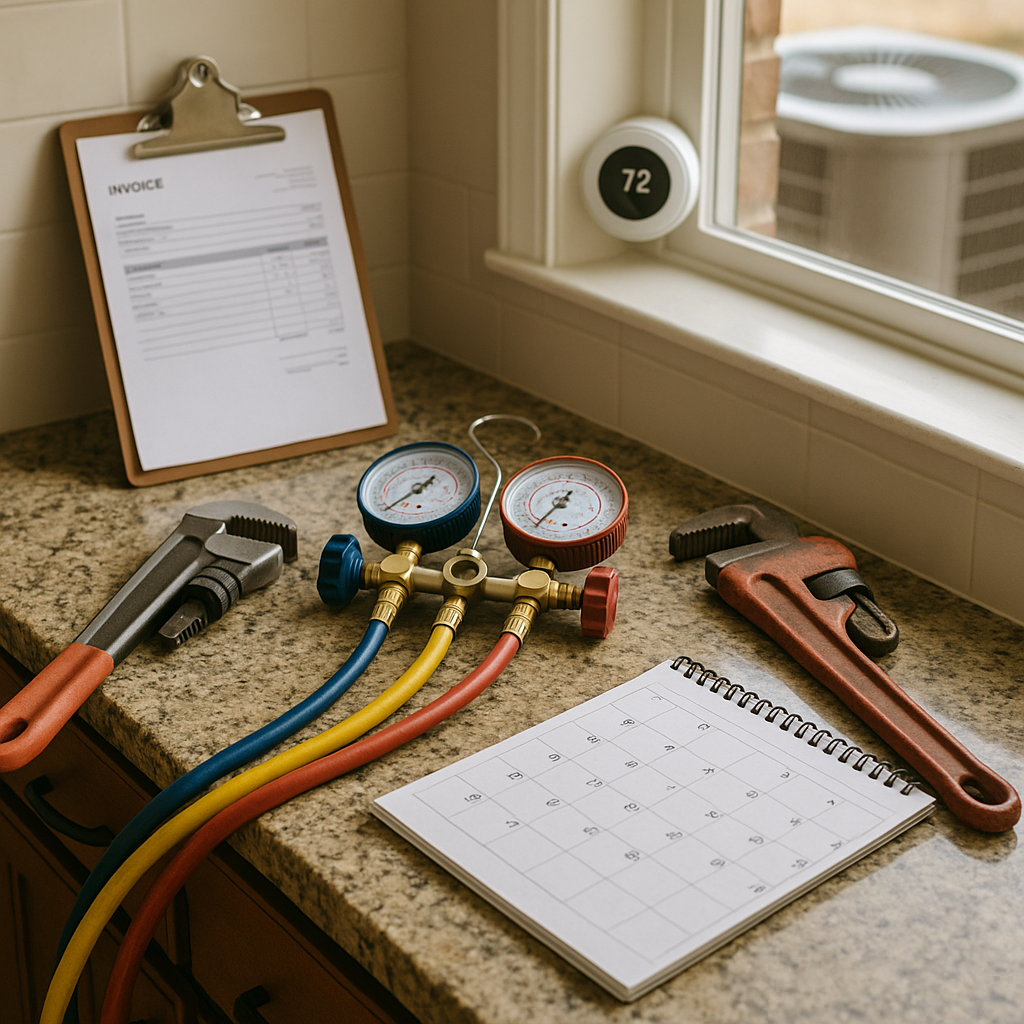
If your AC quit last August and the soonest dispatch was the following week, you ran into the trades labor gap. Two recent workforce moves frame why the shortage has become a homeowner problem in 2026. Ferguson reaffirmed in its FY2025 Sustainability Report a goal to connect 50,000 young people to the skilled trades by 2030, and the PHCC Educational Foundation ran its Creating Super Foremen workshop on May 1 and 2, 2026 at Milwaukee Tool's Brookfield, Wisconsin headquarters. Both are good news for the long arc. Neither helps you get a technician out tomorrow.
Below is what the 2026 numbers actually show, what you should expect when you call for service, and how to keep the bill in check.
The pipeline numbers
Associated Builders and Contractors projects the U.S. construction industry needs 349,000 net new workers in 2026, down from the 439,000 figure ABC published for 2025. Construction Dive notes that the smaller number reflects slower construction spending growth, not a fixed pipeline. The U.S. Bureau of Labor Statistics Employment Situation report for April 2026 shows construction employment changed little month-over-month, which means the industry is not adding bodies fast enough to dent the gap.
The HVAC side is the most visible pinch point for homeowners. ServiceTitan's industry analysis cites a shortfall of roughly 110,000 HVAC technicians, with about 25,000 leaving the field every year and projections of up to a 40 percent talent shortfall over the next decade.
What this looks like from your front porch
The expectations gap is the part that stings. ServiceTitan's survey work shows 74 percent of HVAC customers expect service within 24 hours of an AC failure, and only 4 percent are willing to wait a week. In peak season, industry coverage notes waits commonly stretching to five to ten days or more for non-membership customers. If you call during a heat wave or the first hard freeze, you are joining a queue that already formed.
Three other things have shifted:
-
Diagnostic fees are now standard, not optional. Plumbing service-call or trip fees in 2026 run roughly $50 to $200, with typical standard calls in the $75 to $150 range and emergency calls landing closer to $150 to $250. Angi's 2026 plumbing data tracks similar ranges. Urban and coastal markets commonly run 20 to 50 percent above the national average.
-
Hourly rates have firmed up. Plumbers commonly bill $75 to $150 per hour, with master plumbers up to $200 per hour.
-
The refrigerant transition is pushing repair quotes up. The shift from R-410A to R-454B is raising both equipment and repair costs, and it is nudging contractors toward replace-not-repair recommendations on older systems. That is real on systems past about 12 years old, and worth a second opinion when it shows up on a first visit.
Why some categories hurt more than others
The pain concentrates seasonally. Heat pump and AC installers get slammed in summer because almost every customer needs them in the same eight-week window. Sewer and drain crews fill up after spring rains and during fall leaf season. If your project is elective, like a water heater swap or a panel upgrade, you have leverage that an emergency caller does not.
AI workflows for revenue teams
Placeholder house ad for Conservus.ai. Swap with final creative when brand assets are ready.
Partner with Conservus.aiScheduling moves that actually work in 2026
-
Book maintenance in shoulder seasons. March, April, and October are the easiest windows for HVAC tune-ups. Plumbing camera inspections and water heater swaps are also far easier to schedule outside winter and summer peaks.
-
Ask about membership or maintenance plans for priority dispatch. Many local HVAC and plumbing companies move plan members ahead of walk-up callers during heat waves and freezes. Pricing varies widely by market and company, so ask what the plan actually buys you in writing before you sign up.
-
Ask whether the diagnostic fee is credited toward repair. Many shops will roll the trip fee into the repair total if you authorize the work that day. This is a question to ask before the tech finishes the diagnosis, not after the invoice prints.
-
Find a trades contact before you need one. The single best move is to have a plumber and an HVAC company you already trust on speed dial when something fails. Calling someone who has been to your house before puts you ahead of strangers in the queue.
How to tell a legit emergency call from an upsell
The trades shortage has not changed human nature on either side of the door. A reputable tech will explain what failed and show you the part. A few red flags worth knowing:
-
Whole-system replacement on a first visit, with no diagnostic detail. If a technician is recommending a full HVAC or water heater replacement before isolating the failed component, ask for the model and part number of what failed, and ask for the repair quote in addition to the replacement quote.
-
Refusal to put it in writing. Every legitimate quote in 2026 should be on paper or in an emailed estimate with parts, labor, and warranty terms broken out.
-
Pressure to decide today on a non-emergency. Frozen pipes and gas leaks are emergencies. A 14-year-old furnace that still runs is not. If you have hot water and the house is at temperature, you have time for a second quote.
-
Refrigerant scare scripts. The R-454B transition is real, but it does not mean every R-410A system needs to be replaced immediately. Ask whether your specific failure can be repaired with available parts before agreeing to a full swap.
The fix that is coming, slowly
The supply side is moving, just not at homeowner speed. Ferguson's 50,000-by-2030 commitment operates through Explore The Trades grants, Skills Labs that have reached 32 high schools and 3 middle schools across 17 states since 2021, and partnerships with mikeroweWORKS Foundation, ACE Mentor Program of America, Trades for Tomorrow, and Tools and Tiaras. The PHCC Educational Foundation's Creating Super Foremen workshop trained 24 field leaders this May in servant-leadership techniques, with Purdue Professor Emeritus Kirk Alter leading the curriculum and Milwaukee Tool hosting. ACHR News covered the workshop as part of broader HVAC industry workforce development.
These programs matter because retention is half the math. ServiceTitan's analysis flags roughly 25,000 technicians leaving the industry annually, which means every new apprentice barely offsets attrition. Realistically, homeowners should not expect meaningful price relief from new pipeline graduates in the next year or two.
AI workflows for revenue teams
Placeholder house ad for Conservus.ai. Swap with final creative when brand assets are ready.
Partner with Conservus.aiA 90-day homeowner checklist that pays for itself
The single biggest lever you control is preventing the emergency call in the first place. Over the next 90 days:
-
Audit your HVAC filters. Replace 1-inch filters every 30 to 60 days during heavy-use months. A clogged filter is the most common reason a working system looks broken.
-
Book an HVAC tune-up in the shoulder season. Spring for AC, fall for heat. This is the cheapest way to get a working relationship with a local shop on the books before peak demand.
-
Check the water heater anode rod. A $30 anode replacement on an older tank can buy you years before a full water heater swap, which in 2026 is far easier to schedule on your terms than under emergency conditions.
-
Walk your shutoffs. Locate the main water shutoff, the gas shutoff, and the HVAC disconnect. Knowing where they are turns a flood or a refrigerant smell from a panic call into a controlled call.
-
Get one quote you do not need. Bring out a plumber or HVAC tech for a non-urgent question. You will learn what the local rates actually are and which company answers the phone first.
The takeaway
The trades shortage is structural and it is not getting fixed by Christmas. Treat scheduling and prevention as part of homeownership the same way you treat the property tax bill. The homeowners who do best in 2026 are not the ones who pay the lowest dispatch fee, they are the ones who never have to call at 9 p.m. in July.
Related reading
AI workflows for revenue teams
Placeholder house ad for Conservus.ai. Swap with final creative when brand assets are ready.
Partner with Conservus.aiSources
-
PHCC: Field Leaders Learn Servant Leadership at 2026 Foremen Workshop
-
ACHR News: Milwaukee Tool Hosts PHCC's Creating Super Foremen Workshop
-
ABC: Construction Industry Must Attract 349,000 Workers in 2026
-
Construction Dive: Construction's New Worker Demand Drops to 350,000 in 2026
-
U.S. Bureau of Labor Statistics: Employment Situation, April 2026
Note: This article contains AI-assisted content and has been reviewed by our editorial team.
ABOUT THIS SERVICE: CallTheLocal.com is a directory and lead generation service, not a contractor or service provider. Submitting this form does not obligate you to hire anyone or purchase any service. Your information will be shared with licensed, insured home service professionals in your area who may provide quotes for your project. CallTheLocal.com does not guarantee the quality, timeliness, or outcome of any work performed by service providers you connect with through this service. Always verify licensing, insurance, and references before hiring. Get everything in writing before work begins.