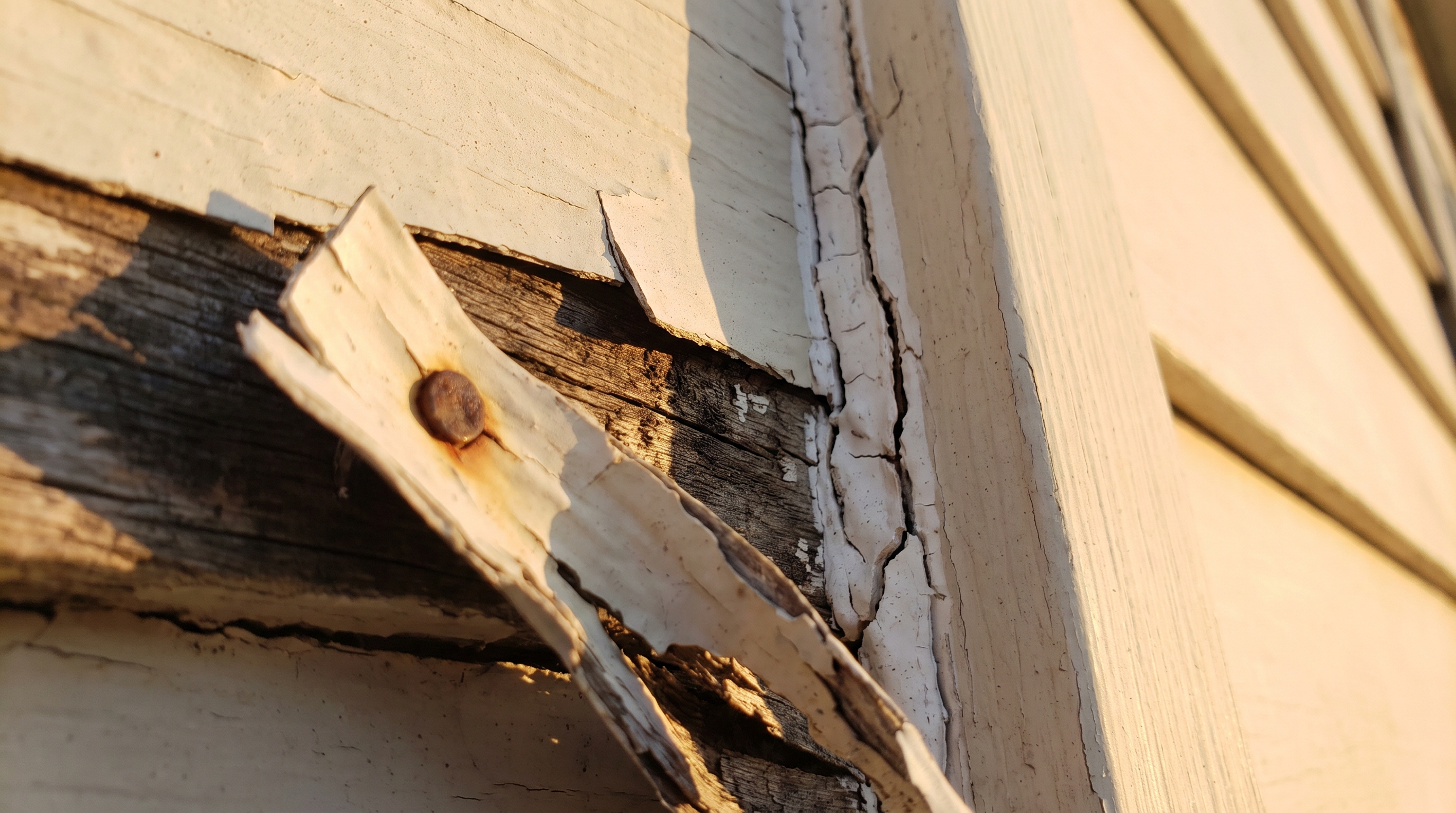
How often to paint house exterior surfaces depends on siding, sun, humidity and prep. InterNACHI, the home inspectors' association, estimates exterior paint lasts 7 to 10 years nationally but only about 5 years in Florida. Wood siding may need repainting every 4 to 10 years, stucco every 5 to 10, and aluminum about every 5.
If you're standing in the driveway looking at faded or flaking siding and wondering whether it's time to call a painter, that range is where to start. No single number fits every house, though. The credible sources give ranges, and they agree on what pushes a house toward the short end or the long end. Below are repaint intervals by siding type, how your climate changes them, the warning signs worth checking, and what the next paint job is likely to cost where you live.
What decides how long exterior paint lasts
InterNACHI's Standard Estimated Life Expectancy Chart states it plainly: "Surface preparation and paint quality are the most important determinants of a paint's life expectancy. Ultraviolet (UV) rays via sunshine can shorten life expectancy. Additionally, conditions of high humidity indoors or outdoors can affect the lifespan."
That gives you four things to look at: how well the last crew prepped, what grade of paint went on, how much sun your walls get, and how much moisture they deal with. Caulk wears out on its own schedule too. InterNACHI puts caulking at 5 to 10 years, so it often fails before the paint does.
Repaint intervals by siding type
| Siding | Typical repaint interval | Source |
|---|---|---|
| Wood | 4 to 5 years with one coat over primer; up to 10 years with two coats | Purdue Extension / USDA Forest Products Laboratory |
| Wood | 3 to 7 years | HomeAdvisor |
| Stucco | 5 to 10 years, depending on condition | CertaPro Painters |
| Aluminum | About every 5 years | HomeAdvisor |
| Painted brick | 15 to 20 years | HomeAdvisor |
| Unpainted brick | Virtually no maintenance | Brick Industry Association |
| Fiber cement (factory finish) | 15-year prorated paint-and-labor warranty | James Hardie |
Wood siding
Wood is the most paint-hungry siding. Purdue University Cooperative Extension and the USDA Forest Products Laboratory, in Selection and Application of Exterior Finishes for Wood, say one coat of good house paint over a properly applied primer "should last 4 to 5 years," while "two coats can last up to 10 years." HomeAdvisor gives a similar 3 to 7 years. The practical takeaway: paying for a second top coat can roughly double the time before your next paint job.
Stucco
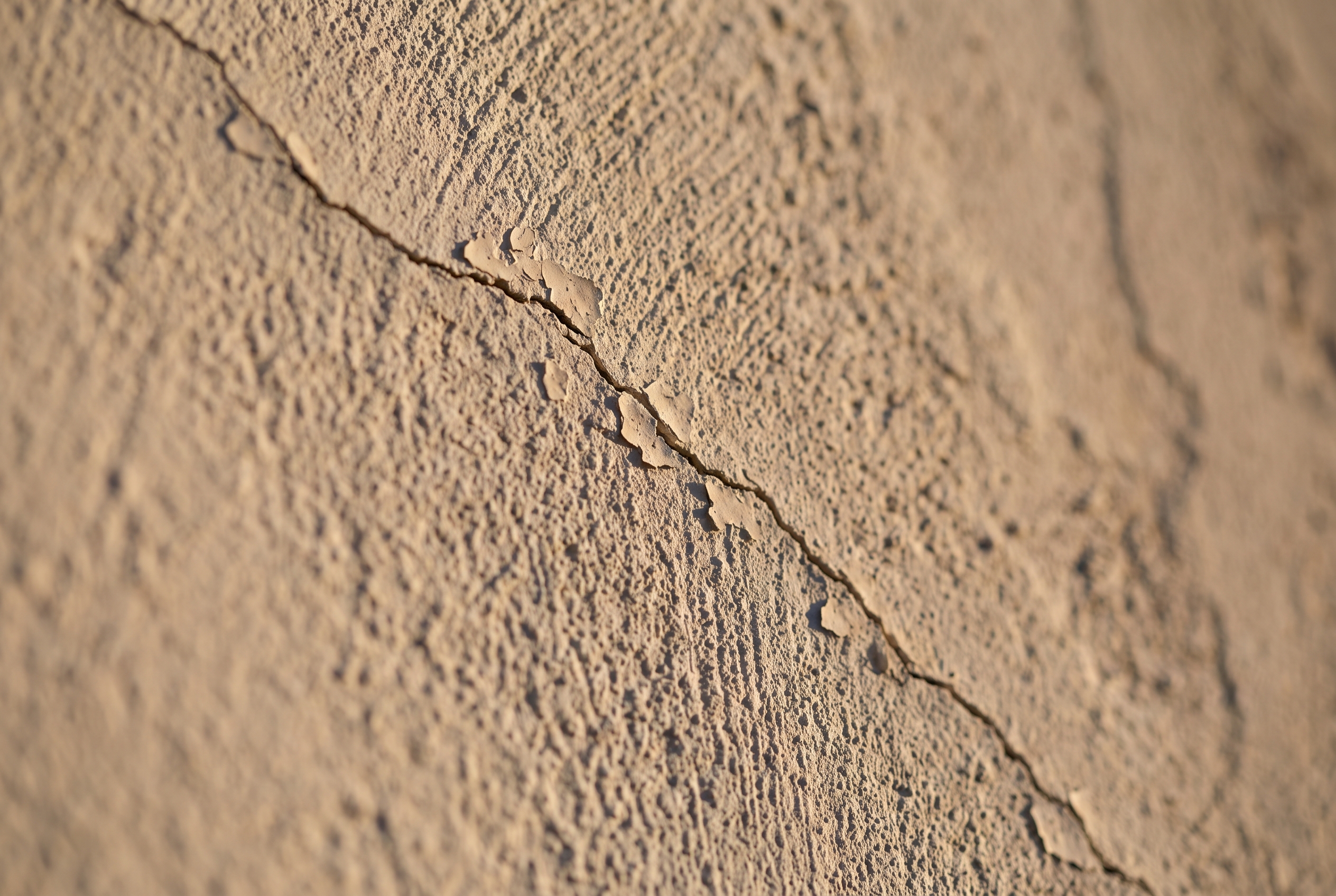
CertaPro Painters says stucco is often repainted every 5 to 10 years depending on its condition. Stucco holds up better in dry climates, and homes in wetter climates may need painting and repairs more often. CertaPro calls elastomeric paint "often a great choice for stucco homes."
Fiber cement
If you have James Hardie siding with its factory ColorPlus finish, the company backs that finish with a 15-year prorated limited warranty covering paint and labor against peeling, cracking and chipping, plus a 30-year non-prorated warranty on the board itself. Hardie's article doesn't give a repaint interval, so if you're weighing a repaint, pull your warranty paperwork first and ask Hardie or your installer what is still covered.
Brick
The Brick Industry Association says unpainted brick "requires virtually no maintenance over the decades" and that painting it should be "a last resort," because paint "creates a barrier, trapping moisture inside the brick." If your brick is already painted, HomeAdvisor says it needs refreshing every 15 to 20 years. The BIA adds that mineral (silicate) paints bond to the brick without forming a film, which keeps it breathable and "lasts longer than other painted surfaces."
Aluminum
HomeAdvisor says aluminum surfaces need repainting about every five years.
How your climate changes the schedule
The siding chart above assumes average conditions. Sun and moisture are what shorten it.
Southeast and coastal areas: humid, sunny, salty
InterNACHI publishes a separate life expectancy chart for Florida homes, and the numbers drop sharply: exterior paint 5 years (versus 7 to 10 nationally) and exterior caulk 1 to 3 years (versus 5 to 10). Its reasoning is that items "regularly exposed to saltwater, wind, sun and heat are particularly vulnerable to premature failure." If you live in a hot, humid or coastal area, plan around the short end of every range, and check your caulk every year or two. Mildew is also more common where walls stay damp or shaded.
Midwest and colder regions: watch the caulk season
Sherwin-Williams says caulk should go on only when the air, the surfaces and the caulk are all above 40°F, unless the product is made for cold. Caulk applied too cold is one of the listed causes of cracked paint over joints. Where winters are long, that narrows the window for good caulk and paint work, so schedule exterior jobs for the warm months and ask your painter how they handle a cold snap.
West Coast and sunny climates: south and west walls go first
Purdue and the USDA note that "areas fully exposed to sunshine and rain are the first to deteriorate" and recommend two top coats on fully exposed south and west sides. In sunny regions, it's normal for those walls to look tired years before the shaded side. On the plus side, CertaPro says stucco does better in arid climates than in wet ones.
Five warning signs to check on a walk-around
Walk around the house on a bright day and look at each wall. Here's what each sign means and what to do about it.
-
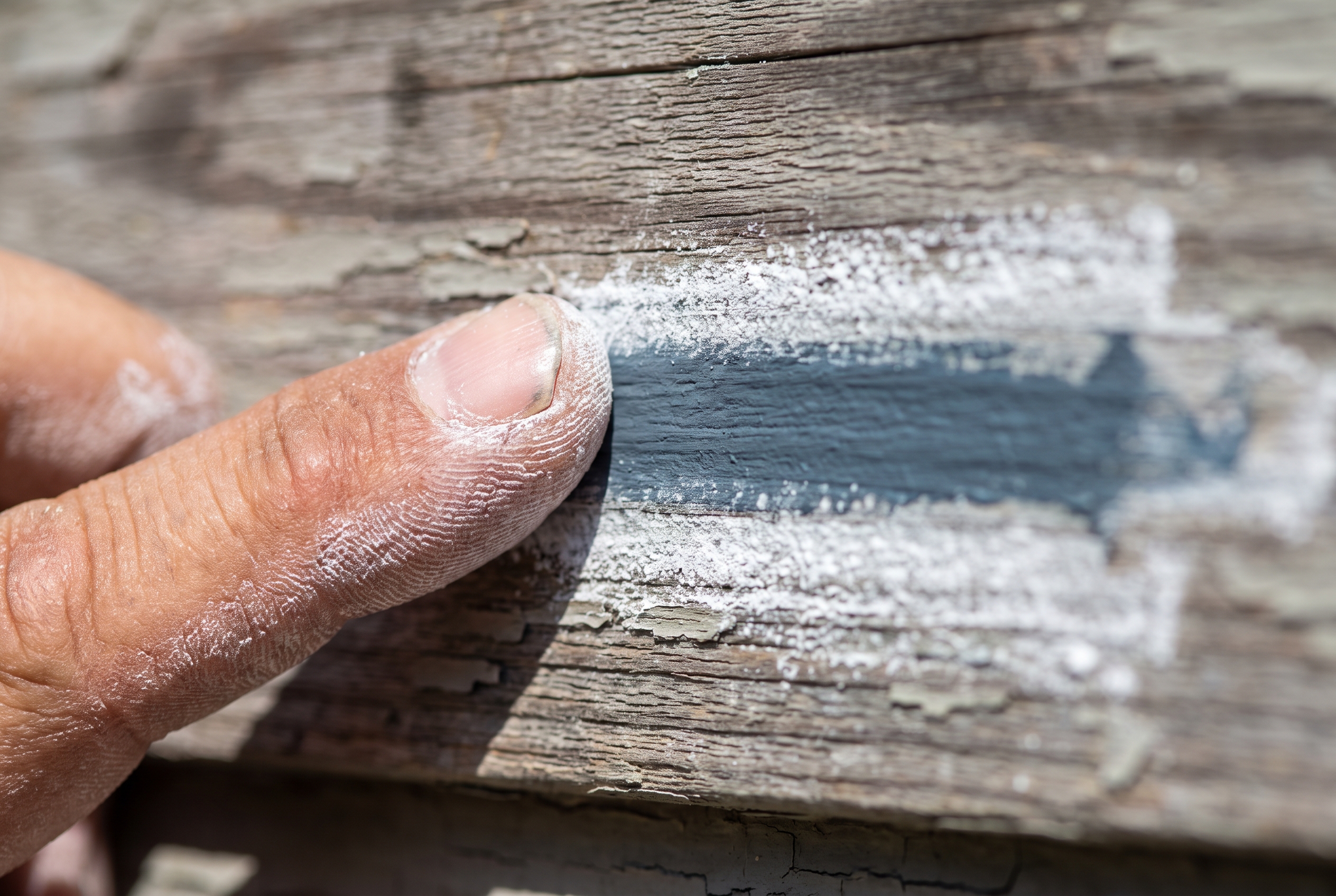
Chalking. Sherwin-Williams defines it as a fine, white powder on the paint surface that can make the color look faded. Some chalking is normal and is how paint is meant to wear. Heavy chalking can come from oil-based paint, cheap highly pigmented paint, interior paint used outside, or paint that was over-thinned or spread too thin. What to do: wash or power wash, rinse and let it dry. Sherwin-Williams says repainting isn't required just because of chalk. When you do repaint, it recommends a higher-quality acrylic paint.
-
Peeling. Sherwin-Williams calls peeling a loss of adhesion, and the causes it lists are mostly moisture: worn or missing caulk, clogged gutters, indoor moisture moving out through the walls, painted surfaces too close to bare ground, roof leaks, and painting damp surfaces. What to do: fix the water source first, or new paint will peel the same way. Then the failing paint has to come off before repainting. Sherwin-Williams also recommends keeping wood siding at least 6 inches above the ground.
-
Cracked or open caulk. Check around windows, doors, trim and corners. Gaps let water get behind the paint, which leads to peeling. Paint cracking right over a caulked joint usually points to non-paintable caulk, paint applied before the caulk dried, caulking in the cold, or joints wider or deeper than 1/2 inch filled without backing. What to do: re-caulk with a paintable product, priming first, in weather above 40°F.
-
Mildew. Sherwin-Williams describes it as black, gray, green or brown spots that signal too much moisture or too little sun. To tell it from dirt, "apply a few drops of household bleach to the area; if it is bleached away, the discoloration is probably mildew; if it doesn't disappear, it's probably dirt." What to do: clean it off before any paint goes on.
-
Stucco cracks and streaks. CertaPro says hairline cracks can usually be covered by fresh paint, but white streaks suggest moisture damage that needs repair before painting. What to do: if you see streaks, ask for a repair estimate along with the paint quote.
Repaint, touch up, or wash?
Not every tired-looking house needs a full repaint. A rough guide:
-
Wash it if the main problem is chalky residue, dirt or mildew and the paint underneath is still sticking well.
-
Touch it up if the caulk has failed in a few spots or one wall has small areas of damage. Re-caulking and spot priming can buy you time.
-
Repaint if peeling is widespread, bare wood is showing, or several walls are failing at once. Bare wood takes on water, and waiting usually means more prep and repair later.
What an exterior repaint costs in 2026, by region
The two main sources here measure different things, so they're shown separately instead of averaged together.
HomeAdvisor: homeowner-reported costs
HomeAdvisor's cost guide (last updated June 17, 2026) puts the national average at $3,178, with a typical range of $1,819 to $4,551, or about $1.50 to $4 per square foot. Its regional averages for a 1,500 sq ft home:
| Region (HomeAdvisor) | Average, 1,500 sq ft home |
|---|---|
| Plains | $2,300 |
| Southwest | $2,400 |
| Rocky Mountains | $2,900 |
| Great Lakes | $3,000 |
| Southeast | $3,315 |
| Mideast | $4,300 |
| Far West | $4,500 |
| New England | $4,800 |
HomeAdvisor doesn't list which states fall into each region, so treat these as a rough guide to where your area sits.
CertaPro: one full-service franchise's own jobs
CertaPro Painters (updated October 5, 2026) says its average exterior project costs $5,477, with pricing that typically runs $4.25 to $7.95 per square foot (stated as 2025 figures). By home size, it lists $3,000 to $6,000 for 1,000 to 1,500 sq ft, $5,000 to $10,000 for 1,500 to 2,500 sq ft, and $8,000 to $15,000+ above 2,500 sq ft. Its regional two-story examples:
-
Central Illinois (Midwest): about $4,500 to $6,500
-
Orange County, CA (West Coast): about $6,950 to $8,450
-
Boston: about $8,250 to $16,000
CertaPro doesn't give a Southeast example, so for that region HomeAdvisor's $3,315 average is the only regional number in these sources.
Why the numbers are so far apart
HomeAdvisor's figures are averages of costs reported by homeowners across all kinds of painters and job sizes. CertaPro's reflect one national franchise's own projects. If your bids come in closer to CertaPro's numbers than HomeAdvisor's, that isn't automatically a red flag. Compare what each bid includes, especially prep, repairs and number of coats.
What moves the quote
-
Stories. HomeAdvisor says two-story homes cost up to 50% more.
-
Siding type. HomeAdvisor's per-square-foot ranges: vinyl $1.25 to $3, wood $1 to $3, brick $1.50 to $4.50, stucco $1.50 to $4, stone $2.40 to $5.
-
Labor. HomeAdvisor puts labor at $1 to $3.50 per sq ft, or $25 to $100 per hour per painter.
-
Paint grade. Paint runs $20 to $80 per gallon (HomeAdvisor). Since prep and paint quality are the biggest factors in paint life, the cheapest gallon often costs more over time.
-
Prep and repairs. Scraping failed paint, replacing caulk, and fixing moisture problems or stucco damage all add time.
-
Weather. HomeAdvisor says working in extreme heat or cold can raise labor costs by 50%, and specialized paint for storm-prone areas can cost up to twice as much as standard exterior paint.
-
Timing. HomeAdvisor says homeowners can save by waiting until winter or watching for holiday promotions from local painters. Weigh that against the 40°F caulking rule if you live somewhere cold.
When to call a painter, and what to ask
Call for quotes if you see peeling across more than a small patch, open caulk joints around windows and trim, or bare wood. If all you see is chalk or mildew, try washing first and look again.
When painters come out, ask each one:
-
What's included in prep? Will they wash, scrape and prime failing areas, or paint over them?
-
Will you replace old caulk? With paintable caulk, and only when it's above 40°F?
-
How many coats? Ask for two top coats on south- and west-facing walls, as Purdue and the USDA recommend.
-
What paint are you using? Get the product line in writing. For stucco, ask about elastomeric paint. For painted brick, ask about mineral (silicate) paint.
-
Did you find moisture problems? Clogged gutters, roof leaks or siding too close to the ground should be fixed before painting.
Get at least two or three written bids that list prep, repairs, products and coats line by line so you can compare them fairly. Check licensing and insurance before you sign.
Related reading
-
Portable Generator With Transfer Switch or Whole-House Standby?
-
How to Winterize Outdoor Faucets Before the First Hard Freeze
Sources
-
InterNACHI: Standard Estimated Life Expectancy Chart for Homes
-
InterNACHI: Estimated Life Expectancy Chart for Florida Homes
-
Purdue Extension (Cassens and Feist): Selection and Application of Exterior Finishes for Wood
-
HomeAdvisor: How Much Does It Cost to Paint the Exterior of a House
-
CertaPro Painters: How Much Does It Cost to Paint the Exterior of a House in 2026?
-
James Hardie: ColorPlus Technology, the facts behind the finish
-
Brick Industry Association: The Do's and Don'ts of Painting Brick
This article contains AI-assisted content and has been reviewed by our editorial team.
ABOUT THIS SERVICE: CallTheLocal.com is a directory and lead generation service, not a contractor or service provider. Submitting this form does not obligate you to hire anyone or purchase any service. Your information will be shared with licensed, insured home service professionals in your area who may provide quotes for your project. CallTheLocal.com does not guarantee the quality, timeliness, or outcome of any work performed by service providers you connect with through this service. Always verify licensing, insurance, and references before hiring. Get everything in writing before work begins.