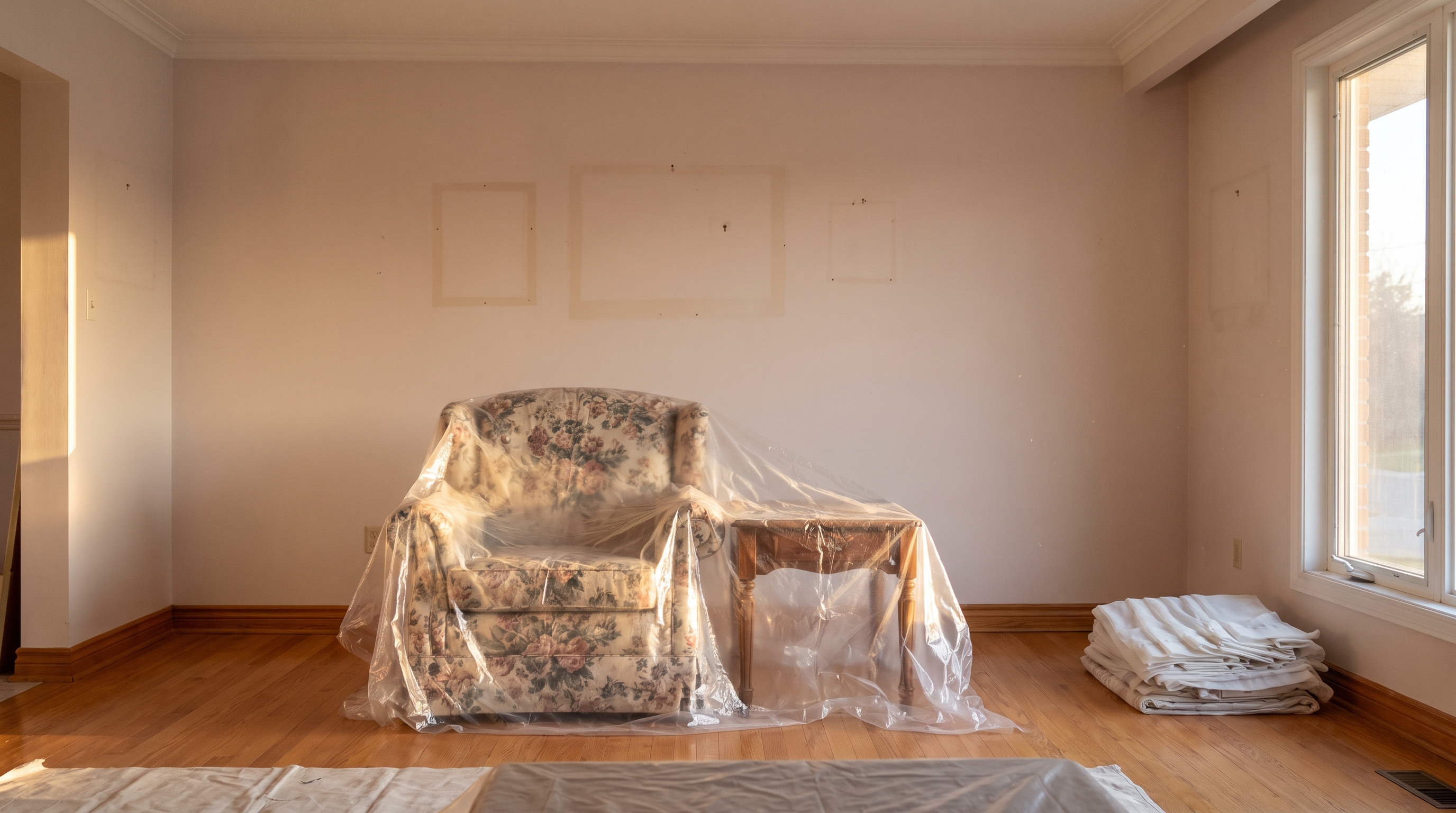
To prepare for house painters, clear the rooms of wall décor, curtains, electronics and small furniture, secure valuables, and keep outlets and switches reachable. Leave patching, sanding, caulking, masking and priming to the crew, but get those tasks written into the bid. If your home was built before 1978, ask whether the crew is EPA lead-safe certified.
-
Decide the scope room by room (walls only, or walls, trim and ceilings).
-
If the house was built before 1978, confirm the painting firm is Lead-Safe Certified.
-
Get furniture moving, repairs, priming and any wallpaper removal written into the bid.
-
Take down art, mirrors, wall décor, curtains and blinds.
-
Disconnect electronics and clear tabletops, shelves and small furniture.
-
Secure fragile and valuable items.
-
Keep outlets and switches reachable, and plan where pets and kids will be on painting day.
When you get a painting quote, most of what you're paying for is labor. According to HomeAdvisor, labor makes up 75% to 95% of the total cost of interior painting. So if the crew spends an hour boxing up your bookshelf, you're paying for that hour. The good news is that a lot of the prep is simple stuff you can do yourself in an evening. The rest is skilled work the painter should do and put a price on.
This guide splits the job into four parts: what you decide, what you clear, what the painter handles, and what should show up as a separate line on the bid.
What interior painting costs in 2026
It helps to know what's normal before the estimate visit. HomeAdvisor puts the national average for interior painting at $2,022, with most homeowners paying between $965 and $3,089. NerdWallet, citing 2026 Angi data, reports a similar average of $2,021, at $2 to $6 per square foot.
HomeAdvisor's per-room ranges:
| Room (approx. size) | Typical cost |
|---|---|
| Bathroom (70 sq ft) | $140 to $420 |
| Bedroom (120 sq ft) | $240 to $720 |
| Kitchen (160 sq ft) | $300 to $960 |
| Dining room (300 sq ft) | $600 to $1,200 |
| Living room (330 sq ft) | $700 to $2,000 |
We couldn't find reliable regional numbers, so treat these as national benchmarks. Local quotes may come in higher or lower.
Before the estimate: decide the scope
Scope affects the price more than anything else you control, so settle it before the painter walks through. HomeAdvisor estimates about $2.75 per square foot for walls only and about $4.70 per square foot for walls, trim and ceilings. For each room, decide which one you want.
Two other choices move the number:
-
Accent walls raise costs by 20% to 30%, according to HomeAdvisor.
-
Textured walls can raise costs by up to 50%.
During the walkthrough, ask the painter to write down exactly what's included: who moves the furniture, which repairs are covered, whether priming is included, and whether there's any wallpaper to strip. If it isn't written down, you can't hold anyone to it.
The lead question for homes built before 1978
If your house was built before 1978, you have one more decision to make before you hire anyone. The EPA notes that homes built before 1978 are more likely to have lead-based paint, because that's the year the federal government banned consumer use of lead-based paint.
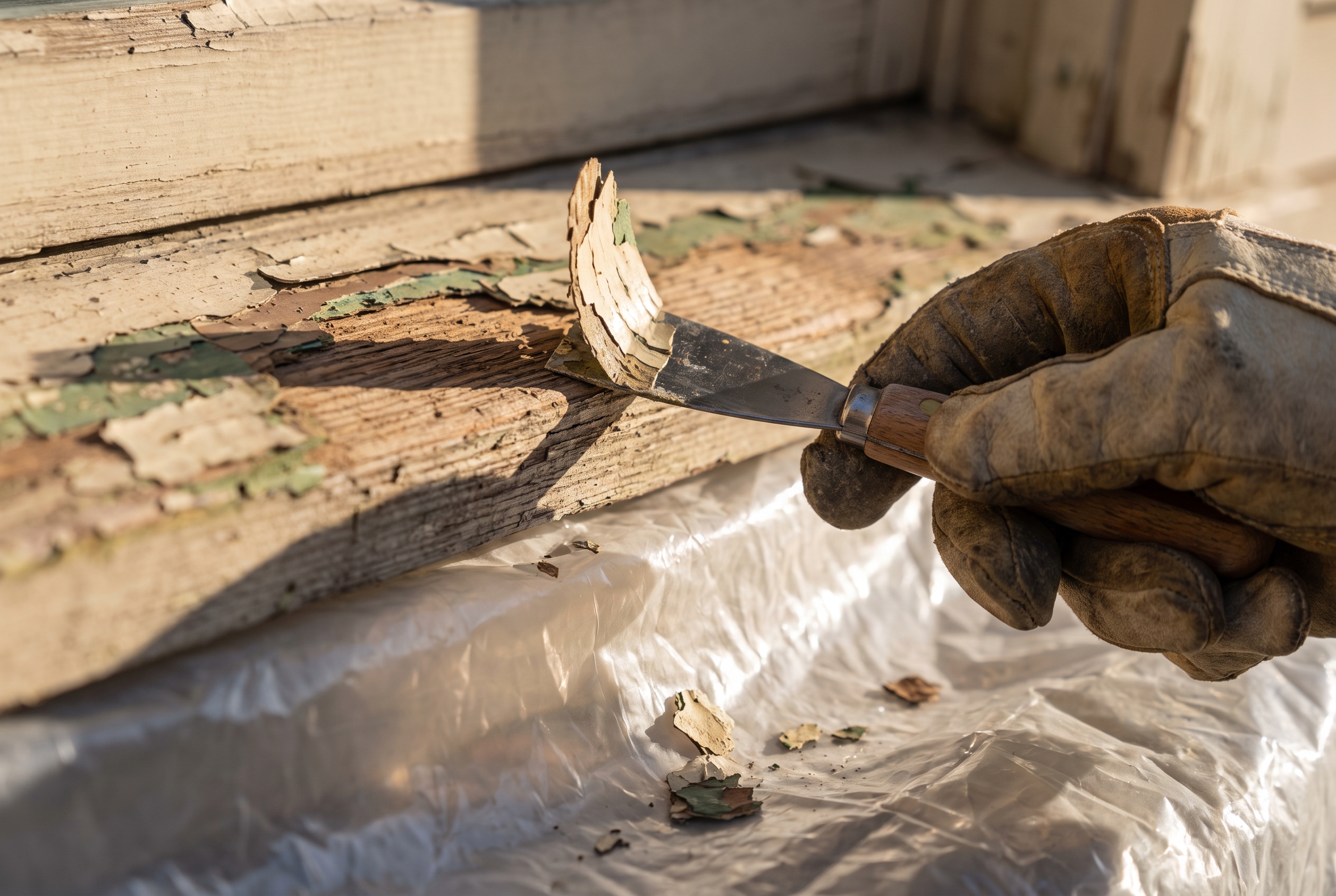
Under EPA's Renovation, Repair and Painting rules, anyone who is paid to disturb paint in pre-1978 housing must be certified, and painters are specifically included. Sanding, scraping and patching all count as disturbing paint.
What to know:
-
The small-job exception. Indoor work that disturbs 6 square feet or less of paint per room (20 square feet or less outside) counts as minor repair. EPA's FAQ says a project that small is not considered a "renovation" under the rule, so pre-renovation steps such as handing out EPA's lead pamphlet aren't required. Full-room prep usually goes well past 6 square feet.
-
Always covered. Window replacement and demolition are never treated as minor repair, no matter the size.
-
Other exemptions. These include housing for the elderly or disabled and studios or dorms (unless a child under six lives there), plus surfaces a certified inspector has declared lead-free.
How to check a painter: ask for the firm's certification, look for the Lead Safe Certified Firm logo, or use EPA's search tool for certified firms, which is linked from its consumer page. If you're not sure whether your walls contain lead, EPA's DIY guidance recommends having a certified lead inspector or risk assessor test the surfaces you plan to work on.
Your room-by-room clearing list
This is the part that's easy for you and costly for the crew. CertaPro Painters lists these as homeowner tasks:
-
Remove artwork, mirrors and wall-mounted décor. Hallways and stairways with lots of family photos tend to take the longest.
-
Take down curtains or window treatments. Bedrooms and living rooms usually have the most.
-
Disconnect electronics. In the living room, that means the TV, media console and any wall-mounted gear.
-
Clear tabletops and small furniture. Empty bookshelves, nightstands, dressers and kitchen counters near the walls.
-
Secure fragile or valuable items. Put them in a room that isn't being painted.
-
Make outlets and switches reachable. The crew needs to get to every one of them.
Furniture: settle it at the estimate
CertaPro says large furniture is "often covered or repositioned by the painting crew, but it's best to confirm that in advance." Every company handles this a little differently, so ask during the walkthrough and make sure the answer is in the bid.
If you can safely move furniture yourself, that's one way to save. NerdWallet lists both doing your own prep work and moving your own furniture as ways to lower the cost of a paint job.
What the painter should handle (and price)
The technical prep is skilled work and belongs to the crew. According to CertaPro, it includes:
-
Filling nail holes and minor surface repairs
-
Sanding uneven areas
-
Caulking trim
-
Masking edges and fixtures
-
Protecting floors and larger furniture
-
Priming surfaces when needed
Use the paint maker's standard to judge the result. Sherwin-Williams says to wash off dirt, grease, soap and oil buildup and rinse thoroughly, patch holes and cracks and sand them smooth once dry, and lightly sand glossy or nonporous surfaces to a dull finish. In its words, "A properly prepared surface is clean, solid and dry, without cracks and imperfections." Kitchens with grease and bathrooms with soap film are where washing matters most, so ask whether it's included.
Wallpaper removal belongs on its own line
Some prep is a big job on its own, and wallpaper removal is the main one. HomeAdvisor puts the average at $793, with a typical range of $423 to $1,192, or $0.60 to $3 per square foot. A 12-by-12-foot room runs about $535. Labor alone can range from $0.60 to $10 per square foot, depending on how hard the paper is to remove and the method used.
If any room has wallpaper, make sure it appears as its own line item on the bid. That way you can compare it from one bid to the next and won't get a surprise change order once the crew starts.
Prep that saves money vs. prep to skip
Worth doing yourself: clearing rooms, taking down décor and window treatments, unplugging electronics, and moving furniture you can handle safely. It costs you a few hours and saves the crew time you'd otherwise pay for.
Usually not worth it: buying the paint yourself. HomeAdvisor notes that homeowners often offer to do this, but "painters usually get significant discounts from their suppliers." You may end up paying more than the painter would.
Leave to the pro: patching, sanding and priming, especially in a pre-1978 home, where sanding painted surfaces is exactly the kind of work the lead rules cover.
What painting day looks like
Before the crew arrives, decide where pets and kids will be so they stay out of the rooms being worked on. Expect masking and floor protection to go up first, then repairs and priming where needed, then paint.
Modern paints dry fast. Benjamin Moore lists its Regal Select flat as dry to the touch in 1 hour, ready for a second coat in 1 to 2 hours, and applied at 50 to 90°F. With a paint like that and normal indoor temperatures, a crew can often put two coats on a room in the same day. Ask your painter which product they're using and how long they expect each room to take.
Comparing two bids: a checklist
When the bids come in, put them side by side and check each one for:
-
Scope: walls only, or walls, trim and ceilings, room by room
-
Accent or textured walls: priced and named
-
Furniture: who moves or covers the large pieces
-
Repairs: nail holes, patching, sanding and caulking included
-
Priming: where and whether it's included
-
Wallpaper removal: listed as its own line, if needed
-
Paint: brand and product named, supplied by the painter
-
Lead certification: for pre-1978 homes, the firm is Lead-Safe Certified
If one bid is much lower, it's usually missing something from this list.
Ready to call a painter?
Here's the short version. Clear the rooms yourself. Make the painter write the skilled prep, furniture handling and any wallpaper removal into the bid. If your home was built before 1978, hire a Lead-Safe Certified firm. Once you've made those decisions, you're ready to get quotes and compare them line by line.
Related reading
-
Flat Roof Leak After Heavy Rain? What to Check in Phoenix and Albuquerque as Polo Moves Through
-
Which Foundation Cracks Mean You Should Call a Structural Engineer?
Sources
-
How Much Does It Cost to Paint a Home Interior? (HomeAdvisor, updated June 17, 2026)
-
What Does Wallpaper Removal Cost? (HomeAdvisor, updated June 20, 2026)
-
Cost to Paint a House in 2026, Plus 6 Ways to Save (NerdWallet, Feb 19, 2026)
-
Renovation, Repair and Painting Program: Contractors (EPA, updated March 31, 2026)
-
EPA FAQ on projects disturbing six square feet or less of interior surface
-
Lead-Safe Renovations for DIYers (EPA, updated Aug 20, 2026)
Note: This article contains AI-assisted content and has been reviewed by our editorial team.
ABOUT THIS SERVICE: CallTheLocal.com is a directory and lead generation service, not a contractor or service provider. Submitting this form does not obligate you to hire anyone or purchase any service. Your information will be shared with licensed, insured home service professionals in your area who may provide quotes for your project. CallTheLocal.com does not guarantee the quality, timeliness, or outcome of any work performed by service providers you connect with through this service. Always verify licensing, insurance, and references before hiring. Get everything in writing before work begins.