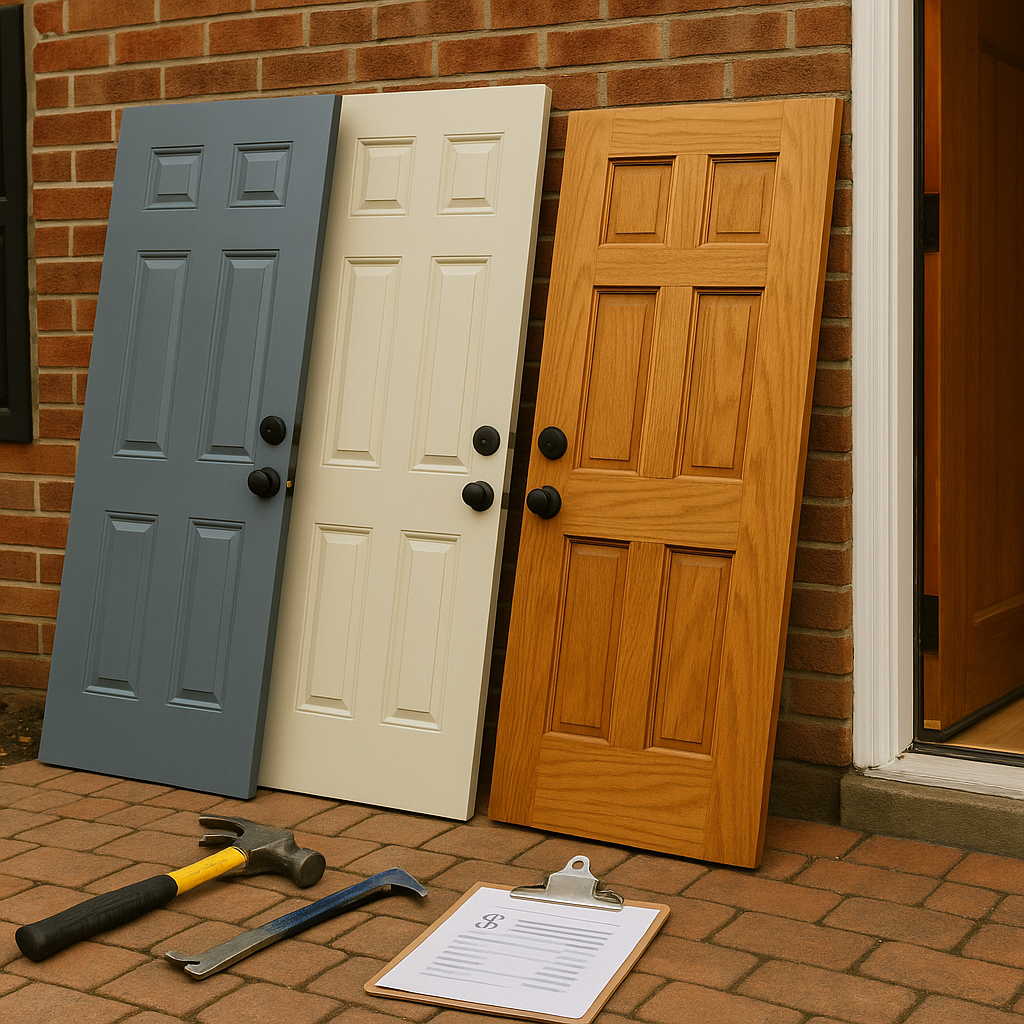
If you have priced an entry door lately, you have probably noticed that two installers can look at the same opening and hand you quotes that are thousands of dollars apart. The number on the page is rarely about the door itself. It comes down to two things: the material you choose (steel, fiberglass, or wood) and whether the crew is replacing only the door slab or the entire prehung assembly, including the frame, threshold, and weatherstripping.
This is exactly the spot a homeowner named James found himself in on Fine Homebuilding Podcast Episode 737, which aired May 15, 2026. In the companion segment, "Materials for a Durable and Affordable Entry Door," James explains that his current door is dented on the back and the jambs around it are rotting. He found a Craftsman-style fiberglass door at Home Depot for under $500 and wants to know whether a traditional wood door would simply last longer. It is a fair question, and the honest answer touches everything below.
Steel doors: the value pick
Steel is the lowest cost of entry. The 2026 pricing guide from HomeFix puts a steel door on its own at roughly $1,000 to $2,000 for the unit, and budget steel slabs can be found for far less. Installed, a mid-range steel door commonly lands in the $1,200 to $2,500 range once labor is added, according to Energy Home Improvements.
The trade-off shows up over time. The fiberglass buying guide from This Old House notes that fiberglass resists dents and corrosion better than steel, which is the polite way of saying steel can dent from a dropped tool or a kicked-in delivery, and the bare metal can rust where the finish fails. The same guide points out that steel conducts heat and cold, so an uninsulated steel door can feel cold to the touch in winter. None of that makes steel a bad buy. It makes steel the right buy when up-front price is the priority and the door is not in a brutal, exposed location.
Fiberglass doors: the durability winner for the money
Fiberglass costs more up front than steel but solves steel's biggest weaknesses. The fiberglass buying guide from This Old House prices the door itself at $150 to $3,000 and explains that fiberglass "won't warp, rot, shrink, or swell due to temperature or humidity changes," resists dents better than steel, and can be molded to mimic real wood grain. Maintenance is close to nothing: a damp cloth for cleaning and an occasional UV-protective recoat.
HomeFix lists quality fiberglass units at $1,500 to $3,000 for the door alone. Installed pricing from Energy Home Improvements runs about $1,500 to $3,000 for a solid mid-tier job, climbing into the $3,800 to $8,000-plus range once you add decorative glass and sidelights.
So what about James's sub-$500 Home Depot fiberglass door? On material durability alone, it is a sound choice. A budget fiberglass slab will outlast a comparable wood door in a wet, sun-exposed opening with a fraction of the upkeep, per the same This Old House fiberglass guide. The catch for James is not the door. It is the rotting jamb behind it, which we get to below.
Wood doors: the premium tier with an ongoing bill
Wood is the widest price ladder of the three. The wood entry door guide from This Old House spans roughly $500 to $5,000, with engineered and fir doors at the low end and premium species like mahogany, walnut, and cherry at the top. HomeFix puts a wood door on its own at $2,000 to $6,000 at the higher end. Add custom sizing and a pair of sidelights and an installed wood entry package can clear $8,000 without much effort, based on the upgrade pricing from Energy Home Improvements.
The sticker price is only part of the story. The This Old House wood guide is direct about the maintenance burden: wood is prone to warping and rot, and it needs refinishing every few years, more often on a door that gets more than four hours of direct sun a day. Mahogany has natural rot resistance, which is part of why it costs what it does. Salvaged wood doors can start near $300, but the same guide notes they typically need restoration before they are weather-tight. For James, who is comparing wood to a cheap fiberglass slab, that recurring refinishing schedule is the hidden line item.
AI workflows for revenue teams
Placeholder house ad for Conservus.ai. Swap with final creative when brand assets are ready.
Partner with Conservus.aiThe real cost drivers nobody quotes up front
Two doors of the same material can differ by thousands once you account for the frame and the add-ons. Replacing the frame and threshold is the big one (covered in the next section). After that, the upgrade list from Energy Home Improvements is where budgets balloon:
- Decorative or insulated glass: add $300 to $1,800
- Sidelight: add $1,200 to $2,800 per side
- Transom: add $500 to $6,500
- Premium handleset and deadbolt: add $400 to $1,200
- Smart lock: add $250 to $650
- Multi-point lock: add $600 to $1,800
Painting and finishing is a separate line too, and it matters most for wood, which needs a quality UV or marine-grade finish to hold up over time, per the This Old House wood guide. For context, industry cost aggregators put the average installed exterior door somewhere around $1,450, with a wide spread from roughly $546 to $2,376 and labor running about 30 to 35 percent of the total, per Angi. Treat those as ballpark figures, and expect the high end of any range in expensive metros.
Slab-only versus prehung: what each actually includes
A slab is just the door. A prehung unit is the door already hung in a new frame, with the jamb, sill or threshold, and weatherstripping included. The practical rule from HomeFix is straightforward: reuse the existing frame and buy a slab only if that frame is sound, square, and dry; replace the whole prehung unit if the jamb is rotted, warped, or out of square. Industry aggregators put slab installs roughly in the $150 to $1,780 range and prehung installs around $270 to $2,400 depending on material and options, per HomeGuide.
Reusing a sound frame saves perhaps $100 to $300 in materials plus the labor to set a new frame, again per HomeGuide. That saving is real only if the frame is actually sound. This is the heart of James's problem: his jambs are rotting, so the cheaper slab-only path is not really available to him.
What a typical one-day install involves
Most prehung exterior door replacements are a half-day to full-day job, roughly three to five hours of working time on site, according to Energy Home Improvements. That window covers tearing out the old door and trim, inspecting and prepping the rough opening, setting and shimming the new unit plumb and square, flashing and weatherproofing the sill and head, installing hardware, and a final adjustment so the door closes and seals cleanly. In humid or coastal climates, where jamb rot moves faster, that opening inspection is the step that protects your money. A door that swings open on its own or drags on the threshold a week later usually means part of that list got skipped.
AI workflows for revenue teams
Placeholder house ad for Conservus.ai. Swap with final creative when brand assets are ready.
Partner with Conservus.aiRed flags and the questions to ask before you sign
The single most common trap is a cheap slab-only quote on a door whose frame is already failing, which is James's exact situation: a dented door with rotting jambs. A slab dropped into a rotted jamb looks like a bargain on quote day and leaves you with a warped, leaking opening within about a year, with no clean fix short of the full prehung redo you were trying to avoid. HomeFix is clear that a compromised frame should be replaced regardless of which door you buy, because the hinges anchor into the jamb and a soft jamb lets them work loose.
Ask these before you sign:
- Does this quote include the frame, threshold, and weatherstripping, or is it slab only?
- Have you actually inspected my jambs and sill for rot, or is sound framing an assumption?
- Is this a prehung unit or a slab into my existing frame, and why?
- What is the warranty on the labor, and separately on the door's finish?
- Does the price include painting or final finishing, especially if I am buying wood?
The bottom line by use case
Best value: steel, for the lowest entry price, with eyes open that it can dent and rust over time and conducts temperature, per the This Old House fiberglass guide. Best longevity for the money: fiberglass, which resists warp, rot, swell, and dents with almost no maintenance, which is precisely why James's sub-$500 fiberglass door is a smart pick on the merits. Wood is worth it when you want a specific species or a custom size and you accept refinishing it on a schedule for the life of the door, as the This Old House wood guide spells out. And the thing the Fine Homebuilding crew would tell James first has nothing to do with the door he picked: get the rotting jamb replaced as part of a prehung unit, or the best door in the world will fail at the frame.
Related reading
AI workflows for revenue teams
Placeholder house ad for Conservus.ai. Swap with final creative when brand assets are ready.
Partner with Conservus.aiSources
- Fine Homebuilding Podcast Episode 737: Building Doors, Affordable Doors, and Ikea Cabinets (May 15, 2026)
- FHB Podcast Segment: Materials for a Durable and Affordable Entry Door
- A Guide to Wooden Front Doors: Cost, Safety, and Buying Tips — This Old House
- Exterior Fiberglass Doors: Everything You Need to Know — This Old House
- Entry Door Replacement Cost 2026: What You'll Pay Installed — Energy Home Improvements
- How Much Does Front Door Replacement Cost in 2026? — HomeFix
- How Much Does Exterior Door Installation Cost? [2026 Data] — Angi
- 2026 Cost To Install Exterior Door — HomeGuide
Note: This article contains AI-assisted content and has been reviewed by our editorial team.
ABOUT THIS SERVICE: CallTheLocal.com is a directory and lead generation service, not a contractor or service provider. Submitting this form does not obligate you to hire anyone or purchase any service. Your information will be shared with licensed, insured home service professionals in your area who may provide quotes for your project. CallTheLocal.com does not guarantee the quality, timeliness, or outcome of any work performed by service providers you connect with through this service. Always verify licensing, insurance, and references before hiring. Get everything in writing before work begins.