Note: This article contains AI-assisted content and has been reviewed by our editorial team.
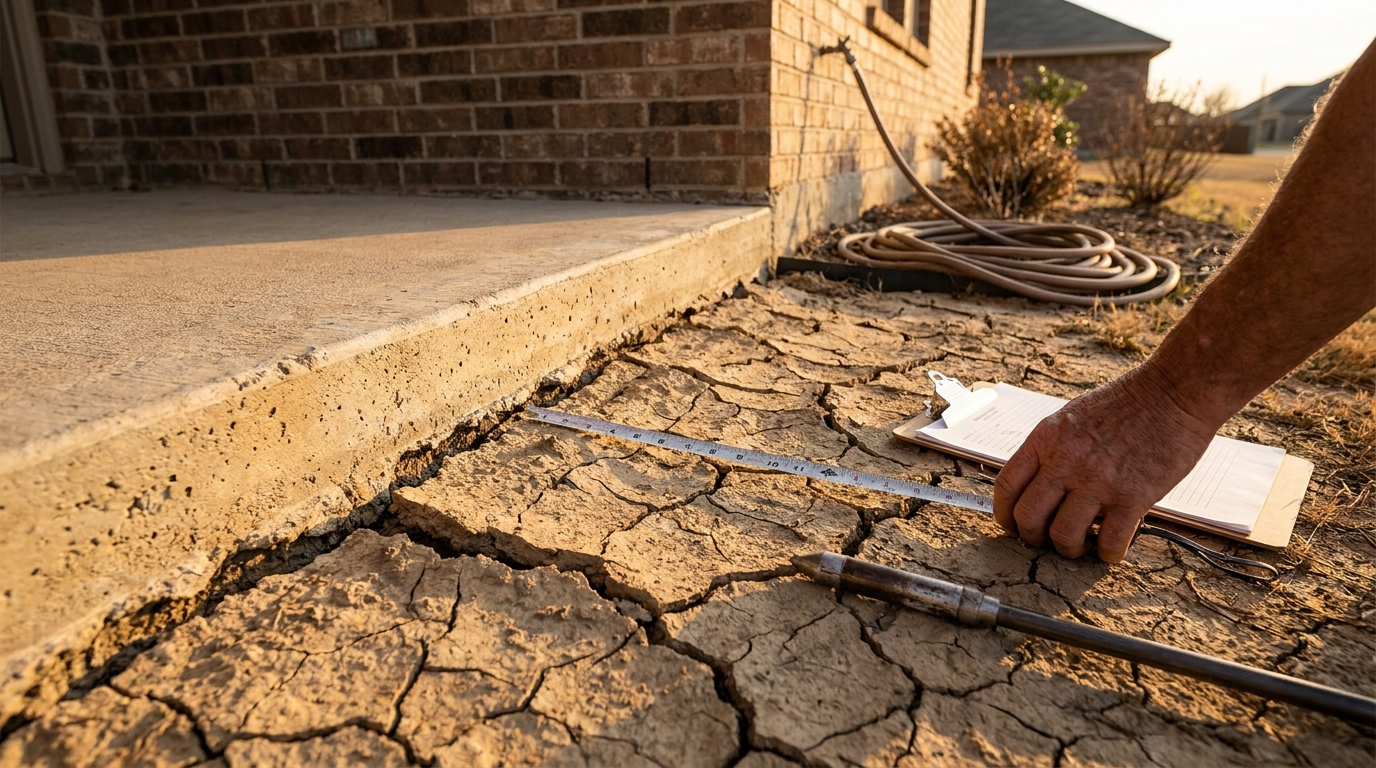
If you live anywhere between San Antonio and Tulsa, you have probably noticed the new cracks above your interior doors, the trim pulling away from the ceiling, or a back door that suddenly will not latch. You are not imagining it, and you are not alone. Summer 2026 is shaping up to be one of the hardest years on Southern Plains foundations in recent memory, and the repair quotes hitting kitchen tables are landing anywhere from $8,000 to $35,000.
Here is what is actually happening under your slab, what fair pricing looks like this year, and how to keep from getting steamrolled by a high-pressure salesperson before you even understand the problem.
Why summer 2026 is different
The setup for this year started in winter. According to the NIDIS Southern Plains drought status update from April 2, 2026, February 2026 was the warmest February on record for Oklahoma and the second-warmest for Texas. Soil moisture across most of Texas, Oklahoma, and western Kansas fell below the 10th percentile heading into spring, meaning the ground was already drier than 90% of years on record before summer even began.
The U.S. Drought Monitor and Drought.gov have continued to show stubborn deficits along the I-35 corridor from Austin north into Oklahoma City and Tulsa, with only partial relief in parts of east and south Texas. Industry sources like Olshan Foundation Repair are reporting calendars booked into the fall.
The science, in plain English
The villain here has a name: smectite. The red and gray clays that dominate north Texas and central Oklahoma are Vertisols, soils packed with smectite minerals that swell when wet and shrink when dry. According to Dura Pier, these soils can change volume by 10 to 30% or more between their saturated and shrunken states. DalTx Real Estate describes the same mechanics for Oklahoma's red clays.
In a normal slow drought, the soil dries gradually and the slab settles in a relatively even way. A flash drought after a warm, dry winter is different. The clay pulls away from the perimeter of the slab quickly, leaving sections of your foundation unsupported. That is when the diagonal cracks above door frames, the brick step-cracks outside, and the sticking doors all show up within a few weeks of each other.
Early warning signs to document now
Before you call anyone, walk the house with your phone and take dated photos of the following:
-
Diagonal cracks running up and out from the top corners of doors and windows
-
Interior doors that stick, drag, or no longer latch
-
Gaps appearing between crown molding and ceiling, or baseboard and floor
-
Step-cracks in exterior brick following the mortar joints
-
Floors that feel sloped or bouncy in spots that used to feel solid
A single hairline crack above one doorway is not a five-figure problem. A pattern of these signs on multiple walls is the kind of thing an engineer should look at.
AI workflows for revenue teams
Placeholder house ad for Conservus.ai. Swap with final creative when brand assets are ready.
Partner with Conservus.aiWhat fair 2026 pier pricing actually looks like
Foundation repair pricing has gone up alongside everything else, but there is still a reasonable range. Here is the current 2026 picture in Texas and the broader South-Central market:
-
Per-pier installed cost: roughly $1,000 to $3,000, according to House Escort's 2026 Texas guide and Lift Texas.
-
Steel piers: commonly around $2,000 each, sometimes more for deeper installations. Steel is generally preferred for the deeper, more aggressive clays in north Texas, per Stratum Foundation Repair's 2026 DFW pricing guide.
-
Segmented concrete piers: commonly around $1,000 each, a lower upfront cost but with different depth limitations.
-
Small jobs (around 6 piers): roughly $6,000 to $15,000.
-
Full-perimeter or larger interior jobs: commonly $15,000 to $35,000 depending on linear footage and pier count.
-
National 2026 average: around $11,950, per Angi's 2026 cost data.
If a quote falls outside these ranges in either direction, ask why in writing.
The $300-a-month soaker hose strategy
The cheapest foundation repair is the one you do not need. Tilson Homes, citing Texas A&M AgriLife guidance, treats consistent foundation watering as the most effective drought protection a homeowner can do. HD Foundations and Foundation Check agree on the basic playbook:
-
Place soaker hoses about 12 to 18 inches off the slab, not against it.
-
Bury the hose lightly or cover with mulch. An exposed hose can lose roughly half its output to evaporation in summer heat.
-
Run it on a timer, typically 15 to 45 minutes per zone daily, adjusting for temperature and rainfall.
-
Aim for consistent moisture, not flooding. Over-watering can cause its own problem called edge lift, where the soil at the perimeter swells more than the soil under the center.
Done right, the water bill increase is a fraction of what underpinning costs. Done wrong (a hose flat against the slab, on for hours), it can create new problems.
The engineer's report you should pay for first
This is the single most important step homeowners skip, and it is the one that prevents most regret. Before signing anything with a repair company, hire an independent structural engineer who does not also sell repairs. According to Thomas Engineering Consultants and HD Foundations, current DFW and Houston pricing runs roughly:
-
$400 to $900 for a basic inspection and report
-
$900 to $1,800 for a more in-depth evaluation with drawings and a pier-count opinion
Granite Foundation Repair notes that the report should be yours to keep and share with multiple bidders. The contractor's in-house engineer has an obvious conflict of interest. An independent report typically includes an elevation or floor-level survey, photographs, a written assessment of cause, and a recommendation for whether repair is needed at all (sometimes the answer is just moisture management).
AI workflows for revenue teams
Placeholder house ad for Conservus.ai. Swap with final creative when brand assets are ready.
Partner with Conservus.aiThe high-pressure scripts to walk away from
Drought years are open season for bad actors. Church Foundation Repair and Foundation Repair Consultant both point out that Texas has no statewide licensing for foundation repair contractors, which is part of why the same scams keep working. Rapid Foundation Repair catalogs the most common pressure scripts. Here is what should send you to the front door:
-
"Sign today for the discount." A real $15,000 repair is still a real $15,000 repair next week.
-
"Free elevation survey" with no original benchmark. As engineer Richard Rash explains in his breakdown of the elevation scam, a floor-level reading on its own cannot prove a slab has moved. Most slabs are not perfectly level when poured.
-
Door-knockers offering free inspections after a storm or during a drought stretch.
-
Fear-based urgency like "your house could fall in." Foundation movement is slow. You have time to think.
-
Refusal to work from your independent engineer's pier plan. A reputable company will bid the plan you bring them.
Your practical checklist before any contract
-
Document cracks and sticking doors with dated photos.
-
Start consistent soaker-hose watering 12 to 18 inches off the slab.
-
Hire an independent structural engineer for a $400 to $1,800 report you own.
-
Get 2 to 3 itemized bids that reference the engineer's pier plan by location and count.
-
Confirm warranties are transferable to future owners and backed by the company, not a third party that may disappear.
-
Verify the contractor carries general liability and workers' comp insurance.
-
Get everything in writing, including total price, pier locations, depth specs, cleanup, and timeline.
The local angle: where backlogs are worst
If you are calling around DFW, Austin, San Antonio, Oklahoma City, or Tulsa right now, expect long waits for engineers and reputable repair crews alike. That is good news in one sense: the busiest, most established companies do not need to pressure you into same-day signatures. If someone is available tomorrow and demanding a deposit tonight, that is a data point on its own.
The Southern Plains will eventually get rain again, and the clay will swell back. The houses that come through this summer in the best shape are the ones whose owners watered consistently, documented changes, and refused to sign anything before an independent engineer told them what was actually needed.
AI workflows for revenue teams
Placeholder house ad for Conservus.ai. Swap with final creative when brand assets are ready.
Partner with Conservus.aiRelated reading
Sources
-
NIDIS / Drought.gov: Drought Status Update for the Southern Plains, April 2, 2026
-
Olshan Foundation Repair: Worsening Drought Conditions in Dallas and Oklahoma
-
DalTx Real Estate: How Clay Soil Damages Foundations in Oklahoma and Texas
-
Dura Pier: Why Texas Clay Soil Causes So Many Foundation Problems
-
Thomas Engineering Consultants: Structural Engineer Cost in Texas
-
Granite Foundation Repair: Importance of a Structural Engineer Report
-
Tilson Homes: Watering Your Foundation During Dry Conditions
-
HD Foundations: How To Use A Soaker Hose For Foundation Watering
-
Rapid Foundation Repair: Protect Your Home From High Pressure Sales Tactics
-
Richard Rash on LinkedIn: Unmasking the Foundation Elevation Scam
-
Foundation Repair Consultant: Scams Within the Foundation Repair Industry
ABOUT THIS SERVICE: CallTheLocal.com is a directory and lead generation service, not a contractor or service provider. Submitting this form does not obligate you to hire anyone or purchase any service. Your information will be shared with licensed, insured home service professionals in your area who may provide quotes for your project. CallTheLocal.com does not guarantee the quality, timeliness, or outcome of any work performed by service providers you connect with through this service. Always verify licensing, insurance, and references before hiring. Get everything in writing before work begins.