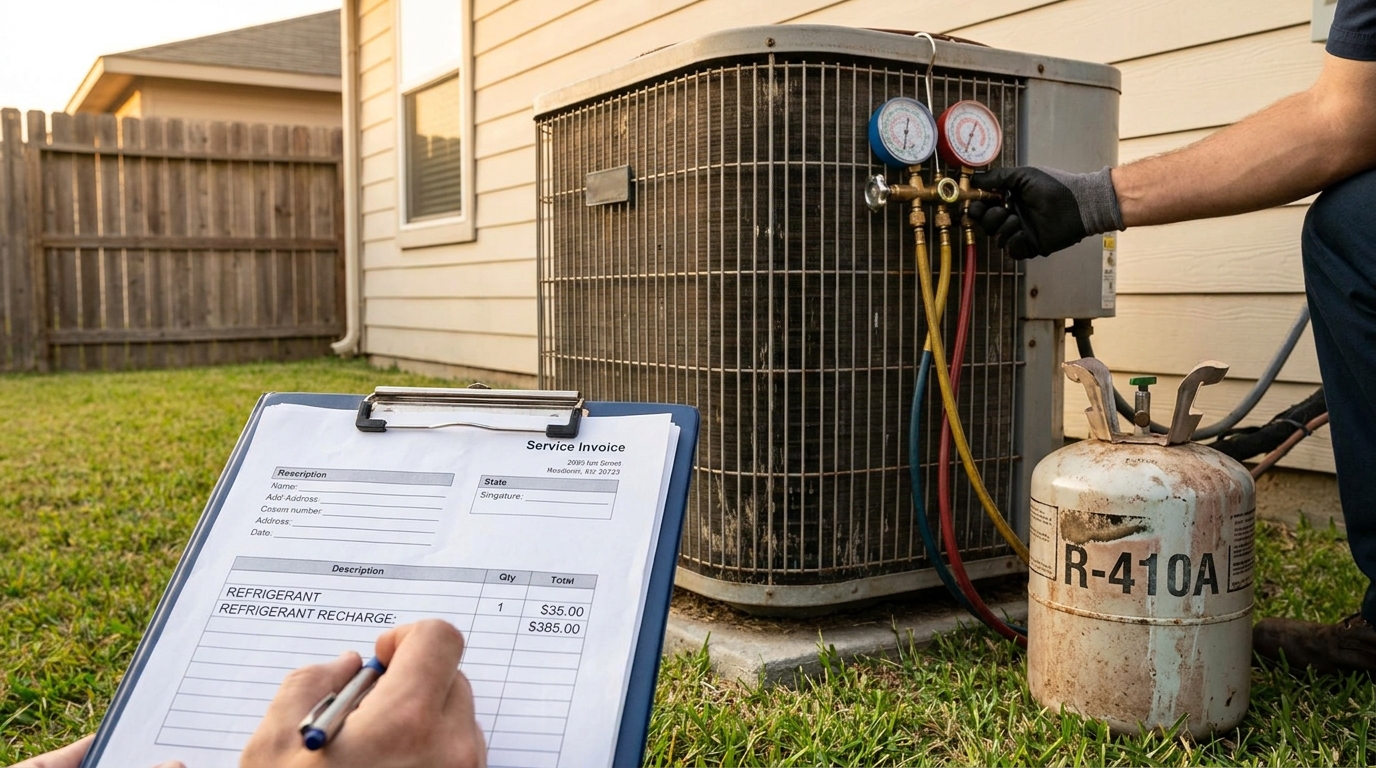
Your air conditioner still cools the house just fine. Then it starts running warm, a technician says it is low on refrigerant, and the recharge quote is higher than you remember. You are not imagining it, and you did not do anything wrong. A federal rule has changed what gets built and, over time, what it costs to keep an older system topped off.
Here is the good news up front: if you own a working R-410A system, you do not have to replace it because of any 2026 rule. You can legally run it and service it for years. What is changing is the price of the refrigerant that goes back in, and understanding why helps you avoid overpaying and spot a bad sales pitch.
What actually changed, and when
The shift traces back to the AIM Act of 2020, which directs the EPA to phase down hydrofluorocarbons (the class of refrigerants that includes R-410A) by 85 percent by 2036. To get there, the EPA's Technology Transitions rule set a cap on how much a new residential AC or heat pump refrigerant can contribute to warming, measured as global warming potential (GWP). The cap landed around 700. R-410A has a GWP of 2,088, so it no longer qualifies for new equipment.
The milestone that matters: manufacture and import of new R-410A residential split systems ended on January 1, 2025. Since the 2025 model year, new systems have shipped with milder A2L refrigerants instead. If you bought a system before 2025, you almost certainly have R-410A, and that is completely normal.
A lot of homeowners heard about a "2026 ban" and assumed their equipment was about to become illegal. The 2026 news actually went the other direction. An EPA final rule published in May 2026, effective July 27, 2026, loosened the installation cutoff. Instead of forcing contractors to stop installing pre-2025 R-410A units on January 1, 2026, the rule now lets them keep installing that existing inventory until it runs out (NAHB). One exception worth flagging: New York State codified the original January 1, 2026 deadline, so no new R-410A systems can be installed there.
The refrigerants replacing R-410A in new equipment are R-454B (GWP 466), sold under names like Carrier's Puron Advance and Honeywell's Solstice 454B, and R-32 (GWP 675), which is common in mini-splits. Both are classified A2L, meaning mildly flammable, so new systems include leak-detection sensors and require A2L-rated service practices (Grasshopper).
Why you cannot just switch refrigerants in your old unit
A common question is whether a technician can simply drain the R-410A and pour in the new stuff. The answer is no, and the reason is not what most people assume.
It is not really about pressure. R-454B actually runs within about 5 percent of R-410A's operating pressures, and both use the same type of oil (AC Direct). The real blocker is the jump from the A1 safety class (R-410A) to A2L (mildly flammable). That change requires equipment your old unit does not have: compressors and sealed electrical components rated for A2L, leak-mitigation sensors, and different fittings. R-454B also behaves a little differently as it changes state, which affects how a system is charged. Put simply, converting an R-410A unit to A2L is not a refill. It effectively means a new system.
What a recharge really costs in 2026
This is where the sticker shock lives. As production of R-410A steps down under the phase-down schedule, the refrigerant itself gets scarcer and pricier. Here is where verified 2026 pricing lands:
-
Refrigerant by the pound: roughly $40 to $75 per pound at the jug or wholesale level, and about $50 to $90 per pound installed. In tight or emergency-repair markets, installed prices can push toward the top of that range (HomeGuide, Angi).
-
A typical recharge: a common residential refill of 2 to 4 pounds usually totals about $100 to $400. Larger systems or full service calls can run higher (HomeGuide).
Two things drive your quote up. First, location and timing: an August emergency call in a supply-tight market costs more than a scheduled spring tune-up. Second, the amount of refrigerant your system holds and how much has leaked out. A quick top-off is cheaper than refilling a system that has run nearly empty.
The trend line matters for budgeting. R-410A production is scheduled to fall to roughly 15 percent of current output by around 2036 (NAHB). So even though today's prices are more reasonable than some scary headlines suggest, the direction is up. Plan for refills to get pricier over the next several years, not cheaper.
AI workflows for revenue teams
Placeholder house ad for Conservus.ai. Swap with final creative when brand assets are ready.
Partner with Conservus.aiRepair or replace: a simple framework
A single recharge does not mean your system is failing. Refrigerant does not get "used up" in a healthy sealed system. If you need more, you have a leak somewhere. The decision comes down to how bad that leak is and how old the unit is.
Lean toward a repair or recharge when:
-
The system is under about 10 to 12 years old and otherwise running well.
-
This is the first time it has needed refrigerant, or the leak is small and fixable at a joint or fitting.
-
A leak fix plus a $100 to $400 recharge gets you back to normal.
Start pricing a replacement when:
-
The system is in its mid-teens or older and losing efficiency.
-
You have paid for repeated recharges over a couple of seasons.
-
The leak is in the evaporator coil, which is expensive to replace and often a sign the rest of the system is aging out.
A recurring leak is the number that tilts the math. Paying $100 to $400 once is smart. Paying it every summer while a leaky coil quietly drains the system is money you could put toward a new unit you will own for the next 15 years.
The A2L price premium (and why it should shrink)
When you do replace, expect to pay a premium for the new A2L equipment. New R-454B and R-32 systems currently run about 15 to 30 percent more than comparable R-410A units. As a rough example, a 3-ton R-454B system runs about $5,000 to $7,000 installed, versus roughly $4,000 to $5,500 for a comparable older R-410A system (HVAC Services Pro).
The premium exists because the new systems include the safety sensors and redesigned A2L-rated components mentioned earlier. The encouraging part: as manufacturing scales up, analysts expect that gap to narrow to about 5 to 15 percent by 2028. If your current system is healthy, letting the market mature a bit works in your favor.
Red flags to watch for
The refrigerant change has given some sales pitches a convenient hook. Watch for these:
-
"Your refrigerant is banned, you have to replace the whole system." Not true. R-410A is legal to buy and service. A working system does not need to go anywhere.
-
A full replacement quote before anyone diagnoses the leak. Ask where the refrigerant is going. A proper diagnosis finds the leak location before recommending thousands of dollars in equipment.
-
Pressure and urgency. Take the time to get a second opinion, especially on a coil-replacement or full-changeout recommendation.
Protect yourself the same way you would with any home service: get a written diagnosis that names the leak location and the amount of refrigerant needed, get the recharge and any repair itemized, and get a written quote before work starts. If replacement is on the table, get at least two.
AI workflows for revenue teams
Placeholder house ad for Conservus.ai. Swap with final creative when brand assets are ready.
Partner with Conservus.aiBottom line
If your R-410A system is running well, keep it. The 2026 rules did not outlaw your equipment, and in most of the country they actually gave installers more flexibility, not less. Budget for the fact that refills will keep getting pricier as production winds down, get an honest leak diagnosis before spending big, and replace on your own timeline when the repairs stop making sense, not because someone told you the clock ran out.
Related reading
-
[The 30% Solar Tax Credit Is Gone for 2026 Buyers: Why a Cash or Loan Install Now Costs Thousands More](/article/solar-tax-credit-gone-2026-cash-loan-cost-more)
-
[AI Data Centers Are Now on Your Power Bill: Why 2026 Electricity Rates Jumped and the Home Upgrades That Blunt the Hit](/article/ai-data-centers-power-bill-2026-electricity-rates-home-upgrades)
Sources
-
EPA Finalizes Refrigerant Rule Update to Allow Older HVAC Unit Installation - NAHB
-
How Much Does R-410A Refrigerant Cost per Pound? (2026) - HomeGuide
-
How Much Does a Home AC Recharge or Freon Refill Cost? (2026) - HomeGuide
-
How Much Does R-410A Refrigerant Cost per Pound? [2026 Data] - Angi
-
R-454B vs R-410A Pressures: Side-by-Side Pressure Chart Comparison - AC Direct
-
EPA Refrigerant Changes R-410A vs R-454B For Homeowners - HVAC Services Pro
Note: This article contains AI-assisted content and has been reviewed by our editorial team.
ABOUT THIS SERVICE: CallTheLocal.com is a directory and lead generation service, not a contractor or service provider. Submitting this form does not obligate you to hire anyone or purchase any service. Your information will be shared with licensed, insured home service professionals in your area who may provide quotes for your project. CallTheLocal.com does not guarantee the quality, timeliness, or outcome of any work performed by service providers you connect with through this service. Always verify licensing, insurance, and references before hiring. Get everything in writing before work begins.