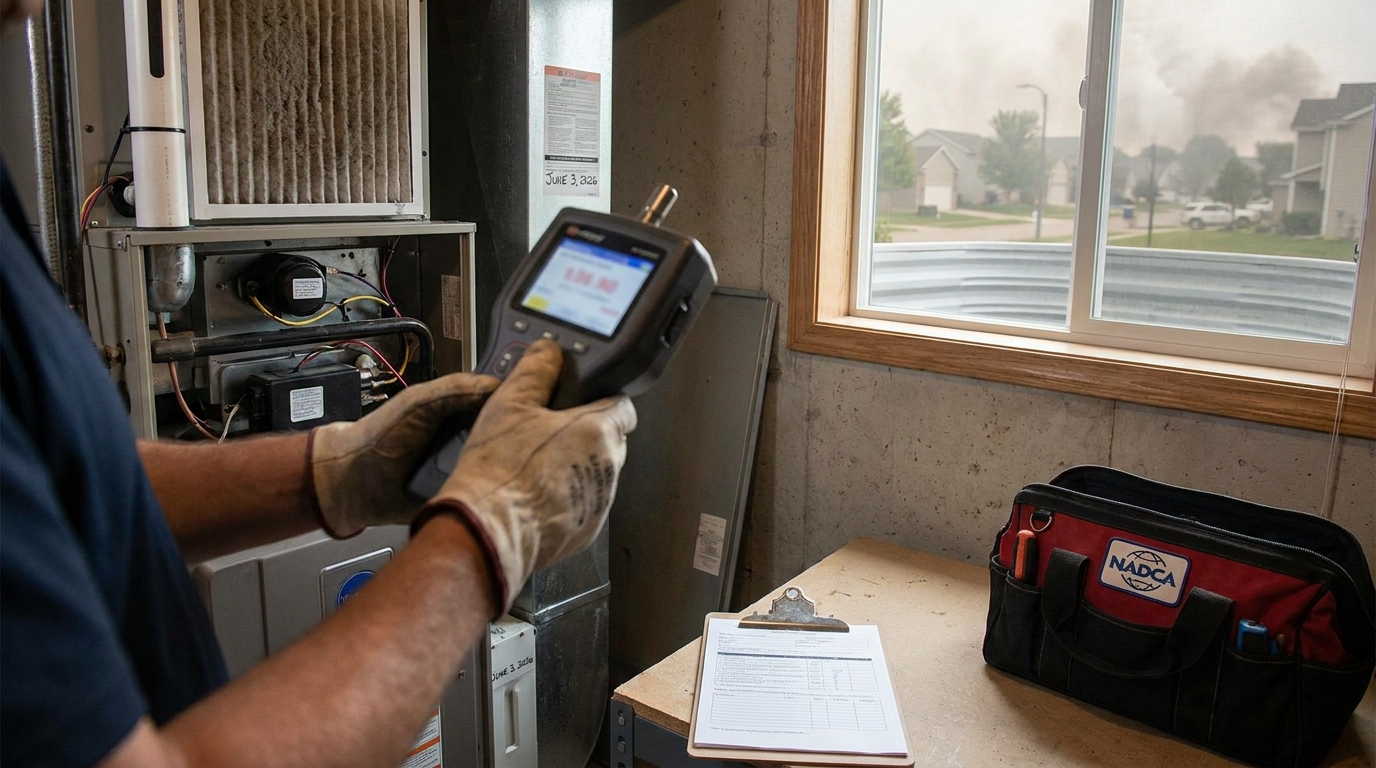
The first U.S. air quality alerts of 2026 went out the morning of June 3, and the smoke is already settling into Midwestern homes. Forecasters across Minneapolis, Madison, Chicago, and the Cincinnati corridor are watching Canadian wildfire plumes drift south from Ontario fires near Lake Nipigon and east of Thunder Bay, both currently rated out of control. For homeowners who lived through the 2023 smoke summers, the playbook is familiar. The bill, though, is bigger this year.
Restoration firms across the Midwest are already quoting whole-home smoke cleanouts in the $4,000 to $20,000 range when fine particulate from wildfire smoke gets pulled deep into HVAC systems and porous finishes. The good news: most homeowners do not need the high end of that estimate. Here is what the work actually involves, what it costs at each level, and what your insurance is likely to cover.
Why 2026 Is Shaping Up Worse Than the Quiet Start Suggested
Canada's 2026 wildfire season opened slowly, but federal officials are warning the lull will not last. Public Safety Canada's mid-May outlook projects fire danger building through July, with Ontario and Quebec elevated in June and the southern Prairies turning hot in July. The Canadian Wildland Fire Information System was tracking roughly 104 active fires nationally by mid-May, concentrated in Alberta, British Columbia, and Saskatchewan, with additional activity in Manitoba and Ontario documented in the season-to-date timeline.
The first 2026 Midwest air quality alert hit June 3, with Wausau Pilot & Review reporting that Ontario fires were the looming threat behind the warning. NBC News and CBS News have both flagged the Great Lakes, Midwest, and High Plains as the most exposed regions in the early going.
How Smoke Gets Into Your HVAC in the First Place
Wildfire smoke is mostly PM2.5, particles smaller than 2.5 microns, plus a stew of odor-bearing volatile compounds. When outdoor air is bad, smoke gets into your house three main ways: open windows, fresh-air dampers on newer high-efficiency HVAC systems, and leaks on the return side of your ductwork. Once inside, those particles settle on evaporator coil fins, the inside walls of flex duct, and the blower wheel. The volatiles soak into anything porous: drywall, carpet pad, upholstery, insulation.
That is why a smoke event you barely noticed at the time can produce a burnt smell every time the AC kicks on weeks later. The residue is sitting on the coil, and warm humid air is pulling the odor back out.
Tier 1: Filter Upgrade Plus Standard Duct Cleaning ($300 to $1,500)
For short exposures with no visible soot and no lingering odor when the system runs, the fix is usually a filter swap plus a standards-based duct cleaning.
The EPA's wildfire indoor air guidance recommends upgrading residential HVAC filters to MERV 13 or higher during smoke events. A MERV 13 captures roughly 95% of smoke-sized particles passing through the unit, but heavy smoke loading can clog one in 30 to 60 days. Check yours monthly during smoke season and swap it when it visibly darkens.
For the ductwork itself, baseline cleaning runs $275 to $800 nationally per 2026 Angi data, with an average around $390. Wildfire-context jobs tend to quote a little higher, $300 to $1,000, because the contractor is typically also wiping down register boots and the return drop. Insist the company follows the ACR Standard from NADCA, which requires mechanical agitation paired with continuous negative-pressure HEPA capture, not just a shop vac at the register.
AI workflows for revenue teams
Placeholder house ad for Conservus.ai. Swap with final creative when brand assets are ready.
Partner with Conservus.aiTier 2: Coil Decontamination and Blower Service ($2,500 to $8,000)
Move up to Tier 2 when any of these are true:
-
A persistent burnt or campfire smell every time the AC or furnace runs
-
Visible residue or discoloration on the evaporator coil fins
-
A noticeable drop in cooling efficiency or airflow after a smoke event
At this level, the technician is pulling the evaporator coil, cleaning the fins with a non-acid coil cleaner, servicing the blower wheel and motor housing, sanitizing the plenum, and applying an HVAC-rated deodorizer. The NADCA 2021 General Specification is explicit that a proper job covers all coils, fins, dampers, and blower components, not just the supply trunk. Restoration firms like ATI Restoration describe the same scope for smoke-loaded systems.
Expect $2,500 to $8,000 depending on system size, accessibility, and whether the blower has to come out. A variable-speed system in a tight attic costs more than a single-stage unit in a walk-in basement.
Tier 3: Whole-Home Smoke Remediation ($4,000 to $20,000)
Reserve Tier 3 for homes that took prolonged heavy exposure, often with windows open during a multi-day alert, or homes with a lot of porous finishes (carpet, drapery, unfinished basements, cedar paneling) that have soaked up odor.
A full job per Angi's 2026 smoke remediation cost data can include:
-
The full HVAC decontamination described in Tier 2
-
Contents cleaning (soft goods, upholstery, hard surfaces)
-
Sealing or encapsulating affected drywall and framing
-
Ozone or hydroxyl deodorization in sealed areas
-
Repainting, sometimes with an odor-blocking primer
Total invoices in this band routinely run $4,000 to $20,000, with the high end reserved for larger homes or jobs where attic and crawlspace insulation has to be replaced. Modern PurAir and similar trade contractors describe comparable scopes for smoke-loaded duct systems.
What Your Homeowners Insurance Will Probably Cover
The headline most homeowners get wrong: standard HO-3 homeowners policies generally cover smoke and soot damage even when the fire is off-property, like a neighbor's house or a wildfire hundreds of miles away. According to ValuePenguin's coverage breakdown, the policy typically applies whether or not flames ever reached your home.
Where it gets complicated:
-
Wildfire-prone regions are increasingly carrying separate wildfire deductibles, reduced limits, or specific exclusion endorsements. Read your declarations page before assuming a flat deductible applies.
-
Odor-only claims get scrutinized harder than visible-soot claims. Adjusters often want air quality readings, particulate testing, or a professional smoke assessment to support the file.
-
FAIR Plans are the state-run fallback in high-risk zones where private carriers have non-renewed coverage. The Washington State Office of the Insurance Commissioner has a clean plain-language explainer of how these work.
-
No-flames smoke claims are valid, including remediation costs and Additional Living Expenses if you had to evacuate. The policyholder attorneys at Merlin Law Group regularly handle these claims, and their guidance is to document promptly and not sign an Assignment of Benefits to a contractor without legal review.
Documentation checklist if you plan to file:
-
Date-stamped photos of any visible residue on filters, registers, and coils
-
Local Air Quality Index readings during the exposure window
-
A written scope from a NADCA-certified or IICRC-credentialed firm
-
Before and after particulate sampling if the contractor offers it
-
Receipts for filters, portable HEPA units, and any hotel nights during heavy alerts
AI workflows for revenue teams
Placeholder house ad for Conservus.ai. Swap with final creative when brand assets are ready.
Partner with Conservus.aiHow to Vet the Contractor Who Knocks on Your Door
Smoke events bring out storm chasers. A few quick filters:
-
Ask for NADCA membership and an ACR Standard reference in the written scope. If the company has never heard of either, move on.
-
For Tier 2 or Tier 3 work, ask for an IICRC Fire and Smoke Restoration Technician (FSRT) credential.
-
Get the scope in writing before any work starts, including the equipment that will be used (HEPA negative-air machine, agitation tools, deodorization method).
-
Decline pressure to sign an Assignment of Benefits on the first visit. Insurance attorneys consistently flag AOBs signed in driveways as a top source of later disputes.
-
Verify a state contractor license and a current certificate of insurance.
Before the Next Smoke Wave: Cheap Prevention That Pays
The EPA's wildfire smoke preparedness guidance lays out a short, cheap checklist that prevents most of the damage above:
-
Install a MERV 13 filter now, before the next alert. Buy two so you have a spare.
-
Locate your fresh-air damper or economizer on newer systems and learn how to close it during alerts.
-
Set the thermostat fan to recirculate, not the outdoor-air or auto-economizer setting.
-
Add a portable HEPA air cleaner in the primary bedroom. A unit rated for the room's square footage costs $150 to $400.
-
Do a weatherstripping audit on doors and operable windows. A $30 roll of foam tape closes the easiest infiltration paths.
-
Keep windows closed during any AQI red or purple day, even if the temperature is comfortable.
The cost difference between an hour of weekend prep and a Tier 3 remediation bill is, conservatively, four figures. With Natural Resources Canada projecting elevated fire danger through July, that hour is worth booking on the calendar this week.
Find a Vetted Local Pro
Call The Local maintains directories of NADCA-listed duct cleaning firms and IICRC-credentialed smoke restoration contractors in affected Midwest metros. If you are seeing residue on filters or smelling smoke when your system runs, request quotes from at least three companies, ask each to reference the ACR Standard in the written scope, and avoid signing anything binding on the first visit.
AI workflows for revenue teams
Placeholder house ad for Conservus.ai. Swap with final creative when brand assets are ready.
Partner with Conservus.aiRelated reading
Sources
-
Public Safety Canada: 2026 wildfire season preparedness and outlook
-
Canadian Wildland Fire Information System: National Situation Report
-
Wausau Pilot & Review: June 3, 2026 Midwest air quality alert
-
NBC News: Canadian wildfire smoke triggers Midwest and Plains alerts
-
CBS News: Great Lakes, Midwest, High Plains air quality alerts
-
ValuePenguin: Homeowners insurance and wildfire smoke coverage
-
Merlin Law Group: Wildfire claims when your home did not burn
-
Washington State Office of the Insurance Commissioner: Wildfires and Insurance
Note: This article contains AI-assisted content and has been reviewed by our editorial team.
ABOUT THIS SERVICE: CallTheLocal.com is a directory and lead generation service, not a contractor or service provider. Submitting this form does not obligate you to hire anyone or purchase any service. Your information will be shared with licensed, insured home service professionals in your area who may provide quotes for your project. CallTheLocal.com does not guarantee the quality, timeliness, or outcome of any work performed by service providers you connect with through this service. Always verify licensing, insurance, and references before hiring. Get everything in writing before work begins.