
If you find a flat roof leak after heavy rain, stay away from sagging ceilings and wet light fixtures, catch the drips, and photograph everything with the time noted. Once the roof is dry, clear scuppers and drains, look for water still sitting 48 hours later, and check foam for blisters, cracks and exposed foam.
-
During the storm: keep people away from sagging ceilings and electrical hazards, catch water in containers, and take photos or video.
-
Once it's dry: clear debris from scuppers, drains and canales.
-
Two days later: check for ponding, meaning water that is still on the roof after 48 hours.
-
Surface check: look for blisters, pinholes, worn coating, exposed foam, cracks and damaged penetrations.
-
Call a pro if you find any of those problems or a ceiling stain.
Polo's rain: what's falling where
According to CBS News, Polo made landfall in Baja California Sur on Tuesday, Sept. 29, and was expected to move inland over southern Sonora. Flood watches covered 11 states, "including most of Arizona and New Mexico," and more than 14 million Americans faced flood risk. FOX Weather put the flood threat at Level 3 of 4, and its forecast center said the storm could drop up to 10 inches across the region. That is the regional maximum, not what Phoenix or Albuquerque should expect.
The local forecasts are lower, and they're different for each state:
-
Arizona: NWS Phoenix meteorologist Gabriel Lojero told FOX 10, "We can see anywhere from a half an inch to as much as two inches of rain in some areas." KJZZ reported that the flood watch covered most of the state through Tuesday evening. Lojero said the higher terrain in the north and southeast would likely get the most rain, and that skies should clear Wednesday. FOX 10 also reported that areas east of Phoenix have the highest flash-flood risk because hard, dry soil sends more water running off.
-
New Mexico: NWS Albuquerque issued a flood watch for most of the state through Wednesday morning, nm.news reported. Forecasters expect "1 to 3 inches in most areas, with 4 to 6 inches possible" in isolated spots that get repeated downpours. Drier weather moves in from west to east by Thursday and Friday.
Why flat roofs are the weak spot this week
New Mexico was already wet before Polo showed up. Through Sept. 25, Clovis had recorded 9 inches of rain, more than four times its typical 2-inch monthly average, and Taos had six times its normal September rainfall (nm.news). Any roof that took on water earlier this month now gets hit again.
Flat and parapet roofs don't shed water the way a pitched roof does. They depend on drains and scuppers to move it off, and the Asphalt Roofing Manufacturers Association (ARMA) notes that debris "can also lead to clogged drains." When a drain clogs, water pools.
This storm also isn't the last one to plan for. Lojero told KJZZ that strong El Niño conditions could bring above-normal precipitation to Arizona in the coming months. If Polo turns up a weak spot, fix it before winter.
What to do while it's still raining
Stay off the roof. A wet flat roof is slippery, and a thunderstorm is no time to be up there. Do your checking from inside and from the ground.
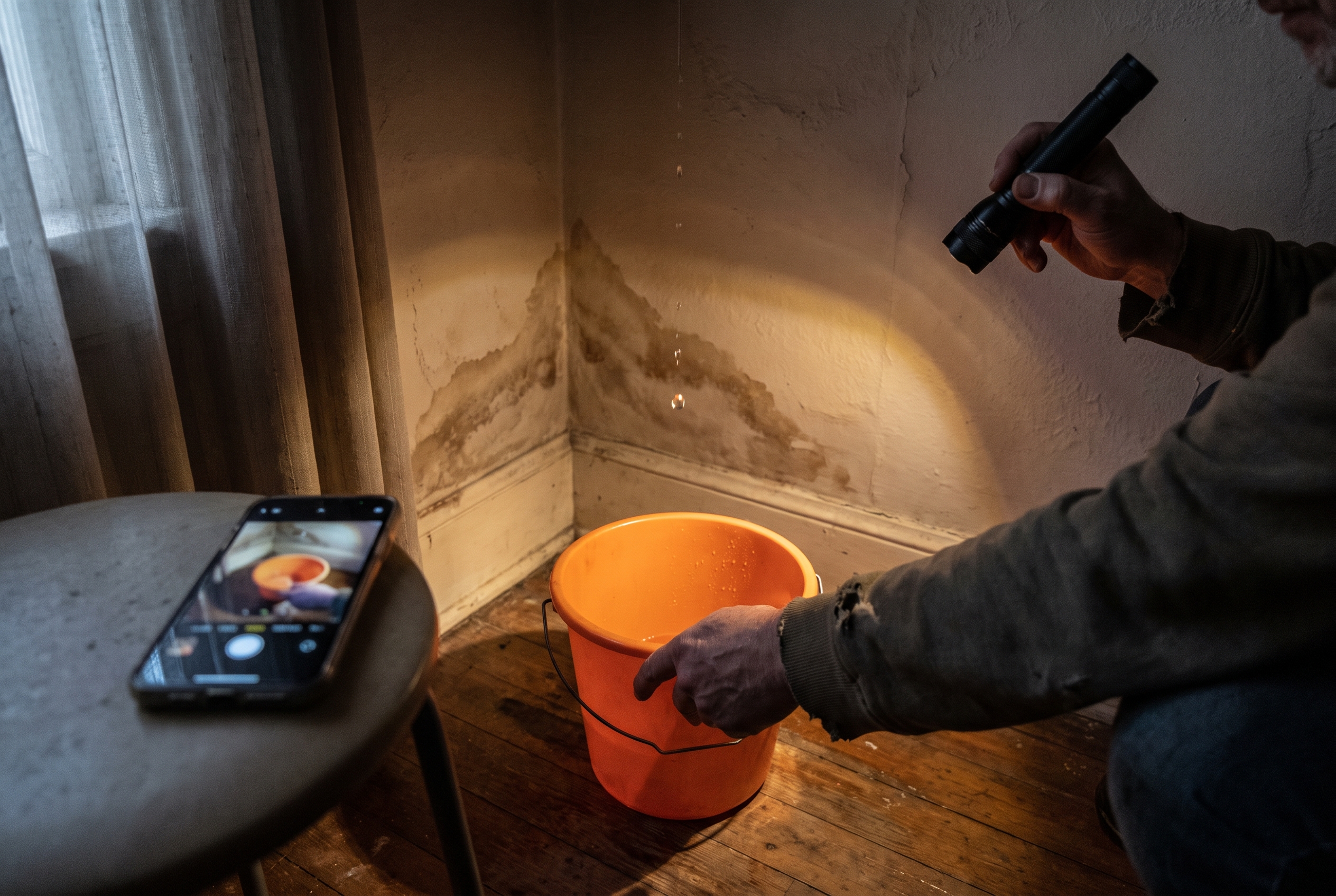
Farmers Insurance, citing the Insurance Information Institute, lists these steps when you find a leak:
-
Keep everyone away from sagging ceilings and anything electrical near the water.
-
Move furniture, electronics and other valuables out of the way.
-
Put buckets or other containers under the drips.
-
Take photos or video, and write down when you first noticed the leak.
-
Report it to your insurer promptly.
From the ground, see whether water is pouring out of each scupper or canale. If one is dry while the others are running, it's probably blocked.
Once it's dry: the post-storm roof check
Plan on Wednesday in the Phoenix area and Thursday or Friday in most of New Mexico. Wait until the surface is dry before you climb up, and if you aren't comfortable on a ladder, hire this part out.
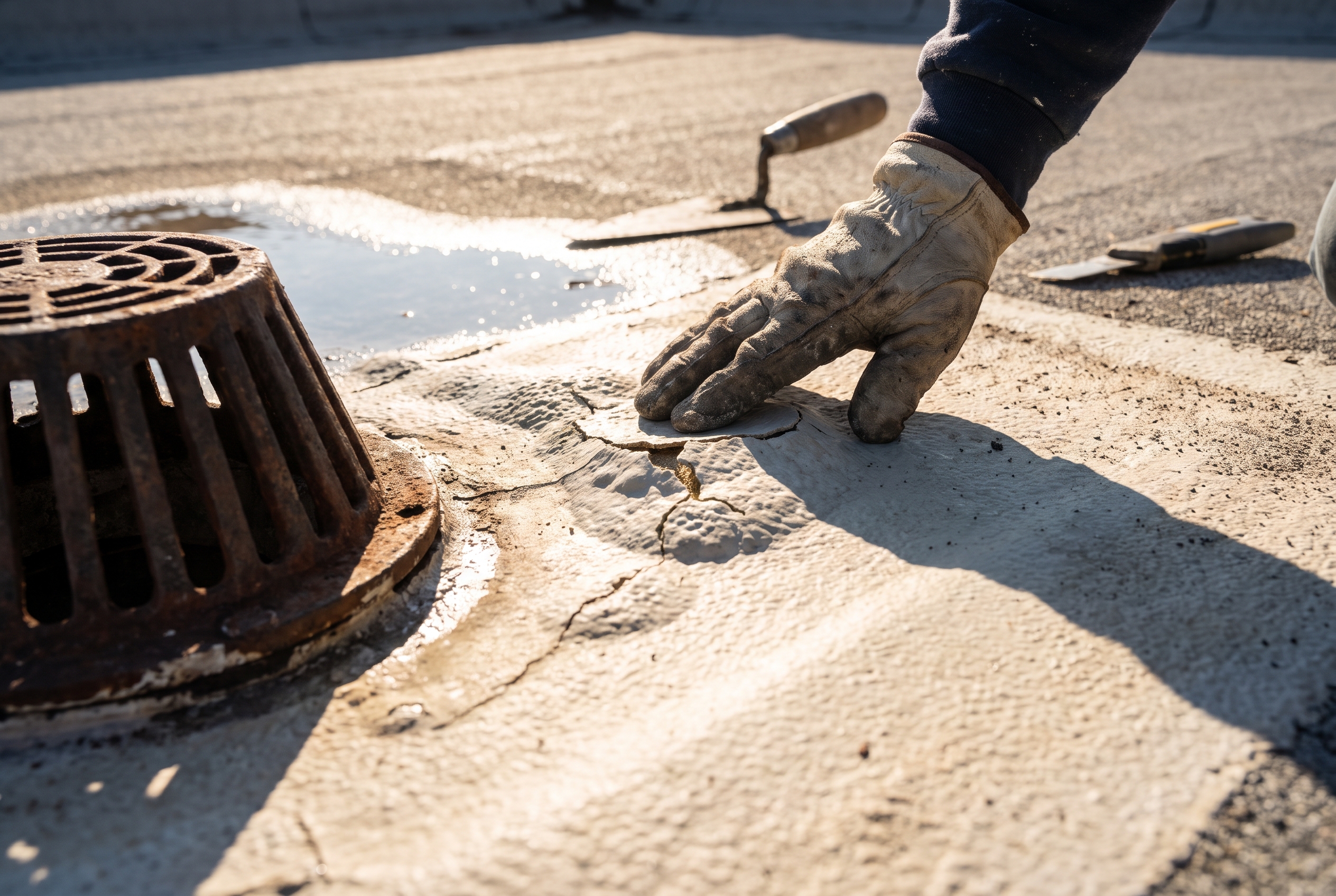
Clear drains, scuppers and canales
Pull out leaves, dirt, nests and anything else the storm blew in. This is the easiest DIY job on the list, and it's the one that heads off ponding.
Watch for ponding
ARMA defines ponding as "water which remains on a roof 48 hours or longer." Two days after the rain stops, go back up and note where water is still standing. ARMA says ponding can lead to structural deformation, algae and plant growth, and damage to the roof surface. The type of coating matters here too. The InterNACHI inspection narrative calls acrylic coatings a "poor choice where ponding or freezing temperatures are possible," and ACS Roofing in Albuquerque says silicone handles ponding better, though it costs more.
Inspect the foam and coating
InterNACHI says to "check for blisters, pinholes, erosion of the coatings or polyurethane foam, cracks, and moisture penetration," and notes that foam is "highly vulnerable to degradation from UV-caused oxidation." RENCO Roofing in Phoenix lists these signs that a foam roof needs repair before it can be recoated:
-
Exposed foam (worn-through coating, often yellow or brown)
-
Cracks or splits
-
Blisters
-
Ponding water
-
Damaged penetrations around vents, pipes and AC stands
-
Wet or deteriorated spots
RENCO also cautions that putting a new coat over bad foam may only put off the repair. The Spray Polyurethane Foam Alliance recommends inspecting foam roofs twice a year and after severe weather events. A storm like Polo counts. With regular care, the trade group says a foam roof can last 40 years or more.
If a ceiling stain shows up
Where the stain appears is usually not where the water got in. RENCO's Phoenix repair guide explains that on flat roofs, water can travel sideways through or under the roof system, so "the leak you see inside may be 10 or 20 feet away from the actual entry point." Tell your roofer that before they start patching directly above the stain.
In Albuquerque, check the parapets. Rocky Mountain Roofing Services says strong UV at 5,000 to 7,000 feet and daily temperature swings of 30 to 40 degrees make flashing pull away from parapet walls. "Once water slips behind the flashing layer, it completely bypasses your roof's waterproof shield." A stain near an exterior wall often points to this. The company also warns against temporary "bucket of tar" fixes.
Insurance note: Farmers says coverage is more likely for sudden damage such as wind, hail or a falling object. It is less likely for worn-out roofs, slow leaks, or damage made worse by delayed repairs and skipped maintenance. Report quickly and keep your photos.
What flat roof repairs cost in Phoenix and Albuquerque
The prices below come from local contractors' own websites, so treat them as ballpark figures and not guarantees. Each is credited to its source.
Patches and leak repairs
| Job | Price range | Source |
|---|---|---|
| Small repair (Phoenix) | $300 to $600 | Durafoam Roofing |
| Typical repair (Phoenix) | $600 to $1,500 | Durafoam Roofing |
| Foam puncture or bird peck (Phoenix) | $300 to $550 | Durafoam Roofing |
| Foam repair, multiple areas (Phoenix) | $650 to $1,400 | Durafoam Roofing |
| Flat roof pinpoint leak (Phoenix) | $450 to $1,100 | Durafoam Roofing |
| Flat roof patch (Phoenix) | $400 to $1,000 | Phoenix Roofing Hub |
| Storm damage repair (Phoenix) | $500 to $3,000 | Phoenix Roofing Hub |
| Foam roof repair (Phoenix) | $500 to $2,000+ | RENCO Roofing |
| Leak repair (Phoenix) | $400 to $4,000+ | RENCO Roofing |
| Puncture or blister patch (Albuquerque) | $250 to $750 | RMC Roofing |
| Single-point leak repair (Albuquerque) | $300 to $800 | RMC Roofing |
| Drain repair or unclogging (Albuquerque) | $300 to $900 | RMC Roofing |
The Albuquerque figures come from RMC Roofing's commercial price guide, so a residential quote could come in differently. The Phoenix figures come from Durafoam, Phoenix Roofing Hub and RENCO. Durafoam also notes that most roofers charge a $300 to $450 minimum to send a truck, so a very small fix may still cost that much.
Recoating
Recoat prices vary a lot from one contractor to the next:
-
Durafoam (Phoenix): $1 to $3 per square foot, plus $0.40 to $0.80 per square foot for silicone. A 2,000 sq ft home runs $2,000 to $4,000, including pressure cleaning, primer and two coats. Durafoam recommends recoating about every 5 years in the Valley and says waiting too long can double the cost.
-
RENCO (Phoenix): $3 to $5 per square foot when the foam is still in good shape. A brand-new foam roof runs $6 to $12 per square foot.
-
ACS Roofing (Albuquerque, elastomeric): $1.50 to $3 per square foot, or $2,250 to $4,500 for a 1,500 sq ft flat roof. ACS says professional coats last 10 to 15 years, while DIY coats often fail within 2 to 3 years.
What moves the quote
-
Coating type: silicone costs more than acrylic, but it holds up better where water ponds.
-
Foam condition: wet or damaged foam has to be repaired before a recoat, and if it's bad enough you could be looking at new-roof pricing.
-
Ponding areas: low spots may need extra material or silicone.
-
Drain and scupper work: clogged or damaged drains are billed separately.
-
Finding the leak: since water can travel 10 to 20 feet before it shows up, tracking down the entry point takes time.
Who to call, and how to check their license
After a storm, roofers get busy and door-knockers show up. Check the license before you sign anything.
-
Arizona: use the Arizona Registrar of Contractors (ROC) contractor search at roc.az.gov. You can search by name, license number or classification. According to this NearMeTips guide, you should confirm that the license is active, that the classification fits your job (residential vs. commercial), and that the business name matches the one on your contract.
-
New Mexico: the Construction Industries Division directs homeowners to its PSI license search at public.psiexams.com/search.jsp. You can also call the CID's Albuquerque office at (505) 222-9800.
Ask for proof of insurance and get the scope, price and coating type in writing before any work starts.
The decision: DIY or book a pro?
You can probably handle it yourself if: the roof drained within 48 hours, you found no stains inside, and all it needed was clearing debris out of the scuppers, drains and canales.
Book a foam or coating pro now if you see:
-
Exposed foam, blisters, cracks or pinholes
-
Water still standing 48 hours after the rain
-
Any ceiling stain, especially near an exterior wall
-
Damaged seals around vents, pipes or AC equipment
-
Flashing pulling away from a parapet
With a wetter-than-normal winter possible, a $300 to $1,000 repair this fall is much cheaper than a full new foam roof later.
Related reading
-
Which Foundation Cracks Mean You Should Call a Structural Engineer?
-
How to Find a Licensed Roofer on Kauai When the Whole Island Needs One
-
Roofers Have Open Calendars in the Quietest Season Since 1941
Sources
-
nm.news: Polo match: Hurricane leftovers square off with an already-soaked New Mexico
-
KJZZ: Rain expected across Arizona as Hurricane Polo moves inland
-
FOX 10 Phoenix: Flash flood risk rises in Arizona as heavy rain moves into the state
-
CBS News: Hurricane Polo approaches Mexico, threatens Southwest U.S. with rain, flooding
-
FOX Weather: Hurricane Polo lashes Mexico with life-threatening flooding
-
Spray Polyurethane Foam Alliance: SPF Roofing Installation and Maintenance
-
InterNACHI Inspection Narrative Library: Sprayed Polyurethane Foam
-
Durafoam Roofing: Foam Roof Recoating Cost in Phoenix (2026)
-
Phoenix Roofing Hub: How Much Does Roof Repair Cost in Phoenix AZ (2026 Guide)
-
Rocky Mountain Roofing Services: Albuquerque Parapet Wall Roof Leaks
-
NM Regulation and Licensing Department: Construction Industries
ABOUT THIS SERVICE: CallTheLocal.com is a directory and lead generation service, not a contractor or service provider. Submitting this form does not obligate you to hire anyone or purchase any service. Your information will be shared with licensed, insured home service professionals in your area who may provide quotes for your project. CallTheLocal.com does not guarantee the quality, timeliness, or outcome of any work performed by service providers you connect with through this service. Always verify licensing, insurance, and references before hiring. Get everything in writing before work begins.
Note: This article contains AI-assisted content and has been reviewed by our editorial team.