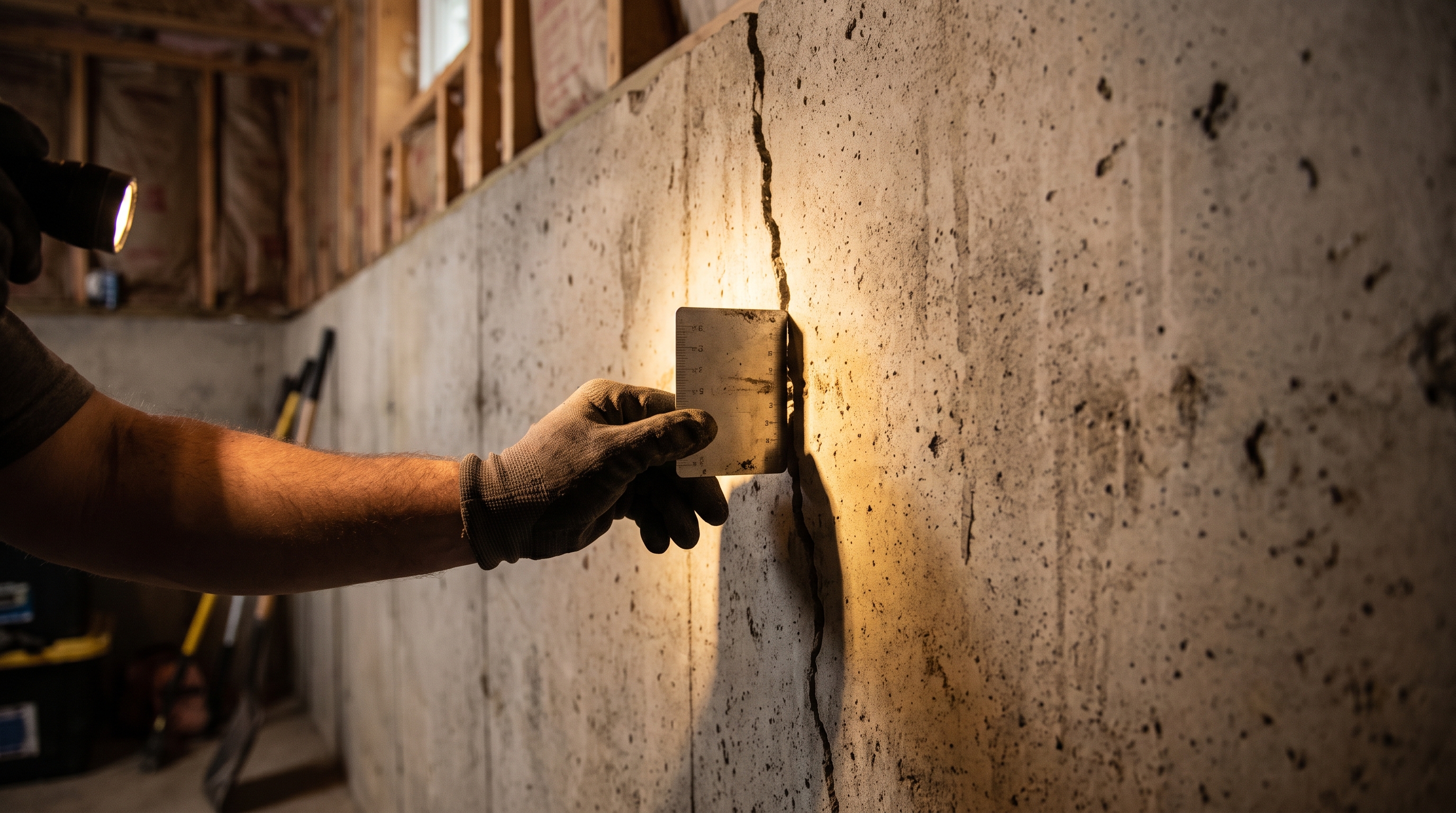
You're down in the basement or walking around the outside of the house and you spot it: a crack in the foundation. Now you have three options. Ignore it, call a foundation repair company, or pay a structural engineer. Anyone looking up foundation cracks when to worry really wants to know which of those three is right for this crack. The good news is that most foundation cracks are cosmetic, and the ones that need an engineer have fairly clear signs.
Below, we go through each crack pattern, show you how to monitor one, lay out what an engineer's inspection costs, and explain why a paid, independent diagnosis often beats a free one before you sign up for thousands of dollars in repairs.
When should you worry about a foundation crack?
Worry when a crack is wider than about 1/8 inch, runs horizontally, forms a stair-step pattern in block or brick, keeps getting wider, has one side pushed in or out, or lets water in. A thin crack that stays the same and stays dry can usually be watched and sealed.
Width is only part of the picture. Direction, movement and water tell you more. As ArchitectureCourses.org puts it, "A narrow crack that leaks every storm may be more urgent than a wider crack that has stayed dry and unchanged for years."
Are hairline foundation cracks normal?
Usually, yes. According to This Old House, "A web of hairline cracks or widely spaced vertical cracks less than 1/8 inch wide generally means the concrete shrank too much as it cured."
Concrete shrinks as it cures, and those small cracks are a normal side effect. Resolve Engineering agrees that "Hairline cracks that remain unchanged can often be monitored."
"Cosmetic" still doesn't mean you should ignore them. NDSU Extension agricultural engineer Ken Hellevang advises that "Cracks in the basement wall should be repaired to reduce the potential for water intrusion" (NDSU Extension). This Old House's foundation repair cost guide puts epoxy sealing of hairline cracks at $200 to $800, which is a small cost next to water damage.
How wide of a foundation crack is too wide?
This Old House uses two thresholds: cracks 1/8 inch or wider "deserve a closer look," and cracks wider than 1/4 inch "cause concern and likely indicate significant structural stress."
Here is a simple way to think about those numbers:
-
Under 1/8 inch, vertical, unchanged: most likely shrinkage. Monitor it and seal it.
-
1/8 inch to 1/4 inch: worth a closer look, especially if it is growing or letting in water.
-
Over 1/4 inch: treat it as a possible structural problem and have it evaluated.
Direction matters too. This Old House notes that "Vertical cracks run up and down the wall and are usually less severe than horizontal cracks."
What do stair-step cracks mean?
Stair-step cracks follow the mortar joints in block or brick, and they can point to foundation movement or settling. Resolve Engineering says they are "Frequently found in brick or block foundations" and "may indicate foundation movement."
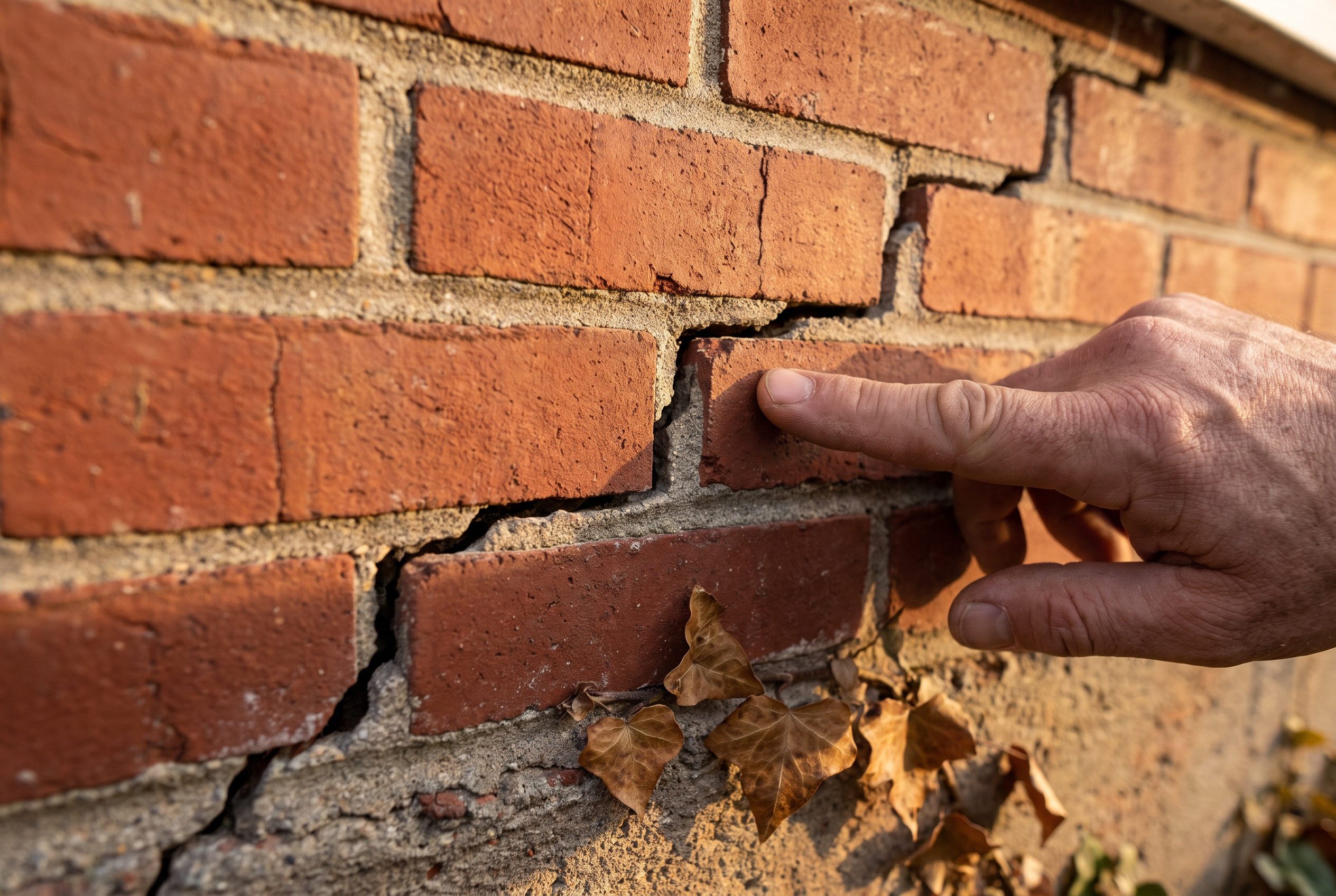
ArchitectureCourses.org's advice is blunt: "Do not treat it as cosmetic until movement is ruled out." This Old House goes further. When diagonal or stair-step cracks show up without horizontal cracks, it recommends calling in a structural engineer to find the cause and prescribe a professional fix, and notes these cracks can signal the need for major structural repairs.
Are horizontal foundation cracks serious?
Yes. Horizontal cracks are the pattern to take most seriously. This Old House explains that "Horizontal cracks indicate that the soil exerts enough pressure on the wall to make it bulge inward."
ArchitectureCourses.org adds that horizontal cracks "are usually more concerning than simple vertical hairline cracks. They can point to soil pressure, water pressure, frost pressure, or wall bending." If you see a horizontal crack, especially with a wall that looks bowed, don't wait. Book an engineer.
Other warning signs that call for a professional
The crack itself is only part of the story. Watch for these signs as well:
-
Cracks that keep widening. Resolve Engineering recommends an inspection "if cracks are growing, foundation walls appear to be moving, floors become uneven, or water is entering your basement."
-
Offset cracks. ArchitectureCourses.org says a crack with one side pushed in or out, or with a height difference across it, needs professional evaluation.
-
Leaks. A crack that lets water in after storms is more urgent, even if it is narrow.
-
Sticking doors and windows. NDSU's Hellevang notes that "Sticking doors or windows and cracks in walls may be indications that the building is shifting due to soil shrinkage." He explains that "As clay or other fine-particle soils dry, they shrink, creating gaps around the basement walls."
-
Uneven floors. Another sign on Resolve Engineering's list.
How to monitor a foundation crack
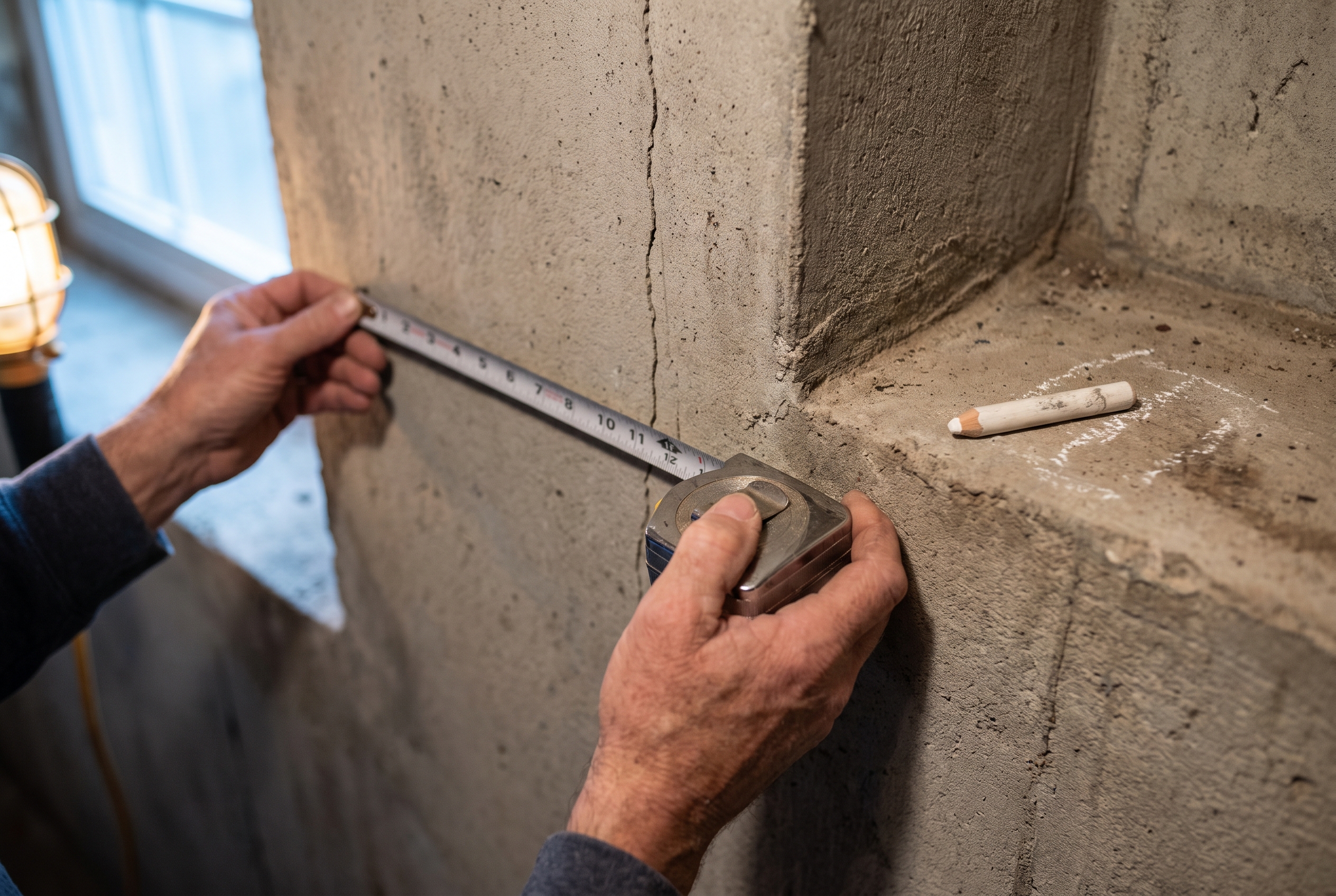
If your crack looks minor, keeping an eye on it is a legitimate choice, as long as you track it properly. ArchitectureCourses.org lays out a simple method:
-
Photograph the crack with something for scale in the frame.
-
Measure its width at the widest point.
-
Mark the date on the wall next to the crack, and note where you measured.
-
Check it after rain for dampness or leaks.
-
Inspect it each season. Soil moisture changes through the year.
-
Watch nearby finishes such as drywall, trim and flooring for new cracks or gaps.
-
Compare photos over time. If the crack is changing, stop monitoring and call a professional.
How much does a structural engineer cost for a foundation inspection?
This Old House's foundation inspection cost guide puts the average at $600, with a typical range of $300 to $1,000. That guide lists structural engineers at $100 to $500 per hour, with most inspections taking one to two hours.
Other sources give slightly different numbers:
-
This Old House's structural engineer inspection guide: most homeowners pay $300 to $3,000, typically about $600. It lists hourly rates of $100 to $200, or a set price.
-
Today's Homeowner: "For foundation inspections, you can expect between $400 and $1,500; this will change if there is severe damage." It lists $70 to $250 per hour, with "$150 as the going rate in most areas."
-
Carolina Foundation Solutions (a repair company): a national average of about $500, ranging from $300 to $1,500.
The takeaway: budget a few hundred dollars for a straightforward inspection, and more for complex problems.
What happens during the visit
According to This Old House's structural engineer guide, the visit takes about 90 minutes. The engineer looks at the exterior, interior walls, floors and ceilings, and crawl spaces or basements. Before they arrive, have your crack photos and dates ready. They are exactly the history an engineer wants to see.
What you get at the end matters. Lange Engineering, a Texas engineering firm, says an engineer delivers a written structural engineering report with recommended repairs. Carolina Foundation Solutions notes that an engineer can "specify or design the repairs that are needed," including where helical piers go and the loads they carry.
Should you use a free foundation inspection or pay an engineer?
A free inspection from a repair company is a sales visit. A paid engineer's inspection is an independent diagnosis. Both have their place, but you should know which one you're getting.
| Free repair-company inspection | Paid structural engineer | |
|---|---|---|
| Who shows up | Often a sales consultant (Carolina Foundation Solutions confirms its free inspection is run by a "technical sales consultant") | A licensed professional engineer |
| How they make money | Selling repairs | The inspection fee, whatever they find |
| What you get | A repair proposal and price | A written report with the cause and recommended repairs |
| Cost | $0 | Typically $300 to $1,000 (This Old House) |
This Old House's inspection cost guide says free repair-company inspections are "more likely to be biased toward getting you to use their services." Its structural engineer guide points out that an engineer "gets paid the same no matter the assessment, so you won't receive recommendations for repairs you don't need."
Lange Engineering compares free repair-company inspections to a mechanic's "free 10 point inspection" and says an engineer is "not trying to sell you anything." Keep in mind that Lange is an engineering firm, so it has a stake in that argument too.
Why a few hundred dollars protects a much bigger decision
Here is what the repair side looks like, according to This Old House's foundation repair cost guide:
-
Typical foundation repair: $2,224 to $8,134, averaging $5,179
-
Epoxy sealing hairline cracks: $200 to $800
-
Piering: $1,000 to $3,000 per pier
-
Foundation lifting or leveling: $20,000 to $23,000
-
Waiting until damage worsens: $10,000 to $15,000 or more
-
Structural engineer report: $500 to $1,000
-
Permits: $75 to $150
Since piers are priced one at a time, the number a contractor recommends drives the bill. An engineer's report sets the scope (what's wrong, what fix, how many piers and where) before anyone quotes you. After that, every repair company bids on the same job, and you can compare bids line by line instead of comparing sales pitches.
The same list shows the cost of waiting. A $200 to $800 sealing job is a lot easier to pay for than a $10,000-plus repair after the problem grows.
How do you check a structural engineer's license?
Use your state engineering board's public license lookup. Every state licenses professional engineers, and the boards run search tools. In California, for example, the Board for Professional Engineers, Land Surveyors, and Geologists has a "License Search" tool on its verification page.
Before you book, run through this list:
-
Look up the engineer by name and confirm the license shows as active.
-
Ask up front whether you'll receive a written report, and what it will include.
-
Get the fee in writing: hourly or flat, and whether the report costs extra.
-
Ask whether the engineer has any business relationship with a repair company. You want someone independent.
The decision: monitor, call an engineer, or get bids
Here is a rule of thumb for each type of crack:
-
Hairline or under 1/8 inch, vertical, dry and unchanged: Monitor it with dated photos and measurements, and have it sealed to keep water out.
-
1/8 inch or wider, or getting wider: Book a structural engineer.
-
Stair-step cracks in block or brick: Book a structural engineer. Don't assume they're cosmetic.
-
Horizontal cracks or a bowing wall: Book a structural engineer promptly. This is the most serious pattern.
-
Offset, leaking, or paired with sticking doors and uneven floors: Book a structural engineer.
-
You already have an engineer's report: Now get repair bids, and make every contractor bid on the scope in that report.
A crack you can explain is much less stressful than one you can't. Spending a few hundred dollars on an independent opinion means you're making the next decision based on facts, not on a sales pitch.
Related reading
Sources
-
How Much Does a Foundation Inspection Cost? (2026 Guide), This Old House
-
Structural Engineer Foundation Inspection Guide, This Old House
-
Understanding Basement Foundation Wall Cracks, This Old House
-
How Much Does Foundation Repair Cost? (2026 Pricing), This Old House
-
How Much Does a Structural Engineer Cost?, Today's Homeowner
-
Is That Foundation Crack Serious? When to Call a Structural Engineer, Resolve Engineering
-
Foundation Cracks: What the Shape, Water, and Movement Mean, ArchitectureCourses.org
-
Structural Engineer vs Foundation Repair Company, Lange Engineering
-
Importance of a Structural Engineer with Foundation Repair, Carolina Foundation Solutions
-
License Verification, California Board for Professional Engineers, Land Surveyors, and Geologists
Note: This article contains AI-assisted content and has been reviewed by our editorial team.
ABOUT THIS SERVICE: CallTheLocal.com is a directory and lead generation service, not a contractor or service provider. Submitting this form does not obligate you to hire anyone or purchase any service. Your information will be shared with licensed, insured home service professionals in your area who may provide quotes for your project. CallTheLocal.com does not guarantee the quality, timeliness, or outcome of any work performed by service providers you connect with through this service. Always verify licensing, insurance, and references before hiring. Get everything in writing before work begins.