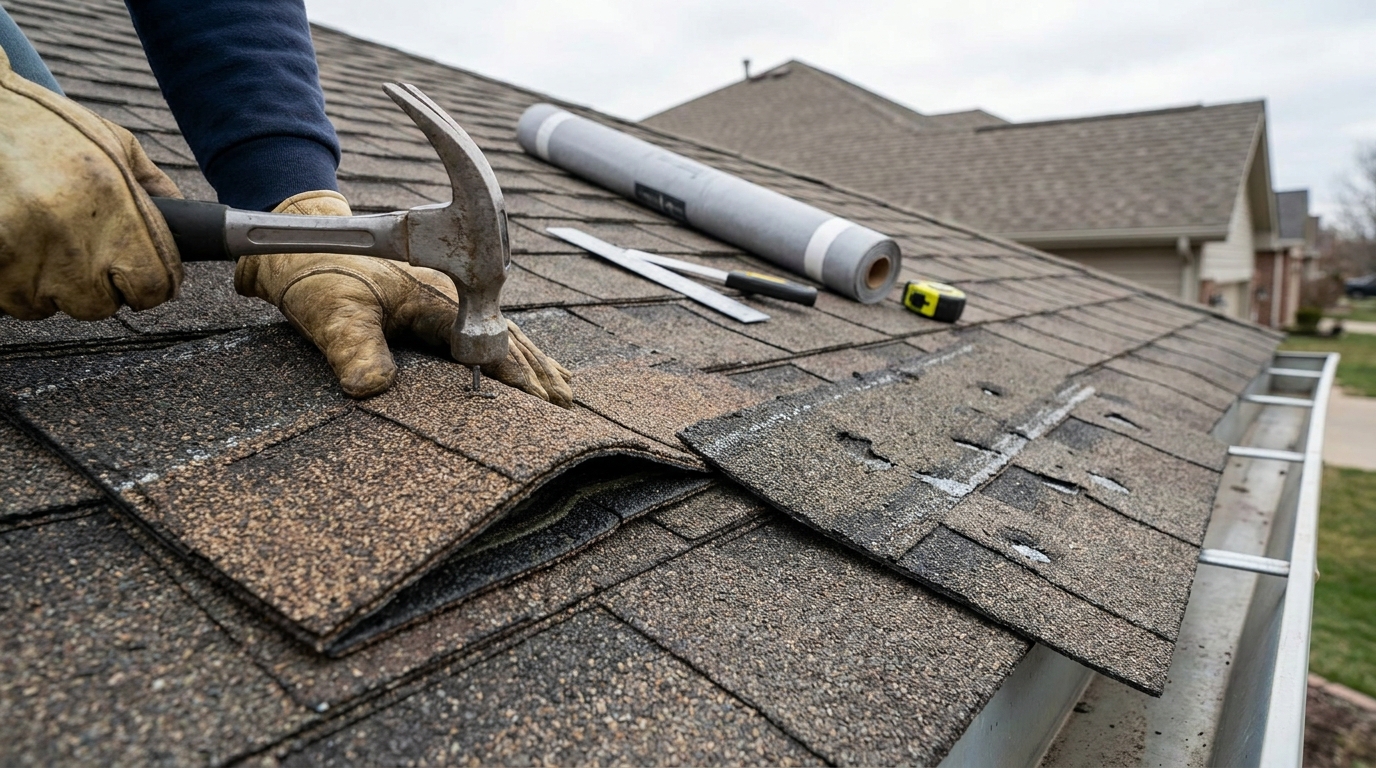
If you own a home in Dallas, Denver, Oklahoma City, or anywhere along the hail belt, your 2026 insurance renewal letter is probably the scariest piece of mail you have opened all year. Carriers are dropping policies, capping roof age at 10 to 15 years, and pushing homeowners toward Class 4 impact-resistant shingles to keep coverage in force. The math has shifted hard, and so has the price tag on a new roof.
Here is the practical homeowner's guide to what changed, what a Class 4 roof actually buys you, what it costs in 2026, and how to avoid getting taken by the storm chasers who follow every supercell into town.
What carriers are doing in 2026
Texas Department of Insurance complaint data tells the story bluntly. Nonrenewal complaints to TDI more than doubled, from 79 in 2023 to 190 in 2024, with carriers citing future hail risk and roof age as the trigger (NBC 5 DFW). The Texas FAIR Plan, the state's insurer of last resort, restructured its wind and hail deductibles effective July 1, 2026 (Texas FAIR Plan announcement), which is the kind of move you only see when the broader market is hardening fast.
In Colorado, which ranks second nationally for hail damage, carriers are increasingly drawing the line at 10 years for asphalt-shingle roofs before switching homeowners to actual cash value (depreciated payouts) or refusing to renew at all. Industry guides peg the broader cutoff at 15 to 20 years for asphalt and even sooner in hail country (Insurance.com). Oklahoma logged 151 tornadoes and 767 hailstorms in 2024, and average homeowners premiums are projected near $5,858 by year-end 2026.
A note on the headline: while industry coverage routinely lists a dozen or so states with active Class 4 underwriting pressure, including Texas, Oklahoma, Colorado, Kansas, and Nebraska as the verified core, plus reporting on Missouri, Iowa, Minnesota, the Dakotas, New Mexico, and Wyoming, there is no single authoritative "12-state list." Treat any specific count as a moving target, and check with your own carrier on what they require where you live.
What Class 4 actually means
UL 2218 is the underwriting industry's lab test for impact resistance. A 2-inch steel ball is dropped from 20 feet and strikes the same spot on a shingle twice. If the back of the shingle shows no cracking, the product earns Class 4, the highest of four classes. Class 1 uses a smaller ball from a shorter drop; Class 4 is the threshold most carriers actually care about (Owens Corning explainer; GAF Class 4).
Texas formalized premium credits for these roofs all the way back in TDI Commissioner's Bulletin B-0030-98, which is still the governing document for filed company discounts in 2026 (TDI Bulletin B-0030-98). TDI maintains a public, searchable list of products that have passed UL 2218 or FM 4473 testing and qualify for the credit (TDI roofing discounts list). Pull this list before you sign any bid. If your contractor names a shingle that is not on it, the discount goes away.
The IBHS reality check most contractors will not mention
Here is the part that does not fit on a brochure. UL 2218 is a lab test using a steel ball. Real hail is irregular, often softer, and arrives at angles, so lab performance does not always predict storm performance. The Insurance Institute for Business and Home Safety (IBHS) has been publishing real-storm Impact-Resistant Shingle Performance Ratings, and the results are sobering. Many UL 2218 Class 4 shingles do not perform as well in actual hailstorms as their stamp suggests (IBHS shingle ratings).
That is why the 2025 update to the IBHS FORTIFIED standard now requires shingles rated "Good" or "Excellent" on the IBHS scale, not just a UL 2218 Class 4 stamp, to qualify for the FORTIFIED hail supplement (IBHS 2025 standards; FORTIFIED hail supplement). Carriers in Texas, Oklahoma, Colorado, and Alabama increasingly recognize the FORTIFIED designation for premium credits and renewal eligibility (FORTIFIED Roof program).
The other thing to know: impact resistance in asphalt shingles comes from SBS (styrene-butadiene-styrene) polymer modification, the same rubbery additive that makes road asphalt more flexible (CertainTeed). The UL 2218 stamp does not legally expire, but UV and thermal cycling over 5 to 10 years can erode real-world performance. If you are buying a Class 4 roof primarily for storm protection rather than the discount, the IBHS rating is the number that matters most.
AI workflows for revenue teams
Placeholder house ad for Conservus.ai. Swap with final creative when brand assets are ready.
Partner with Conservus.aiWhat it actually costs in 2026
Class 4 asphalt shingles run roughly $110 to $150 per square (a square is 100 square feet) installed, about 10 to 20 percent above standard architectural shingles (NerdWallet; HomeGuide). On a typical 2,000 square foot roof, that is $1,500 to $3,000 in added material cost for the impact-resistant upgrade alone.
The bigger jump in total replacement cost is not the Class 4 line item by itself. It is the combination of 2025 to 2026 asphalt material inflation, labor, decking and underlayment code upgrades, and the impact-resistant premium stacking on top. Full asphalt re-roofs in hail country are commonly running $12,000 to $25,000 in 2026, with Class 4 sitting in the middle to upper end of that range. The headline figure of $4,000 to $9,000 in added cost reflects this composite picture (materials inflation plus code upgrades plus the Class 4 upcharge), not a single line item.
The premium discount math
Reported homeowner premium discounts for Class 4 roofs run 20 to 35 percent on the dwelling or wind/hail portion in Texas, Oklahoma, and Colorado, with smaller credits in less hail-exposed states. Each carrier files its own credit schedule, so the exact number is on your own declarations page or in your agent's quote (State Farm discounts; TDI consumer guide).
Quick payback example. If your wind/hail premium portion is $2,000 a year and you earn a 25 percent credit, you save $500 a year. A $2,500 Class 4 upcharge pays back in about 5 years. In states with smaller credits, the payback can stretch to 8 years or more. The other lever to ask about is a separate wind/hail deductible buy-down endorsement, which can soften the 2 percent or 5 percent deductibles many carriers are now imposing.
Materials beyond asphalt
-
SBS-modified asphalt shingles. The most common Class 4 option, with major lines from GAF (Timberline AS II), Owens Corning (Duration FLEX), and CertainTeed (NorthGate, Landmark Impact Resistant). Affordable and code-friendly, but performance varies in real storms.
-
Standing-seam metal (steel or aluminum). Naturally Class 4 in most profiles. Higher upfront cost (often double asphalt) but 40 to 70 year lifespan, excellent fire and wind ratings, and a metal roof rarely triggers the roof-age underwriting cliff.
-
Polymer-modified synthetic shake and slate. Brands like DaVinci, CeDUR, and F-Wave offer Class 4 ratings with the look of cedar or slate, lower weight than real slate, and long warranties. Pricier than asphalt, often comparable to metal.
AI workflows for revenue teams
Placeholder house ad for Conservus.ai. Swap with final creative when brand assets are ready.
Partner with Conservus.aiHow to verify a contractor
Texas does not have a statewide roofing license, though the Roofing Contractors Association of Texas (RCAT) runs a voluntary certification. Colorado requires local municipal licensing, and Oklahoma requires registration with the Construction Industries Board (Construction Dive). Beyond the state piece, look for:
-
Manufacturer certifications: GAF Master Elite (top ~2 percent of GAF contractors), CertainTeed SELECT ShingleMaster, or Owens Corning Platinum Preferred.
-
IBHS FORTIFIED Roofer designation if you want the storm performance, not just the discount.
-
A permanent local office, a current Certificate of Insurance you can call the carrier to verify, and reviews tied to a real address rather than a Google profile spun up after the last storm.
Storm-chaser red flags
The National Insurance Crime Bureau estimates roofing fraud costs U.S. homeowners roughly $3 billion a year (NICB). The Colorado Roofing Association keeps an updated playbook on the patterns to watch for (Colorado Roofing Association). Walk away if you hear:
-
"Sign this AOB (Assignment of Benefits) and we will deal with your insurance." That hands your claim rights to a stranger.
-
Door-knocking the day after a storm with a clipboard and a free inspection.
-
"We will cover your deductible." That is insurance fraud, and it is on you, not them, when the carrier finds out.
-
Out-of-state plates, no local office, and pressure to put down a deposit before any adjuster has been on the roof.
-
A bid that lists "Class 4 shingles" without naming a specific manufacturer and SKU you can look up on the TDI list.
The pricing trick to watch for
Some contractors quote Class 4 pricing and install Class 3 product. Two cheap ways to verify: ask the crew to set aside one bundle wrapper from delivery day. The wrapper prints the UL 2218 stamp and the product name. Photograph it. Then require the contractor to register the manufacturer warranty in your name within 30 days, which most major brands let you confirm online. If the SKU on the warranty does not match the bid, you have leverage and a paper trail.
AI workflows for revenue teams
Placeholder house ad for Conservus.ai. Swap with final creative when brand assets are ready.
Partner with Conservus.aiPractical next steps this week
-
Pull your declarations page and find the wind/hail premium and deductible. That is the number a Class 4 credit applies to.
-
Call your agent and ask for the carrier's filed Class 4 credit, in writing, and whether they recognize IBHS FORTIFIED for an additional credit.
-
Open the TDI product list (useful even outside Texas) and write down two or three Class 4 SKUs you would accept.
-
Get three local bids that name a specific UL 2218 Class 4 product and SKU, the underlayment, the decking inspection plan, and the warranty registration step.
-
On install day, photograph the bundle wrappers and the truck delivery slip. File the manufacturer warranty registration yourself.
The hardening market is not going to soften by next renewal cycle. A Class 4 roof, paired with an IBHS-rated shingle and a contractor whose name you can verify, is one of the few homeowner-side moves that improves your premium, your coverage stability, and your actual storm protection at the same time.
Related reading
Sources
-
Texas Department of Insurance: Products qualifying for impact-resistant roofing credits
-
TDI Commissioner's Bulletin B-0030-98: Hail Resistant Roof Coverings
-
NBC 5 DFW: Texas homeowner loses insurance over future hail risk
-
IBHS releases updated resilient construction standards (2025)
-
IBHS: Most expansive impact-resistant shingle ratings to date
-
Colorado Roofing Association: How to Spot Common Roofing Scams
-
Insurance.com: Have a 20-year-old roof? You may lose your homeowners insurance
Note: This article contains AI-assisted content and has been reviewed by our editorial team.
ABOUT THIS SERVICE: CallTheLocal.com is a directory and lead generation service, not a contractor or service provider. Submitting this form does not obligate you to hire anyone or purchase any service. Your information will be shared with licensed, insured home service professionals in your area who may provide quotes for your project. CallTheLocal.com does not guarantee the quality, timeliness, or outcome of any work performed by service providers you connect with through this service. Always verify licensing, insurance, and references before hiring. Get everything in writing before work begins.