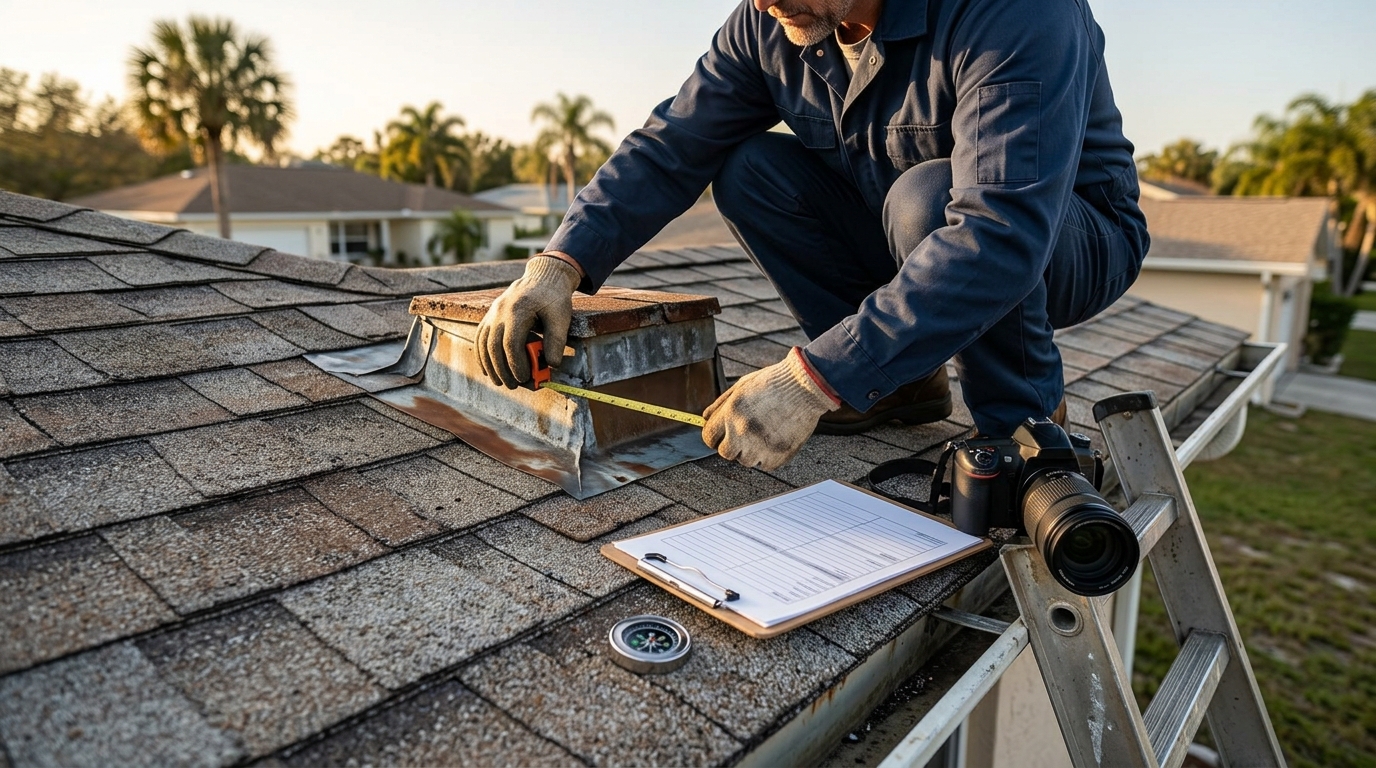
You open the envelope from your insurance carrier expecting another routine renewal. Instead, you find a non-renewal notice citing the age of your roof. The shingles still look fine from the driveway, you have never filed a roof claim, but the policy is gone in 90 days. Welcome to the 2026 homeowners insurance market, where roof age has become one of the single biggest underwriting triggers in storm-prone states.
The 15-Year Cliff
Across Florida, Texas, Louisiana, Colorado, and Oklahoma, carriers are increasingly using a 15-year mark as a hard underwriting line on asphalt shingle roofs. Some non-renew outright. Others move the roof to actual cash value (ACV) coverage, which depreciates the payout based on age and condition rather than paying the full cost to replace it. Consumer Reports has documented this shift across multiple carriers, including national insurers tightening their roof-age rules in hail and hurricane states (Consumer Reports).
The pressure is not random. National homeowners insurance premiums rose roughly 20% or more between 2021 and 2024, with roof-related wind and hail losses among the top drivers of tightening underwriting, per Insurance Information Institute statistics (III Facts + Statistics). National regulators have flagged similar loss patterns in their homeowners insurance reporting (NAIC).
Why Now
Florida's 2022 to 2023 property insurance crisis is the clearest example. Multiple carriers either pulled out of the state or shifted roof coverage to ACV schedules, a trend tracked by the Florida Office of Insurance Regulation through its property insurance market work (Florida OIR). The state legislature responded with Senate Bill 4-D, signed in May 2022, which prohibits carriers from refusing to write or renew a policy solely because of roof age if the roof is less than 15 years old, and requires them to allow an inspection on roofs 15 or older to prove at least 5 years of remaining useful life (Florida Senate SB 4-D). Local reporting at the time captured how dramatically the new rules reshaped what homeowners could expect at renewal (Tampa Bay Times).
Outside Florida, the same loss math has pushed Texas, Louisiana, Colorado's Front Range, and Oklahoma's tornado and hail belt into tighter underwriting territory. The Texas Department of Insurance walks through how carriers may use ACV versus replacement cost value (RCV) endorsements on roof coverage in its consumer policy comparison (Texas Department of Insurance). Colorado's Division of Insurance has published similar consumer guidance for the state's hail-heavy market (Colorado DOI).
ACV vs. RCV: The Endorsement That Changes Everything
Replacement cost value pays what it actually costs to put a new roof on your house today, minus your deductible. Actual cash value pays the depreciated value, accounting for age and wear. The Insurance Information Institute explains how that depreciation interacts with deductibles and payouts on a covered loss (Insurance Information Institute).
Here is what that looks like in practice. Imagine a 20-year-old asphalt shingle roof on a typical home in a hail-prone metro. This Old House places average national asphalt shingle replacement in roughly the $9,000 to $16,000 range, with storm-belt projects often higher once code upgrades and labor are factored in (This Old House). Under RCV, the carrier pays the replacement number minus your deductible. Under ACV on a 20-year roof, depreciation can knock the payout down sharply, leaving a homeowner with five-figure out-of-pocket exposure even after a covered loss. That gap is the entire reason the pre-renewal inspection conversation exists.
AI workflows for revenue teams
Placeholder house ad for Conservus.ai. Swap with final creative when brand assets are ready.
Partner with Conservus.aiCosmetic vs. Structural: What Triggers a Forced Replacement
Not every flaw on an aging roof means the carrier can force a replacement or non-renew. Consumer Reports' reporting on roof-age underwriting separates cosmetic issues like minor granule loss or isolated lifted shingles, which generally do not trigger replacement, from structural problems like widespread shingle loss, exposed underlayment, deck rot, or soft spots, which commonly do (Consumer Reports). Knowing which side of that line your roof sits on is the whole point of a pre-renewal inspection.
The $500 Inspection Playbook
You have three realistic options when a renewal is approaching:
-
Licensed roofer inspection ($300 to $600). A roofer inspects, photographs, and writes a condition letter, often including an estimate of remaining useful life. This is precisely the kind of document Florida contemplates for roofs 15 years and older under SB 4-D (Florida Senate SB 4-D).
-
Wind mitigation or 4-point inspection. In coastal and hail states, these standardized inspections can document the roof's condition, sometimes preserving RCV coverage or unlocking premium discounts, as the Texas Department of Insurance describes in its consumer policy comparison (TDI).
-
Public adjuster pre-claim review. Public adjusters often inspect at low or no upfront cost and work on contingency if a claim is warranted. The National Association of Public Insurance Adjusters maintains a directory of licensed adjusters by state (NAPIA).
A FORTIFIED Roof certification, issued under the standards set by the Insurance Institute for Business and Home Safety, can also document a higher level of resilience and unlock discounts or insurability in storm states (IBHS FORTIFIED Roof).
Timing the Inspection
Non-renewal notice windows are set by state law and typically run 45 to 120 days before the policy ends. That is your action window. If the first time you hear about your 17-year-old roof is when the non-renewal arrives in the mail, you have weeks, not months, to either document the roof's remaining life or schedule a replacement. Florida OIR's stability unit materials illustrate how compressed those decisions have become for homeowners in carrier-exit states (Florida OIR).
AI workflows for revenue teams
Placeholder house ad for Conservus.ai. Swap with final creative when brand assets are ready.
Partner with Conservus.aiWhen Replacement Is the Right Call
If the inspection shows widespread structural issues, replacement is often cheaper than the alternative. A proactive asphalt shingle replacement in the $9,000 to $16,000 range, per This Old House's national cost data (This Old House), can prevent a forced post-storm scenario where you face a much larger storm-belt project on top of a non-renewal and a hunt for a new carrier in a hardening market. Pulling the trigger early also resets the clock on your roof's age, which is the single most powerful lever you have over your insurability for the next 15 years.
Your 90-Day Pre-Renewal Checklist
-
Pull out your current declarations page and confirm whether your roof is written on RCV or ACV. The Texas Department of Insurance comparison is a useful template for reading these endorsements (TDI).
-
Find your roof's install date from permit records, your closing disclosure, or a prior roofer invoice.
-
Book a licensed roofer inspection or, in storm states, a wind mitigation or 4-point inspection.
-
If you are in Florida and your roof is 15 years or older, exercise your right under SB 4-D to submit an inspection showing at least 5 years of remaining useful life (Florida Senate SB 4-D).
-
Get written replacement quotes for budgeting purposes, even if you are not replacing yet.
-
Compare what your current carrier offers against at least two competing quotes before the renewal date, and consider a FORTIFIED upgrade if you are replacing anyway (IBHS FORTIFIED Roof).
The Bottom Line
A roof is the single most scrutinized component of a homeowners policy in 2026. A $300 to $600 inspection, scheduled before your renewal rather than after a denial, is the cheapest insurance you can buy on your insurance.
AI workflows for revenue teams
Placeholder house ad for Conservus.ai. Swap with final creative when brand assets are ready.
Partner with Conservus.aiRelated reading
Sources
-
Florida Senate SB 4-D (2022): Property Insurance Roof Age Provisions
-
Florida Office of Insurance Regulation: Property Insurance Stability Unit
-
Insurance Information Institute: Understanding Your Insurance Deductibles
-
NAIC: Homeowners Insurance Topic
-
Consumer Reports: How Roof Age Affects Your Home Insurance
-
Tampa Bay Times: Florida Passes Sweeping Property Insurance Reforms
-
Colorado Division of Insurance: Homeowners Insurance Guidance
-
Insurance Information Institute: Facts + Statistics, Homeowners and Renters Insurance
-
This Old House: Roof Replacement Cost Guide
About This Service
ABOUT THIS SERVICE: CallTheLocal.com is a directory and lead generation service, not a contractor or service provider. Submitting this form does not obligate you to hire anyone or purchase any service. Your information will be shared with licensed, insured home service professionals in your area who may provide quotes for your project. CallTheLocal.com does not guarantee the quality, timeliness, or outcome of any work performed by service providers you connect with through this service. Always verify licensing, insurance, and references before hiring. Get everything in writing before work begins.
Note: This article contains AI-assisted content and has been reviewed by our editorial team.