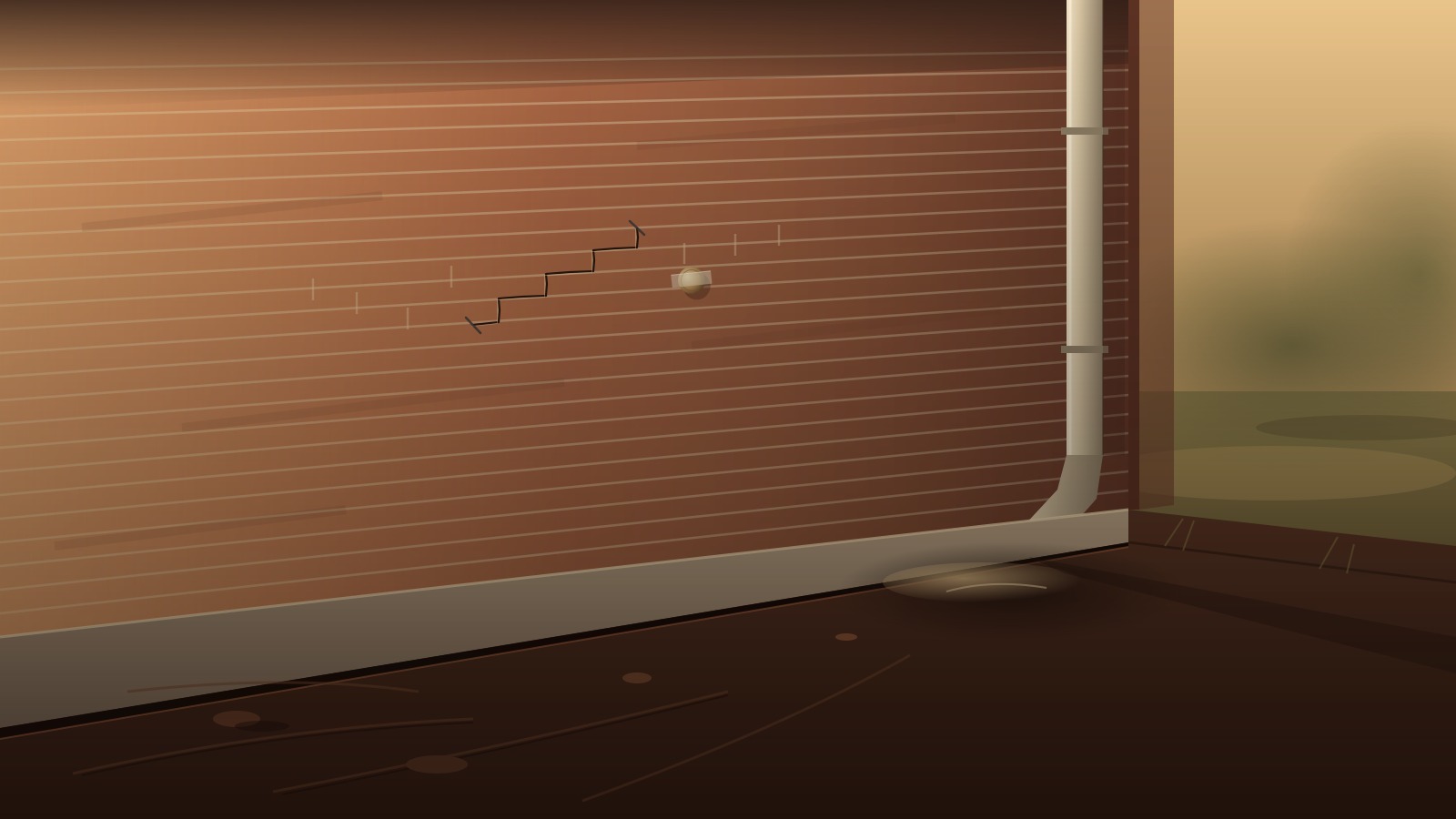
Drought covered 92% of Texas as of late September, according to Texas+Water's outlook+water column. By the U.S. Drought Monitor map for Nov. 3, 2026, that number had dropped to 60.8%, per Drought.gov. That's good news for your lawn. If you've noticed foundation cracks after drought, though, the clay under your slab is now taking on water after a long dry stretch, and the cracks you saw in August may not be the last word.
This guide covers why slabs keep moving once rain comes back, how to tell a cosmetic crack from one worth paying attention to, who to call first and what Texas homeowners are paying for repairs right now.
Why does a slab foundation move after it rains?
A lot of Texas sits on clay that swells when it gets wet and shrinks when it dries. "In Texas, we are blessed with vertisols," Dr. Jake Mowrer, an associate professor of soil and crop sciences with Texas A&M AgriLife Extension, told FOX 7 Austin. "When they get wet, they swell, and when they get dry, they shrink."
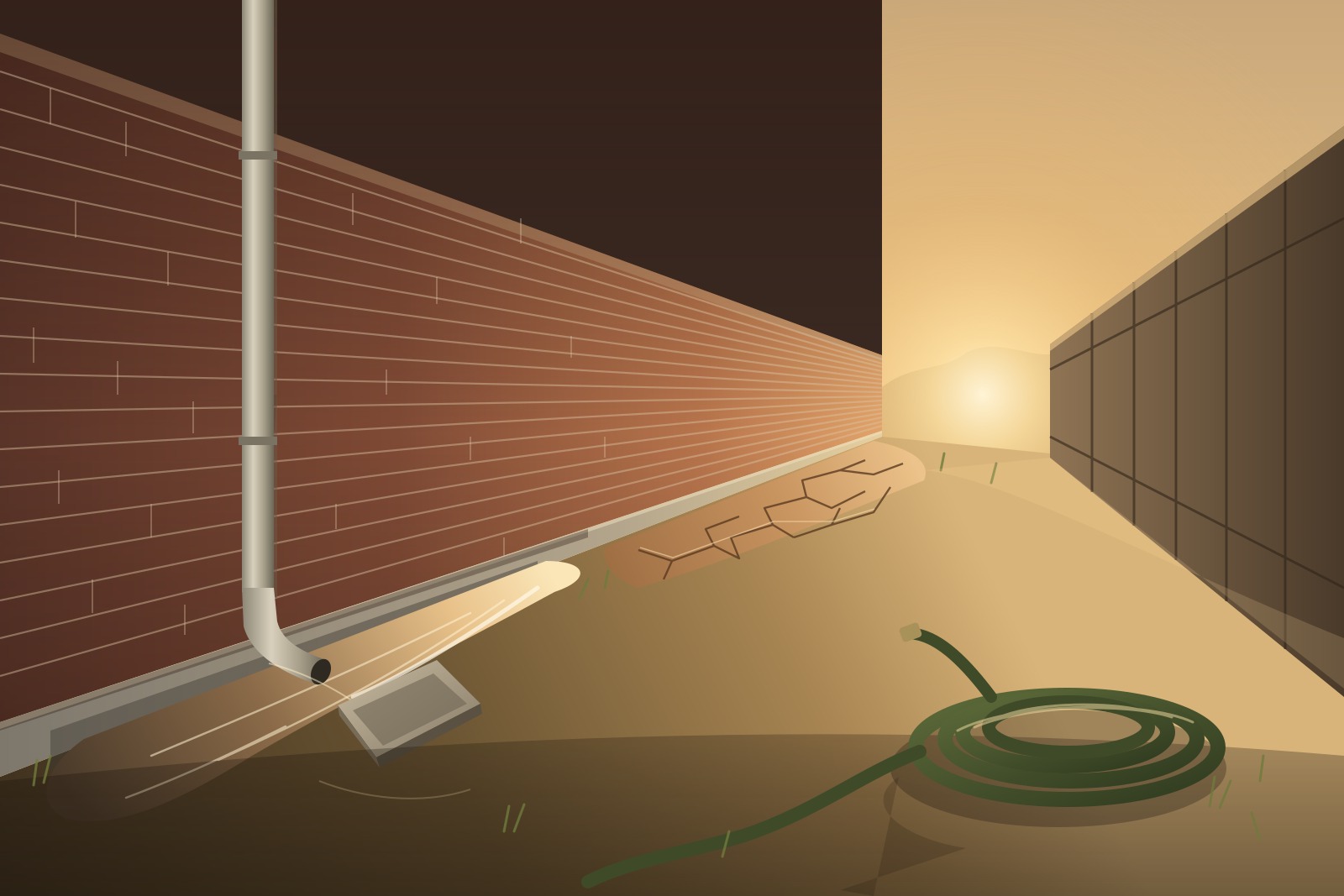
Shrinking is only half the cycle. After months of drying, the clay starts swelling again, and it rarely does that evenly. A corner under a downspout or a low spot in the yard can take on more water than the soil under the middle of the house. When one part of the slab gets lifted more than another, you can see new cracks or old ones changing even after the drought has broken.
How long that adjustment lasts depends on your soil and your lot. Watching your house tells you more than guessing.
How much of Texas is still in drought?
As of the Nov. 3, 2026 Drought Monitor data on Drought.gov, 60.8% of Texas was in drought (D1 to D4), with about 19.0 million Texans living in drought areas. The breakdown:
-
D0, abnormally dry: 23.5%
-
D1, moderate drought: 28.5%
-
D2, severe drought: 25.3%
-
D3, extreme drought: 6.1%
-
D4, exceptional drought: 0.9%
That puts roughly 32% of the state in severe drought or worse. Things were much drier five weeks earlier. The Texas+Water column reported that extreme drought or worse covered 26% of Texas as of late September, compared with about 7% on the Nov. 3 map.
More moisture is probably on the way. The same column said "drought conditions are expected to improve across the entire state over the next three months," citing the U.S. Seasonal Drought Outlook for Oct. 1 to Dec. 30, 2026, along with an El Niño advisory. For homeowners, that means the soil under many slabs will keep changing through the winter.
Are foundation cracks after drought cosmetic or structural?
Many aren't serious, but whether a crack is changing matters more than how it looks on any one day. The This Old House foundation repair cost guide splits warning signs into milder early signs and more serious ones.
Early signs (watch, don't panic):
-
Doors or windows that stick seasonally
-
Floors with a slight slope
-
Small cracks in the walls
More serious signs (time to get it evaluated):
-
Diagonal cracks in interior walls
-
Gaps that keep getting wider
-
Uneven floors and damage that keeps coming back after it's patched
-
Large cracks, visible gaps or drainage problems on the exterior
Jeff Griffith, owner of CenTex Foundation Repair, pointed FOX 7 Austin to a similar set of signs: exterior cracks, interior wall cracks and a front or back door that sticks. When you see several of these together, take it more seriously than one hairline crack over a closet door.
You'll find online charts that sort cracks by width. We couldn't verify any of those numbers in an authoritative source, so we're not repeating them. A better test is whether the crack is growing, whether it runs diagonally and whether doors nearby have started to stick.
What should you monitor this winter?
If what you're seeing is mild, a few minutes a month will give you the record an engineer or contractor needs later:
-
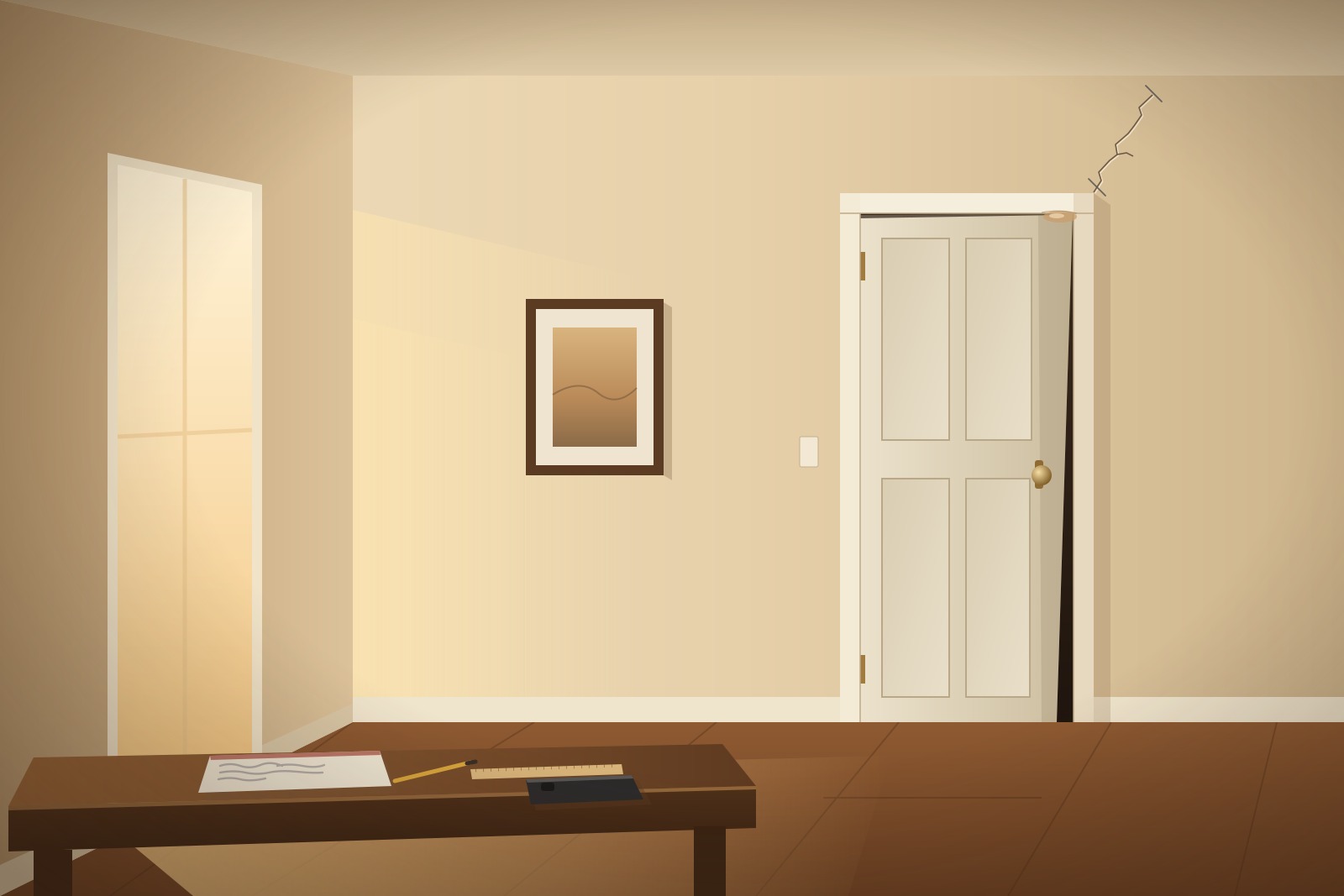
Photograph every crack with the date showing. Put a ruler or coin in the frame and shoot from the same spot each time. Lightly marking each end of the crack with a pencil makes growth easy to see.
-
Keep notes on doors. Write down which ones stick, when they started and whether it comes and goes with the weather or keeps getting worse.
-
Look for standing water after storms. Water pooling against the slab, overflowing gutters and downspouts emptying next to the foundation all wet one side of the house more than the others.
"You want to keep the moisture as consistent as possible," Griffith told FOX 7 Austin. Getting water to drain away from the house, instead of letting it sit at one corner, is the simplest way to do that while the weather swings.
Who should you call first about foundation cracks?
Start with an independent structural engineer, not a repair company. The engineer has no piers to sell. Their report tells you whether you need repairs at all and, if so, what the plan should be. Contractors can then bid against that plan instead of writing their own.
Expected costs for the report:
-
This Old House: $500 to $1,000 for a structural engineer report
-
HomeBuddy: $300 to $800 for the initial inspection, plus $200 to $500 for final certification after the work is done
-
Two Brothers Foundation Repair, a Houston contractor, put an independent engineer's evaluation at $300 to $1,000 in a company press release
The Texas Section of the American Society of Civil Engineers publishes Guidelines for the Evaluation and Repair of Residential Foundations (Version 3, effective April 1, 2022). The section describes them as guidelines rather than standards, written mainly to help engineers, and meant to guide the Texas Board of Professional Engineers when it reviews complaints against engineers. You don't need to read them, but it's fair to ask an engineer whether their evaluation follows them.
How much does foundation repair cost in Texas?
National figures from This Old House: homeowners pay between $2,224 and $8,134, with an average of $5,179. Texas metros run higher in the sources below, mainly because pier jobs on expansive clay tend to be bigger.
| Area | Typical range | Source |
|---|---|---|
| Texas statewide (most homeowners) | $3,500 to $8,000 | HomeBuddy |
| Dallas-Fort Worth | $4,000 to $14,000 | HomeBuddy |
| Houston | $4,500 to $15,000 | HomeBuddy |
| Dallas and Houston (underpinning) | $4,950 to $18,250 | Bedrock Texas |
| Houston | $4,500 to $12,000 | Two Brothers Foundation Repair (company release) |
A few notes on those numbers. HomeBuddy is a lead-generation marketplace. It breaks Texas jobs into minor ($500 to $1,500), moderate ($3,500 to $8,000) and severe ($10,000 to $30,000 or more). Bedrock Texas is a referral service that says it's not a contractor, and its Dallas section also lists a low end of $4,700. The Two Brothers figures come from the company itself.
Pier count drives the price
Most slab repairs in Texas involve piers driven under the foundation, and the bill mostly comes down to how many piers you need and what kind they are. Bedrock Texas says a typical underpinning job uses 8 to 15 piers.
| Pier type | HomeBuddy (per pier) | Bedrock Texas (per pier) |
|---|---|---|
| Pressed concrete | $300 to $600 | $350 to $800 |
| Steel | $1,000 to $1,500 | $1,000 to $2,350 |
| Helical | $1,500 to $2,500 | $1,200 to $2,200 |
This Old House gives a national range of $1,000 to $3,000 per pier for piering or underpinning. As a rough example, eight steel piers at HomeBuddy's per-pier range comes to $8,000 to $12,000 before any other line items. When two bids are far apart, check the pier count and pier type first.
Cheaper fixes for minor problems
Not every job needs piers. For minor settling, slabjacking (also called mudjacking) pumps material under the slab to raise it. This Old House lists it at $550 to $1,300, and HomeBuddy at $500 to $1,300, or $3 to $8 per square foot. Crack filling runs $250 to $800, according to This Old House. Neither fixes a slab that's still moving, which is one more reason to get the engineer's opinion before you pay for anything.
East Texas homeowners
We couldn't find reliable published price ranges for Tyler, Longview or the rest of East Texas. For now, the statewide ranges and per-pier costs above are the best guide you have. Ask local bidders to break out the pier count and price per pier so you can compare them line by line.
Do you need a permit for foundation repair in Houston or Dallas?
In both cities, yes, and the permit also works as a quick way to vet a contractor.
Houston. The city's foundation repair permit page says foundation repair includes "the repair of the fractures in slabs." For slab-on-grade jobs, you must "Submit foundation plans and details prepared by a State of Texas-licensed engineer." The job requires plan review plus pre-construction and final inspections, and the permit has to be paid for before work starts. Fees are a $33.56 administrative fee plus whatever the city's fee schedule charges. Houston's separate residential repair permit covers repairs to existing structural members, also requires plan review and inspection, and is valid for six months.
Dallas. The city's Building Inspection FAQ says "a building permit is needed for work involving structural elements of a building" in most cases, and it lists foundation repair as a permit you can get at a Building Inspection District Office.
Ask every bidder who pulls the permit and whose engineer stamps the plans. If you hear that permits aren't needed for this kind of work, or the contractor wants you to pull the permit yourself, treat that as a red flag. Get the answer in writing in the contract.
Should you wait or call a pro now?
If you only have small wall cracks or a door that sticks now and then, and nothing changes in your dated photos, keep monitoring through the winter. The soil is still settling into wetter conditions, and a few months of records will tell you more than one look in November.
If cracks are growing, running diagonally or showing up along with uneven floors and doors that suddenly won't latch, book an independent engineer first. Then get two or three pier bids priced against the engineer's plan, and compare pier count, pier type and who handles the permit before you sign.
Related reading
Sources
-
FOX 7 Austin: Texas drought may be impacting your home's foundation
-
Two Brothers Foundation Repair press release via AB Newswire
Note: This article contains AI-assisted content and has been reviewed by our editorial team.
ABOUT THIS SERVICE: CallTheLocal.com is a directory and lead generation service, not a contractor or service provider. Submitting this form does not obligate you to hire anyone or purchase any service. Your information will be shared with licensed, insured home service professionals in your area who may provide quotes for your project. CallTheLocal.com does not guarantee the quality, timeliness, or outcome of any work performed by service providers you connect with through this service. Always verify licensing, insurance, and references before hiring. Get everything in writing before work begins.