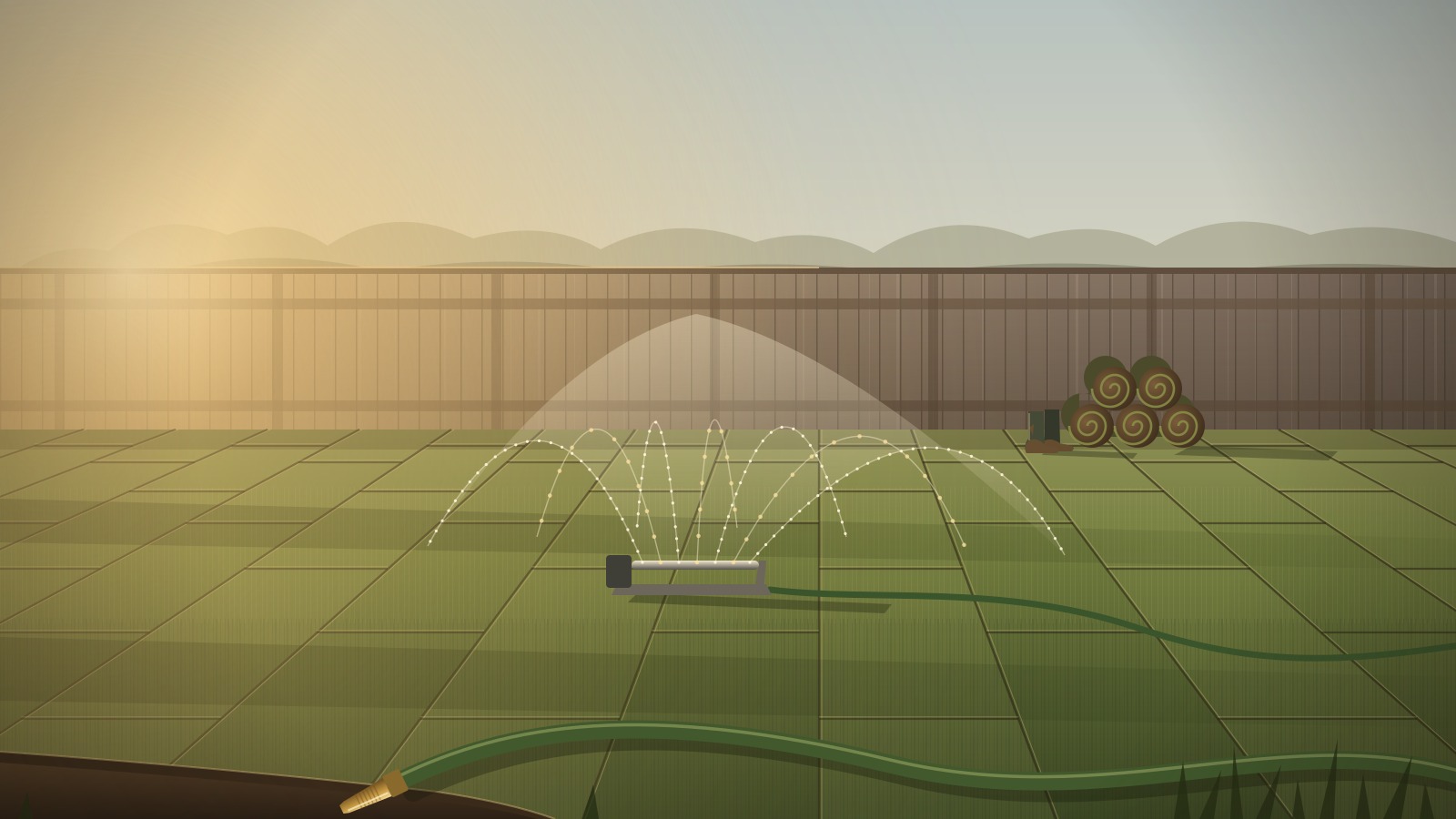
A new sod care schedule runs about a month. Lay sod the day it arrives and soak it right away. For the first 7 to 10 days, water every morning, adding an afternoon cycle in hot weather, so the soil stays moist but never soggy. Do a gentle tug test at 10 to 14 days. Once it's rooted, water deeper and less often, then mow.
Sod gives you a lawn in an afternoon, which is exactly why people get careless with it. The grass is green on day one, but the roots are sitting on top of your soil, not in it. The next few weeks decide whether those roots grow down or the pieces dry out, shrink and pull apart. This guide follows the calendar from the pallet to the first mow, using advice from university extension services in Iowa, Mississippi, Minnesota, Kansas, South Carolina, California and Nebraska. It ends with how to tell an installation problem from a watering problem, so you know whether to call the crew back.
Delivery day: get it on the ground
Fresh-cut sod doesn't keep. The University of Minnesota Extension says sod should ideally be cut no more than 24 hours before delivery and laid "as soon as possible, or within one day after delivery." Clemson's Home & Garden Information Center gives a slightly wider window: "Generally, sod must be laid within 48 hours of delivery," stored in a cool, shady spot until then, and not for long.
Mississippi State Extension puts it bluntly: fresh sod "will not tolerate sitting on a pallet for very long." Sod bought in winter holds up longer on the pallet than summer sod. If the install gets pushed back, keep the pallets shaded and lightly moistened. Kansas State adds that sod grown on soil similar to yours, ideally with a thin soil layer, roots faster.
If a crew is doing the work, write down the delivery date and the date the last piece went down. A pallet that sat in the driveway for three days in July is worth noting.
What a good install looks like
Walk the yard before the crew leaves. The extension guides agree on these standards:
-
Staggered seams. Clemson says to stagger the ends "in a checkerboard fashion," like bricks. Mississippi State notes that erosion potential is greatest where seams line up in straight lines.
-
Tight joints, no overlaps. Clemson's standard is "forcing the sod tight but not overlapping."
-
No stretched pieces. Kansas State warns: "Do not stretch sod, it will shrink as it dries allowing weed invasion between pieces."
-
Rolled right away. Clemson says to roll or tamp immediately, perpendicular to the direction the sod was laid. Minnesota suggests a roller about one-third full of water.
-
Across the slope. On a grade, Minnesota says rolls should run across the slope, not up and down it, and cracks should be filled with soil so the edges don't dry out.
-
No low spots. Mississippi State advises making sure the graded soil has no low spots that will hold water.
Take photos of the whole lawn that day, especially seams and any slopes. You'll want them if something goes wrong in week two.
Day 0: the first deep soak
The first watering is the most important one. Bill Kreuser, a turfgrass specialist with University of Nebraska-Lincoln Extension, told the Sports Turf Managers Association: "Water deeply immediately after the sod is laid to wet the subsoil." Clemson sets the target at "a depth of 4 inches immediately after transplanting."
That means the soil under the sod, not just the sod itself. Lift a corner of a piece and look at the dirt below. If it's dry, keep going. The University of California's IPM program suggests pushing a screwdriver into the soil to see how deep the moisture reaches. It slides in easily through wet soil and stops where it hits dry ground.
Days 1 to 10: moist, not soaked
After the first soak, Kreuser recommends light, frequent watering until roots grow into the soil underneath. Iowa State Extension lays it out simply: water every morning for the first 7 to 10 days, and add an afternoon watering in warm weather. In real heat, UC IPM says "watering 2 or 3 times a day may be required." Kreuser notes that sod can lose about 0.3 inch of water on a hot, windy August day, which is why a single morning cycle sometimes isn't enough.
The opposite mistake is just as common. Iowa State warns: "Do not overwater because the new sod will not root properly if it is kept saturated." Mississippi State's target for the first week is soil that's "soft underfoot but not oozing wet." If water squishes up around your shoe or puddles sit between pieces, cut back.
The grass will tell you when it's thirsty. Both UC IPM and Mississippi State say sod short on water turns a bluish-gray color and starts to wilt. If you see that tint in the afternoon, water that day and check whether your sprinklers are reaching that spot. Corners, edges and areas near pavement tend to dry first.
Stay off it, and leave the fertilizer in the garage
Keep foot traffic to a minimum the first week. Mississippi State points out that well-watered soil is soft and shows tracks, and every footprint can push sod out of contact with the soil. Move sprinklers from the edges when you can.
Clemson says fertilizing right after installation "should not be needed." Start a fertilizer program once the sod has a good root system. If you do fertilize new sod, Mississippi State says to use only a product whose label doesn't exclude newly established grass. Weed preventers are riskier: Mississippi State warns that "many herbicides used for preemergence weed control may cause unacceptable injury to young sod." Hold off on weed-and-feed products until the lawn is established, and read the label before you use one.
Days 10 to 14: the tug test
This is the checkpoint. Minnesota Extension's instructions: "After about 10 to 14 days perform a 'tug test' by gently tugging the sod in a few areas. If the sod has resistance, it is rooted in and can be treated as an established lawn." Test several spots, including sunny areas and the edges, not just the one piece by the back door.
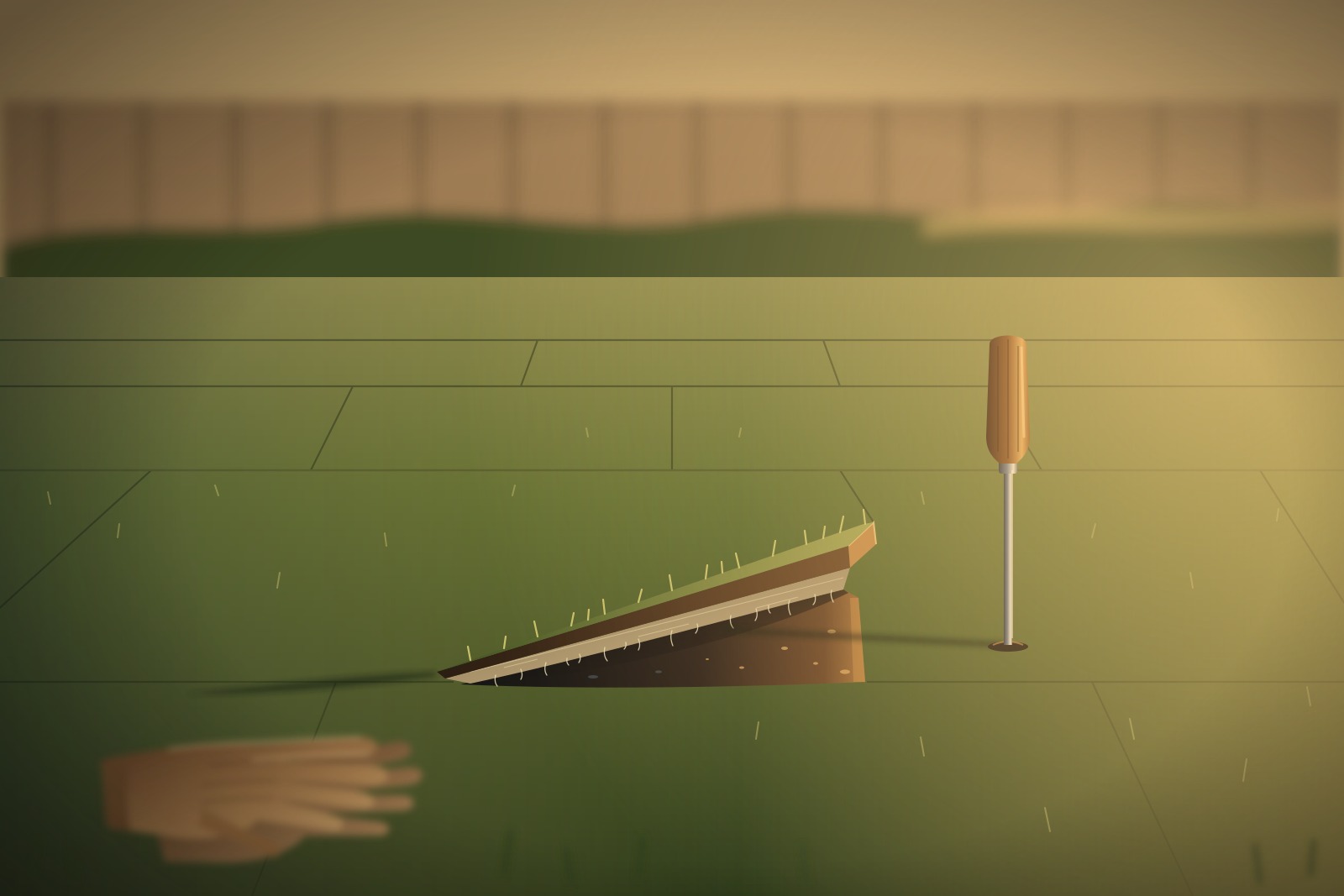
Timing varies. Kansas State says "under good conditions sod will begin to root within 14 days," but "the speed of sod rooting changes with the season." In peak growing weather, Mississippi State says sod starts to tack down within a week. In cooler months, or with dormant grass, expect it to take longer.
Once it holds, change the watering. Kreuser's rule: "Once you can no longer pull up a corner, move irrigation to once a day," then "continue to stretch out the irrigation interval as the roots continue to dive deeper into the soil."
Weeks 2 to 4: deeper and less often
The goal now is to pull roots downward. Iowa State says that once sod roots, you should water more deeply and less often. Mississippi State says that "after 2 to 3 weeks, irrigation can be limited to every other day." UC IPM recommends that every second or third day you water deeply enough to wet the soil about 6 inches down, then check with the screwdriver. Once the lawn is fully established, UC IPM says watering twice a week is usually enough.
Don't stop all at once. Spread the cycles out a day at a time and watch for bluish-gray patches. If a section wilts while the rest looks fine, it may be a coverage gap in your sprinklers rather than a rooting problem.
The first mow
There's no rush. Mississippi State says "it is rarely necessary to mow sod immediately after installation," and that soft, well-watered soil is easily rutted by a mower. Clemson says: "Do not mow until the turfgrass sod is firmly rooted and securely in place."
Two checks before you start the mower:
-
The sod passes the tug test everywhere you try it.
-
The soil is moist to the touch but firm enough to walk across without sinking or leaving prints, per Mississippi State.
Mow at the height you'd use for an established lawn of that grass type, as Clemson advises, and follow Kansas State's one-third rule: never remove more than one-third of the blade height in a single mowing. If the grass got tall while you waited, take it down over two or three mowings instead of one. Kansas State also notes that sodded lawns can handle traffic sooner than seeded ones, so normal use comes back fairly quickly after this point.
How the season changes the schedule
When the sod goes down affects how fast it roots and how much water it needs.
-
Cool-season grasses (like Kentucky bluegrass and fescue in the north): Kansas State says that in the north central US they can be sodded any time during the growing season.
-
Warm-season grasses: Kansas State says sodding "is best done in late spring to early summer" in that region.
-
In the South: Mississippi State says pros lay sod year-round unless the ground is frozen or fields are too wet to harvest. Dormant bermudagrass, zoysia, centipedegrass and St. Augustinegrass "still can be installed with adequate planning." Tall fescue there should go in during fall or winter.
-
In South Carolina: Clemson prefers mid-to-late spring or fall. It warns that "summertime sodding may result in excessive water use," and that winter sodding happens when conditions for root growth aren't favorable.
In practice, a summer install means more watering cycles and closer attention to that bluish-gray tint. A winter install of dormant warm-season sod uses less water, but don't expect it to pass the tug test on the same schedule as spring sod. Mississippi State's point about adequate planning applies here: you're waiting on the soil to warm up before roots really take off.
Installer problem or watering problem?
When new sod struggles, the first question is whether it was laid wrong or cared for wrong. The answer decides who pays to fix it.
Signs that point to the installation
-
Seams that line up in long straight rows instead of a staggered pattern.
-
Gaps between pieces on day one, or pieces overlapping each other.
-
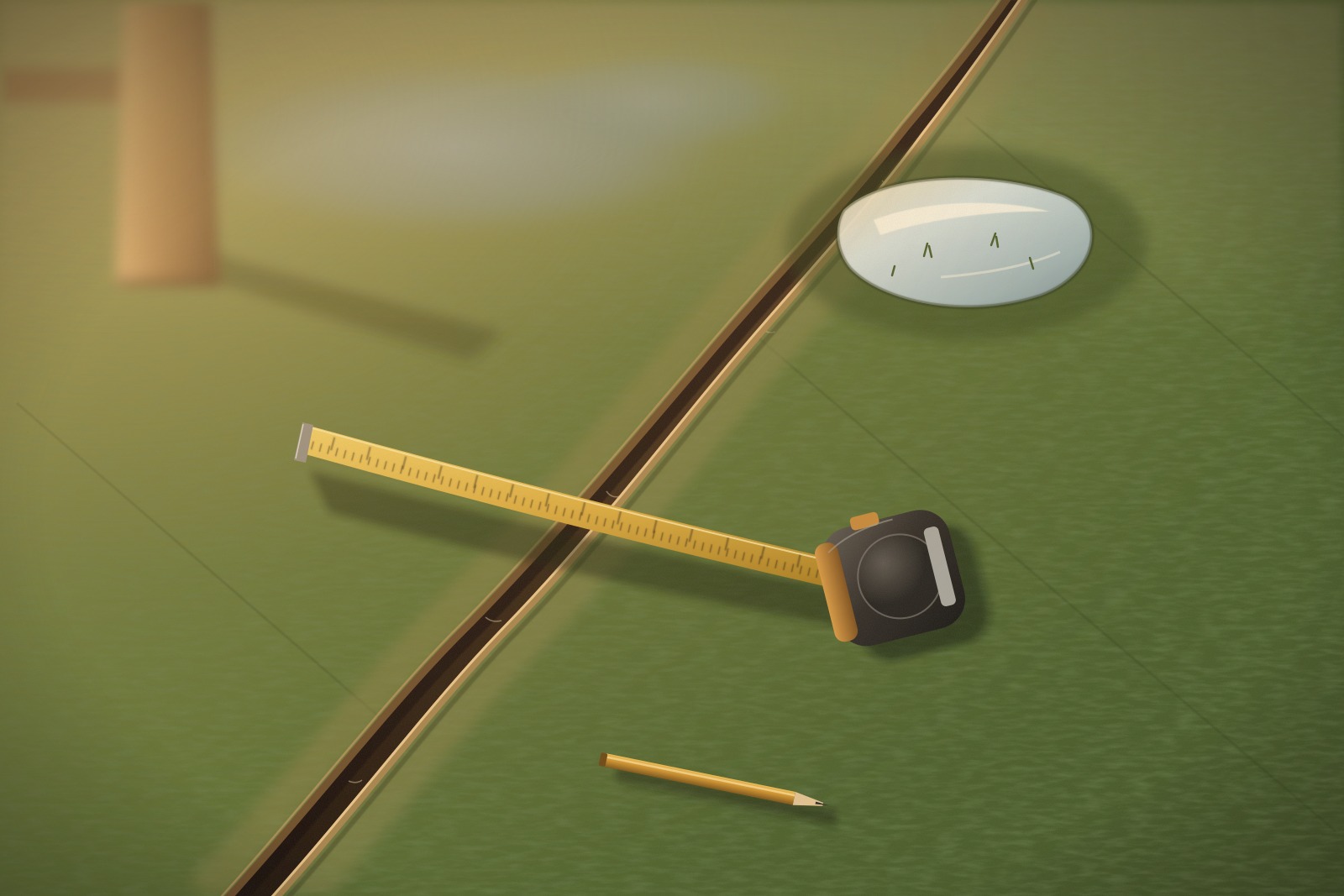
Gaps that open up as the sod dries. Clemson says "the sod will shrink upon drying and cause voids," and Kansas State ties this to stretched pieces.
-
Sod that wasn't rolled and doesn't sit flat on the soil.
-
Low spots where water pools after every watering, which points to grading.
-
Sod that sat on the pallet for days before anyone laid it.
-
Sod that still lifts freely well past the 10 to 14 day window during the growing season, even though you've kept the soil evenly moist.
Signs that point to watering
-
Bluish-gray, wilted grass, especially in afternoon heat or at edges and corners. That's thirst.
-
Soil that stays soggy or muddy for days and sod that won't knit in. Iowa State says saturated sod won't root properly.
-
Browning in a pattern that matches where your sprinklers do or don't reach.
Some problems are both. A gap from stretched sod dries faster at the edges, so a shrinking seam can look like underwatering. That's why the install-day photos matter.
When to call the installer back
Before you call, gather a few things:
-
Your install-day photos and new photos of the problem areas, taken from the same spots.
-
The delivery date and the date the sod was actually laid.
-
A simple watering log: what time the sprinklers ran and for how long. Even notes on your phone help.
-
Your contract, so you can see what, if anything, it says about the sod and the work.
Call promptly if you see gaps, overlaps or straight-line seams in the first few days, or if water pools in the same low spots after every cycle. Those are installation and grading issues, and they're easier to fix before the sod roots in. Also call if you're well past the two-week mark during the growing season, you've watered by the schedule above, and the sod still lifts like it was laid yesterday.
If the grass is bluish-gray or the ground is squishy, adjust your watering first and give it a few days. A crew can't fix a watering schedule, and a good one will usually ask to see your log before anything else.
Related reading
-
Rain Returned to Texas, but Slab Foundations Are Still Moving
-
How to Blow Out a Sprinkler System Without Cracking the Backflow
Sources
-
How should I water a newly sodded lawn? Iowa State University Extension and Outreach
-
Sod Installation and Maintenance (P2951), Mississippi State University Extension (see also page 4 and page 5)
-
Seeding and sodding home lawns, University of Minnesota Extension
-
HGIC 1203 Lawn Establishment, Clemson Cooperative Extension Home & Garden Information Center
-
Lawn Problem Solver: Establishment, Kansas State University Turfgrass
-
Watering New Sod, Sports Turf Managers Association (Bill Kreuser, University of Nebraska-Lincoln)
-
Irrigating new turf, UC IPM, University of California
Note: This article contains AI-assisted content and has been reviewed by our editorial team.
ABOUT THIS SERVICE: CallTheLocal.com is a directory and lead generation service, not a contractor or service provider. Submitting this form does not obligate you to hire anyone or purchase any service. Your information will be shared with licensed, insured home service professionals in your area who may provide quotes for your project. CallTheLocal.com does not guarantee the quality, timeliness, or outcome of any work performed by service providers you connect with through this service. Always verify licensing, insurance, and references before hiring. Get everything in writing before work begins.