A Wet Spring That Did the Bugs a Favor
If mosquitoes were thick on the deck by Memorial Day, or you pulled a tick off the dog earlier than usual, you are not imagining it. Spring 2026 ran wet across much of the Midwest and Northeast, according to NOAA's National Centers for Environmental Information monthly climate reports. Wet ground plus warm nights is the combination that fills containers, ditches, and low spots with mosquito habitat and keeps leaf litter humid enough for tick nymphs to thrive.
That is the setup behind a lot of the "worst season in years" talk you are hearing from local extension offices and pest companies right now. The honest answer is that 2026 is shaping up to be a heavy bug year in much of the country, and the quotes you are getting from pest-control reps reflect that.
Why It Matters Beyond the Itch
Ticks are the part of this story most homeowners underestimate. The CDC estimates roughly 476,000 Americans are diagnosed and treated for Lyme disease each year, well above lab-confirmed case counts. The agency's tick distribution maps show blacklegged ticks (the Lyme vector) and lone star ticks pushing into counties that did not have established populations a decade ago. If you live in the Northeast, Mid-Atlantic, or Upper Midwest, tick control deserves its own line in your pest budget, not an afterthought.
Tier 1: The One-Time Barrier Spray, $80 to $150
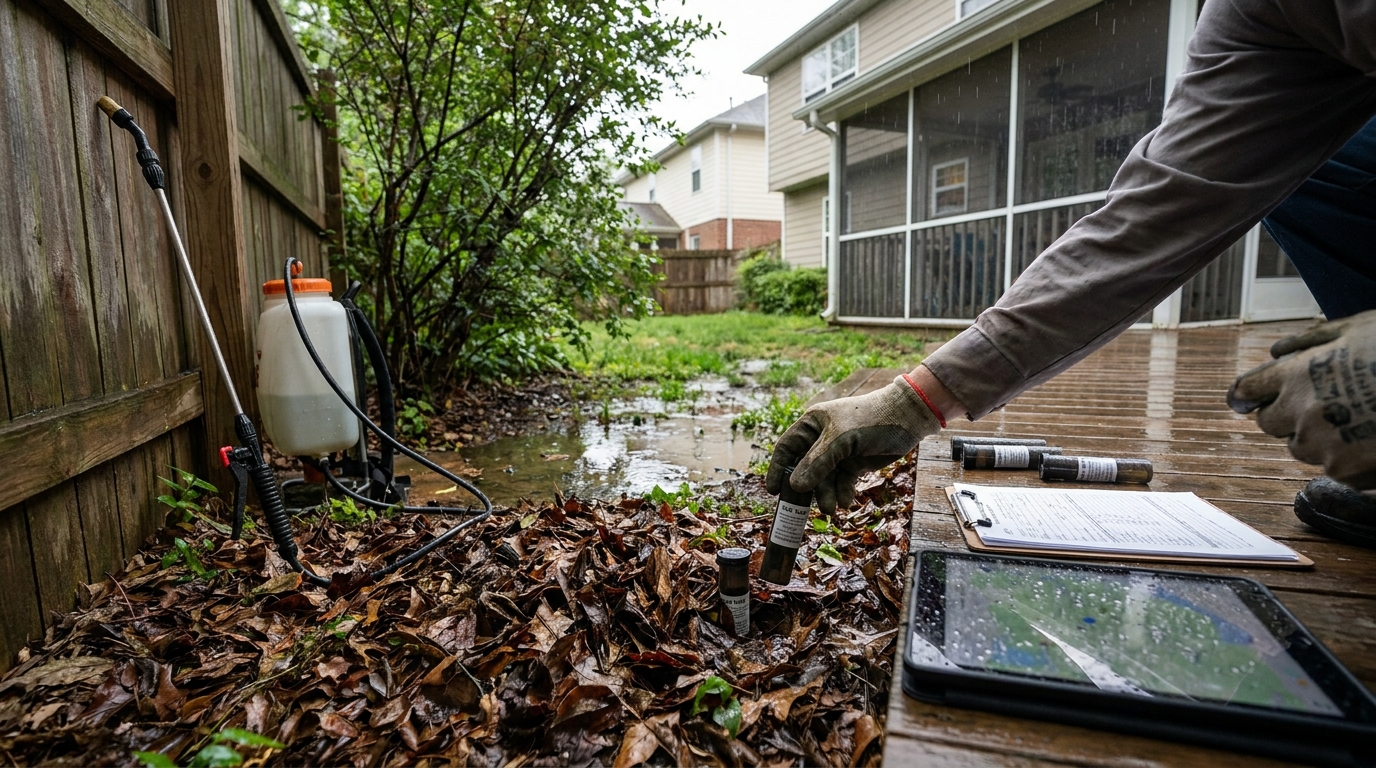
This is the entry point and the most common call-in. A technician walks the perimeter with a backpack mister and treats the lower vegetation, the shaded foundation areas, the fence line, and the shrubs where mosquitoes rest during the day.
What is in the tank is almost always a synthetic pyrethroid like bifenthrin, lambda-cyhalothrin, or permethrin. The EPA's pyrethroids overview covers the chemistry. Labels typically claim 21 to 30 day residual control, but that window shrinks fast under heavy rain, daily irrigation, or strong sun. After a wet week, do not be surprised if mosquitoes are back inside two weeks.
A one-time spray makes sense before a backyard event, or as a trial run with a new company. It is not a season-long solution.
Tier 2: The Four-to-Six-Visit Seasonal Mosquito Plan, $400 to $700
This is the bread-and-butter offer. You sign up in spring, the company comes back every three to four weeks through fall, and you get continuous pyrethroid coverage on the property. Most plans run from April or May through September or October depending on your region.
Things to confirm before you sign:
-
How many visits are actually included, and what triggers a free re-treat after heavy rain.
-
Whether the contract auto-renews next spring.
-
Cancellation terms and any early-termination fee.
-
What the technician does about standing water on the property. A good company will flag it. A great one will treat it with a larvicide.
Larger lots, heavily wooded properties, and homes backing up to wetlands tend to land at the top of the range or get quoted custom pricing.
AI workflows for revenue teams
Placeholder house ad for Conservus.ai. Swap with final creative when brand assets are ready.
Partner with Conservus.aiTier 3: The Combined Mosquito and Tick Plan, $500 to $900
If you are in the Lyme belt, or you have kids and a dog who live in the yard, this is usually the right tier. It adds tick-targeted treatment to the mosquito cadence: granular products along the lawn-to-woods edge, perimeter sprays in leaf litter, and in many cases bundled tick tubes.
The Connecticut Agricultural Experiment Station's Tick Management Handbook and the University of Rhode Island TickEncounter Resource Center are the two sources worth reading before you buy this tier. Both are public-university funded, both update their guidance regularly, and both will tell you that landscape modification (clearing leaf litter, widening the lawn-woods buffer, moving woodpiles away from play areas) does as much work as the spray.
Tick Tubes, Explained
Tick tubes are cardboard tubes packed with permethrin-treated cotton. White-footed mice (the main reservoir for the Lyme bacterium) grab the cotton for nesting material, and the permethrin kills the tick nymphs feeding on those mice before they molt into the adults that bite people.
Damminix-style tubes have been on the market for decades, and Thermacell sells a consumer version you can place yourself. The National Pesticide Information Center's permethrin fact sheet is the cleanest independent summary of how the active ingredient behaves. Timing matters: tubes need to go out in spring (for the larval generation) and again in mid-summer (for nymphs). One placement in July does very little.
The "Natural" Alternatives People Ask About
Two come up constantly.
In2Care Mosquito Stations. These are small black buckets that attract Aedes mosquitoes, the container breeders responsible for a lot of backyard biting. The water inside is dosed with pyriproxyfen, an insect growth regulator, plus a fungal pathogen called Beauveria bassiana. Mosquitoes that visit pick up both and carry the growth regulator to other breeding sites. In2Care's product information covers the mechanism, and the stations are EPA-registered. Companies often offer them as a pyrethroid alternative when homeowners raise pollinator concerns.
Garlic-oil sprays. Marketed as the "natural" backyard spray. Published efficacy is mixed, and the residual is short compared to pyrethroids. If you are committed to avoiding synthetic insecticides, garlic oil can be part of an integrated approach, but going in expecting pyrethroid-level knockdown will disappoint you. The Xerces Society's pollinator-focused mosquito management guidance is the best read on the trade-offs.
AI workflows for revenue teams
Placeholder house ad for Conservus.ai. Swap with final creative when brand assets are ready.
Partner with Conservus.aiWhat You Can Do Yourself, Free
Before any spray, walk the property with the CDC's source-reduction checklist in hand. Clogged gutters, kid toys, wheelbarrows, plant saucers, tarps, corrugated drainpipes, and birdbaths are where mosquitoes actually come from. A bottle cap of standing water is enough. If your yard has no standing water and no leaf-litter tick habitat, a quarterly plan may be more than you need. The EPA's integrated mosquito management guidance puts source reduction at the top of the list for a reason.
Red Flags When the Quote Comes In
-
Door-to-door pitches. The Better Business Bureau has a long-running scam alert on summer door-to-door pest sales. Common pattern: a "today only" discount, a multi-year contract, and a lot of friction when you try to cancel. Take the business card, do not sign in the driveway.
-
Vague "organic" or "all-natural" claims. Ask for the product name, the EPA registration number, and the safety data sheet. You can verify the registration in the EPA's Pesticide Product and Label System. If the rep cannot produce these, walk.
-
No mention of pollinator protocols. A reputable company will tell you they avoid blooming plants and treat in low-wind, off-peak-pollinator windows.
-
Auto-renewing contracts buried in the fine print. Read the cancellation clause before you sign anything multi-season.
-
No state pesticide applicator license listed. Every state has a regulator (usually the Department of Agriculture) where you can look this up.
How to Vet a Company in Ten Minutes
-
Ask for the company's state pesticide business license number and look it up with your state regulator.
-
Ask for the product names they plan to use, and search the EPA registration numbers in PPLS.
-
Ask for a written scope of work that lists visit count, products, and what triggers a free re-treat.
-
Ask how they handle pollinator-attractive plants in bloom and what their wind cutoff is.
-
Read the Consumer Reports overview of yard-spray efficacy claims before you sign anything multi-year.
AI workflows for revenue teams
Placeholder house ad for Conservus.ai. Swap with final creative when brand assets are ready.
Partner with Conservus.aiWhat to Budget in 2026
For a quarter-acre suburban lot with no major wetlands nearby, plan on $400 to $600 for a seasonal mosquito plan. Add $150 to $300 if you want tick coverage layered in. Heavily wooded properties, half-acre-plus lots, and homes in the Lyme belt should expect the upper end, and in some cases custom quotes north of $900. One-time sprays before an event are $80 to $150 in most markets, a bit more in high-cost metros.
The right tier depends less on the bug pressure and more on how you use the yard. If the deck is just for grilling on the weekend, a Tier 1 spray two days before guests arrive may be all you need. If kids and pets are in the grass every day and you are in tick country, Tier 3 with bundled tubes pays for itself in peace of mind. And no matter which tier you pick, do the standing-water walkaround first. It is the cheapest mosquito control you will ever do.
Related reading
Sources
-
Connecticut Agricultural Experiment Station: Tick Management Handbook
-
National Pesticide Information Center: Permethrin General Fact Sheet
-
Better Business Bureau: Scam Alert on Summer Door-to-Door Sales
Note: This article contains AI-assisted content and has been reviewed by our editorial team.
ABOUT THIS SERVICE: CallTheLocal.com is a directory and lead generation service, not a contractor or service provider. Submitting this form does not obligate you to hire anyone or purchase any service. Your information will be shared with licensed, insured home service professionals in your area who may provide quotes for your project. CallTheLocal.com does not guarantee the quality, timeliness, or outcome of any work performed by service providers you connect with through this service. Always verify licensing, insurance, and references before hiring. Get everything in writing before work begins.