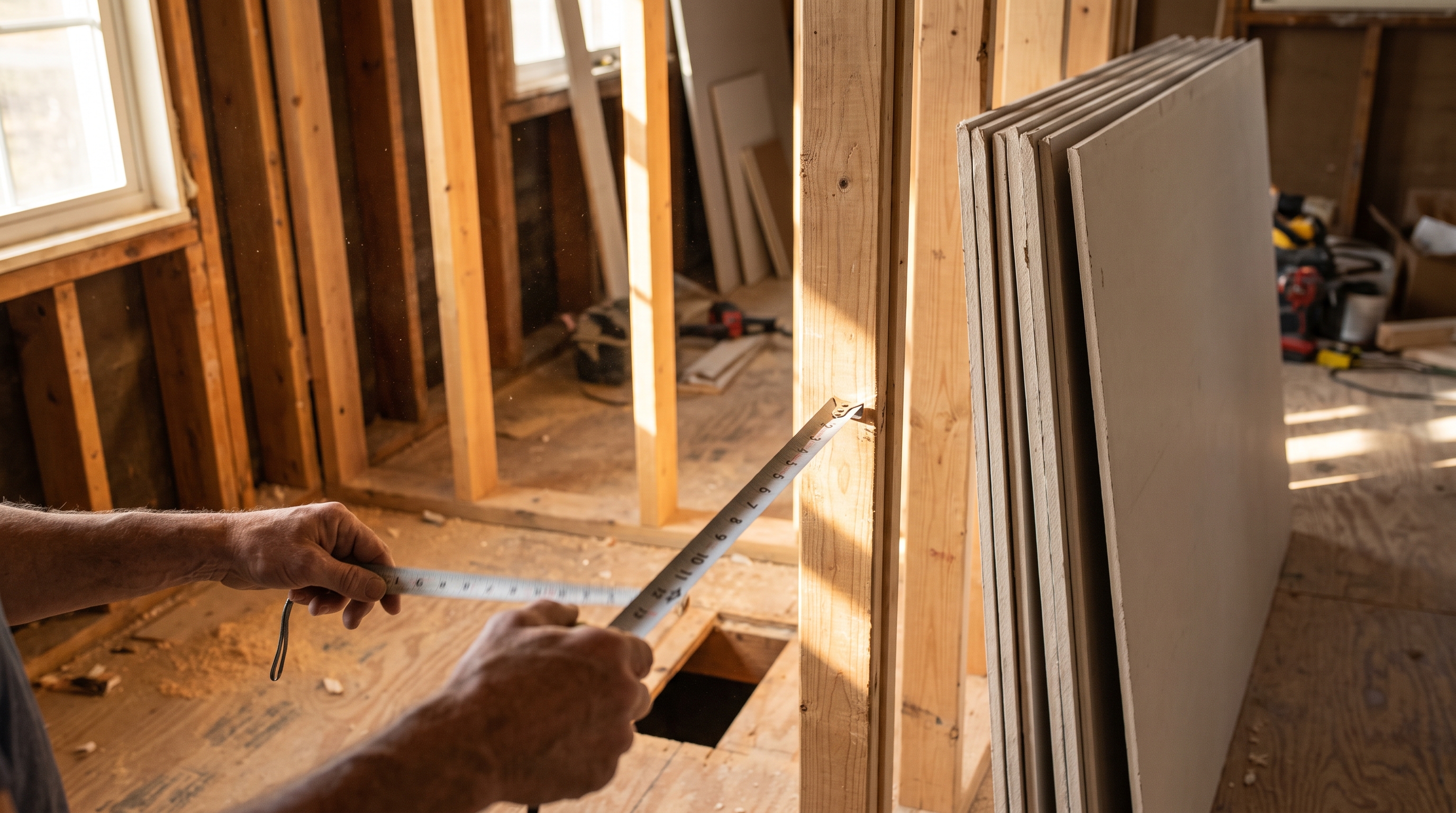
Before you look at state rules, here's a recent case. A Columbia County, Wisconsin homeowner made several payments totaling more than $45,000, from late 2023 through 2024, for changes to the home so a disabled resident could live there. Police said work started soon after the first payment, became on-and-off, and then stopped. About $30,000 of the roughly $45,000 project was never done, and supplies the homeowner had paid for were never bought, according to WMTV15 and WKOW. That's the reason the contractor deposit how much question matters: it decides how much of your money is at risk before any work gets done.
On Sept. 22, the Dodge County Sheriff's Office arrested the contractor, Jay E. Patey, 47, of Burnett, at his home. He is charged with one count of felony theft by contractor in Columbia County Circuit Court. The homeowner reported the case to the Columbus Police Department in August, and Police Chief Dennis Weiner announced the arrest. Both outlets report that Patey also has a theft-by-contractor case pending in Fond du Lac County and is due back in court Nov. 16. These are charges, not convictions. The homeowner said repeated requests to the contractor went unanswered, and they ended up hiring another contractor to finish the work.
The short answer
Keep the deposit small and make every later payment match work that is finished or materials that have been delivered. California has the strictest general rule: the down payment can be no more than $1,000 or 10% of the contract price, whichever is less. Even if your state allows more, that's a good benchmark to use. Hold the final payment until the job is done and you're satisfied.
How deposit limits differ by state
States handle this very differently. The FTC notes that "some states actually limit the amount of money a contractor can ask for as a down payment" and suggests checking with your state or local consumer protection agency. Here are the rules in five states that show the range:
-
California: Under Business and Professions Code 7159.5, the down payment "shall not exceed one thousand dollars ($1,000) or 10 percent of the contract amount, whichever amount is less." On a $50,000 job, that means $1,000, not $5,000. After the deposit, the contractor "shall neither request nor accept payment that exceeds the value of the work performed or material delivered," and progress payments must follow a schedule written in dollars and cents and tied to specific work. The one exemption is for contractors who carry a qualifying performance and payment bond, a lien and completion bond, or a bond equivalent or joint control approved by the registrar.
-
Maryland: Business Regulation 8-617 says a contractor may not demand or receive any payment before the contract is signed, and may not take a deposit of more than one-third of the contract price. The Maryland Home Improvement Commission explains that past the deposit, the law "does not control the payment schedule." That part is left to you and the contractor to negotiate.
-
Massachusetts: Under M.G.L. c.142A §2, the advance deposit can't exceed the greater of one-third of the contract price or the actual cost of special-order or custom-made materials. Contracts over $1,000 must be in writing.
-
Nevada (pools and spas): For residential pool and spa contracts over $1,000, NRS 624.940 caps the first deposit at $1,000 or 10% of the contract price, whichever is less. That's the same formula California uses.
-
New York: New York has no percentage cap. Under General Business Law §771, the contract must say that payments received before the job is finished will be deposited as required by the Lien Law. The contractor can instead post a bond, a contract of indemnity, or an irrevocable letter of credit guaranteeing that your money is returned or used properly. You can also cancel until midnight of the third business day after you sign.
If you live somewhere else, don't assume either way. Call your state or local consumer agency before you sign.
When a bigger deposit makes sense: special-order materials
The Massachusetts rule reflects how some jobs really work. Custom windows, made-to-order cabinets, and special-order garage doors get built for your house, and the supplier may want payment before building them. In those cases a larger payment up front can be fair.
How you pay matters more than how much. Pay that material bill straight to the supplier, or use a joint check made out to both the contractor and the supplier. Get a copy of the order confirmation. That way the money for your windows actually goes toward windows. In the Wisconsin case, supply money never reached a supplier at all.
How to build a milestone payment schedule
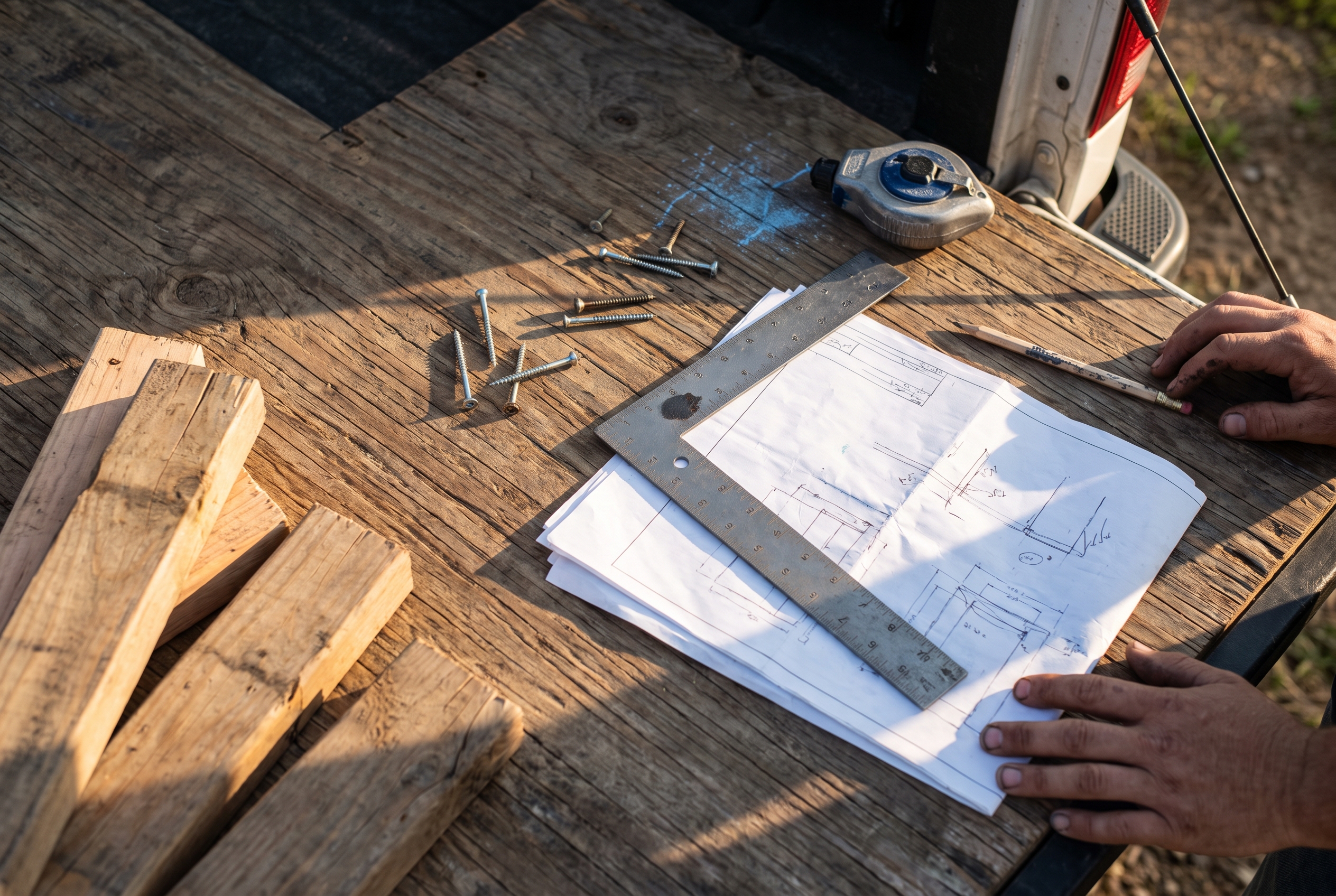
The California Contractors State License Board says a contract should include "a detailed, written payment schedule." That's good practice anywhere. To build one:
-
Set a small deposit. Use the lesser of $1,000 or 10% unless state law or a real special-order cost justifies more.
-
Tie every payment to a stage you can see. Examples: materials delivered to the site, rough-in inspection passed, drywall hung, cabinets installed, final walkthrough.
-
Write dollar amounts, not just percentages. California requires this, and it prevents arguments about what "30%" meant.
-
Put changes in writing first. CSLB says changes to price or scope need a written change order signed by both parties before the work changes.
-
Hold back the final payment. The FTC says: "Never make the final payment until the work is done and you're satisfied with it."
Make sure suppliers and subs get paid
If a contractor takes your money and doesn't pay the lumber yard or the electrician, those companies may be able to put a lien on your home. That can mean paying twice for the same work. Three tools help prevent it:

-
Joint checks. The CSLB's mechanics lien guide puts it simply: "The simplest way to prevent liens and ensure that subcontractors and suppliers are paid is to pay with joint checks."
-
Lien waivers or releases with every payment. In Wisconsin this is a legal right. Under ATCP 110.025(2), if you ask, the seller must give you written lien waivers from all contractors, subcontractors, and material suppliers with each partial payment. Wisconsin DATCP explains that waivers keep a sub or supplier from putting a lien on your home if the contractor doesn't pay them. CSLB also recommends collecting lien releases so you can track who has been paid.
-
Notice of Completion (California). CSLB notes that filing one shortens the time claimants have to record a lien.
What the law does after the money is gone
Wisconsin's statute 779.02(5) treats money an owner pays a contractor as a trust fund for the labor, services, and materials on that project. Using it for anything else before those bills are paid is theft by contractor, which is the charge in the Columbia County case. That gives prosecutors a way to act. It doesn't give you a refund plan or a finished bathroom. The Wisconsin homeowner still had to hire someone else. Setting up payments carefully at the start protects you in a way that prosecution afterward can't.
Red flags before you pay
-
A deposit higher than your state allows, or well above the lesser of $1,000 or 10% with no special-order reason
-
Asking for any payment before the contract is signed (illegal in Maryland)
-
Cash only, or everything up front (the FTC lists both as scam signs)
-
Payment requests that get ahead of the work you can see
-
Refusing joint checks, direct supplier payment, or lien waivers
-
Scope or price changes agreed out loud with no signed change order
Sample plans: $15,000 and $50,000 jobs
Here's how the up-front amount compares under the two main approaches:
-
$15,000 job: California-style benchmark = $1,000 deposit (10% would be $1,500, so the lower $1,000 applies). A one-third deposit = $5,000.
-
$50,000 job: California-style benchmark = $1,000 deposit. A one-third deposit = about $16,667.
On the $50,000 job, the gap is more than $15,000 that you would hand over before any work is done. Under the benchmark approach, a $15,000 job might look like this (illustrative only): $1,000 at signing, $4,000 when materials arrive (paid by joint check), $4,000 at rough-in, $4,000 when installation is substantially done, and $2,000 after the final walkthrough.
What to say when a contractor asks for more: "I'm glad to pay for materials when they're delivered, by joint check or straight to the supplier, and I'll pay for each stage as it's finished. I'd like to keep the deposit at $1,000 and get a lien waiver with each payment." A solid contractor with good supplier relationships can usually work with that. If one refuses every part of it, keep collecting bids.
Related reading
-
Belt, Chain or Wall-Mount Garage Door Opener: Which Is Quietest for the Money?
-
Should You Still Replace the Furnace Before a Warm Winter Forecast?
Sources
-
WMTV15: Dodge County contractor arrested after home project goes unfinished
-
WKOW: Contractor charged with felony theft after leaving disabled resident's home unfinished
-
Maryland Home Improvement Commission: Home Improvement Contracts
Note: This article contains AI-assisted content and has been reviewed by our editorial team.
ABOUT THIS SERVICE: CallTheLocal.com is a directory and lead generation service, not a contractor or service provider. Submitting this form does not obligate you to hire anyone or purchase any service. Your information will be shared with licensed, insured home service professionals in your area who may provide quotes for your project. CallTheLocal.com does not guarantee the quality, timeliness, or outcome of any work performed by service providers you connect with through this service. Always verify licensing, insurance, and references before hiring. Get everything in writing before work begins.