If it feels like your homeowners insurance bill is quietly taking over your mortgage statement, you are not imagining it. Home insurance now equals a record 9% of the average homeowner's monthly mortgage payment, the highest share ever recorded (24/7 Wall St.). That is on top of a roughly 24% cumulative premium increase over three years, from 2021 to 2024, which far outpaced inflation (Consumer Federation of America, via Consumer Reports).
Homeowners have noticed. In a Pew Research survey of 3,524 adults polled in March 2026, 71% of homeowners said their insurance costs went up, and 42% said they went up "a lot" (Pew Research Center, reported by CNBC). A big reason: the cost of repairing or replacing property after a loss rose about 45% on average from 2020 to 2023, and carriers pass that through to premiums.
Here is the more useful news for anyone who owns a home and works with contractors. You cannot control the weather or the reinsurance market, but you can control your house. Certain contractor-installed upgrades measurably move an underwriter, and several of them can be the difference between a home that a carrier will write and one it will not. Below are five upgrades that actually earn credits in 2026, plus the inspection that can force your hand.
A quick word on how insurance credits really work
Before you spend a dollar, understand the ground rules. Credit amounts vary widely by carrier and by state. The same roof that earns a big discount in Texas or Oklahoma might earn a smaller one where you live. Treat every number below as a range, not a promise, and always confirm the credit with your specific carrier before you sign a contract. The upgrades still pay off in lower risk and better insurability, but the exact savings depend on your policy.
Upgrade 1: Impact-resistant or FORTIFIED roofing (Class 4)
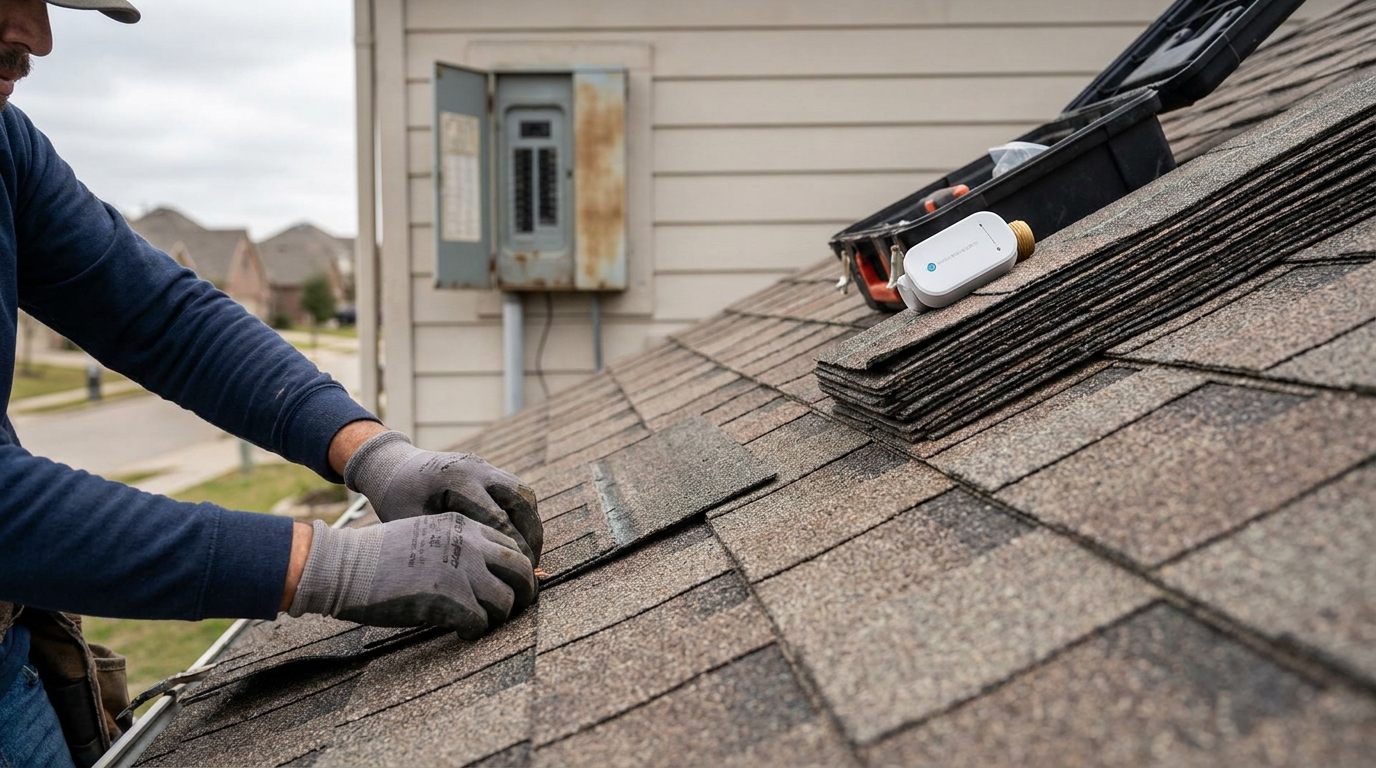
Your roof is the single biggest factor most carriers look at, and an impact-resistant roof covering is the upgrade with the most documented savings. A Class 4 rated shingle is built to withstand hail and wind better than a standard roof. State Farm advertises impact-resistant roof discounts of up to 35% in some states, and homeowners with FORTIFIED roofs commonly report credits in the 5% to 15% range or more (State Farm; Consumer Reports).
What to expect: A Class 4 shingle upgrade usually adds a modest premium over a standard architectural shingle, and it makes the most sense when you are already due for a roof replacement. If you are tearing off an old roof anyway, stepping up to a rated product is where the math works best.
How to get the credit: Ask your contractor for a product that qualifies for an impact-resistant credit, and get the manufacturer's rating documentation in writing. Texas, for example, keeps an official list of qualifying products through its Department of Insurance (tdi.texas.gov). Send that documentation, plus dated photos, to your carrier so the credit is actually applied to your policy.
Upgrade 2: Automatic water shut-off and leak sensors
Water is the quiet budget-killer. Burst supply lines, failed water heaters, and slow leaks add up to some of the most common and expensive non-weather claims a carrier sees. An automatic water shut-off valve paired with leak sensors, such as a Moen Flo or Phyn Plus system, watches your plumbing and cuts the water when it detects a problem.
The payoff: Farmers cites an average premium reduction of about 3% for these systems, and the devices can cut non-weather water claims by up to 96% (Farmers Insurance). A number of carriers offer credits here, including Farmers, State Farm, Liberty Mutual, Amica, and American Family. Some partnerships sweeten the deal further; Mercury, for example, partners with Flo to offer a 10% credit on part of the policy plus a $400 install offset.
What to expect: A pro-installed shut-off valve at the main line is a half-day job for a plumber. The device cost plus installation is generally recovered over time through both the premium credit and, more importantly, the claims you never have to file.
Upgrade 3: An updated electrical panel and wiring
This one is less about a discount and more about being able to buy coverage at all. Outdated wiring, including aluminum branch wiring and old knob-and-tube systems, along with aging electrical panels, raises fire risk. On older homes, carriers increasingly require modern wiring and an updated panel before they will write or keep a policy (Augustyniak Insurance Group).
What to expect: A licensed electrician can evaluate your panel and wiring and tell you what a carrier will flag. If your home still has knob-and-tube or aluminum branch circuits, budget for remediation as a condition of insurability, not just a savings play. The premium credit may be small, but a home you can actually insure is the real return.
Upgrade 4: Reinforced roof-to-wall connections and a sealed roof deck
If you live in hurricane or high-wind country, this is where the biggest structural credits live. The FORTIFIED program, run by the Insurance Institute for Business and Home Safety, covers upgrades like a sealed roof deck, reinforced roof-to-wall connections, braced gable ends, and rated doors (FORTIFIED / IBHS). These are the connections that keep a roof attached to the house when the wind picks up.
The payoff: Many carriers discount the wind and hail portion of your premium for these mitigations, and in some states the savings are steep. In Oklahoma, for instance, credits have run as high as roughly 42% off the wind and hail portion. Florida's official consumer guide details exactly which structural upgrades, including roof-to-wall connections and sealed decks, earn wind-mitigation credits (Florida CFO).
What to expect: Many of these upgrades are most affordable when bundled into a roof replacement, since the roof deck is already exposed. A qualified contractor and a wind-mitigation inspection are both worth lining up before you start.
Upgrade 5: Monitored burglar and fire alarm systems
The oldest discount in the book still works. A monitored burglar and fire or smoke alarm system is a long-standing credit category offered by most major carriers, including State Farm's home-security discounts (State Farm).
The catch: The keyword is monitored. A basic alarm that only makes noise usually earns little or nothing. Carriers want central-station monitoring that summons the fire department or police. Factor in the monthly monitoring fee when you weigh the credit, and confirm your carrier's requirements before you subscribe.
The 4-point inspection trap: turn it into an upgrade roadmap
Here is the part many homeowners learn the hard way. On older homes, typically those 20 to 30 years old or more, carriers often require a 4-point inspection, most commonly when you apply with a new carrier and especially in states like Florida. The inspection reviews four systems: roof, electrical, plumbing, and HVAC (Augustyniak Insurance Group).
Failing findings can trigger a required repair, an exclusion, or an outright denial before a policy is issued. The usual culprits are exposed or outdated wiring, active or prior leaks, polybutylene plumbing, an aged roof, and HVAC equipment past 20 years. Roof age is its own tripwire: many carriers want documentation of about 5 or more years of remaining roof life, and shingle roofs older than roughly 25 years, or about 50 for tile, slate, or metal, draw extra scrutiny.
Instead of dreading the inspection, use it as a punch list. The same four systems it examines are the systems worth upgrading. Fix them proactively and you clear the inspection, qualify for credits, and avoid the scramble of a last-minute nonrenewal.
Your practical playbook
-
Confirm the credit first. Call your carrier and ask exactly what an upgrade will save on your policy in your state before you spend. Credits vary widely, so get it in writing.
-
Get multiple contractor quotes. For roofing, electrical, plumbing, and mitigation work, compare licensed and insured pros and ask specifically about products that qualify for insurance credits.
-
Keep your documentation. Manufacturer ratings, dated photos, wind-mitigation reports, and permits are what actually unlock the discount. No paperwork, no credit.
-
Re-shop at renewal. Once your home is upgraded, its risk profile has changed. Compare quotes at renewal so the improvements show up as savings.
An honest word on the math
None of these upgrades is a magic switch. A 3% water-detection credit will not offset a five-figure roof by itself, and discount percentages swing by carrier and state. The strongest case is when an upgrade does double duty: it lowers real risk, it earns a credit, and it keeps your home insurable. Impact-resistant roofing folded into a replacement you needed anyway, or an electrical update that a carrier would have required regardless, tend to pay back best. Weigh each project against its cost and payback period, and let insurability, not just the discount, guide the priority.
Related reading
-
[A Second Wave of HVAC Price Hikes Just Landed July 1: Six Suppliers Added 6 to 10% to Your 2026 AC Job](/guides/hvac-price-increases-july-2026-second-wave)
-
[The $200 Fine Just Became $1,500: What California, Florida, and New Jersey's 2026 Unlicensed Contractor Rules Mean for Your Wallet](/guides/unlicensed-contractor-crackdown-california-florida-new-jersey-2026)
Sources
-
Home Insurance Now Takes A Record 9% of Your Mortgage Payment, the Highest Ever — 24/7 Wall St.
-
42% of homeowners say insurance costs have gone up 'a lot,' survey finds — CNBC
-
71% of U.S. homeowners say their home insurance costs have gone up — Pew Research Center
-
5 Home Improvements That Can Save You Money on Homeowners Insurance — Consumer Reports
-
Products qualifying for impact-resistant roofing credits — Texas Department of Insurance
-
Premium Discounts for Hurricane Loss Mitigation: A Guide for Consumers — Florida CFO
-
What is a 4-Point Inspection in Florida for Home Insurance? — Augustyniak Insurance Group
Note: This article contains AI-assisted content and has been reviewed by our editorial team.
ABOUT THIS SERVICE: CallTheLocal.com is a directory and lead generation service, not a contractor or service provider. Submitting this form does not obligate you to hire anyone or purchase any service. Your information will be shared with licensed, insured home service professionals in your area who may provide quotes for your project. CallTheLocal.com does not guarantee the quality, timeliness, or outcome of any work performed by service providers you connect with through this service. Always verify licensing, insurance, and references before hiring. Get everything in writing before work begins.