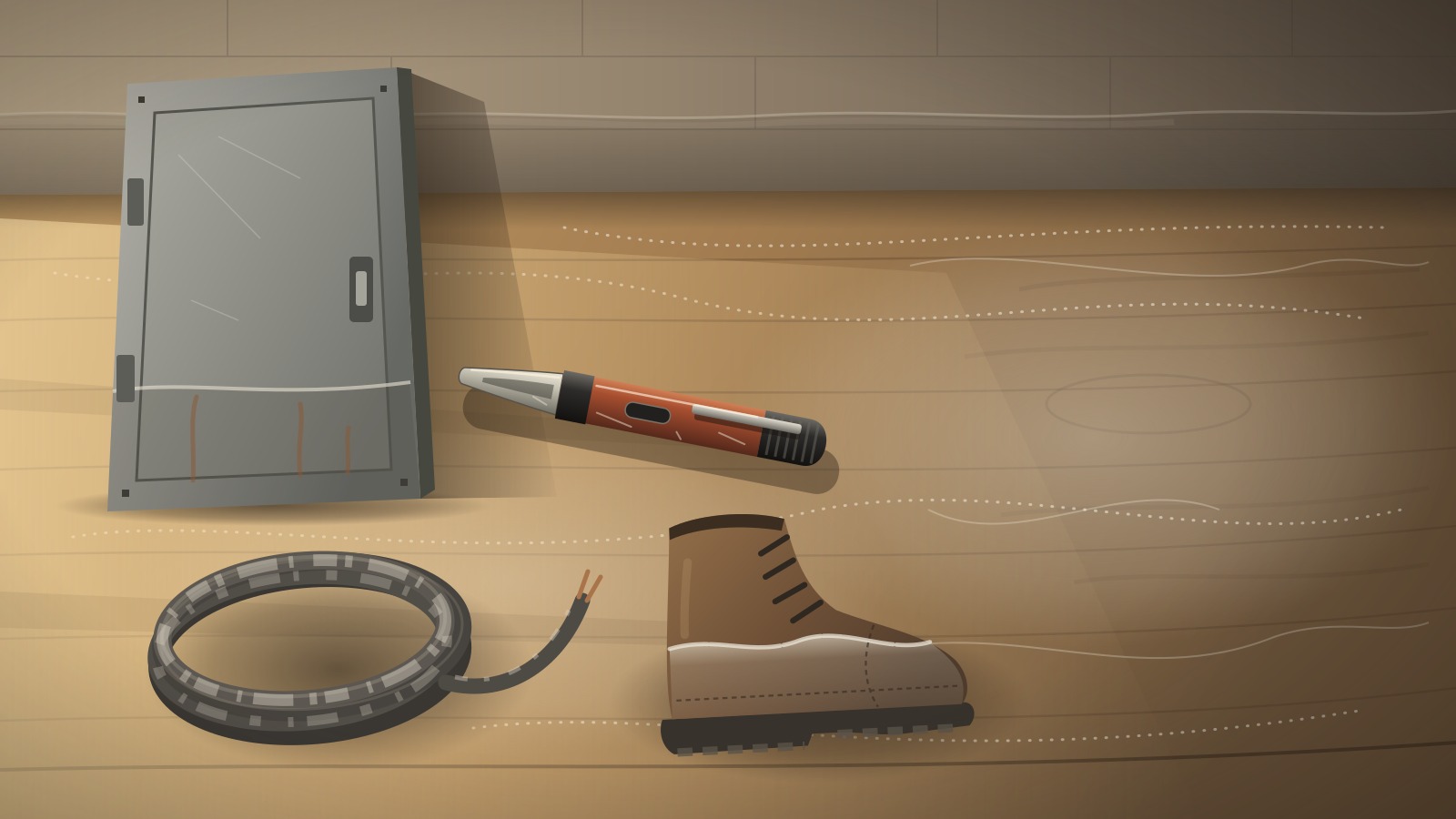
The tide went out, the garage floor is drying and the outlets look fine, so the next move seems obvious: flip the breaker and get the lights back. Don't, at least not yet. With saltwater flood electrical damage, the trouble may be out of sight, and Schneider Electric says "tripped circuit breakers or fuses indicate there may be hidden damage." Leave the main off if you can reach it from a dry spot, and have a licensed electrician inspect the system before power comes back.
Plenty of homeowners are facing this call right now. AP reported that late-October king tides sent seawater into homes in California, Florida and the Carolinas. In Sunset Beach, Calif., Lorraine Friedman, 75, stacked sandbags in a garage and on a patio, and the water washed over them. Friedman told AP it was the second day of flooding and that "tomorrow I'll get flooded again."
In Miami, the Virginia Key gauge reached a preliminary 2.54 feet above its high-water baseline (MHHW) on Oct. 27. "The only times we've seen higher was during hurricanes," National Weather Service meteorologist Chris Fisher told AP. The Watchers lists those two higher readings as Irma and Wilma.
Is it safe to reset a breaker after saltwater flooding?
No. If water reached your outlets, wiring or panel, or if a breaker tripped, wait for an electrician. The CDC says to "have an electrician check the house's electrical system before turning the power on again," and Schneider Electric advises keeping main power off until the inspection is complete.
A breaker that resets without complaint doesn't settle the question. Treat the trip as information, and let someone qualified find out what caused it.
What should you do first when water reaches the garage?
Stay out of standing water, and only touch the main if you can do it from a dry location. The rest can wait for an electrician.

-
If reaching the main means stepping into water, stop. The CDC says: "If you must enter standing water to access the main power switch, then call an electrician to turn it off."
-
Never work power from a wet floor. The CDC's wording is blunt: "NEVER turn power on or off yourself or use an electric tool or appliance while standing in water."
-
Leave wet appliances and tools off. The CDC says all electrical equipment and appliances "must be completely dry before returning them to service," but treat dry as a minimum, not an all-clear.
-
Skip the hose and the hair dryer. Schneider Electric says to "resist the urge to clean your electrical equipment."
-
Take pictures before anything moves. Photograph the waterline and write down how deep the water got and how long it stayed.
When should you call an electrician after a king tide?
Call a licensed electrician if water touched outlets, the panel or wiring, or if any breaker tripped. If you smell smoke or heat, Schneider Electric advises removing main power, so do that if you can reach the main from a dry spot, and make the call right away.
Your utility or building department may also have a say. After Hurricane Idalia in 2023, Duke Energy Florida said it "cannot reconnect power until the electrical system has been inspected by a licensed electrician" for flooded customers, and that any repairs and sign-off from the local building inspection authority had to come first. After Hurricane Matthew in 2016, Duke said in the Carolinas that "a local building inspector may need to inspect the structure before power can be reconnected." It also made homeowners responsible for hiring an electrician when a meter box pulled away. Those were storm-restoration statements from past events, so they won't necessarily apply if your power was never cut. Ask your own utility and building department what they require.
Does water-damaged electrical equipment have to be replaced?
Often, yes. Schneider Electric's position is that "electrical equipment that has been submerged or come into contact with water needs to be replaced." Some larger equipment may be reconditioned, but it says only a local electrical contractor or service technician can make that decision.
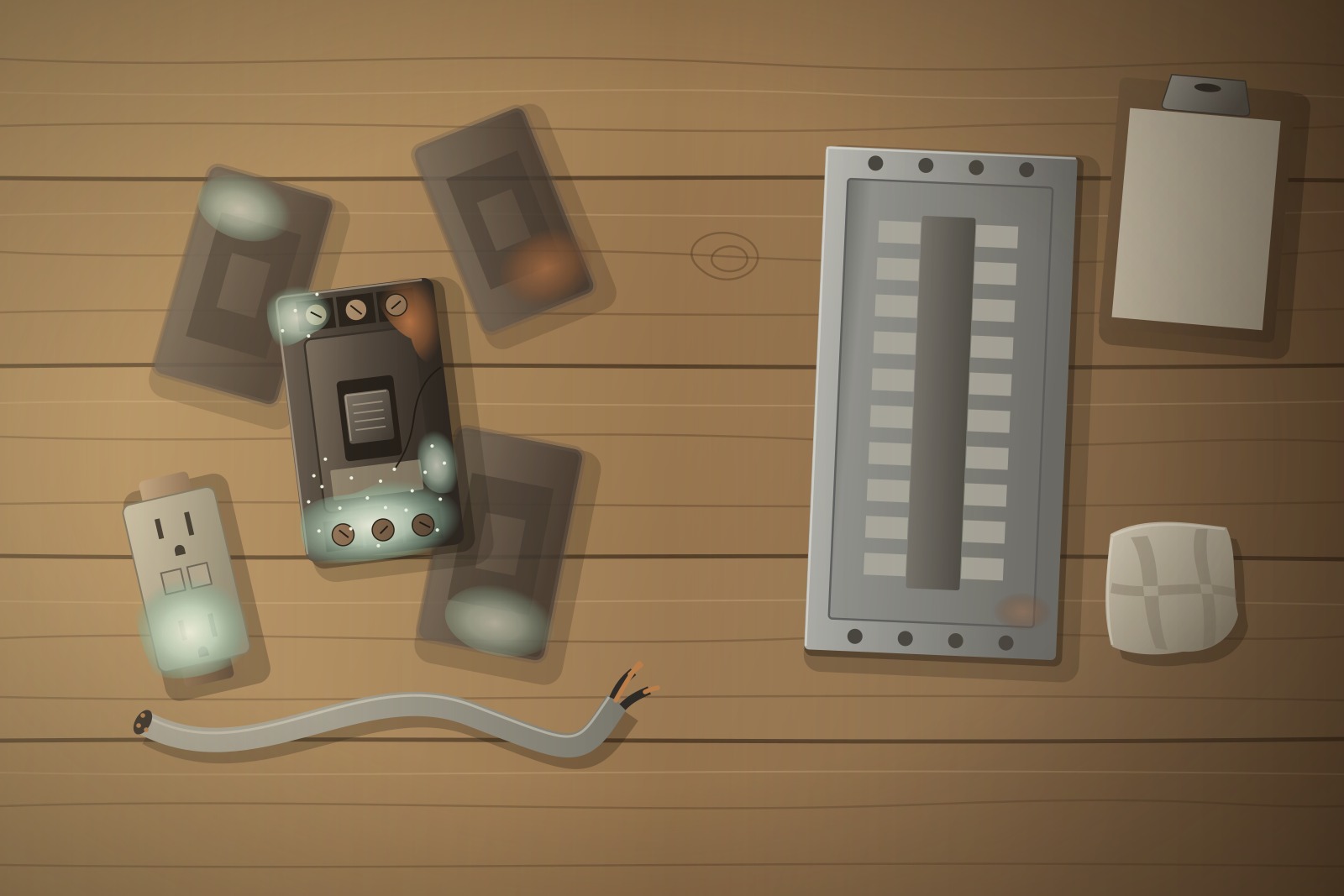
A repost of 2005 guidance from NEMA, the electrical manufacturers' trade group, gives a more specific breakdown:
-
Listed for complete replacement: molded case circuit breakers (the standard kind), fuses, dry-type transformers, and wire or cable listed for dry locations only, such as NM-B cable.
-
Also must be replaced: water-damaged GFCIs and surge protective devices. The text adds that "air drying and washing of water damaged products of this type should not be attempted."
-
Possibly saved: panelboards aren't on the replace list and may be reconditioned by trained personnel working with the manufacturer.
One detail matters for coastal homes. The Schneider FAQ wasn't written about saltwater, and the 2005 NEMA text refers to "the minerals and particles which may be present in the water" without naming it. So tell your electrician plainly that this was seawater, and how long it sat. Leviton's summary of the NEMA process starts with identifying the water source, exposure time and contaminants, and brings in the manufacturer and the local authority having jurisdiction.
How much does it cost to fix saltwater flood electrical damage?
No published range prices a saltwater job, so everything below is a routine-work benchmark. Expect a basic inspection in the low hundreds of dollars, with repairs quoted separately. Totals depend on how far the damage goes.
| Region | Modeled local inspection (2 hours of labor) | Modeled one-panel job (regional comparison only) | Other benchmarks |
|---|---|---|---|
| Orange County | Huntington Beach: $148-$197 | Huntington Beach: $911-$1,303 Orange: $835-$1,194 | California inspection: $189-$384. Bidroom's California hourly rates: $80-$150 standard, $150-$250 emergency |
| South Florida | Miami: $117-$154 | Miami: $745-$1,056 | Florida inspection: $172-$351 |
| The Carolinas | Charleston: $112-$148 Wilmington: $114-$150 | Charleston: $779-$1,103 Wilmington: $791-$1,120 | National hourly: $40-$120 (This Old House), $53-$125 (Homeyou) |
Read the city figures carefully. They come from Homeyou's labor models, so treat the inspection numbers as a floor, not a flood-inspection quote. The panel totals sit far below Homeyou's own national replacement range, so use them only to compare regions. On that model, Huntington Beach runs about 22-23% above Miami, while Charleston and Wilmington run about 4-6% above it (our arithmetic). Wages show a similar gap: SimplyWise, citing federal data, puts the mean electrician wage at $39.57 in the Los Angeles-Long Beach-Anaheim area and $28.81 in the Miami-Fort Lauderdale-West Palm Beach area. Those are wages, not billed rates.
National benchmarks for the full job
-
Inspection: Thumbtack shows an average range of $217-$663, with most people paying around $389. Homeyou shows $150-$313, or $220-$490 for whole-house wiring.
-
GFCI outlet: $169-$340 from Homeyou, $120-$200 from This Old House. As an illustration, four garage GFCIs at Homeyou's range come to $676-$1,360 (our arithmetic).
-
Outlet or breaker: Homeyou lists outlet replacement at $120-$222 and circuit breaker replacement at $120-$233.
-
Breaker box or panel: This Old House lists breaker box replacement at $500-$1,800 and a panel upgrade at $1,300-$3,000. Homeyou lists panel replacement at $2,251-$4,913, averaging $3,401. Bidroom puts a 100-to-200-amp upgrade in California at $1,500-$4,000.
-
Whole-home rewire: Homeyou lists $7,887-$29,588, averaging $14,945, with California at $11,906-$35,416 and Florida at $8,791-$27,579. This Old House lists $6-$10 per square foot. If only part of the house took water, ask for a price on that scope.
What moves the quote, and how do you test a bid?
The biggest factor is how far the work extends: a few outlets, then breakers, then the panel. After that, watch the fees around the work.
-
Minimum fees: This Old House says electricians may charge a minimum equal to one to four hours. Bidroom lists $75-$200 for a minimum service call in California.
-
Timing: This Old House says urgent night or weekend calls add at least $100-$200.
-
Add-ons: Homeyou says repairs, code upgrades, and permit or municipal inspection fees are usually billed separately. Inch Calculator gave a permit range of $50-$350 or more, but that figure dates to 2023.
-
Meter-side work: Ask for it as its own line item, and don't assume a panel price includes it.
Before you sign, ask each electrician to list every device as "replace" or "clean," and to explain any item marked clean. Then ask what the manufacturer or local inspector said about it. A bid that plans to wash and reuse breakers or GFCIs, with no manufacturer behind that decision, is a red flag given the guidance above.
Can saltwater make lithium batteries catch fire?
Yes, it can, though most of the fire data comes from hurricane surge, not king tides. Florida's State Fire Marshal said saltwater from storm surge can compromise these batteries, "causing fires which cannot be easily suppressed." Florida officials confirmed 48 lithium-ion battery fires tied to Helene's storm surge, 11 of them involving EVs. Closer to the current flooding, the Laguna Beach Fire Department warned that fires are possible "days or even weeks after the initial exposure."
What to do depends on what got wet:
-
EVs, hybrids and golf carts: If you suspect damage, Laguna Beach fire officials say not to drive or charge the vehicle, and to call your insurer and arrange professional towing before a certified mechanic inspects it. ABC7 reported NHTSA's recommendation that flooded EVs "be parked at least 50 feet from any structures, vehicles or combustibles." Pinellas County applied the same distance to EVs and golf carts exposed to salt water during Helene.
-
E-bikes, scooters and tools: Don't charge them, and keep them out of the house. For small household batteries, the EPA says to tape exposed terminals, store damaged batteries in non-flammable material such as a sand-filled bucket, cat litter or vermiculite, and keep them apart from undamaged batteries. Confirm that your household hazardous waste site accepts them before you drive over.
-
Home batteries: The Powerwall 3 manual says to stay out of the water if any part of the battery, Gateway or wiring is submerged, note the flood depth and duration, and contact Tesla Support before turning the unit back on. The manual doesn't address saltwater specifically, so mention it on the call.
If you notice smoke, "hissing or popping sounds and unusual heat," Laguna Beach fire officials say to move away and call 911.
Will insurance cover king tide flood damage?
Don't count on a standard policy. FEMA says "most homeowners insurance does not cover flood damage," and "there is typically a 30-day waiting period for an NFIP policy to go into effect," with exceptions for mandated coverage.
That timing matters. An application made Oct. 30 would typically start around Nov. 29, after the Nov. 25 tide peak (our arithmetic). Flood insurance may still be worth pricing for December and beyond, but it probably won't help with this round.
Before repairs start, keep your waterline photos and your notes on depth and duration. The same record answers the questions Tesla's manual tells owners to note, and it gives your insurance agent and electrician something concrete to work from. Ask your agent in writing how your policy treats tidal water.
When are the next king tides?
South Florida's next window opens Nov. 6, and the rest of the coast should plan around Thanksgiving week. Insurance Journal also reported two more fall king tides, in the second week of November and Thanksgiving week.
-
Miami and Miami Beach: City of Miami and Miami Beach list Nov. 6-9 and Nov. 23-26. Miami's Nov. 23-26 peaks are at 7:33, 8:23, 9:13 and 10:04 a.m., and the city says flooding typically lasts about 3 hours, roughly 1.5 hours either side of peak.
-
Palm Beach County: The county lists Nov. 24-27.
-
Charleston: The local blog Tidelines lists Nov. 24-27, though it names no data source.
-
Newport Beach: The Inertia reports a five-day stretch in Thanksgiving week, starting at 6.5-7 feet and potentially reaching 8.8 feet, then Dec. 22-26, with up to 9 feet possible on Christmas Eve.
Don't lean too hard on the tide table, though. It's a floor on your risk, not a forecast. NOAA's predicted peaks, which account for astronomy alone, look like this:
| Station | Oct. 27 | Nov. 8 | Nov. 25 |
|---|---|---|---|
| Virginia Key, Fla. (ft above MHHW) | 0.737 | 0.542 | 0.556 |
| Charleston, S.C. (ft MLLW) | 6.870 | 6.419 | 6.781 |
| Wrightsville Beach, N.C. (ft MLLW) | 5.643 | 5.225 | 5.561 |
| Newport Beach, Calif. (ft MLLW) | 6.653 | 6.146 | 7.017 |
Only Newport Beach is predicted to run higher on Nov. 25 than on Oct. 27. But the October water beat the predictions by a wide margin. Virginia Key's 2.54-foot reading was about 1.8 feet above the prediction (our arithmetic). Charleston topped 8 feet on Oct. 25, its major flood level, which was more than a foot above the 6.87 feet predicted for the peak of that window.
Palm Beach County's page says "King tides for 2026 are not predicted to reach the Flood Stage," while warning that storms can push levels higher. Then Lake Worth Pier, in that county, reached a preliminary 2.7 feet above MHHW, topping the 2.52 feet set during Hurricane Nicole. The county also says flooding isn't guaranteed on predicted dates, so a listed date is a reason to prepare, not a promise. Yale Climate Connections reports that Miami crossed its major flood threshold for the first time on record without hurricane surge.
Three things are worth doing before the next window:
-
Block the garage opening. Newport Beach, which declared a local emergency this month, advises "placing sandbags or temporary flood barriers along all vulnerable areas, including seawalls, garages." It offered free prefilled sandbags as of Oct. 23, so check with your city about what's available now.
-
Move vehicles and batteries to high ground. That includes EVs, golf carts, e-bikes, scooters and tool batteries.
-
Book early. If you already had water in the garage, get the inspection and any repairs scheduled before the next window instead of after it.
So should you call an electrician today?
Match what happened at your house to one of these three cases:
-
Water stayed away from outlets, the panel and wiring, and nothing tripped. You may not need an urgent call. Take your photos and notes, and if you aren't sure how high the water got, treat your home as the next case.
-
Water reached outlets or breakers, or something tripped. Don't reset anything. Book an inspection and tell the electrician it was seawater.
-
Water reached the panel or meter, or you smell smoke or heat. Keep the power off, or have an electrician shut it off if you'd have to enter water to reach the main, and call now.
Whoever you call, check them first. California homeowners can use the state's CSLB License Check, and North Carolina homeowners can use the electrical contractors board's license search. Elsewhere, ask for the license number and proof of insurance, then confirm both with the issuing agency and the insurer.
Watch the deposit, too. For a home improvement job in California, the CSLB says the down payment "cannot be more than $1,000 or 10 percent of the contract price, whichever is less," with no exception for special-order materials, and later payments can't exceed the value of the work performed.
Related reading
-
Ceiling Leak? What to Do in the First 48 Hours, Room by Room
-
Lumber Hit a Two-Year Low. So Why Is Your Flooring Quote Still High?
-
Portable Generator With Transfer Switch or Whole-House Standby?
-
How to Restore Power Safely After Floodwater Reaches the Breaker Box
Sources
-
Flooding: AP via NBC News, AP via KSBY, CBS Miami, The Watchers, Yale Climate Connections, Post and Courier via Yahoo, CBS Los Angeles
-
Tide dates: NOAA CO-OPS predictions (linked in the table above), City of Miami, City of Miami Beach, Palm Beach County, Tidelines, The Inertia, Insurance Journal
-
Electrical safety: CDC, Schneider Electric, NEMA 2005 text (repost), Leviton, Duke Energy Florida (2023), Duke Energy Carolinas (2016)
-
Batteries: KTLA via KRQE, CBS News, Fox Weather, ABC7, EPA, Tesla Powerwall 3 manual
-
Pricing: Thumbtack, Homeyou inspection guide, Homeyou electrical guide, Homeyou rewiring guide, This Old House, Bidroom, Inch Calculator, SimplyWise. Homeyou city pages are linked in the cost table.
-
Insurance and vetting: FEMA, CSLB contracts, CSLB License Check, NC State Board of Examiners of Electrical Contractors
ABOUT THIS SERVICE: CallTheLocal.com is a directory and lead generation service, not a contractor or service provider. Submitting this form does not obligate you to hire anyone or purchase any service. Your information will be shared with licensed, insured home service professionals in your area who may provide quotes for your project. CallTheLocal.com does not guarantee the quality, timeliness, or outcome of any work performed by service providers you connect with through this service. Always verify licensing, insurance, and references before hiring. Get everything in writing before work begins.
Note: This article contains AI-assisted content and has been reviewed by our editorial team.