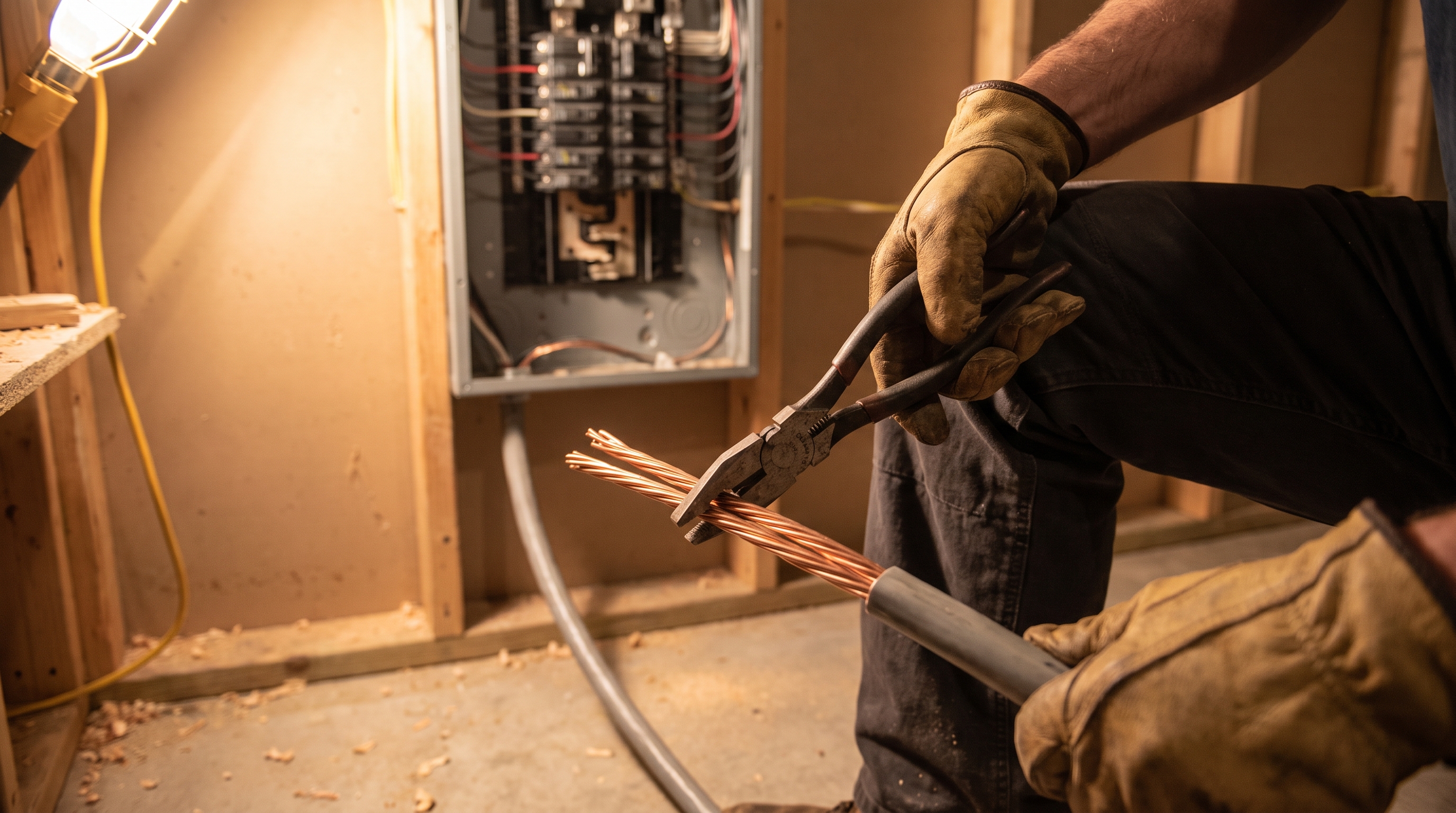
Copper set a new record on the London Metal Exchange this week. If you are getting bids for electrical work, it may affect your panel upgrade cost 2026 quote. Bloomberg reported an intraday high of $14,533 per metric ton on Sept. 7. Business Recorder reported a new all-time high of $14,779 on Sept. 9, followed by a dip to $14,641 on Sept. 10. The homeowners most exposed are those pricing a panel upgrade, a service change or a whole-house rewire.
Before you rush to sign, know one thing: this week's record is on the London exchange, not the US market. COMEX, the US copper futures contract, hit its peak in August at about $6.83 per pound. According to Trading Economics, it was down to about $6.47 on Sept. 11, after reports that the US is reconsidering tariffs on refined copper. The run-up is real, but in the US it may already be easing.
What happened to copper, and when
-
August 2026: COMEX copper sets its record near $6.83 per pound (Trading Economics).
-
Sept. 7: LME copper reaches an intraday high of $14,533 per ton. That was up 0.8% on the day and 17% over the past year, topping a January record (Bloomberg via Yahoo Finance).
-
Sept. 9: LME copper sets a new all-time high of $14,779 per ton (Business Recorder).
-
Sept. 10: LME copper falls 0.5% to $14,641 and COMEX drops 1% to $6.76 per pound (Business Recorder).
-
Sept. 11: COMEX copper is at about $6.47 per pound. That is still up about 41% from a year earlier, with reports that the US may back off refined copper tariffs (Trading Economics).
Reporters point to several causes. Traders expected US tariffs to expand to refined copper, so they shipped huge amounts of metal into US warehouses (Business Recorder cites about 1.2 million tons since February 2025). That left supply tight in the rest of the world. Mines are ageing, and data centers, renewable energy projects and power grids all need more copper. Business Recorder says the US price premium over London had grown to about $260 per ton.
Electrical supply prices were already climbing
Homeowners feel the metal price through wire and equipment, and official government data shows those costs have gone up. Producer price indexes from the Bureau of Labor Statistics track what manufacturers charge. Their August 2026 readings are below (recent months are preliminary):
| Product (BLS producer price index) | Change, Aug 2025 to Aug 2026 |
|---|---|
| Copper wire and cable | Up about 27% |
| Switchgear and switchboard apparatus manufacturing | Up about 13% |
| Low-voltage panelboards and distribution boards (the equipment category behind home breaker panels) | Up about 6% |
Timing matters too. The copper wire and cable index rose about 13% between April and August 2026 alone. The panelboard index rose only 6% over the whole year. In practice, the wire lines on a bid are likely to change much faster than the price of the panel itself.
Contractor pricing databases move more slowly than raw metal. Gordian's RSMeans data (updated July 13, 2026) listed copper wire at $445.15 per thousand linear feet in the third quarter of 2026. That was up 6.98% on the quarter and 13.09% on the year, and it was the eighth quarterly increase in a row. Conduit was $140.19 per hundred linear feet, up 4.59% from a year earlier. Trade publication Electrical Wholesaling reported that copper wire and cable and switchgear had some of the biggest year-over-year jumps in the June 2026 data. Construction input prices overall were up 7.6%.
What a panel upgrade bid includes, and which lines follow copper
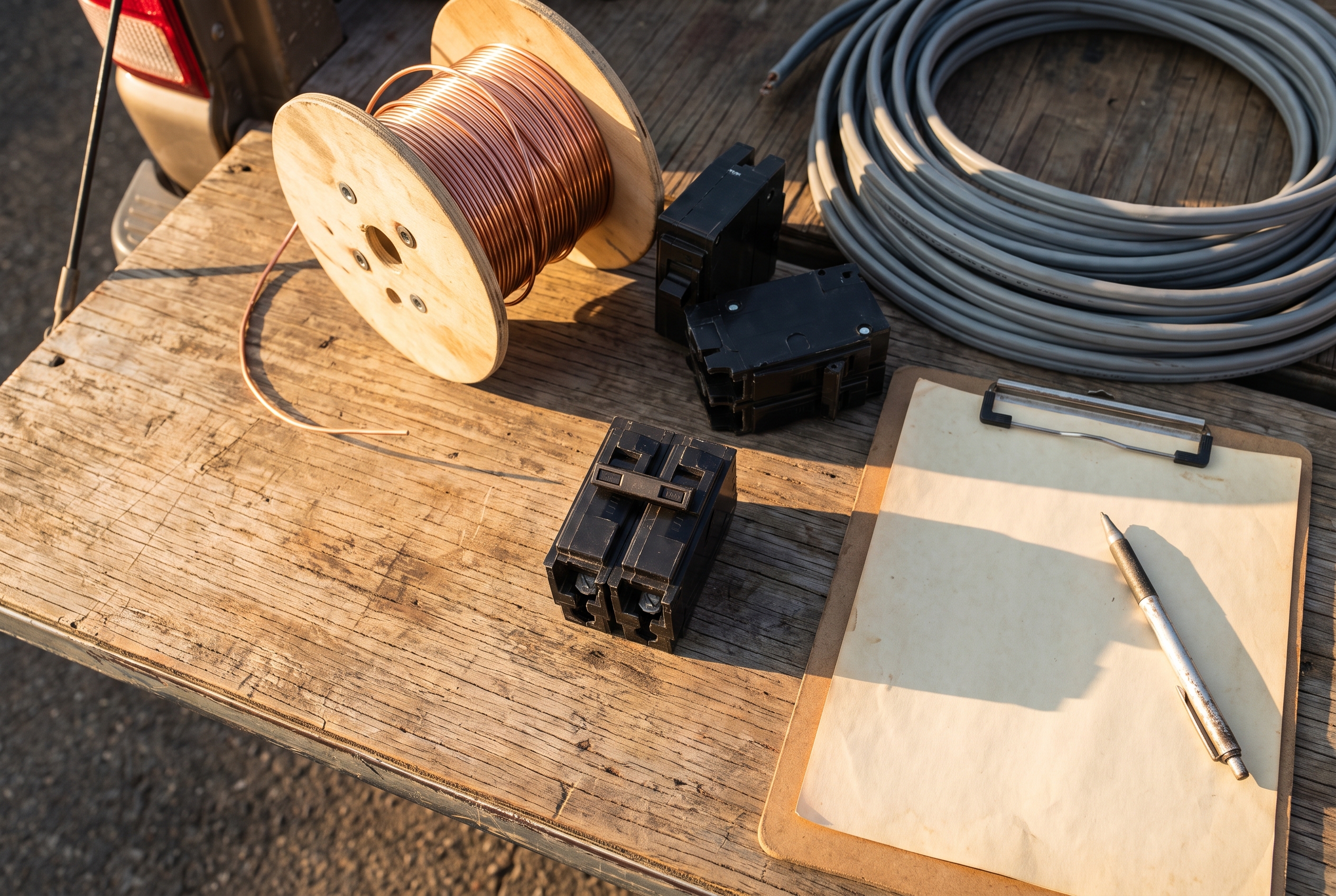
Home services site FixUpFirst gives these regional ranges for going from 100 amps to 200 amps:
| Region | 100A to 200A upgrade |
|---|---|
| Northeast | $2,200-$5,000 |
| Pacific | $2,200-$5,000 |
| Midwest | $1,500-$3,500 |
| Southeast | $1,400-$3,200 |
Those ranges were last updated June 12, 2026. That was before the August wire price data and this week's metal record, so use them as a starting point, not a promise. Here is how the typical parts of a bid relate to copper:
-
Panel and main breaker, plus 20-40 breakers: Moderate exposure. Panelboard producer prices rose about 6% in a year, and switchgear manufacturing prices rose about 13%.
-
Service entrance cable: The most exposed line on a panel job. This heavy cable runs copper from the meter to the panel.
-
Feeders and grounding and bonding: Exposed wherever copper conductors are used, and more so on long runs.
-
Meter base (often extra, $300-$800): This is an equipment line. Ask whether it is included or priced on its own.
-
Added circuits (often extra, $100-$300 each): Each one includes new wire, so more circuits means more copper exposure.
-
Panel relocation (often extra, $500-$1,500): Moving the panel usually means longer runs of wire, so copper matters more.
-
Labor, permit and utility coordination: These do not follow copper prices.
We could not find a reliable, current figure for what share of a home panel upgrade is materials versus labor, so we won't guess. Panel jobs are heavy on labor, permits and utility coordination, so a big jump in copper does not raise the whole bid by the same percentage. If you want the actual split, ask your electrician to list materials separately.
AI workflows for revenue teams
Placeholder house ad for Conservus.ai. Swap with final creative when brand assets are ready.
Partner with Conservus.aiRewiring is where copper matters most
A whole-house rewire is different. Wire is a much bigger part of that job than of a panel swap, so copper prices move rewire bids more. Here is a simple way to size it. At Gordian's third-quarter price, every 1,000 feet of that copper wire costs about $50 more than it did a year earlier in contractor cost data. The producer price index for copper wire and cable rose faster, about 27%, so what distributors charge your electrician may be higher still.
For a rewire, ask two things: roughly how many feet of wire the job needs, and what price per foot the bid assumes. With those numbers you can estimate your own exposure instead of relying on a headline.
How to read your quote

-
Validity window. Look for how many days the price holds, usually near the signature line or in the terms. A short window is normal when material prices are moving.
-
How wire is priced. Is it included in a lump sum, listed as its own line item, or shown as an "allowance"? An allowance is an estimate that can be adjusted later.
-
Escalation language. Search for phrases such as "escalation," "material price adjustment," or "subject to supplier pricing." These let the contractor raise the price after you sign.
-
Deposit and payment schedule. Check them against your state's rules (see the California example below).
Does signing a fixed-price contract now protect you?
Usually yes, if the contract is truly fixed. ConsensusDocs, which publishes standard construction contracts, puts it this way: "Constructors, subcontractors, and materials suppliers typically bear the risk for cost increases in a firm-fixed or lump sum agreement, even if such increases are unforeseen."
State consumer rules add another layer. California's Contractors State License Board (CSLB) says: "If the contract price or scope of work needs to be changed, it MUST be done with a written Change Order, signed by the customer and contractor prior to the change." California also caps the down payment at $1,000 or 10% of the contract price, whichever is less, and payments cannot be more than the value of the work done. Other states have their own home improvement contract laws, so check yours.
The catch is that this protection disappears if the contract includes an open-ended escalation clause. A "fixed price" that can be adjusted for "all material cost increases" is not really fixed.
AI workflows for revenue teams
Placeholder house ad for Conservus.ai. Swap with final creative when brand assets are ready.
Partner with Conservus.aiWhat a fair escalation clause looks like
Escalation clauses are not automatically a red flag. In a volatile market, some electricians will only offer a lower price with one. According to guidance from law firm Barley Snyder and contractor software company Projul, a fair clause:
-
Names specific materials, such as copper wire, instead of "all materials." Projul notes that "all materials" clauses are nearly impossible to administer and invite disputes.
-
Sets a threshold. The contractor absorbs increases up to a set percentage, or the two of you split the difference.
-
Caps the increase at a maximum amount you will pay.
-
Requires proof: written notice plus dated supplier quotes showing the original price and the new one. ConsensusDocs notes that some clauses use a published price index instead, and the hard part is choosing one that matches the actual material.
-
Passes along decreases (called de-escalation) if prices fall.
-
Requires a signed change order before the higher-priced material is bought.
Questions to ask your electrician before signing
-
Is this a fixed price, and how many days is the quote good for?
-
Does the contract include an escalation clause? If so, which materials does it cover?
-
What evidence would trigger an increase: supplier quotes, an index, or something else?
-
Is there a cap on the increase, and do price drops come back to me?
-
Will you sign a written change order with me before buying higher-priced material?
-
Can you buy the wire when I sign, so the price is set?
-
Can you list materials, labor, permit and utility fees on separate lines?
Should you sign now or wait?
If you need the upgrade because your panel is failing, or you are adding an EV charger or heat pump that needs more capacity, don't try to time the copper market. Get a fixed price with a short validity window, and read the escalation language before you sign. If one bid is a little higher but truly fixed, and a cheaper bid has an open-ended "all materials" clause, the fixed price may be the better deal.
If the upgrade is optional, don't rush because of a headline. Copper is volatile, US futures are already below their August peak, and tariff news can push prices either way. Get two or three bids, compare them carefully, and keep your deposit within your state's rules.
AI workflows for revenue teams
Placeholder house ad for Conservus.ai. Swap with final creative when brand assets are ready.
Partner with Conservus.aiChecklist: compare two bids line by line
-
Same scope? Amperage, number of breakers, meter base, added circuits and relocation all included or excluded in both.
-
Service entrance cable and feeders listed with footage, or buried in a lump sum?
-
Wire priced as a fixed line item or as an adjustable allowance?
-
Permit and utility coordination included in both?
-
How long each quote is valid, in days.
-
Escalation clause present? Named materials, threshold, cap, proof required, price drops passed back?
-
Written, signed change orders required before any price change?
-
Deposit amount and payment schedule within your state's rules?
-
License and insurance verified for both contractors?
Related reading
-
California Moves to Set the First Rules for Smoke Damaged Homes
-
How to Restore Power Safely After Floodwater Reaches the Breaker Box
Sources
-
Copper Surges to All-Time High as Tariff Turmoil Rocks Market (Bloomberg via Yahoo Finance, Sept. 7, 2026)
-
Copper trades near record highs (Business Recorder, Sept. 10, 2026)
-
Copper Price, Chart, Historical Data (Trading Economics)
-
PPI by Commodity: Copper Wire and Cable (BLS via FRED)
-
PPI by Industry: Low Voltage Panelboards and Distribution Boards (BLS via FRED)
-
PPI by Industry: Switchgear and Switchboard Apparatus Manufacturing (BLS via FRED)
-
What the Data Says: Copper Price Updates (Gordian)
-
Electrical Product Price Increases Figure Prominently in PPI June Increases (Electrical Wholesaling)
-
Electrical Panel Upgrade Cost 2026 (FixUpFirst)
-
Learn About Home Improvement Contracts (California Contractors State License Board)
-
Price Escalation Clauses in Construction (ConsensusDocs)
-
Can I Use a Price Escalation Clause in My Construction Contract? (Barley Snyder)
ABOUT THIS SERVICE: CallTheLocal.com is a directory and lead generation service, not a contractor or service provider. Submitting this form does not obligate you to hire anyone or purchase any service. Your information will be shared with licensed, insured home service professionals in your area who may provide quotes for your project. CallTheLocal.com does not guarantee the quality, timeliness, or outcome of any work performed by service providers you connect with through this service. Always verify licensing, insurance, and references before hiring. Get everything in writing before work begins.