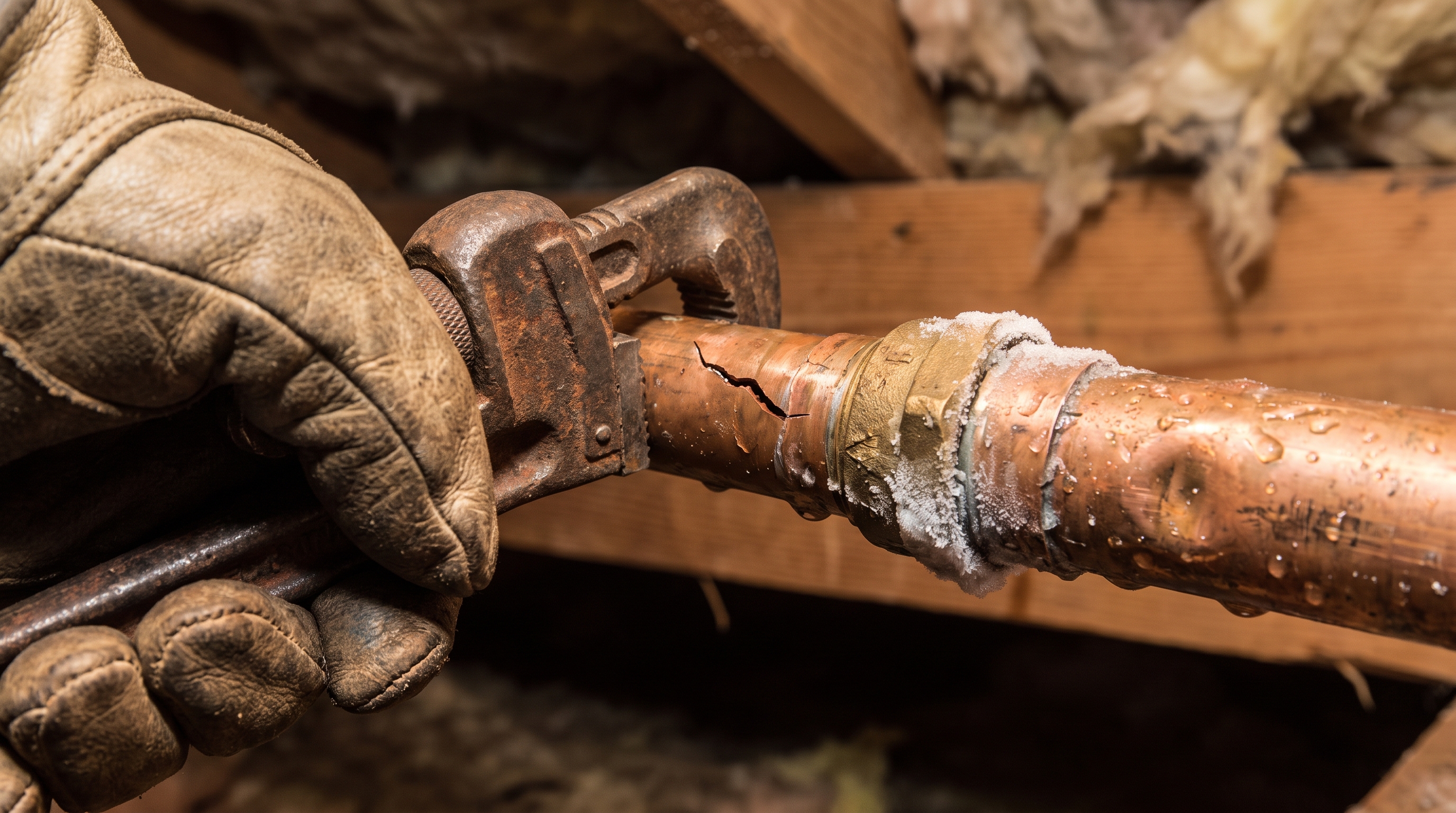
The repair to a burst pipe averages about $500, and most jobs fall between $200 and $3,000, according to HomeAdvisor. The water cleanup usually costs more. Restoration averages $3,868, and most homeowners pay $1,383 to $6,369 (HomeAdvisor). Drywall, ceiling and floor repairs come on top of that.
Freezing weather showed up early this fall. The Denver Gazette reported a Freeze Warning for the Front Range urban corridor from midnight until 9 a.m. Friday, October 16. It covered Greeley, Fort Collins, Boulder and parts of El Paso County, with lows expected between 25 and 35°F. The next day, Radio Iowa reported a freeze warning for 80 Iowa counties. Meteorologist Tyler Ryan told the station, "We are expecting temperatures to fall later on tonight and into early Saturday morning." On Sunday, October 18, a warning ran from 1 a.m. to 9 a.m. for 27 counties in northern Ohio and two areas of northwest Pennsylvania, including Mansfield, Marion, Mount Vernon, Tiffin and Norwalk. Marion County Now reported that the warning said the cold "could damage unprotected outdoor plumbing."
These were early-season warnings, and lows stayed in the 25 to 35 degree range. The serious cold comes later, so this is a good week to learn what a burst pipe costs and what to do in the first hour, while it's still a hypothetical.
The first hour: water off, then two phone calls
The Insurance Information Institute (Triple-I) puts it simply: "If your pipes burst, first turn off the water." Denver Water advises finding your main shut-off valve before you need it. Most homes have it in the basement, crawl space or utility room near where the water line comes in. Test it once this fall. A seized valve is far easier to deal with in October than with water coming through the ceiling.
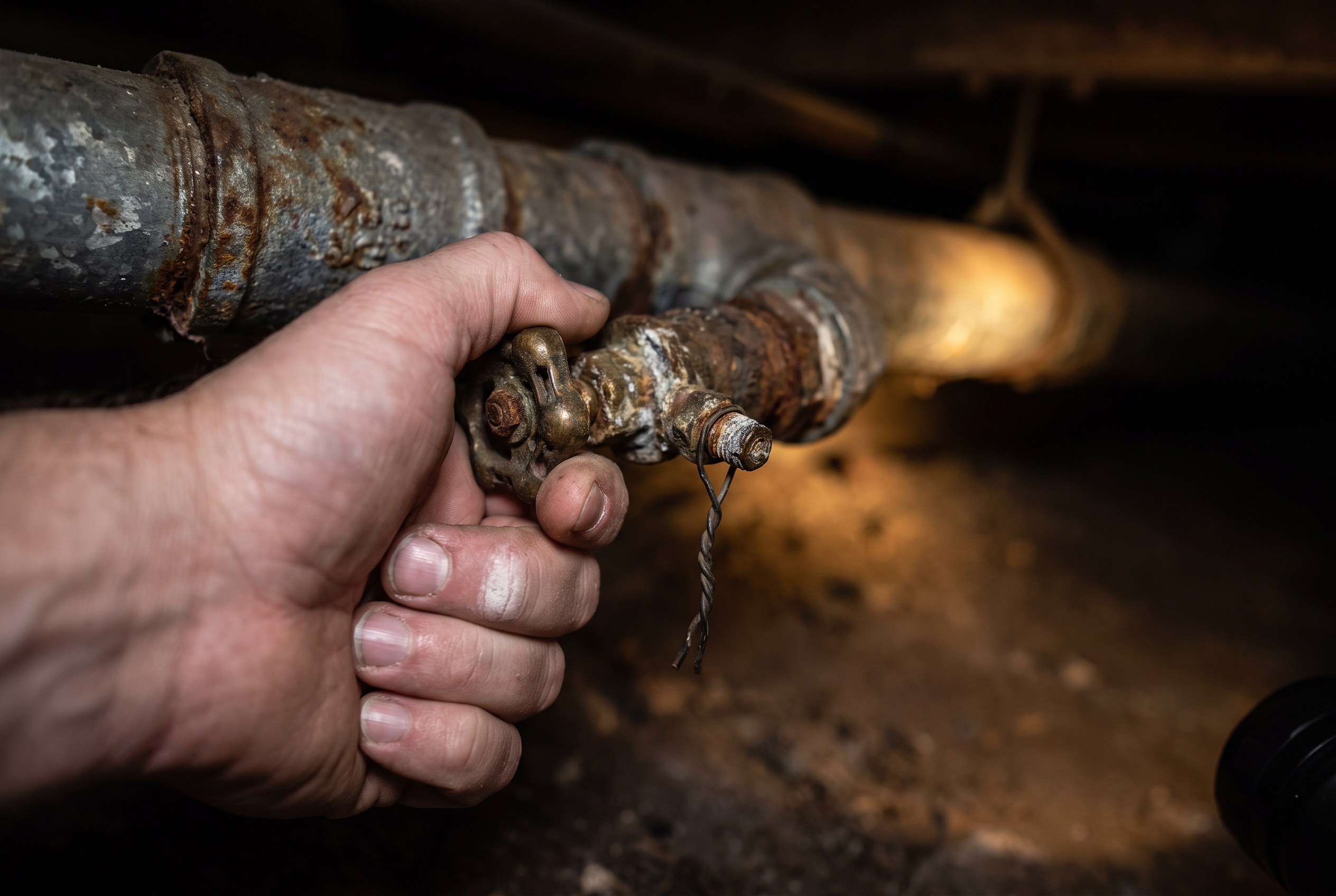
If a pipe is frozen but hasn't split, Denver Water says to shut off the water or test the shut-off valve before you start thawing. Use a hair dryer. The utility says "a blow torch is not" appropriate, and warns that "pipes warmed too fast may break."
Once the water is off, you'll make two calls:
-
A plumber to find the break and fix the pipe.
-
A water mitigation (restoration) company to remove the water and dry the structure. Call the same day. As the drying section below explains, waiting hours makes the job bigger and more expensive.
Bill #1: The plumber
HomeAdvisor puts the average burst pipe repair at $500, with most jobs running $200 to $3,000. "Nearly 80% of a burst-pipe repair bill goes toward labor," it notes. That's why the location of the break matters more than the pipe itself.
How plumbers price it (HomeAdvisor):
-
Hourly: $45 to $200 per hour
-
Flat fee: $100 to $1,250 per job
-
Travel fee: $50 to $300, if the company charges one
-
Emergency call-out: adds $100 to $300
Where the break is (HomeAdvisor):
-
Kitchen or inside a wall: $150 to $500
-
Basement: $200 to $600
-
Bathroom: $150 to $800
Pipe material costs $0.50 to $15 per linear foot in most modern homes. Older cast iron can run up to $30 per linear foot. On a short splice, materials are a small part of the bill. If the plumber finds a long run of brittle old pipe, expect a recommendation to replace more than the split section, and ask for that as a separate line item.
Tip: Ask on the phone whether the price is hourly or flat, whether there's a trip charge and whether night or weekend rates apply. You're allowed to ask before anyone arrives.
Bill #2: Water removal and drying
This is usually the largest bill. HomeAdvisor's restoration average is $3,868. Most people pay $1,383 to $6,369, and the full range runs from $450 to $16,000. Today's Homeowner gives a similar range of $1,300 to $6,000.
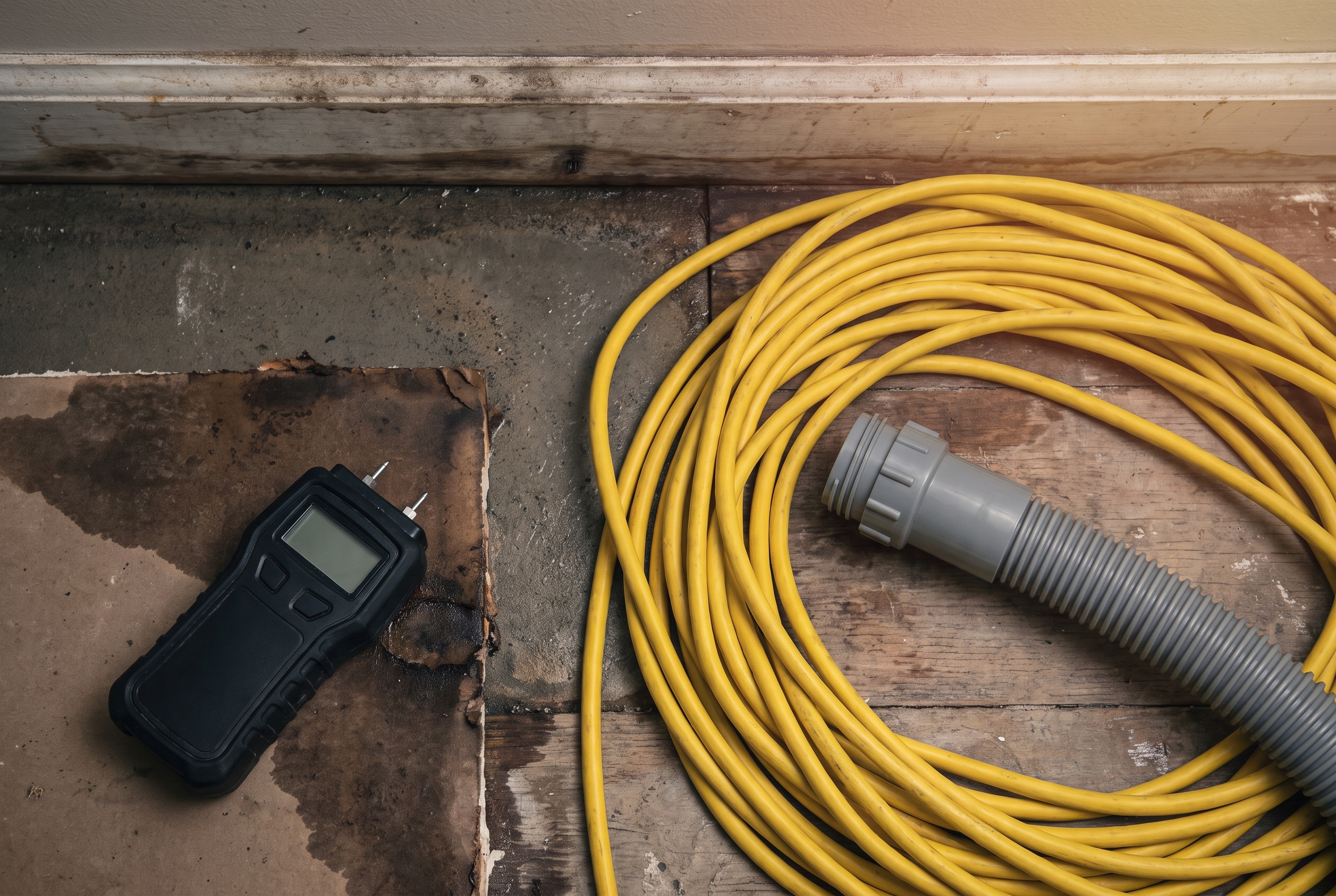
The type of water drives the price. Restoration companies sort water damage into categories. HomeAdvisor's per-square-foot rates are:
| Water category | What it means | Cost per sq ft |
|---|---|---|
| Category 1 | Clean water, typical of a supply-line burst | $3.50 |
| Category 2 | Gray water | $5.25 |
| Category 3 | Black water | $7.50 |
A frozen supply line usually starts out as Category 1, the cheapest kind. It doesn't stay that way if nobody acts. Rainbow Restoration of Des Moines puts it this way: "4-hour response keeps Cat 1. 24-hour delay pushes to Cat 2. 72-hour delay almost guarantees mold work." Mold removal alone averages $2,225, according to HomeAdvisor. A same-day phone call is the single most effective way to keep your total down.
How long drying takes: "A water-damaged home can take around five days to dry, though this depends on the damage," says HomeAdvisor. iDry Columbus estimates 3 to 5 days of dehumidifier operation. Expect fans and dehumidifiers running in your home most of that week, with a technician stopping by to take moisture readings.
After-hours rates: Today's Homeowner says emergency services can run $120 to $600 per hour, or 2 to 3 times normal rates. That premium is usually worth paying to keep the job at Category 1.
Bill #3: Putting the house back together
Mitigation companies dry the house. They don't always rebuild it. Expect the repair work to be priced separately. HomeAdvisor's ranges:
-
Drywall: $300 to $850
-
Ceiling repair: $450 to $1,600 (about $75 per hour)
-
Floor repair: $200 to $550
-
Carpet cleaning: $1 to $11 per sq ft
-
Hardwood repair: $10 to $15 per sq ft
-
Mold removal: $1,100 to $3,400 (average $2,225)
Some materials can be saved and some can't. Rinco, a Denver restoration company, says "drywall and carpet padding require complete removal and replacement," but "hardwood floors can sometimes be dried and saved." If a crew wants to tear out hardwood right away, it's fair to ask whether drying it first is an option.
Regional price check: Denver, Des Moines and Columbus
These figures come from local restoration companies, so treat them as each company's own estimate, not a market survey.
-
Denver metro: Rinco says typical losses run about $1,500 to $7,500.
-
Des Moines: Rainbow Restoration gives tiers by size. Under 100 sq ft costs $1,300 to $2,800, including 2 to 3 days of drying. A multi-room job of 100 to 300 sq ft, such as a burst pipe that reaches two rooms, costs $2,800 to $6,500. A whole basement or several floors (300 to 800 sq ft) costs $6,500 to $15,000.
-
Columbus: iDry Columbus puts frozen-pipe cleanup at $1,500 to $4,500 or more, with clean water at $3 to $4+ per sq ft. Its average job is $2,900, which it says is 25% below a $3,860 national average. Material removal runs $300 to $1,200 and reconstruction $500 to $2,500 or more. Separately, homeyou estimates $2,315 to $2,443 for a standard 215 sq ft water damage repair in Columbus, based on 53.4 labor hours.
The pattern holds in all three cities. A small, quickly handled supply-line leak usually stays in the low thousands. A burst that soaks a finished basement for a weekend can reach five figures.
What to ask before you sign a restoration estimate
Restoration bids can be hard to read. Ask the company to put these items in writing:
-
Water category. Is the job being billed as Category 1, 2 or 3, and why?
-
Square footage affected. Most of the price is per square foot, so check that the measurement matches what you see.
-
Drying days and equipment. How many days do they expect, and how many fans and dehumidifiers will they use?
-
Moisture readings. Will they take readings daily and share them with you? Those readings show when the job is done and back up an insurance claim.
-
What's being removed. List the drywall, carpet pad, baseboards and flooring, and ask which items could be dried instead.
-
Mitigation vs. rebuild. Is the rebuild quoted separately? You aren't required to use the drying company for reconstruction, and getting a second bid on the rebuild is reasonable.
Red flags: no written estimate, pressure to sign before you've talked with your insurer, a category upgrade without explanation, or no plan to take moisture readings. Verify the license and insurance of every company you hire, even in an emergency.
Should you file an insurance claim?
According to AAA Club Alliance, standard policies "generally cover water damage from a burst pipe if the loss results from a sudden, accidental discharge of water." The pipe itself is a separate question. Coverage for the pipe "depends on what caused it to fail and the terms of your policy."
Common reasons for denial:
-
"Failing to maintain adequate heat during freezing weather" (AAA)
-
Leaving a home vacant without shutting off the water or protecting the plumbing (AAA)
-
Neglect or poor maintenance, which homeowners insurance "typically doesn't cover" (HomeAdvisor)
-
Gradual leaks and flooding, which iDry Columbus says are excluded from Ohio HO-3 policies
Doing the math: Add the plumber's bill, the mitigation estimate and the rebuild estimate, then compare the total to your deductible. A $500 pipe fix with a damp closet probably isn't worth a claim. A soaked basement probably is. Covered losses can get large. Triple-I's insurance statistics, based on ISO/Verisk data, show water damage and freezing claims averaged $15,400 per claim from 2019 to 2023. Whatever you decide, take photos before anything is torn out and keep every invoice.
Before the next freeze: a short checklist
-
Keep the heat up. Triple-I recommends a minimum of 65 degrees, because pipes inside walls are colder than the room. Denver Water says to set the thermostat above 65 degrees if you'll be away for several days.
-
Drip the faucets. On the coldest nights, open hot and cold faucets to a slow drip (Triple-I).
-
Deal with outdoor faucets. Radio Iowa's advice: "Disconnect garden hoses and wrap a dry towel around any outside faucets to help protect the pipes."
-
Find and test your shut-off valve so you can close it quickly (Denver Water).
-
Going away for a while? Triple-I suggests having a professional drain the water system before long absences. That also helps you avoid the vacancy issues insurers look at.
The bottom line: who to call, in what order, and what's fair
If a pipe bursts, shut off the main valve first. Then call a plumber to fix the break and a water mitigation company the same day to start drying. A fair plumbing bill for a typical break is a few hundred dollars, though HomeAdvisor's range runs up to $3,000 for hard-to-reach or extensive repairs. A fair bill for drying a clean-water leak in one or two rooms is usually in the low-to-mid thousands, and the Denver, Des Moines and Columbus estimates above all fall in that range. Get the mitigation and rebuild estimates in writing, add them up, and compare the total to your deductible before you decide whether to file a claim.
If you'd like quotes from licensed plumbers or restoration companies in your area, Call The Local can connect you. Compare at least two bids line by line before you commit.
Related reading
-
How to Winterize Outdoor Faucets Before the First Hard Freeze
-
Can Flooded Hardwood Floors Be Saved After Isaias? What to Dry and What Must Go
-
Fence Installation Checklist: Survey, Permit, Utility Marks and HOA Approval
-
Your Water Utility's Letter Probably Says 'Unknown.' That One Word Decides Who Pays.
Sources
-
Denver Gazette: Denver weather, freeze watch, showers could affect evening commute (Oct 15, 2026)
-
Radio Iowa: First wide freeze of the season, Iowans need to cover garden plants (Oct 16, 2026)
-
Marion County Now: Freeze warning issued for Northern Ohio Sunday Morning (Oct 17, 2026)
-
HomeAdvisor: What Does It Cost to Repair a Burst Pipe? (updated June 20, 2026)
-
HomeAdvisor: How Much Does Water Damage Restoration Cost? (updated June 17, 2026)
-
Today's Homeowner: How Much Does Water Damage Restoration Cost? (updated Sept 3, 2025)
-
iDry Columbus: Water Damage Restoration Cost in Columbus, OH
-
homeyou: Water Damage Repair in Columbus, OH, Costs (updated July 21, 2026)
-
Triple-I: Facts + Statistics, Homeowners and renters insurance
-
AAA Club Alliance: Does Homeowners Insurance Cover Frozen Pipes and Ice Dams? (Sept 22, 2026)
-
Triple-I: The homeowner's severe cold weather survival guide
-
Denver Water: Tips to prevent (and thaw) frozen water pipes in your home (Jan 14, 2025)
Note: This article contains AI-assisted content and has been reviewed by our editorial team.
ABOUT THIS SERVICE: CallTheLocal.com is a directory and lead generation service, not a contractor or service provider. Submitting this form does not obligate you to hire anyone or purchase any service. Your information will be shared with licensed, insured home service professionals in your area who may provide quotes for your project. CallTheLocal.com does not guarantee the quality, timeliness, or outcome of any work performed by service providers you connect with through this service. Always verify licensing, insurance, and references before hiring. Get everything in writing before work begins.