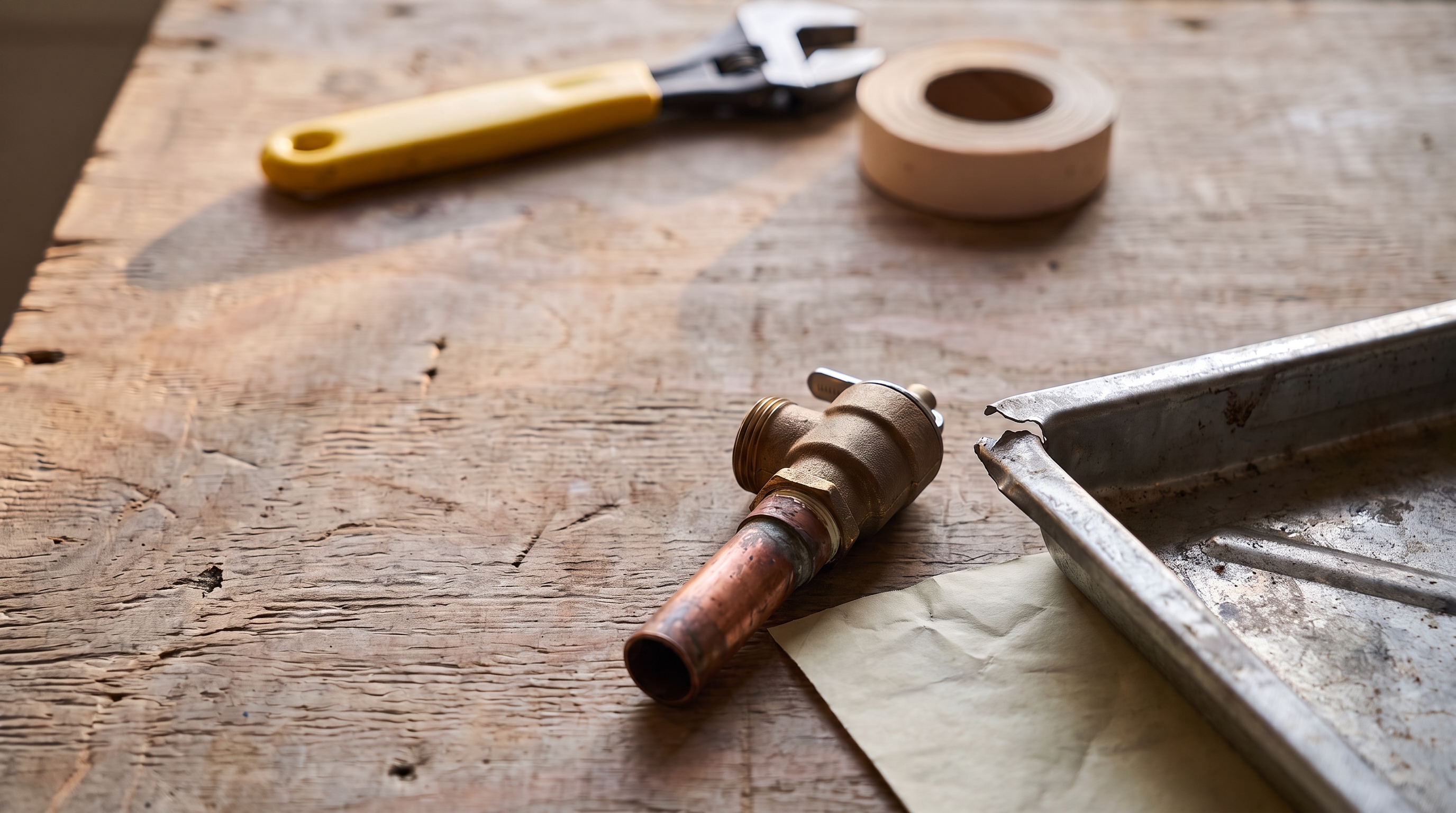
For years, plenty of homeowners treated a water heater swap as routine maintenance: pull the old tank, set the new one, done. That view is getting harder to defend. Since July 1, 2026, Public Health - Seattle & King County has required a water heater replacement permit for every replacement water heater in its plumbing permit program. The county gave three reasons: stricter energy codes, newer equipment, and "an increase in the number of incorrectly installed gas fired water heaters that have lead to dangerous carbon monoxide (CO) levels within occupied spaces."
The county is phasing in enforcement. From July 1 through December 31, 2026, a contractor caught replacing a heater without a permit is told to get one, and "an administrative fee will be applied." Starting January 1, 2027, that contractor pays the "Already Built Construction" permit fee, which is double the standard permit fee.
Most homeowners don't live in King County, but the reasons behind the rule apply everywhere. Below is what official city pages say about permits, what they cost, who handles the paperwork, and what to ask before you sign a quote.
Do you need a permit to replace a water heater?
In most U.S. jurisdictions, yes, even when the new heater is the same size and type as the old one. Official city and county pages in Colorado, Texas, California and Washington all say so:
-
Broomfield, Colorado: "All water heaters need to be permitted, this includes new and replacements." (Broomfield FAQ)
-
Houston, Texas: "A plumbing permit is required for the replacement and installation of water heaters." (Houston Permitting Center)
-
Morgan Hill, California: "Permits are required for all water heater replacements." (City of Morgan Hill)
-
Sonoma County, California: requires a building permit to replace a water heater. (Permit Sonoma CNI-036)
-
Kirkland, Washington: "Replacing a water heater requires at least one permit." (City of Kirkland)
Denver lists water heaters as eligible for its Quick Permits program (Plumbing category) for single-family homes and duplexes, so the process there is designed to be fast. Since March 1, 2023, like-for-like gas water heaters in commercial and multifamily buildings no longer qualify for quick permits.
The Phoenix exception
Phoenix is the notable outlier. Section 105.2 of the 2018 Phoenix Building Construction Code, as published on UpCodes, exempts from permit the "Replacement, in kind, of an existing water heater in one-and two-family dwellings when the work is performed by a licensed contractor." Read that carefully. The exemption covers like-for-like swaps in houses and duplexes, done by a licensed contractor. It doesn't cover a gas-to-electric conversion or a homeowner DIY job, and the code adds that exemptions don't "grant authorization for any work to be done in any manner in violation of the provisions of this code." The install still has to meet code. The city just doesn't send an inspector to check it.
Can one water heater swap need more than one permit?
Yes, if the job goes beyond setting the tank and reconnecting it. King County's June 18, 2026 bulletin says that "In most cases this will be an over-the-counter plumbing permit," but extra work brings extra permits:
-
"If gas piping is being modified, a fuel gas permit will also be required."
-
A new B-vent or chimney relining "may require a mechanical permit."
-
"Modifying or creating a new electrical circuit will require an electrical permit."
Kirkland splits permits by fuel type. A gas water heater replacement always needs a mechanical permit, and an electric replacement always needs a plumbing permit.
Heat pump water heaters can add another step. Morgan Hill requires electrical load calculations when you switch to a heat pump model, unless your main panel is 200 amps or larger. If you're thinking about a heat pump unit, ask the installer early whether your panel will hold up. Finding out after the old tank is out costs you days without hot water.
How much does a water heater permit cost?
Fees vary by city, but on the official schedules we checked they run roughly $85 to $135 for one heater. Here's what three cities publish:
| City | What the official schedule says |
|---|---|
| Houston, TX | $34.24 covers the first three heaters, but a $97.56 minimum permit fee applies, plus a $33.56 administrative fee. One heater comes to $131.12. No plan review for a single-family home, 1 business day to process, valid for 180 days, inspection required. (source) |
| St. Paul, MN | $92 initial plumbing permit fee, plus $6 per water unit, plus a $1 state surcharge. (source) |
| Minneapolis, MN | Minimum residential plumbing permit fee of $85.20, including the $1 state surcharge. The schedule has no separate water heater line. (source) |
Fees can change from year to year. King County's Plumbing & Gas Piping Program raised its fees 3.41% on January 1, 2026 to keep up with inflation, and it moved applications to a new online system called the Public Health Permit Center (December 10, 2025 bulletin). For the current number, check your own city's fee page or call the permit counter.
What to look for on your quote: the permit should show up as its own line item, not be buried in "labor" or missing altogether. It's a small share of the job, and a plumber who lists it is telling you up front that they plan to pull it.
Who pulls the permit, the plumber or the homeowner?
Usually the plumber. Some cities require it. Houston's permit "must be obtained by a master plumber registered with the City of Houston." In Georgetown, Texas, "A State of Texas Licensed Plumber must install the water heater" (City of Georgetown).
If you live in the home and plan to do the work yourself, many places offer a homeowner permit:
-
Houston: the homeowner's plumbing permit is for owners who "own, occupy, and have the property registered as their homestead" and "will perform the plumbing work themselves." It has a lower minimum permit fee than the contractor permit, plus the $33.56 administrative fee.
-
Georgetown, TX: owners with a homestead exemption can install their own heater if they provide proof of ownership and a signed affidavit.
-
King County: "The permit issued to a homeowner is an authorization for the homeowner to do the plumbing." The county still recommends hiring a professional plumber (King County homeowner permits).
A homeowner permit means you do the work yourself. It's not a way to let an unlicensed handyman do the install under your name. In Kirkland, whoever installs the heater, contractor or homeowner, schedules the inspection, and it has to happen within 48 hours of installation.
What does a water heater inspection check?
The inspector checks the safety items that matter most if something goes wrong: pressure relief, leak protection, gas venting and, in California, earthquake strapping. Requirements differ by jurisdiction. The checklist below comes from Permit Sonoma, Georgetown's final inspection list and the Denver Plumbing Code 2021:
-
T&P relief valve and discharge pipe. A listed temperature and pressure relief valve (Sonoma wants a drain line of at least 3/4 inch). Under Denver's code, the discharge pipe can't be smaller than the valve outlet, can't be trapped, has to drain by gravity, can't have valves or tee fittings or a threaded end, and has to end no more than 6 inches above the floor.
-
Drain pan. Required under Denver's code where a tank leak "will cause damage." Pans must be at least 1½ inches deep, and plastic pans can't go under gas-fired heaters.
-
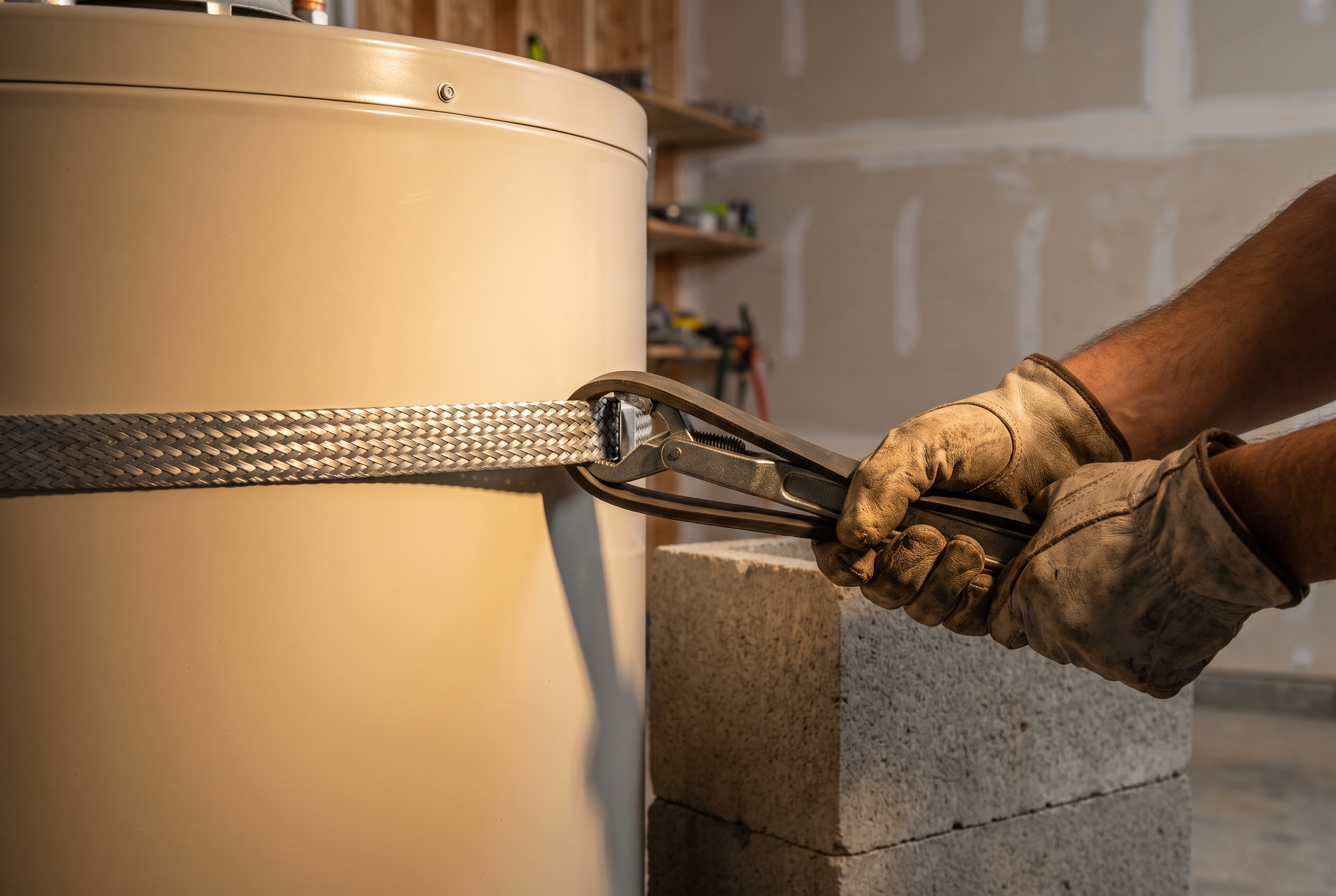
Seismic straps (California). Sonoma requires two straps on gas tanks, one in the upper third and one in the lower third, with the lower strap at least 4 inches above the controls. Tanks over 52 gallons need a third strap.
-
Gas shutoff next to the heater.
-
Venting and combustion air on gas units. This is the issue that drove King County's new rule.
-
18-inch rule in garages. Gas burners must sit at least 18 inches above a garage floor (Sonoma), and Georgetown checks the 18-inch elevation in garages too.
-
Expansion tank to handle thermal expansion over 80 PSI (Sonoma).
-
Pipe insulation. Sonoma requires insulation on the first 8 feet of hot and cold piping, and Georgetown checks pipe insulation as well.
-
Bonding of the water and gas piping (Sonoma).
-
Access and working space. Georgetown checks for a 30" x 30" working space and shutoff valves.
Seen as a list, none of this is red tape. Every item protects against a flood, a scald, a fallen tank or carbon monoxide.
Does skipping the permit affect homeowners insurance?
It can. Water is one of the costliest risks in a house. According to the Insurance Information Institute, citing ISO/Verisk, water damage and freezing made up 22.6% of homeowners insurance losses in 2023. The average claim was $15,400 over 2019-2023, and claims came in at 1.50 per 100 house-years.
Insurer Openly puts it this way: "If the water heater was installed incorrectly and this faulty installation leads to damage, your homeowner's insurance may not cover it." Openly also notes that failures or leaks from age and gradual wear are "typically not covered."
A permit won't guarantee a claim gets paid, and skipping one doesn't mean an automatic denial. What a passed inspection gives you is a public record that a third party checked the install against code. If you ever need to show the heater was put in correctly, that record helps.
Can an unpermitted water heater cause problems when you sell?
Yes. As Redfin puts it, "You're legally obligated to tell potential buyers about known unpermitted work," and "Homes with unpermitted work tend to sell for less than similar homes that are fully permitted." Your local building department can tell you which permits were issued on a property, so a buyer can check too.
California adds its own rule. Under Health & Safety Code §19211, "all new and replacement water heaters, and all existing residential water heaters, shall be braced, anchored, or strapped to resist falling or horizontal displacement due to earthquake motion." The seller has to certify compliance to the buyer in writing. The rule covers standard heaters up to 120 gallons, and a property in violation is considered a nuisance.
If you find an unpermitted install, some jurisdictions allow an after-the-fact permit. In King County, starting in 2027, the contractor who gets caught without a permit pays a doubled fee. It's cheaper and easier to pull the permit at install time.
What to ask your plumber before you hire
Before you approve a water heater quote, ask:
-
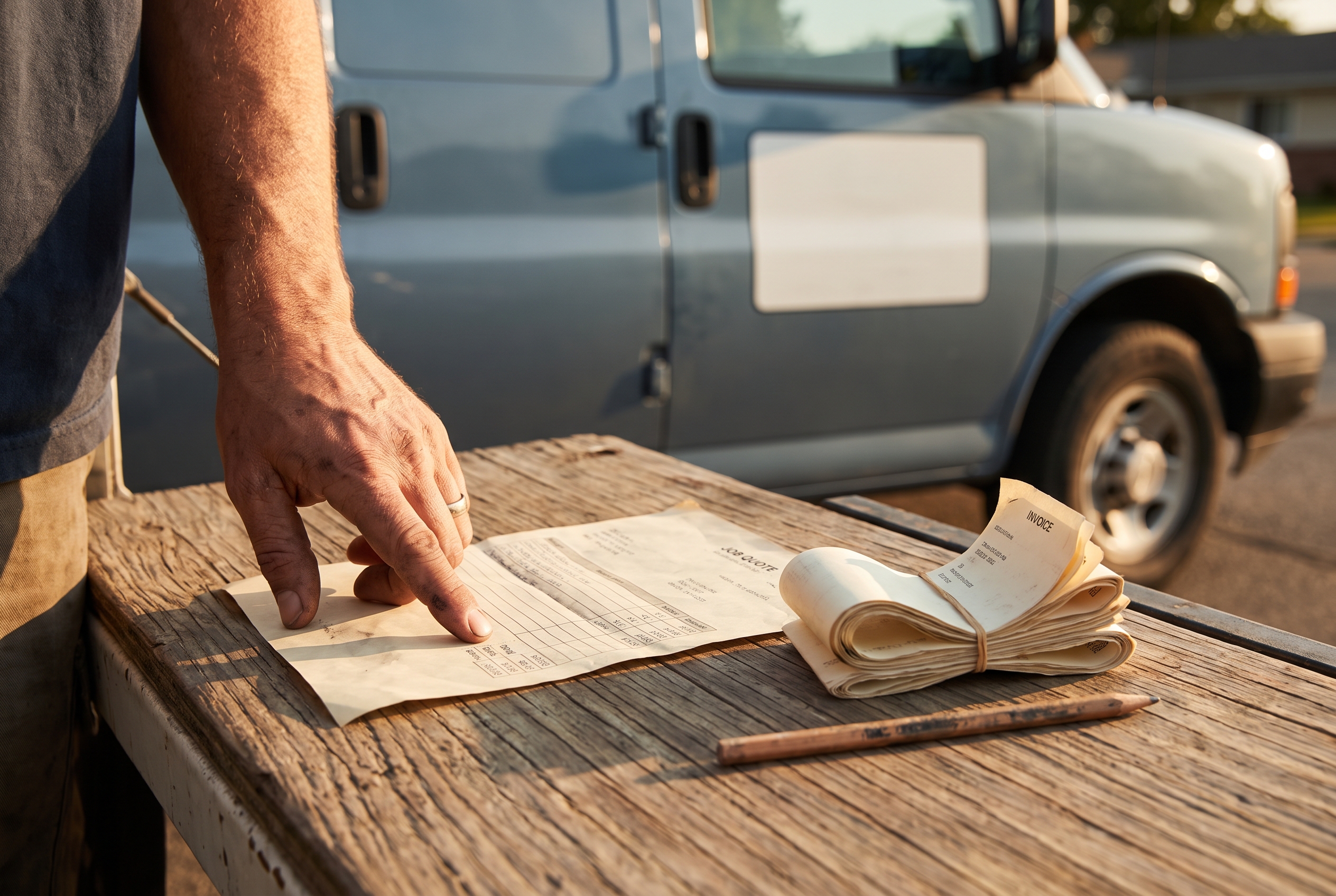
Is the permit included, and is it a separate line item?
-
Who pulls the permit and schedules the inspection? (In Kirkland, the installer has to have the inspection within 48 hours.)
-
Do I need more than one permit? For example, a fuel gas permit for gas line changes, a mechanical permit for new venting, or an electrical permit for a new circuit.
-
If I'm switching to a heat pump model, can my panel handle it?
-
Will you be there for the inspection, and will I get a copy of the final sign-off?
Red flag: "You don't need a permit for that." In most places that's wrong. Unless your local code clearly exempts the job (as the 2018 Phoenix code does for in-kind swaps by licensed contractors), take it as a sign the plumber cuts corners, and get another bid.
Related reading
-
How to Keep Stink Bugs Out This Fall by Sealing the Gaps First
-
Your Water Utility's Letter Probably Says 'Unknown.' That One Word Decides Who Pays.
Sources
-
Public Health - Seattle & King County: New permitting system and 2026 fee updates (Dec. 10, 2025)
-
City and County of Broomfield: Do I need a permit to replace my water heater?
-
Phoenix Building Construction Code 2018, Chapter 1 (UpCodes)
-
Denver Plumbing Code 2021, Chapter 5: Water Heaters (UpCodes)
-
Insurance Information Institute: Facts + Statistics, Homeowners and renters insurance
-
Openly: Does Home Insurance Cover Water Heaters? (Nov. 5, 2025)
-
Redfin: Selling a House With Unpermitted Work (April 7, 2026)
ABOUT THIS SERVICE: CallTheLocal.com is a directory and lead generation service, not a contractor or service provider. Submitting this form does not obligate you to hire anyone or purchase any service. Your information will be shared with licensed, insured home service professionals in your area who may provide quotes for your project. CallTheLocal.com does not guarantee the quality, timeliness, or outcome of any work performed by service providers you connect with through this service. Always verify licensing, insurance, and references before hiring. Get everything in writing before work begins.
Note: This article contains AI-assisted content and has been reviewed by our editorial team.