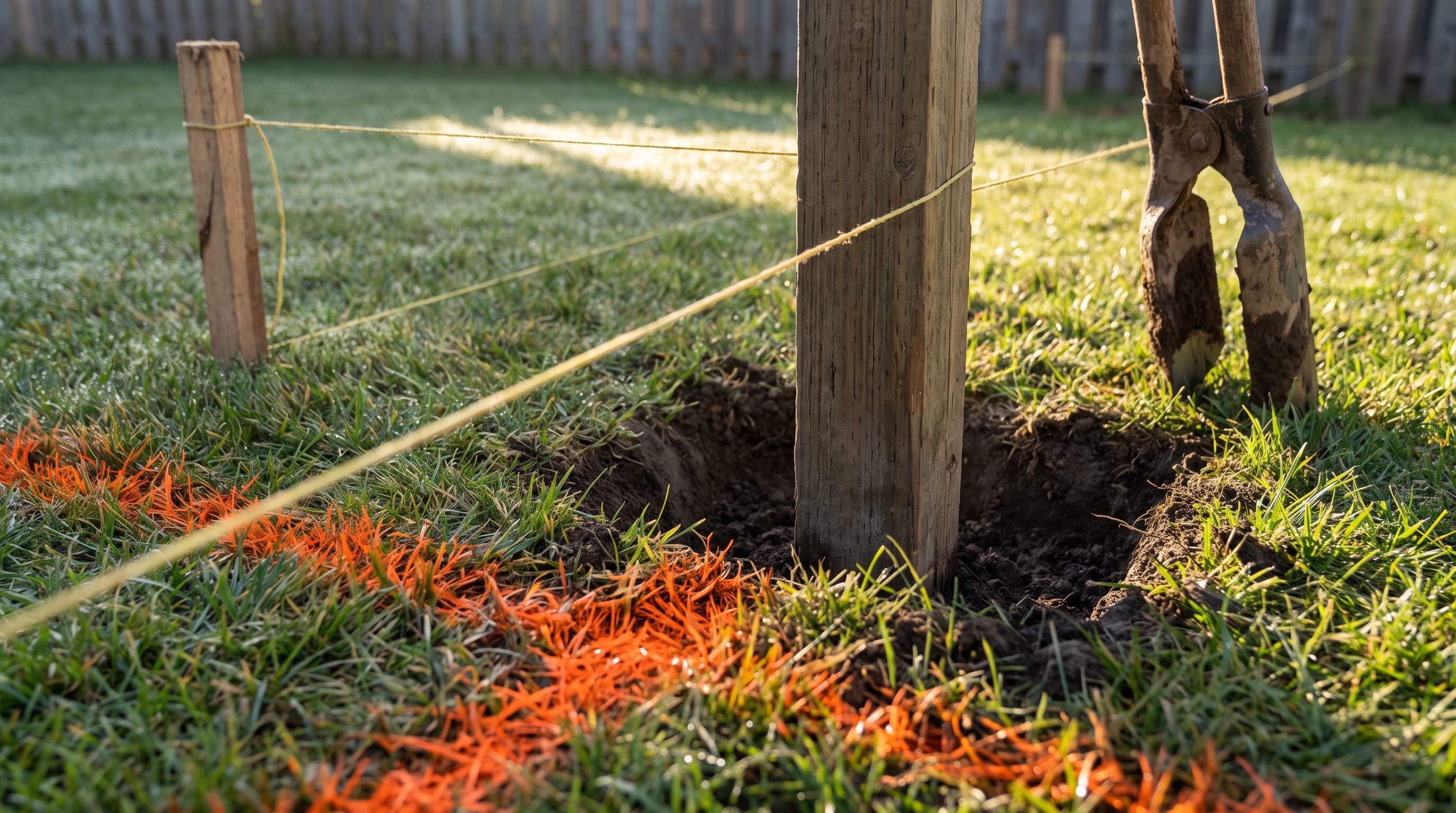
A fence installation checklist covers four approvals before any post hole is dug: confirm your property line with a survey, check local permit and height rules, request a free 811 utility locate plus a private-line locate, and get written HOA approval. Then confirm with your fence crew who handles each step, and get it in writing.
-
Know your line: find your survey or plat, or hire a licensed surveyor.
-
Check permit and height rules: limits differ by yard and by city.
-
Get utilities marked: contact 811 a few business days ahead, and book a private locator for lines 811 won't mark.
-
Get HOA approval: in writing, before you sign a final contract.
-
Confirm details with the crew: locate ticket, permit, post placement and what happens if a line is hit.
Most fence headaches don't come from the fence itself. They come from a post that lands a few inches over the line, a height the city doesn't allow out front, a sprinkler pipe nobody marked, or an HOA letter that never arrived. Each one is cheap to prevent and expensive to fix after the concrete sets. Print this page, work through it before you sign a fence bid, and you'll walk into the contract knowing exactly what to ask.
Step 1: Know where your property line is
Your city will tell you how tall a fence can be. It generally won't tell you where your lot ends. Seattle's building department puts it plainly: "We can't become involved in private civil disputes between neighbors. You may need to obtain a survey and legal advice to resolve the dispute if you believe your neighbor has built something that crosses your property line." (Seattle SDCI)
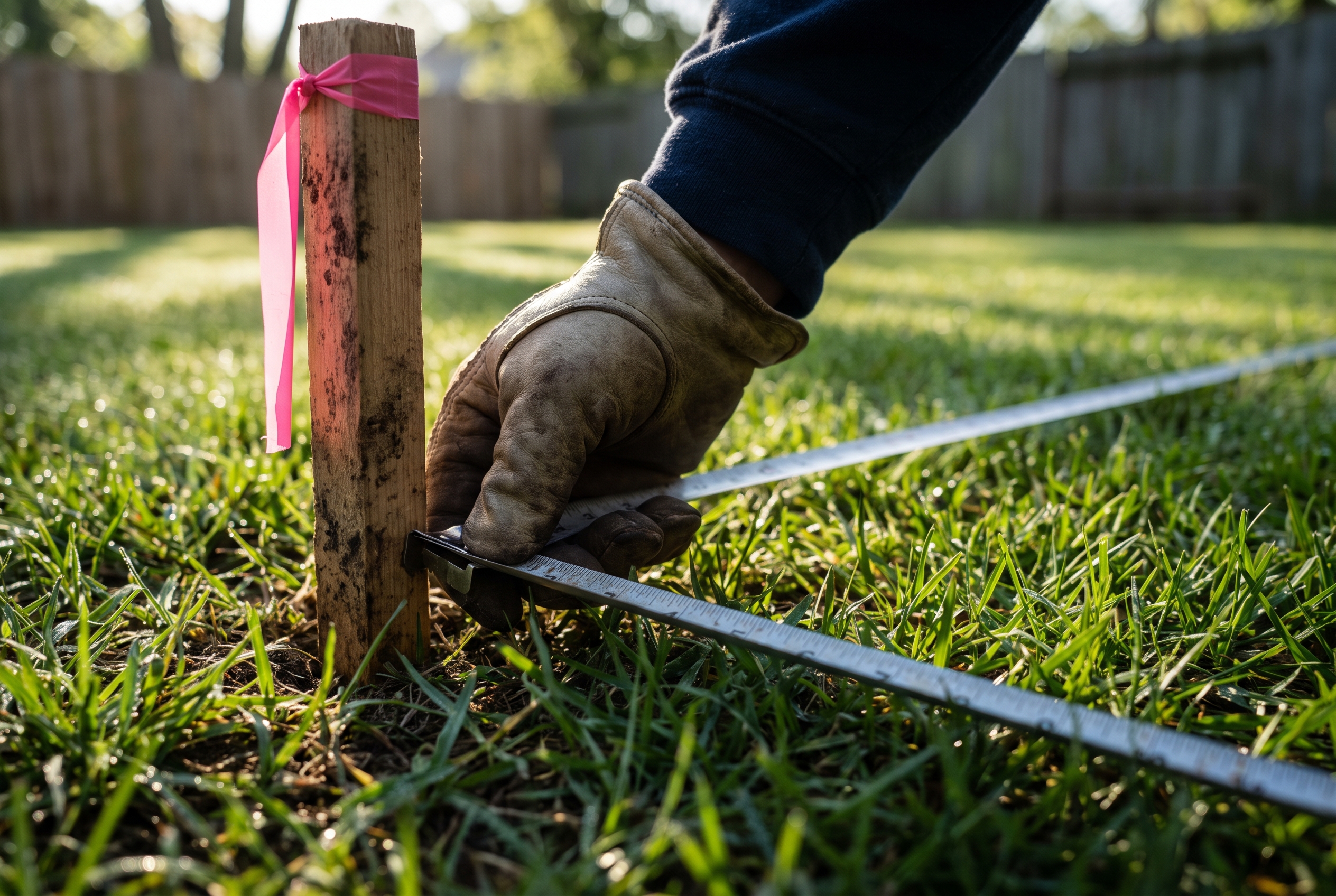
That means the burden is on you. If you're relying on an old chain-link fence, a row of shrubs or where the previous owner said the line was, you're guessing.
Some cities also add placement rules that apply no matter where your line falls. In Denver, "All fences and walls must be at least 6 inches back from the public sidewalk, regardless of where the property line is located," and fences can't be built on a neighboring property or in the public right-of-way (City and County of Denver). So even a homeowner who owns right up to the sidewalk can't put posts there.
Your Step 1 checklist:
-
Look for an existing survey or plat in your closing documents or with your county records office.
-
If the line is uncertain, or the fence will run right along it, hire a licensed surveyor to mark the corners. Survey pricing varies with lot size and location, so get a quote directly.
-
Ask your city about any setbacks from sidewalks, streets or the right-of-way.
-
Talk to your neighbor before building on or near the shared line. A five-minute conversation now beats a dispute later.
Step 2: Check permit and height rules (they change city to city)
There's no single national fence rule. Here's how three cities handle the same backyard project:
-
Denver: Maximum height is 4 feet in the front yard and 6 feet in the backyard (industrial areas excepted). A zoning permit is required for any fence over 4 feet. A post-hole fence needs a building permit only if it's taller than 8 feet. Fences under 4 feet need no permit unless they're in a historic district or on a landmark property. (Denver)
-
Seattle: No permit is needed for fences 8 feet or shorter, as long as they don't have masonry or concrete elements over 6 feet and aren't in a flood-prone area. In neighborhood residential and multifamily zones, the height limit is 6 feet, plus 2 feet for architectural features like arbors, and 4 feet in a front or street-side setback. If the fence sits on a retaining wall that raises the grade, the combined height of wall and fence is capped at 9'-6". Permit applications need scaled site plans and section or detail drawings. (Seattle SDCI)
-
Austin: Residential fences up to 7 feet are exempt from a building permit unless they're in a flood hazard area. The city points homeowners to its fencing regulations for situations where a permit becomes necessary. (City of Austin)
Notice the pattern: in Denver and Seattle, 4 feet out front and 6 feet in back is the common thread. But the permit trigger itself sits at 4 feet in one city, 7 feet in another and 8 feet in a third. The details that most often change the answer are floodplains, front and street-side setbacks, retaining walls, masonry and historic districts.
Your Step 2 checklist:
-
Write down the height limit for each yard (front, side, back) on your lot.
-
Find out whether your planned fence needs a permit, and if so, which kind.
-
Check whether your lot is in a flood hazard area or historic district.
-
Note any retaining walls or grade changes along the fence line.
-
Decide who pulls the permit: you or the contractor. Get that in the contract.
-
Ask whether plans or drawings are required with the application.
Step 3: Get utilities marked through 811
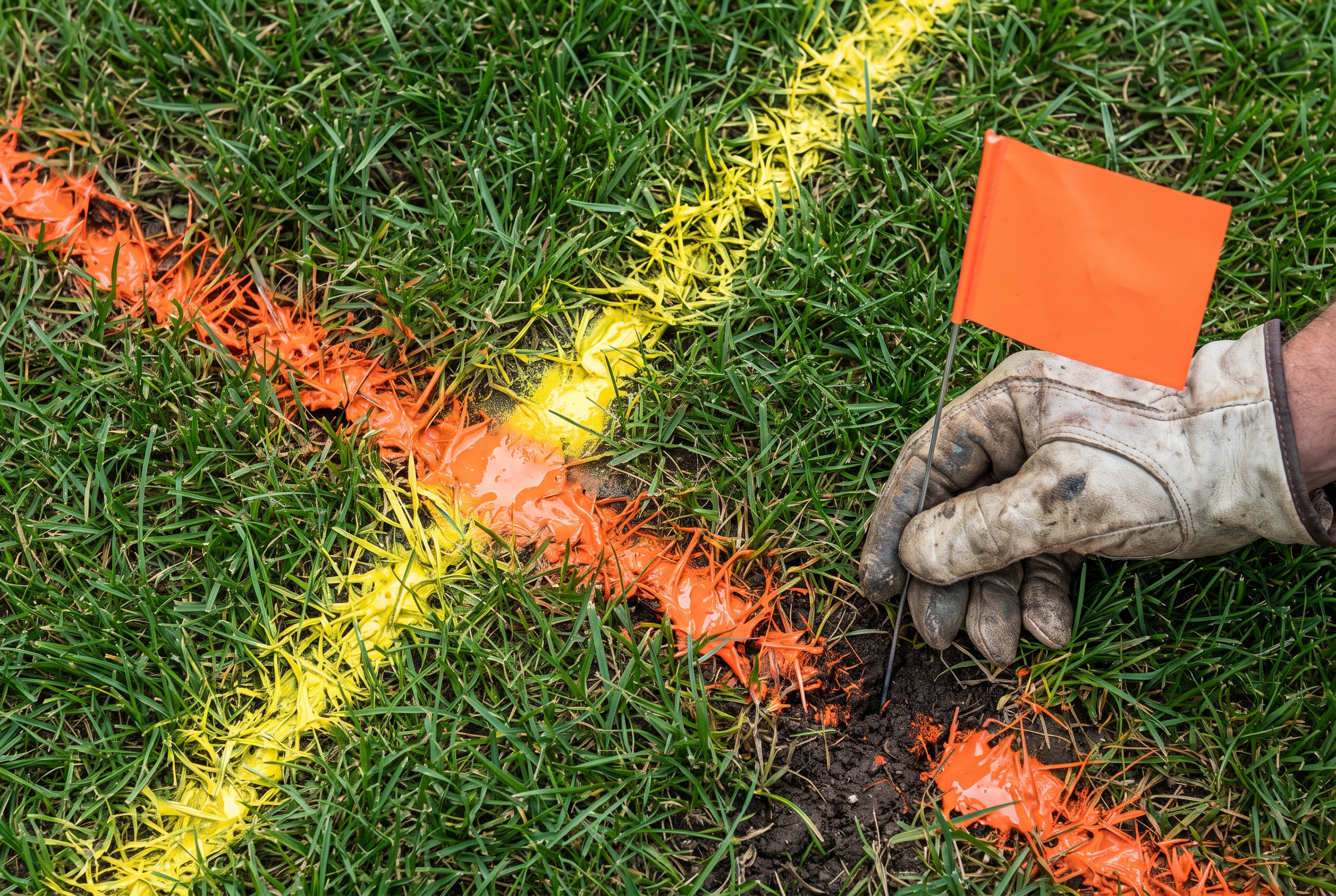
811 is "the free national before-you-dig service," and homeowners should contact it "a few business days before you begin any digging" (811 Before You Dig). You'll give your address, county, nearest cross street, the type of project and where on the property you'll be digging. Then wait for utilities to respond, and confirm that all of them have responded before anyone digs.
Notice periods vary by state:
-
New York: "You should call at least 48 hours but no more than 10 working days, excluding weekends and legal holidays, before starting your digging project." (New York 811)
-
Alaska: Two business days in most areas, ten business days in remote areas. (Alaska 811)
Cost isn't a reason to skip it. New York 811 states: "There is no fee to have your lines marked."
Fence projects deserve extra attention here. New York 811 names them directly: "Lines have been hit digging fence post holes, anchoring supports for decks and swing sets, planting trees and removing tree roots." It advises calling before any digging, regardless of depth. And according to a spring 2026 Common Ground Alliance survey reported by Construction Superintendent, nearly three in four American homeowners planned an outdoor digging project in the next 12 months (an estimated 60 million households), and an estimated 10 million of them planned to skip contacting 811. The same report notes: "Lines can be buried just inches below the surface, well within reach of a garden spade or fence post."
Once the marks are down:
-
"Try to avoid digging on top of or within 18-24" on all sides of utility marks" (811 Before You Dig, For Homeowners).
-
In New York, the tolerance zone "extends approximately 24 inches from each side of the utility line markings," and within it you should "use hand tools and exercise extreme caution."
-
If a post location lands close to a buried line, consider shifting the post or the fence line.
-
If marks fade or get covered, or the job runs past the request's validity period, contact your 811 center for a re-mark.
Step 3b: What 811 won't mark
This is the part many homeowners miss. 811 marks lines owned by member utilities. Anything you own past the meter is usually on you. Colorado 811 says private utilities are "not registered with Colorado 811, are not part of an 811 locate request" and "must be located at the owner's expense by a private locating company" (Colorado 811).
Between Colorado 811 and Minnesota's Gopher State One Call, the common private lines include:
-
Sprinkler and irrigation systems
-
Invisible dog fences
-
Septic systems and wells
-
Buried water tanks and service lines
-
Electrical, gas or water lines to sheds, garages and other outbuildings
-
Gas lines to backyard grills or fire pits
-
Pool heating systems
-
Satellite dish lines
Your Step 3 checklist:
-
Contact 811 (or confirm your contractor has) within your state's notice window.
-
Record the ticket number and date.
-
Confirm every utility on the ticket has responded before digging.
-
Walk the lot and list every private line you know of, including ones the previous owner installed.
-
If any private lines run near the fence route, book a private locating company. That cost is yours, so ask for a quote up front.
Step 4: Get HOA approval in writing
If you live in an HOA, the architectural committee can stop a fence that the city would happily allow. Before you sign anything, pull your declaration (often called the CC&Rs) and any published architectural guidelines. Look for:
-
Allowed materials and colors
-
Maximum heights, which may be stricter than the city's
-
Which side of the fence must face out (the finished side)
-
Where fences can and can't go on the lot
-
What the application needs: drawings, material samples, a plat with the fence line drawn on
Rules on what an HOA can require vary by state. Florida is a useful example. Under Florida Statute 720.3035, an HOA's architectural review authority applies "only to the extent that the authority is specifically stated or reasonably inferred as to such location, size, type, or appearance in the declaration of covenants or other published guidelines." The same law says associations "may not require a building permit to be issued by a governmental authority to a parcel owner as a prerequisite for review by the association or committee." In practice, Florida homeowners can run the HOA review and the city permit at the same time instead of one after the other.
How long the HOA has to respond depends on your community's documents, so read them and plan for the review time they set. Don't let a crew schedule your install date until the approval is in hand.
Your Step 4 checklist:
-
Get a copy of the declaration and architectural guidelines.
-
Submit your application before signing a final fence contract.
-
Keep the approval letter, and the approved drawing, on file.
-
Make sure the contractor's plan matches what the HOA approved, down to height and material.
Step 5: What to confirm with the fence crew before posts go in
A good fence contractor will have ready answers to all of these. If they shrug off any of them, treat that as a red flag.
-
Who places the 811 ticket, and what's the number? New York 811 states: "By law, it is the contractor or excavator's responsibility to call New York 811, even if digging on private property." Rules differ by state, so ask your contractor to confirm in writing that they've placed the request and to give you the ticket number.
-
Who pulls the permit, and when is the inspection? Get the permit number before work starts if one is required.
-
Where exactly do the posts go? Confirm they stay inside the surveyed line and any city setbacks, like Denver's 6 inches from the public sidewalk.
-
How will they handle utility marks and private lines? Ask whether they hand-dig near marks and whether they'll wait for your private locator.
-
Is the HOA-approved plan attached to the contract? It should be.
-
What happens if they hit a line? Ask who pays for repairs and get the answer in the contract, not a handshake.
Printable fence installation checklist
| Item | Status / Notes |
|---|---|
| Survey or plat found; property line confirmed (surveyor hired if needed) | |
| Neighbor notified about fence location | |
| Height limits noted for front, side and back yards | |
| Setbacks from sidewalk, street or right-of-way noted | |
| Permit status: needed / not needed; permit number | |
| Floodplain, historic district and retaining wall check done | |
| 811 ticket number and date; all utilities responded | |
| Private lines listed; private locator booked if needed | |
| HOA approval letter and approved drawing on file | |
| Contractor confirmations (811, permit, post placement, line-strike responsibility) signed |
Who to call, and in what order
Here's the order that keeps things moving without backtracking:
-
A licensed surveyor, if you don't have a reliable survey or the fence will run along the line.
-
Your city's permit or zoning desk, to confirm height limits, setbacks and whether you need a permit.
-
Your HOA, if you have one. Submit the application with your planned height, material and location.
-
811 and a private locating company, a few business days before digging (or confirm your contractor is handling 811).
-
Fence contractors, for bids. With steps 1 through 4 done, you can compare quotes on the same approved plan and hold the winner to it.
Each of these calls takes little time, and 811 is free. Skipping one can mean moving posts, tearing out a section or paying for a damaged line. When you're ready for bids, ask each contractor the Step 5 questions and get the answers in writing.
Related reading
-
How to Get Your Roof Ready Before El Niño Storms Hit California
-
Your Solar Installer Went Out of Business. Now Who Fixes the Panels?
Sources
Note: This article contains AI-assisted content and has been reviewed by our editorial team.
ABOUT THIS SERVICE: CallTheLocal.com is a directory and lead generation service, not a contractor or service provider. Submitting this form does not obligate you to hire anyone or purchase any service. Your information will be shared with licensed, insured home service professionals in your area who may provide quotes for your project. CallTheLocal.com does not guarantee the quality, timeliness, or outcome of any work performed by service providers you connect with through this service. Always verify licensing, insurance, and references before hiring. Get everything in writing before work begins.