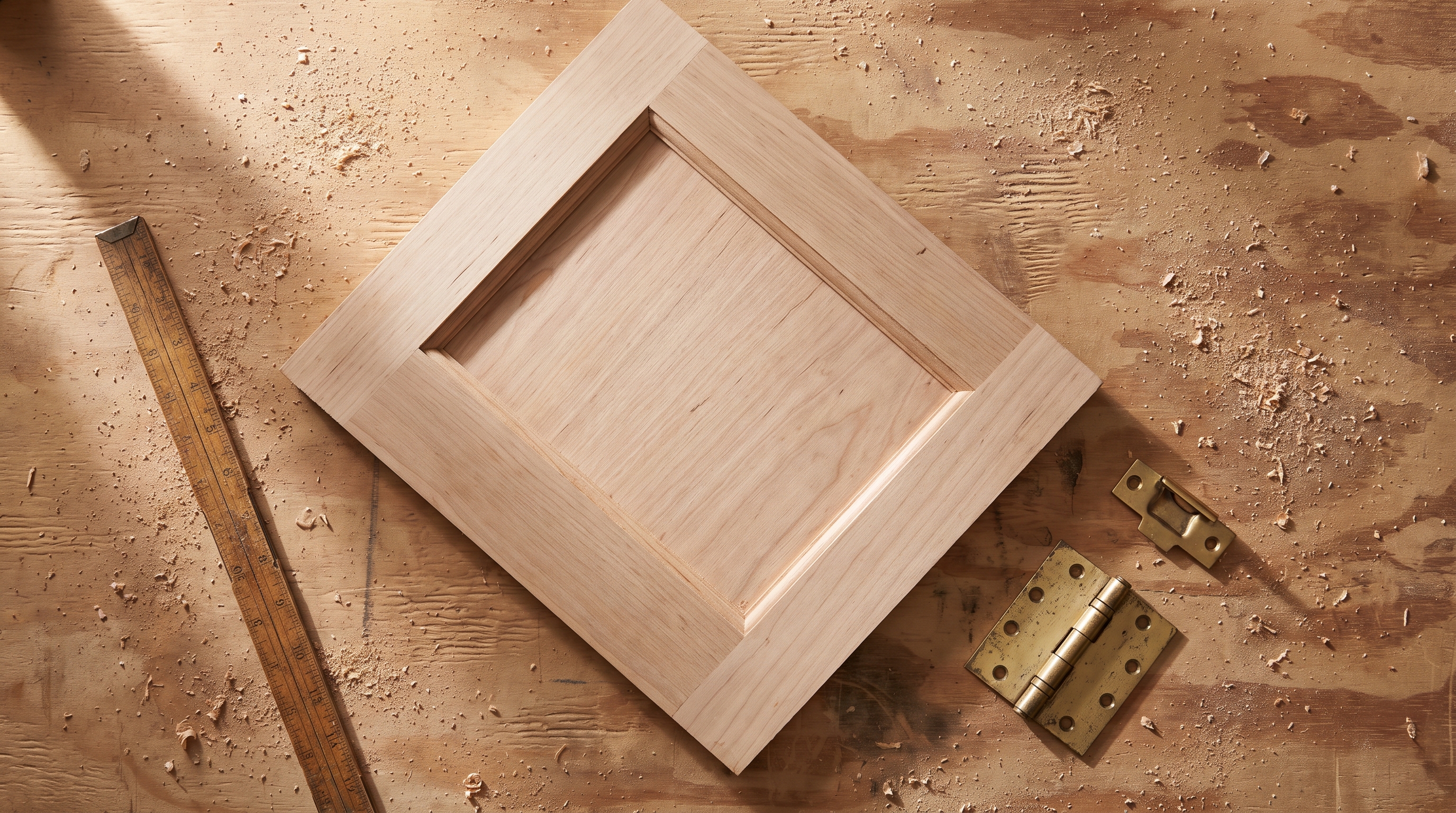
If you've seen the term "Costco door" in your feed this month, here's the quick version. It's a small door, often about 2 feet by 2 feet, cut into the wall between an attached garage and a pantry or kitchen. You park, open the trunk, and slide the bulk paper towels and the 40-pack of water straight into the pantry without hauling them through the house. As for Costco door cost, one Utah custom builder puts it at "roughly a thousand bucks." That figure deserves a closer look, though, and so does the fire code rule that covers every opening between a garage and a home.
The idea got national attention from a Washington Post story by Jenny Singer, reprinted by the Spokesman-Review on Oct. 17, 2026, and picked up by AL.com and Newser. Below we cover what a Costco door is, what goes into the price, the code requirements, and who to call.
What is a Costco door?
A Costco door is a small pass-through door connecting an attached garage to a pantry or kitchen so you can unload groceries straight from the car into storage. Jay Roberts of custom builder Canyon Point described them to the Post as "small pass-throughs, which typically link a home's garage to the pantry or kitchen and let bulk shoppers slide their finds from the trunk into storage," as quoted by AL.com.
Sizes vary. The Post describes a 2-by-2-foot door. A builder quoted by Hunker said they usually run 30 to 36 inches high and wide, and Indianapolis remodeler The Lifestyle Group says its Costco doors typically measure 30 to 36 inches wide.
The feature didn't start as a shopping hack. According to the Post, Roberts and his brother, who co-owns the company, built their first ones about 10 to 15 years ago for a client who was paralyzed, to make daily life easier. Now, Roberts said, about half of Canyon Point's customers ask for one once they see an example. Both brothers have one in their own homes.
How much does a Costco door cost?
The most quoted number is about $1,000. Roberts told the Post that when he tells clients it's "roughly a thousand bucks" to put one in, they see it as a no-brainer. Keep in mind where that number comes from. It's one builder's price for adding the door during a new custom-home build, when the walls are open anyway. It isn't a national average, and it isn't a retrofit price for cutting into a finished wall.
If you're adding one to an existing home, it helps to know what goes into the price:
-
The door unit. Ready-made fire-rated pass-throughs are sold online. As one example, Ark Design lists a 20-minute fire-rated, UL-certified pre-hung unit for $345. It comes in 22 x 22 inches (rough opening 22-1/2 x 22-1/2 inches) and 22 x 30 inches, in primed wood, with a 5-1/2-inch jamb sized for 2x6 walls and a fingerprint/password smart lock. The listing doesn't mention self-closing hardware, which matters for code (more on that below).
-
Framing the opening. Homewyse estimates the national average to frame a door opening at $342 to $511 per opening (May 2026). That covers the header, jack and king studs, and basic labor under favorable site conditions. Homewyse calls it an educational estimate, not a substitute for written quotes.
-
Carpenter time. HomeAdvisor (updated June 20, 2026) puts carpenter rates at $40 to $200 an hour, with most general carpenters charging $75 to $125. Framing carpenters run $40 to $60 an hour, trim carpenters $40 to $75, and master carpenters $75 to $200, often with a 90-minute to two-hour minimum.
Add the Ark Design unit to the Homewyse framing range and you're at about $690 to $860 before trim, a door closer, drywall patching and painting. So a quote around $1,000 for a simple wall is in the right range. Expect more if the wall is load-bearing or has wiring or plumbing inside it. Labor rates also vary a lot from one area to the next, so treat national figures as a starting point and compare local bids.
Does a Costco door have to be fire-rated?
Yes, in places that follow the International Residential Code. It's the part homeowners and quotes most often miss. The code doesn't treat a small grocery pass-through differently from a full-size entry door. Section R302.5 covers all "openings and penetrations through the walls or ceilings separating the dwelling from the garage," per the IRC 2021 text as adopted in Colorado.
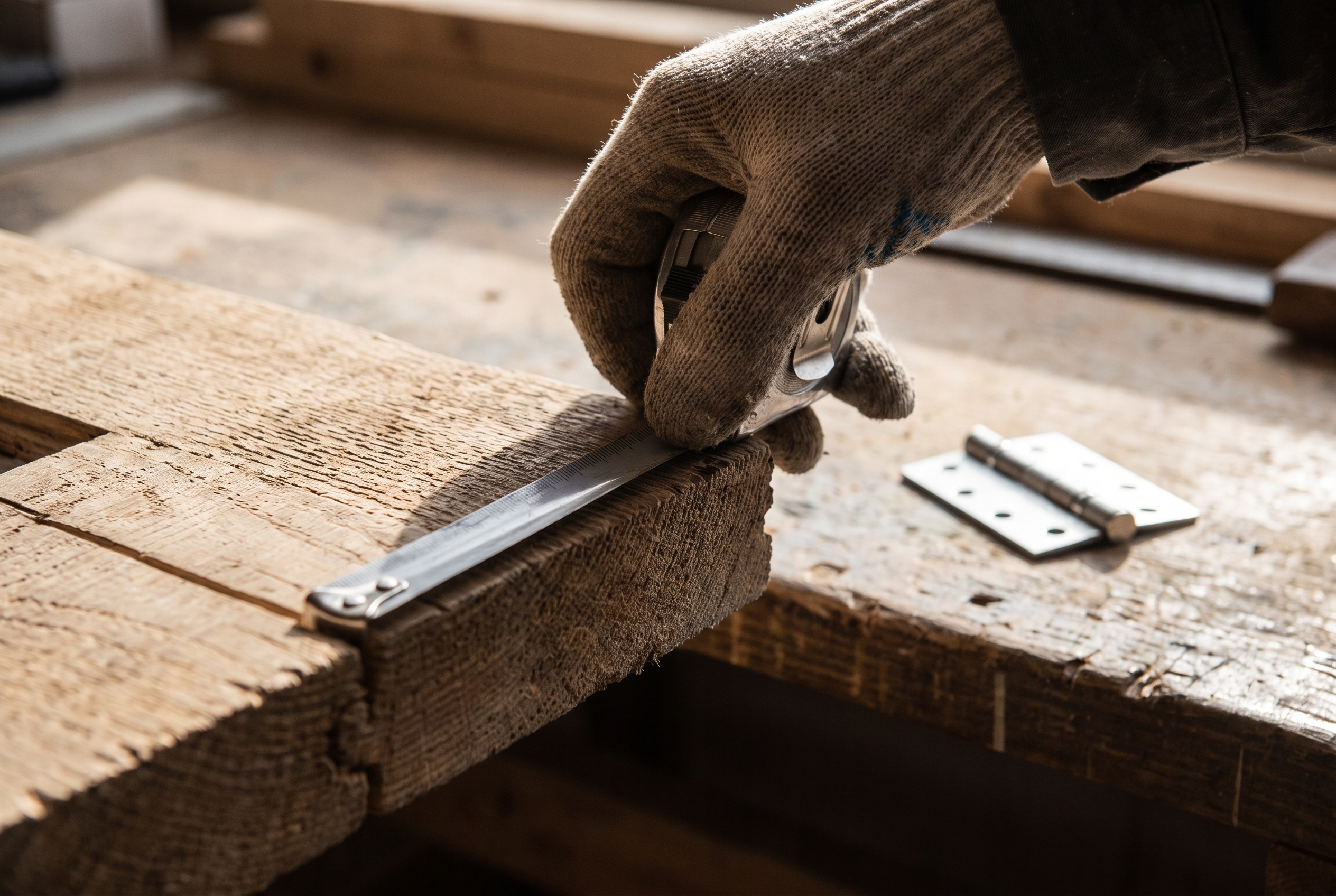
Section R302.5.1 says any opening between the garage and the home must have one of these:
-
A solid wood door at least 1-3/8 inches thick
-
A solid or honeycomb-core steel door at least 1-3/8 inches thick
-
A 20-minute fire-rated door
The same section says the door must be self-latching and have a self-closing or automatic-closing device. It also bans any opening from the garage directly into a room used for sleeping. According to Jaspector's code guide, the 2021 edition didn't materially change R302.5.1 from 2018, so the door options and closing requirements are the same in both.
The wall counts too. Table R302.6 requires at least 1/2-inch gypsum board or equivalent on the garage side of the wall separating the garage from the home. If there are habitable rooms above the garage, the requirement goes up to at least 5/8-inch Type X gypsum board or equivalent. Any drywall cut out for the new opening has to be patched back to that standard.
Bottom line: a hollow cabinet door, a thin hatch, or anything without a rating or the required thickness doesn't meet the rule. Neither does a door with no closer, however solid it is.
Why does a Costco door need to close by itself?
The self-closing rule exists because a fire-separation door only works when it's shut. A pantry pass-through is exactly the kind of door people prop open while unloading and then forget about. A closer and a self-latching catch pull it shut and keep it shut.
Builders have shortcuts here. The builder quoted by Hunker suggested you "just buy a solid-core door and cut it down in height," and noted the door also has to be self-closing to meet most local codes. If you go the cut-down route, the door still has to meet the thickness requirement above. If you buy a pre-rated unit, check whether the closer and latch are included or extra.
Where can a Costco door go?
The pantry or kitchen has to share a wall with the garage. If yours doesn't, the door would open into a hallway or another room, and you'd lose most of the benefit. Remember that code rules out any opening directly into a bedroom.
Andrew Rus of P&D Builders, near Columbus, Ohio, told the Post that the door "might need to be specially designed to prevent the spread of fire and be placed with attention to the structural integrity of the wall." Other than that, he said, "it's no different than a standard door." In practice, placement depends on three questions:
-
Is the wall load-bearing? If so, the opening needs a properly sized header, and the job moves beyond simple framing.
-
What's inside the wall? Outlets, switches, wiring runs and plumbing lines may have to be rerouted.
-
What's on each side? Shelving in the pantry and storage, workbenches or the car's path in the garage all affect where the door can sit.
Height matters too. The Post notes that a Costco door saves you the carry through the house, but depending on how high it sits, you may still end up lifting heavy items off the kitchen floor. If back strain is part of why you want one, place it at a comfortable working height.
What are the downsides of a Costco door?
Skeptics quoted by Newser and the Post have raised three main concerns:
-
Security. It's one more way into the house from the garage. A good latch and lock help, and some units come with one, like the smart lock on the Ark Design listing.
-
Pests. Garages let in bugs, and a poorly sealed pass-through can let them into your pantry.
-
Construction complications. Cutting into a finished, fire-separated wall is more involved than adding a door to new framing.
None of these rule a Costco door out, but each one should be addressed in the bid.
Should you hire a carpenter or a general contractor?
A carpenter is usually enough when the wall isn't load-bearing, nothing has to be moved inside it, and you're installing a pre-rated unit. That job is framing, setting the door, adding the closer, patching drywall and trimming out.
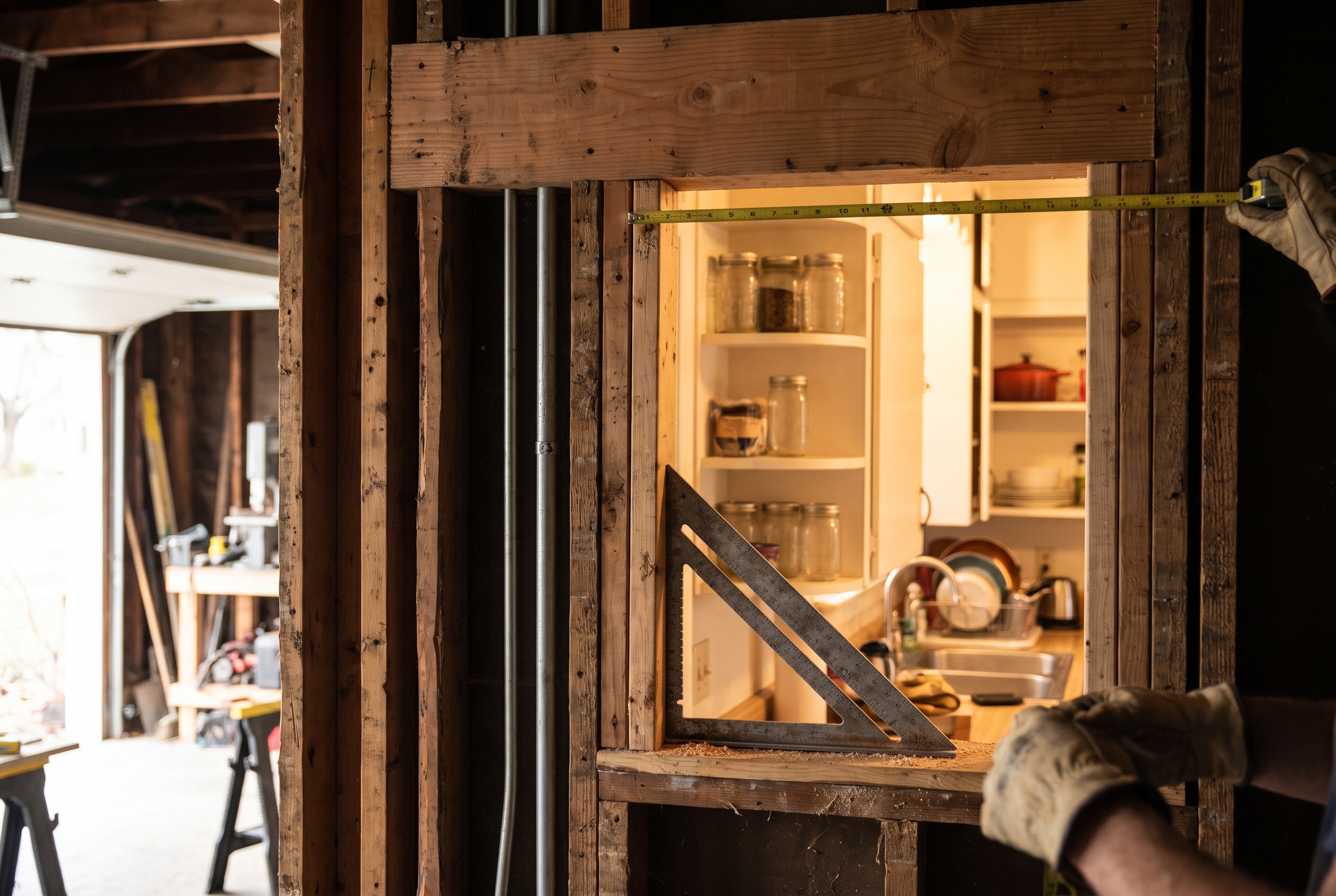
Call a general contractor or builder when:
-
The wall is load-bearing
-
Wiring or plumbing has to be moved
-
A permit and inspection are involved and you want one person to handle them
-
The door is part of a bigger kitchen, pantry or mudroom remodel
The Lifestyle Group puts it this way: "the contractor plays a crucial role in ensuring the new door is properly rated, correctly framed, and fully compliant." Whoever you hire, check their license and insurance before work starts, and ask your local building department whether your project needs a permit.
What to ask before you sign a bid
-
Is the door fire-rated, and is it labeled? Ask for the product name or a photo of the label. If it isn't rated, confirm it's solid wood or steel at least 1-3/8 inches thick.
-
What closer and latch hardware is included? The door must be self-latching and self-closing. Get the specific hardware written into the bid.
-
Does the jamb fit my wall? Some units are sized for 2x6 walls. Make sure the door matches your framing or that the bid covers the adjustment.
-
Who patches the garage-side drywall, and with what? It should be at least 1/2-inch gypsum, or 5/8-inch Type X if there are living spaces above the garage.
-
Is the wall load-bearing, and how will you handle what's inside it?
-
Is a permit needed, and is it included in the price?
-
How will the door be sealed against drafts and pests?
Is a Costco door worth it?
It's probably worth it if you buy in bulk often, have an attached garage that shares a wall with the pantry or kitchen, or have mobility or back problems that make carrying heavy loads hard. The feature started as an accessibility fix, and that's still where it pays off most.
It's probably not worth it if your pantry is tiny, the garage doesn't share a wall with your kitchen or pantry, or the only possible wall is load-bearing and full of wiring. In that last case, the cost can climb past what the convenience is worth.
What a fair quote looks like: For a simple, non-load-bearing wall, a price near $1,000 that names a fire-rated or code-compliant door, includes a self-closer and latch, and covers drywall patching is in line with the numbers above. A much lower quote may be leaving out the rated door or the closer. A much higher one should explain why, such as a header, rerouted utilities or permit fees.
Related reading
-
How to Get Your Roof Ready Before El Niño Storms Hit California
-
Your Solar Installer Went Out of Business. Now Who Fixes the Panels?
Sources
-
Costco fans are renovating their houses to make unloading groceries easier (Spokesman-Review, Washington Post story by Jenny Singer, Oct. 17, 2026)
-
What is a 'Costco door' and does your house need one? (AL.com via Yahoo, Kelly Kazek, Oct. 12, 2026)
-
The 'Costco Door' Is Starting to Pop Up in Homes (Newser, Oct. 10, 2026)
-
Dwelling-Garage Opening and Penetration Protection, R302.5/R302.5.1 (UpCodes, Colorado DFPC Residential Code 2021)
-
Dwelling-Garage Fire Separation, R302.6 (UpCodes, Colorado DFPC Residential Code 2021)
-
IRC 2018 Garage-to-House Door Requirements, R302.5.1 (Jaspector)
-
This House Has A 'Costco Door' In The Garage, And It's Genius (Hunker, Aug. 20, 2022)
-
What is a Costco Door? (The Lifestyle Group, Indianapolis, Dec. 17, 2025)
-
Fire-Rated Garage to Pantry Grocery Pass-Through Door (Ark Design)
-
How Much Does a Carpenter Cost per Hour in 2026? (HomeAdvisor, updated June 20, 2026)
Note: This article contains AI-assisted content and has been reviewed by our editorial team.
ABOUT THIS SERVICE: CallTheLocal.com is a directory and lead generation service, not a contractor or service provider. Submitting this form does not obligate you to hire anyone or purchase any service. Your information will be shared with licensed, insured home service professionals in your area who may provide quotes for your project. CallTheLocal.com does not guarantee the quality, timeliness, or outcome of any work performed by service providers you connect with through this service. Always verify licensing, insurance, and references before hiring. Get everything in writing before work begins.