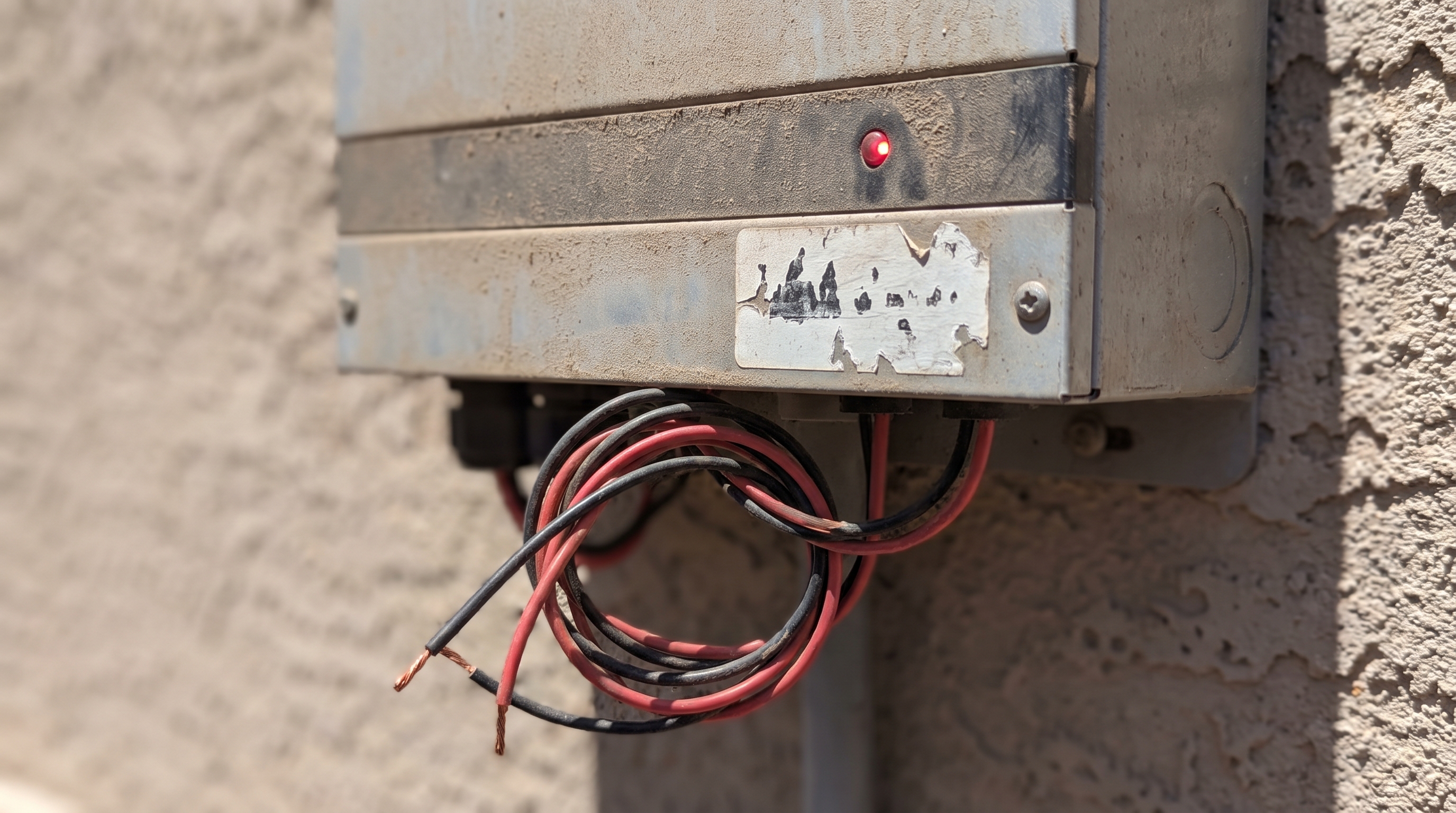
The inverter light is red, the monitoring app shows zero production, and the phone number on your installer's sticker no longer works. If your solar company went out of business, you're not alone, and you still have options. Your panels most likely still carry a valid manufacturer warranty. What you've probably lost is the company that was supposed to get on the roof and do the work.
This is happening to more homeowners each month. Freedom Forever was the top residential contractor on Solar Power World's 2025 Top Solar Contractors List, with nearly 2 GW installed across 35 states, Puerto Rico and DC. It filed Chapter 11 in Delaware on April 15, 2026, listing estimated liabilities of $500 million to $1 billion. On Aug. 7, 2026, the case converted to a Chapter 7 liquidation, which means the company is being wound down, not reorganized.
Below we cover what still protects you, who to call first, what independent repair shops charge in three states, and how to avoid hiring the wrong replacement.
Why are so many solar companies going out of business?
The short answer: demand fell once the federal tax credit ended. The 30% Section 25D credit for homeowners expired at the end of 2025, and Latitude Media ties the slowdown directly to that change. In a June 10, 2026 release, Wood Mackenzie forecast that residential solar installs will decline 21% in 2026, then return to steady growth from 2027 through 2031. That figure is a full-year forecast, not a measured drop. Freedom Forever is far from the only failure. SunPower and Titan filed in summer 2024, and Sunnova and PosiGen have also gone bankrupt. Freedom Forever's own financing partner, Mosaic, filed in June 2025. In February 2026, Freedom Forever laid off about 20% of its workforce and pulled out of 10 state markets.
What happens to my solar warranty if the installer goes out of business?
Your equipment warranties usually survive. Your workmanship warranty and production guarantee usually do not. The two kinds of coverage come from different companies, and that's why this happens.
-
Manufacturer warranties come from the companies that made your panels, inverters and batteries, so they stay in force when the installer disappears. According to ElectriCare, a solar service company, typical terms are about 25 years for panels, 10 to 25 years for inverters and about 10 years for batteries.
-
Workmanship warranties (roof penetrations, wiring, racking) and production guarantees came from the installer. If the installer is gone, those promises usually go with it.
The catch is labor. As ElectriCare puts it: "Equipment warranties cover the cost of the part, but they typically don't cover labor." The Cool Down calls these homeowners "solar orphans": they have a parts warranty but no one to do the repair. So you may get a free replacement inverter and still pay someone to diagnose the fault, take out the old unit and install the new one.
Who do I call first when my solar company is gone?
It depends on who owns the system. Check your paperwork before you call anyone.

If you own the system outright or have a solar loan
Call the equipment manufacturer first. Enphase, for example, says its warranties still cover your system's components if your installer closes, and that it can send service technicians. Enphase microinverters carry a 25-year warranty and its batteries 10 to 15 years. The company also sells Enphase Care and Enphase Care Plus service plans and offers a Transfer of Ownership service. Have your serial numbers and installation date ready when you call. Keep paying your loan. The installer's bankruptcy doesn't end your obligation to the lender.
If you lease the system or have a power purchase agreement (PPA)
You don't own the equipment, so the company that now holds your contract is responsible for it. Look at your most recent bill or bank statement to see who you're paying now. For many former Sunnova and SunPower contracts, that's SunStrong Management, which the Connecticut attorney general says manages loans, leases and PPAs from bankrupt solar companies. Connecticut AG William Tong sent SunStrong a civil investigative demand on Feb. 27, 2026, after about 65 complaints alleging that the company was failing to uphold warranties, not responding to consumer complaints and charging a $10 monthly fee for production data. If your servicer won't respond, document every contact attempt and file a complaint with your state attorney general.
How much does solar repair cost without the original installer?
Expect to pay a diagnostic or evaluation fee before anything gets fixed. Posted prices vary widely by region and by what's included. Here's what independent shops publish in three states.
| Region | Posted price | What it includes |
|---|---|---|
| California (NorCal Solar Repair) | $349 flat diagnostic | $249 is credited toward any repair, so the diagnostic nets out to $100 if you go ahead with them |
| Florida (Coastal Energy: Fort Myers, Naples, Miami) | $750 evaluation; Coastal Care plan $59/month or $649/year | Evaluation covers systems of up to 30 panels and two batteries within 30 miles of a service location. The plan includes up to two hours of labor a year, with parts and repairs billed separately |
| Texas (Atma Energy, via Latitude Media) | Up to $1,200 | Taking over a stranded system's permit and closing it out, or submitting a new permit |
Sources: NorCal Solar Repair, Coastal Energy, Latitude Media.
The Texas figure covers paperwork, not repairs. If your installer never closed out the permit, a new company may need to take it over before it can legally work on the system. Ask about this up front so it doesn't show up as a surprise line item.
What does it cost to replace a solar inverter?
Inverters are the part most likely to fail. SolarReviews puts the average U.S. replacement at $350 to $3,500. By type:
-
String inverters: typically $1,000 to $3,000. They last 10 to 15 years and carry 5 to 12 year warranties.
-
Hybrid inverters: $2,500 to $5,000 or more.
-
Microinverters: $150 to $250 per panel, or $3,000 to $5,000 to replace all of them on a 20-panel system. They last 20 to 25 years with 20 or 25 year warranties.
If the failed part is still under the manufacturer warranty, you should mostly be paying for labor and the diagnostic. If it's out of warranty, those ranges are your parts budget.
How do I vet a replacement solar repair company?
The company that sold you the system may have been a sales outfit that subcontracted the install, so be more careful with the second hire. Ask every repair company these questions:
-
Who holds the electrical license? In Texas, solar contracts under SB 1036 have to name the licensed electrical contractor and the license number. Ask any repair company for the same information.
-
Is the diagnostic fee credited toward the repair? NorCal Solar Repair credits $249 of its $349 fee. Ask for that in writing.
-
Will you file the manufacturer warranty claim (RMA) for me? You want a company that handles the claim so you only pay labor on covered parts.
-
Are parts and labor billed separately? Get both on the quote, especially for service plans, since Coastal Energy's plan, for example, bills parts and repairs on top of the included labor hours.
-
Will you handle the permit? If the old permit was never closed, find out who pays to take it over.
-
Proof of insurance. Ask for a certificate of insurance. In Texas, registered solar retailers must now carry at least $1 million per occurrence and $2 million aggregate in general liability coverage, according to pv magazine USA. That's a reasonable minimum to expect from anyone.
Red flags: a large deposit before anyone has looked at the system, pressure to replace everything when one component failed, or a pitch for a new system disguised as a repair visit.
What does Texas's SB 1036 do for solar buyers?
Texas's new solar law protects people buying a system now. It doesn't help owners whose installer has already failed. Here's what SB 1036 does:
-
Five business days to cancel. Buyers and lessees can cancel "without penalty or further obligation" by written notice on or before the fifth business day after signing. The agreement must require the lender to cancel any linked loan too.
-
Required contract terms. The contract must name the licensed electrical contractor and license number, state that the retailer will get permits and utility approvals, and list the retailer's and salesperson's names and registration numbers.
-
Timing. The contract terms and right to cancel took effect Sept. 1, 2025. TDLR registration for retailers and salespeople took effect Sept. 1, 2026. Registration costs $350 a year for retailers and $56 for salespeople. Licensed electrical contractors and their employees are generally exempt from registering. TDLR has suspended enforcement of its contract-disclosure and educational-materials rules until Nov. 1, 2026.
What it doesn't do: the law covers only contracts signed on or after Sept. 1, 2025, and it says nothing about warranties, service after installation or installer bankruptcy. It also exempts systems under 1 kW, commercial installs, multifamily buildings with more than four units and new residential construction (bill analysis).
Separately, Texas Attorney General Ken Paxton opened an investigation in April 2026 under the Deceptive Trade Practices-Consumer Protection Act into Freedom Forever, Sunrun, Lone Star Solar Services and CAM Solar. The demands request documents on warranties and service plans, among other things, and more than 100 complaints had been filed. "Thousands of Texans have been targeted by companies selling solar panel systems," Paxton said. If you have a complaint about a Texas solar sale, the attorney general's office is the place to file it.
I was a Freedom Forever customer. What should I do?
The court set Oct. 16, 2026 as the deadline for creditors, former employees and "customers with unfulfilled deposits or warranty claims" to file a proof of claim, according to pv magazine USA. The Chapter 7 trustee is Alfred T. Giuliano. Filing a claim doesn't mean you'll be paid, since unsecured creditors in a liquidation are often last in line. Don't wait on it to fix a broken system. Go to the manufacturer and an independent repair company in the meantime. If you missed the deadline and had a large deposit outstanding, a bankruptcy attorney can tell you whether you have any remaining options.
Your orphaned-system checklist
-
Find your paperwork. Gather the contract, permit, equipment list, serial numbers (panels, inverters, batteries) and installation date. Take photos of the equipment labels if you need to.
-
Figure out who owns the system. If you own it outright or through a loan, call the manufacturer. If you lease or have a PPA, call whoever you're paying now.
-
Call the manufacturer. Confirm your warranty is still active, ask whether the company has service technicians or a service plan, and ask about transferring the system into your name if that's offered.
-
Get a baseline inspection. Hire a licensed, insured third party to check the system once so you know what's working, what isn't and whether the permit was closed.
-
Compare diagnostic terms. A $349 fee with $249 credited isn't the same deal as a flat $750 evaluation. Get at least two written quotes.
-
Choose a service plan or pay per visit. Paying $649 a year for a plan with two labor hours can make sense for an older system with batteries. For a newer system with no faults, paying per visit may cost less.
Most orphaned systems can be fixed. The equipment is usually still covered, so what you need to budget for is the labor, plus the time to find a good company.
Related reading
-
Portable Generator With Transfer Switch or Whole-House Standby?
-
How to Winterize Outdoor Faucets Before the First Hard Freeze
-
The Solar Company Still Offering You "30% Off" Is Claiming a Credit You Cannot
Sources
-
Wood Mackenzie: Solar and Storage Provide Over 90% of All New Power Added to the U.S. Grid in Q1
-
Latitude Media: Why did residential solar installer Freedom Forever go under?
-
Solar Power World: Residential solar installer Freedom Forever files bankruptcy
-
pv magazine USA: Freedom Forever bankruptcy converted to Chapter 7 liquidation, key dates set
-
pv magazine USA: Texas ruling tightens oversight of residential solar sales
-
Connecticut Attorney General: New Developments to Hold Solar Industry Accountable
-
ElectriCare: Solar Installer Out of Business? What To Do (a solar service company)
Note: This article contains AI-assisted content and has been reviewed by our editorial team.
ABOUT THIS SERVICE: CallTheLocal.com is a directory and lead generation service, not a contractor or service provider. Submitting this form does not obligate you to hire anyone or purchase any service. Your information will be shared with licensed, insured home service professionals in your area who may provide quotes for your project. CallTheLocal.com does not guarantee the quality, timeliness, or outcome of any work performed by service providers you connect with through this service. Always verify licensing, insurance, and references before hiring. Get everything in writing before work begins.