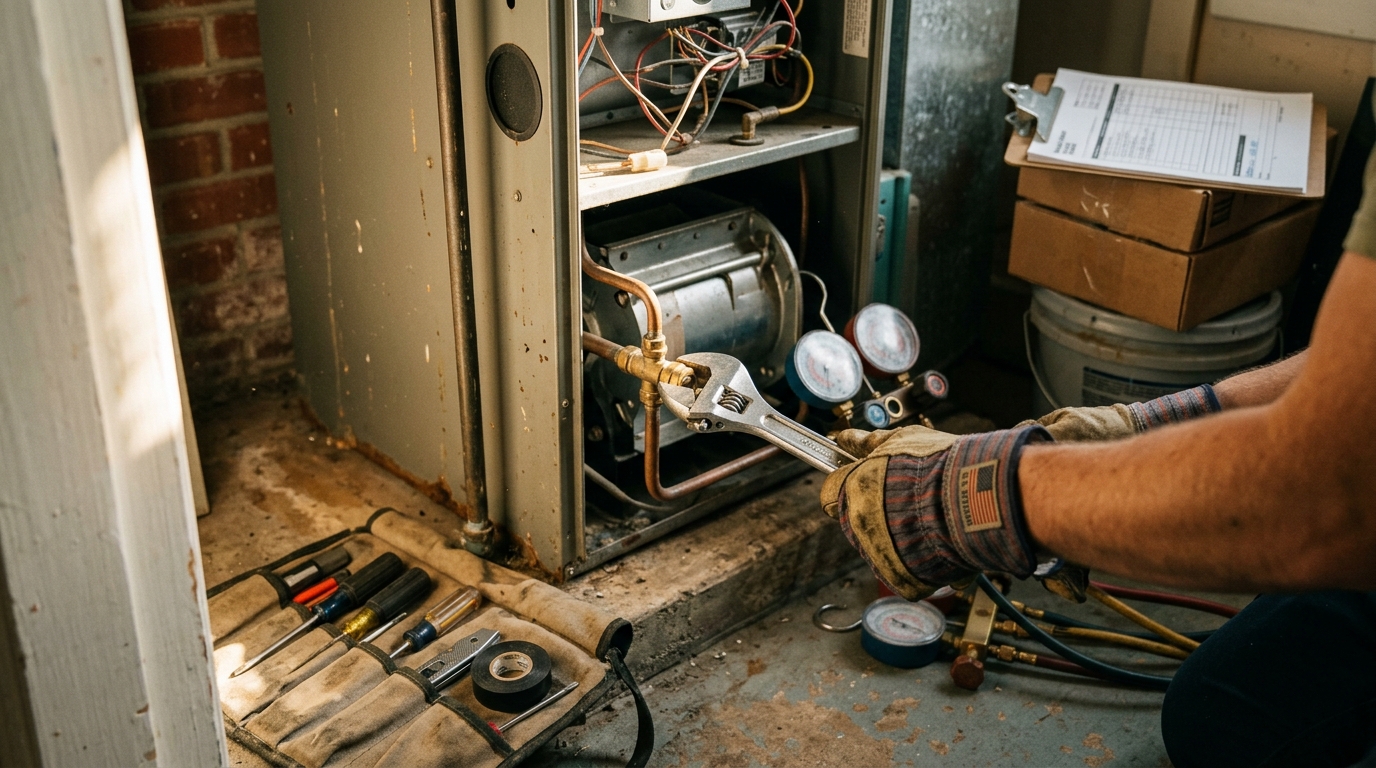
If you have called for an HVAC tune-up, a slab leak repair, or a roof inspection in the last six months and been told the first opening is three weeks out, you already know the story homeowners are living in 2026. The bill at the end is often worse: standard service rates are up, after-hours premiums are up, and "emergency" has become a pricing tier as much as a timeline. The reason is not greed at the local level. It is a national labor shortage that has finally tipped into the consumer experience, and the most concrete relief coming this year is being trained on military bases.
The size of the gap, in plain numbers
The trade press has been warning about this for a decade, but the 2026 figures are sharper. Industry coverage estimates U.S. shortages running over 20,000 licensed plumbers and nearly 40,000 HVAC professionals this year, with a replacement ratio of roughly three retirements for every one new worker entering the field. A broader JLL report covered by Fortune in April 2026 projects up to 2.1 million unfilled skilled-trades jobs by 2030, with potential economic losses approaching $1 trillion a year. More than one in five construction workers is already over 55.
Translation for a homeowner: the person who fixed your AC in 2018 is closer to retirement than to mid-career, and the apprentice who would normally be ready to replace them is not in the pipeline yet. That is why your local company is honest when they say they cannot get to you faster. They genuinely cannot staff the second truck.
Why veterans, and why now
For years the industry tried to recruit out of high schools. It worked, but slowly. The shift in 2026 is that the bigger lever turned out to be transitioning service members, who arrive with safety training, mechanical aptitude, and the discipline to finish certifications on a schedule. Trade publications have started calling veterans "the most viable pipeline" for closing the HVAC and plumbing gap, and the federal infrastructure to move them into the trades has finally matured. You can read the industry argument directly at Plumbing & Mechanical.
How "fast-track" actually works (and why it is faster than a traditional apprenticeship)
The legacy path into a union HVAC or plumbing local is a four to five year apprenticeship. That is still excellent training, but it is not going to solve a 2026 booking calendar. The accelerated programs work differently:
-
UA Veterans in Piping (UA VIP) is a Department of Defense SkillBridge program offering 118 days, roughly 720 hours, of training in HVAC-R, pipefitting and welding, or fire suppression. Graduates get direct entry into a United Association registered apprenticeship with guaranteed employment. Per the program, more than 3,600 transitioning service members have graduated since 2008. Details and current cohorts are at UA VIP, with an independent overview from the ICC Building Safety Journal.
-
GI Bill on-the-job training and apprenticeships stack a monthly housing allowance and a book stipend on top of regular apprentice wages, which is what makes it financially possible for a 28-year-old with a family to leave a steady military paycheck and learn a trade. The VA explains how the stipends work, and the federal portal at Apprenticeship.gov maps the SkillBridge and Registered Apprenticeship overlap.
-
HVAC-R specifically can run from 9 to 18 months end to end, including EPA Section 608 refrigerant certification, which is the federal credential a tech needs to legally touch the refrigerant in your system. HBI and the UA's umbrella veteran tracks both run versions of this.
None of this skips fundamentals. It just compresses the classroom-to-truck timeline by removing the part-time, evenings-and-weekends cadence that civilian apprentices usually live with.
AI workflows for revenue teams
Placeholder house ad for Conservus.ai. Swap with final creative when brand assets are ready.
Partner with Conservus.aiIndustry money is finally backing it
The other reason 2026 looks different is that the companies whose names are on the side of the equipment are paying to absorb these graduates rather than waiting for the labor market to sort itself out.
-
Rheem and Ruud launched a combined 2026 Multi-Trade Pro Partner loyalty program covering heating, cooling, and plumbing, with veteran recruitment routed through MilitaryHire. Larger Pro Partners can realize over $75,000 in annual program value, which is a real incentive for a local contractor to staff up. The program announcement is at phcppros.
-
Lowe's Foundation committed $250 million over a decade to train 250,000 skilled-trades workers and opened the first Lowe's Skilled Trades Academy in Jacksonville, North Carolina, covering HVAC, plumbing, electrical, and general construction for military members and their spouses.
-
VTEC (Veteran Training Empowerment Center) is expanding to 14 Base Camps in 2026, anchored at Fort Gillem in Georgia and including Fort Bragg in North Carolina, with a target of reaching more than 20,000 military-connected individuals. The expansion announcement is on PR Newswire.
Where this hits the schedule first: regional pipelines worth knowing
If you live near one of these hubs, your local service capacity is probably going to recover sooner than the national average. The biggest staffing pipelines in 2026 are:
-
Texas: Fort Bliss (El Paso) and Fort Hood (Killeen) both host DOD SkillBridge carpentry and electrical training, and UTI operates a training center at Fort Bliss. Expect HVAC and electrical capacity around El Paso, Killeen, and the I-35 corridor to thicken first.
-
North Carolina: Fort Bragg is the hub. The Lowe's Skilled Trades Academy in Jacksonville and a UTI campus near Fayetteville feed crews into Raleigh, Fayetteville, Wilmington, and the coastal counties.
-
Georgia: Fort Gillem anchors the new VTEC national training center, which will route trained workers into the Atlanta metro and northwest Georgia.
Background context on the broader veteran-to-trades shift is in this ClearanceJobs piece from January 2026.
What to actually ask when a contractor knocks on your door
You do not need to interrogate the person standing in your driveway. But it is fair, and increasingly useful, to ask a few questions about who is going to be on the truck for your job:
-
"Is the tech who will be on this job EPA 608 certified?" For any HVAC work that touches refrigerant, the answer should be yes.
-
"How long has the lead on the crew been doing this?" You want years on a truck, not just years with the company.
-
"Does your shop participate in UA, SkillBridge, or a manufacturer pro-partner program?" A yes is a signal that the shop is investing in training, which usually correlates with stable scheduling and warranty follow-through.
-
"Who signs off on the final inspection?" A licensed journey-level tech or master should be on the final, even if an apprentice does most of the install.
None of these questions are rude. A good shop will answer them in 60 seconds.
AI workflows for revenue teams
Placeholder house ad for Conservus.ai. Swap with final creative when brand assets are ready.
Partner with Conservus.aiA realistic timeline for relief
Here is the honest part. Even with thousands of veterans entering accelerated programs in 2026, journey-level capacity (the techs who can run a job solo) does not snap back overnight. Expect roughly 18 to 24 months before the bench of experienced installers and service techs visibly rebuilds in most markets. In the meantime:
-
Quote speed improves first. The first thing more labor fixes is the phone queue. You should start seeing same-week estimates again before you see same-week installs.
-
Standard pricing softens before emergency pricing. Expect routine tune-ups, drain cleaning, and seasonal service to normalize ahead of after-hours and weekend calls.
-
Emergency premiums of roughly 10 to 20 percent over standard rates are likely to linger into 2027, because that is where the shortage of senior techs bites hardest.
What to watch over the next year
Two signals tell you the labor market is actually loosening near you. First, you start getting estimates back within 48 hours instead of a week. Second, you stop seeing "trip fee" or "diagnostic fee" tacked onto routine business-hours calls. When both of those show up in the same quarter, your market has turned the corner. Until then, book non-urgent work early in the season, get more than one quote in writing, and ask about financing only after you have the scope and price nailed down.
The veterans walking off Fort Bragg, Fort Bliss, and Fort Gillem this year are not a marketing story. They are the people who are going to be under your house next winter when the water heater goes. Worth knowing.
Related reading
AI workflows for revenue teams
Placeholder house ad for Conservus.ai. Swap with final creative when brand assets are ready.
Partner with Conservus.aiSources
-
About the United Association Veterans in Piping Program (UA VIP)
-
Rheem and Ruud Launch New Multi-Trade Pro Partner Loyalty Program (phcppros)
-
On-the-job training and apprenticeships (U.S. Department of Veterans Affairs)
-
America's 'silent army' of skilled trades workers is vanishing (Fortune, April 21, 2026)
-
VTEC Announces National Expansion Anchored by Fort Gillem National Training Center (PR Newswire)
-
Lowe's launches Skilled Trades Academy for military members, spouses (Fox Business)
-
Skilled Worker Shortages Create New Job Opportunities for Veterans (ClearanceJobs, January 2026)
-
Transitioning Military and Veterans (Home Builders Institute)
Note: This article contains AI-assisted content and has been reviewed by our editorial team.
ABOUT THIS SERVICE: CallTheLocal.com is a directory and lead generation service, not a contractor or service provider. Submitting this form does not obligate you to hire anyone or purchase any service. Your information will be shared with licensed, insured home service professionals in your area who may provide quotes for your project. CallTheLocal.com does not guarantee the quality, timeliness, or outcome of any work performed by service providers you connect with through this service. Always verify licensing, insurance, and references before hiring. Get everything in writing before work begins.