A fair flooring installation cost breakdown lists every part of the job as its own line: flooring material with a stated waste factor, underlayment or moisture barrier, install labor, tear-out and haul-away, subfloor prep, trim and transitions, stairs, and furniture moving. In 2026, total installed cost runs about $3 to $15 per square foot nationally.
That range comes from TaskRabbit's flooring cost guide, which puts the national average around $7 per square foot for materials plus labor. The trouble is that a single total tells you almost nothing. Two bids can land at the same number while one hides a padded waste factor and the other leaves out tear-out entirely. So let's take a bid apart the way a contractor builds it.
Start with a sample: a 500 sq ft LVP bid
Say you're replacing carpet with luxury vinyl plank (LVP) across 500 square feet. Housecall Pro's 2026 pricing guide puts installed LVP at $4 to $16 per square foot, so the core job could land anywhere from about $2,000 to $8,000 before tear-out, prep and extras. Where your bid falls in that range depends on the lines below.
When the quote arrives, you have three choices: sign it, push back on specific lines, or get another bid. Going line by line is how you decide which.
| Line item | Typical 2026 range | What to check |
|---|---|---|
| Installed flooring (LVP) | $4 to $16 per sq ft | Brand, product line, color named |
| Installed flooring (laminate) | $4 to $14 per sq ft | Same, plus whether pad is attached |
| Installed flooring (hardwood) | $6 to $25 per sq ft | Species, grade, finish |
| Installed flooring (tile) | $12 to $50 per sq ft | Tile size and layout pattern |
| Install labor only | $0.60 to $4 per sq ft | What "basic install" covers |
| Underlayment | $0.50 to $3.50 per sq ft | Not billed twice |
| Moisture barrier | $0.50 to $2+ per sq ft | Needed for your subfloor? |
| Removal (carpet / general / tile) | $0.70 to $1.60 / $1.50 to $3.50 / $2 to $7 per sq ft | Haul-away included? |
| Subfloor leveling | $2 to $8 per sq ft | Allowance with a rate and a cap |
| Structural subfloor repair | $10 to $30 per sq ft | Only after tear-out, in writing |
| Baseboard remove and reinstall | $1 to $5 per linear ft | Measured footage |
| Stairs | $50 to $160+ per step | Stair nose included? |
| Furniture moving | $25 to $75 per room | Which rooms, which pieces |
Material, add-on and removal ranges are from Housecall Pro; labor and subfloor figures are from TaskRabbit.
Line 1: Material and waste factor
The material line should name the brand, product line and color, and give a price per square foot. If it just says "LVP flooring," you can't compare it to another bid or confirm you got what you paid for.
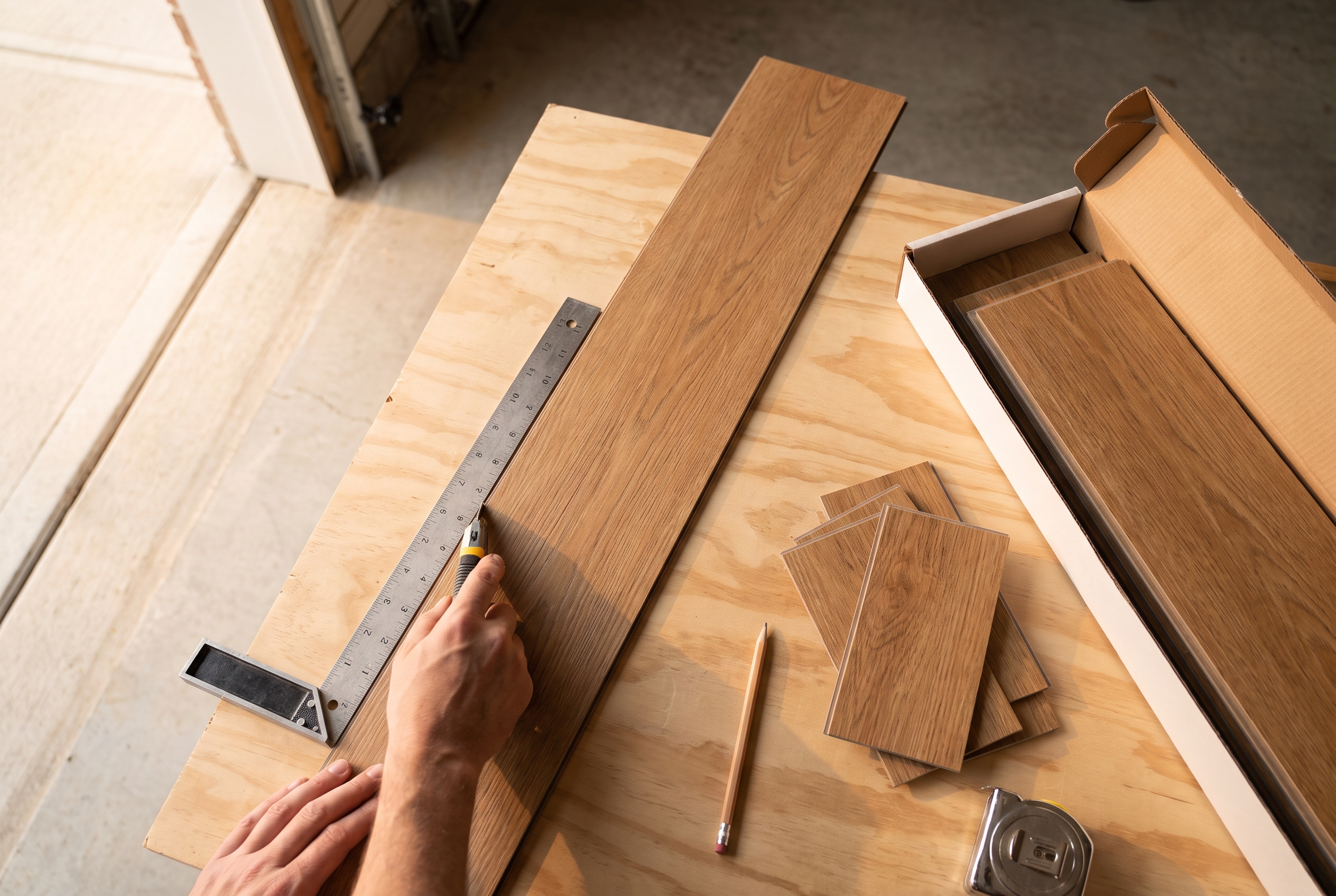
Right next to it should be a waste factor: extra material ordered to cover cuts, mistakes and odd corners. According to Housecall Pro's guidance, reasonable waste looks like this:
-
Carpet: 5 to 10%
-
LVP or laminate in rectangular rooms: 5 to 8%
-
Standard tile: 10%
-
Diagonal, herringbone or pattern-matched tile: 15 to 20%
A bid showing 15% waste on a simple plank layout in square rooms is padded. On a 500 sq ft job, that's roughly 35 to 50 extra square feet of material you're paying for and may never see.
Line 2: Underlayment and moisture barrier
Underlayment runs $0.50 to $3.50 per square foot, and a moisture barrier runs $0.50 to $2 or more, per Housecall Pro. TaskRabbit gives a wider underlayment range of $0.50 to $5.50.
Here's the check most homeowners miss: many LVP and laminate products come with a pad already attached. If yours does, a separate underlayment line may be a double charge. Ask the contractor directly whether the product has attached pad and, if so, why a second layer is needed. There can be a reason (a moisture barrier over concrete, for example), but it should be explained, not assumed.
Also watch for underlayment showing up twice: once folded into "job supplies" or labor, and again as its own line. Homewyse's laminate estimate is a good model here. It separates material, basic labor, job supplies (underlayment, fasteners, adhesives), an equipment allowance, removal and disposal, so each cost appears exactly once.
Line 3: Install labor
Labor alone runs about $0.60 to $4 per square foot nationally, per TaskRabbit, with an average installer rate of $54 an hour. "Basic install" should mean laying the new floor over a prepared subfloor. It generally doesn't cover tear-out, leveling, trim work or stairs, which is why those need their own lines.
Where you live moves this line more than almost anything else. TaskRabbit's 2026 hourly rates by metro:
-
Northeast and Pacific Northwest: New York City, Boston and Seattle about $71 an hour; Washington, DC about $68
-
Midwest and Mountain West: Chicago about $63; Denver about $55
-
South and Southern California: Austin about $70; Miami about $55; Los Angeles and Orange County about $51
So an identical job in Boston and Los Angeles can carry noticeably different labor lines without either bid being out of line. Compare local bids to each other, not to a national average.
Line 4: Tear-out and haul-away
Removing the old floor is real work and should be its own line. Housecall Pro puts general removal at $1.50 to $3.50 per square foot, carpet at $0.70 to $1.60, and tile at $2 to $7. TaskRabbit gives $1 to $5 for old floor removal. Confirm the line includes hauling the debris away, not just pulling it up.
An important caveat for older homes. If you're pulling up 9-inch by 9-inch vinyl tile or there's black adhesive (mastic) underneath, and the house was built before 1980, treat it as possible asbestos until a lab says otherwise. AsbestosHQ notes these materials are commonly presumed to contain asbestos and estimates professional abatement at roughly $1,500 to $5,000 per 1,000 square feet. The EPA's guidance is plain: "Don't sand or try to level asbestos flooring or its backing." If possible, install the new floor over it, and leave removal to trained, qualified people.
A fair bid for an older home either reflects a test result or clearly says tear-out pricing assumes no hazardous materials. Homewyse, for one, excludes hazmat testing and remediation from its estimates, so don't assume a standard removal price covers it.
Line 5: Subfloor prep, where allowances become change orders
This is the line most likely to grow after you sign. Nobody can see the subfloor until the old floor is up, so leveling ($2 to $8 per square foot) and structural repair ($10 to $30 per square foot), per TaskRabbit, are the most common change orders on flooring jobs.
A fair bid handles this with an allowance: a stated per-square-foot rate for leveling, an estimate of how much might be needed, and a written process for approving anything beyond it. A vague "subfloor prep as needed" line gives you no protection.
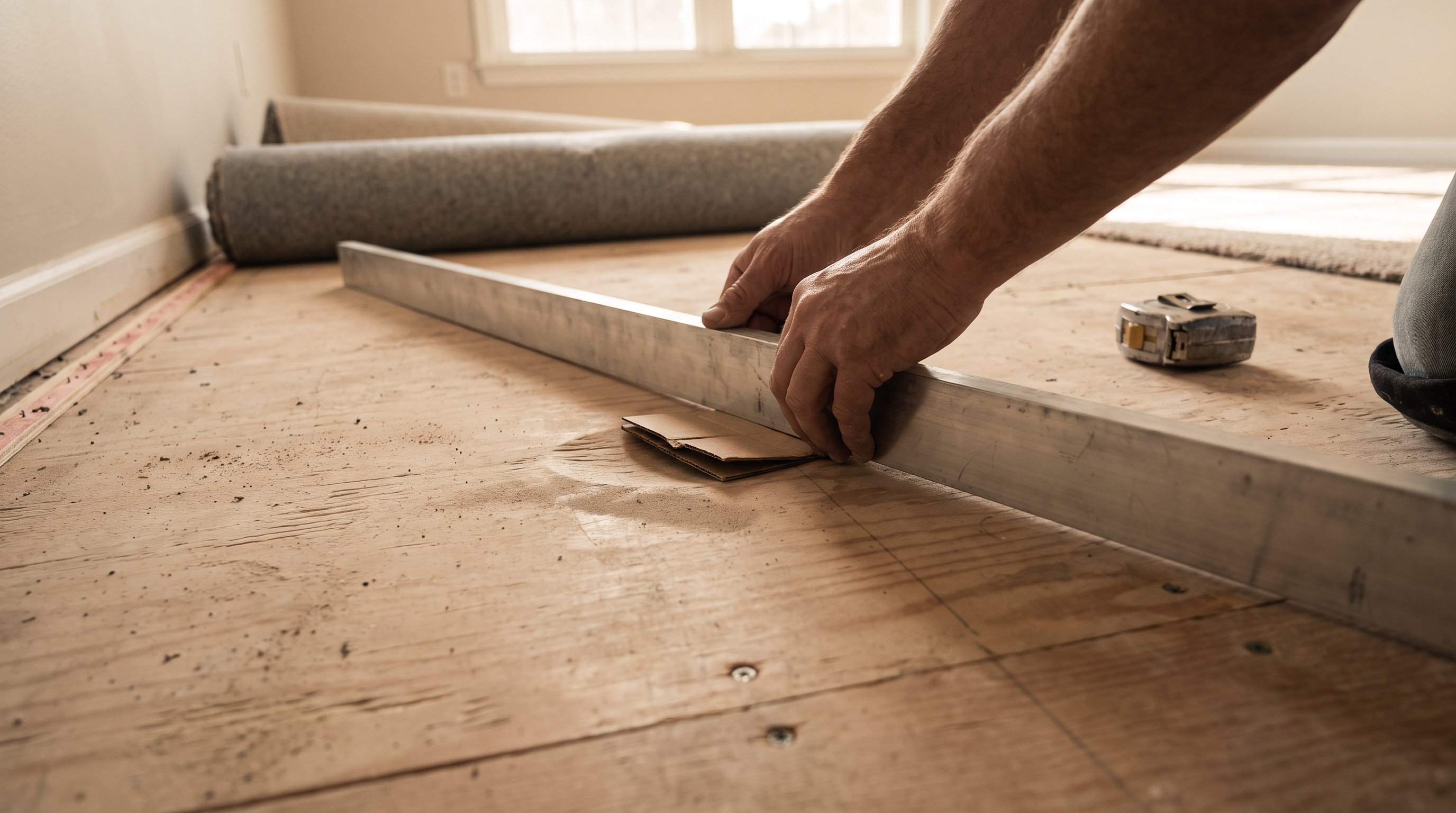
You also have an objective yardstick. The National Wood Flooring Association (NWFA) installation guidelines call for a subfloor flat within 3/16 inch over 10 feet (or 1/8 inch over 6 feet) for glue-down floors and short fasteners, and within 1/4 inch over 10 feet when using fasteners 1.5 inches or longer. High spots are sanded down; low spots are filled or shimmed. Wood subfloor moisture should be within 4% of the acclimated flooring. For concrete slabs, the NWFA's concrete subfloor guide covers moisture testing methods such as ASTM F2170.
If a crew tells you leveling is needed, it's fair to ask: how far out of flat is it, measured over what distance? A good installer can show you with a straightedge.
Line 6: Trim, transitions and stairs
According to D and G Flooring, transitions (T-molds, reducers, thresholds and stair nose) and quarter round or shoe molding are separate items, because each doorway and edge needs individual fitting. Expect transitions priced per piece and quarter round priced per linear foot.
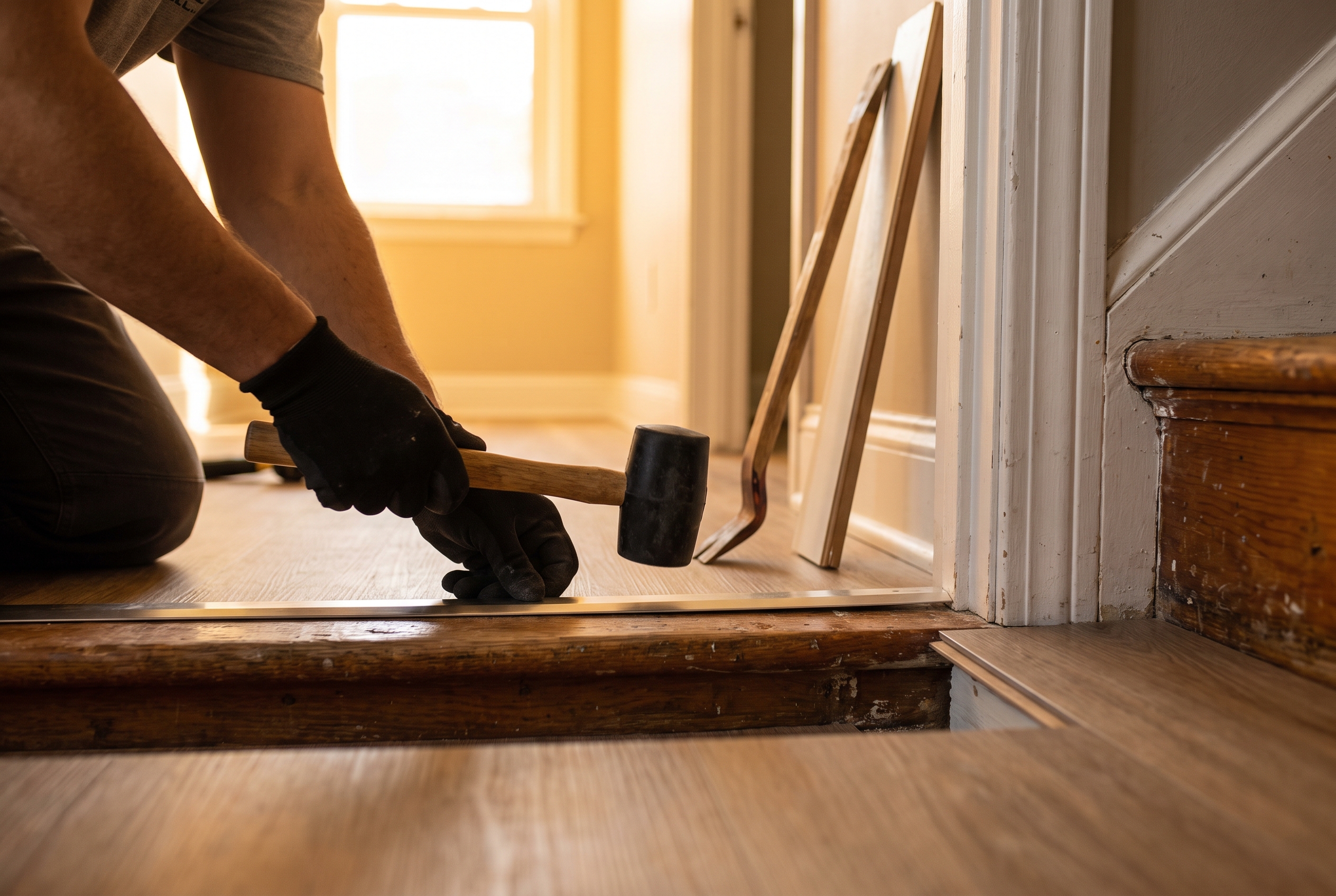
Count your doorways and floor changes yourself, then check the count on the bid. A quote that lists "transitions" with no quantity is an easy place for the number to drift.
If baseboards come off and go back on, Housecall Pro puts that at $1 to $5 per linear foot. Stairs are priced per step, at $50 to $160 or more each, so a 13-step staircase can be a meaningful share of the total on its own.
Line 7: Furniture, permits, tax and overhead
The last group is small lines that add up:
-
Furniture moving: $25 to $75 per room (Housecall Pro). Ask which pieces are included; pianos and gun safes usually aren't.
-
Permits and sales tax: Homewyse's estimates leave both out, so check whether your bid includes them or adds them later.
-
General contractor overhead: If a GC is running the job and subbing out the flooring, Homewyse says to add 13 to 22% for overhead.
Which lines get padded
Markup itself isn't a problem. Housecall Pro notes flooring contractors plan on 20 to 40% gross margin, and that's how they stay in business. The issue is markup that shows up twice. Padding usually hides in four places:
-
Inflated waste. 15% on a simple plank layout, when 5 to 8% is the norm.
-
Lump-sum "installation." One big number with no breakdown of labor, prep, trim or removal.
-
Supplies billed twice. Underlayment inside labor or supplies and again as its own line, or a separate pad under a product that already has one.
-
Stacked overhead. An overhead or "project management" line added to a per-square-foot price that was already all-in.
A fifth is worth watching: transitions that aren't tied to an actual count of doorways.
Deposits and change orders
D and G Flooring's quote guide lists these red flags: no site visit before quoting, vague line items, pressure to sign now, a deposit over 30%, no written labor warranty, and a price 30% or more below competitors. It also says hidden conditions such as a damaged subfloor or moisture should trigger a written change order before work continues.
Some states set hard rules. In California, the Contractors State License Board caps the down payment on a home improvement contract at $1,000 or 10% of the contract price, whichever is less, with no exception for special-order material. Contracts over $500 must be in writing, and any price change must be a written change order that becomes part of the contract. Check your own state's contractor board for its rules; even where they're looser, those are good terms to ask for.
How to compare two flooring bids line by line
Lay the bids side by side and walk through this list:
-
Same product? Brand, line and color named on both.
-
Same square footage? If one measures 500 and the other 560, ask why.
-
Waste factor stated and matched to your layout?
-
Underlayment: attached pad, separate line, or both? Only one should be charged.
-
Tear-out priced for your actual old floor, with haul-away included?
-
Subfloor prep shown as an allowance with a per-square-foot rate and a cap?
-
Transitions counted by doorway; baseboard and quarter round by linear foot?
-
Stairs priced per step, with stair nose included or listed?
-
Furniture moving, permits and sales tax: included or extra?
-
Deposit at or below 30% (or your state's cap), with a written change-order process and a written labor warranty?
When to get a third quote: if the two bids differ by more than you can explain line by line, if one is 30% or more below the other, if either contractor wouldn't visit before pricing, or if one won't break out subfloor prep. A third bid usually shows which of the first two is the outlier.
Related reading
-
Oil at $5.70 a Gallon Changes the Heat Pump Math in the Northeast
-
Which Insurance Pays When Rain Floods the Basement From Below?
Sources
ABOUT THIS SERVICE: CallTheLocal.com is a directory and lead generation service, not a contractor or service provider. Submitting this form does not obligate you to hire anyone or purchase any service. Your information will be shared with licensed, insured home service professionals in your area who may provide quotes for your project. CallTheLocal.com does not guarantee the quality, timeliness, or outcome of any work performed by service providers you connect with through this service. Always verify licensing, insurance, and references before hiring. Get everything in writing before work begins.
Note: This article contains AI-assisted content and has been reviewed by our editorial team.