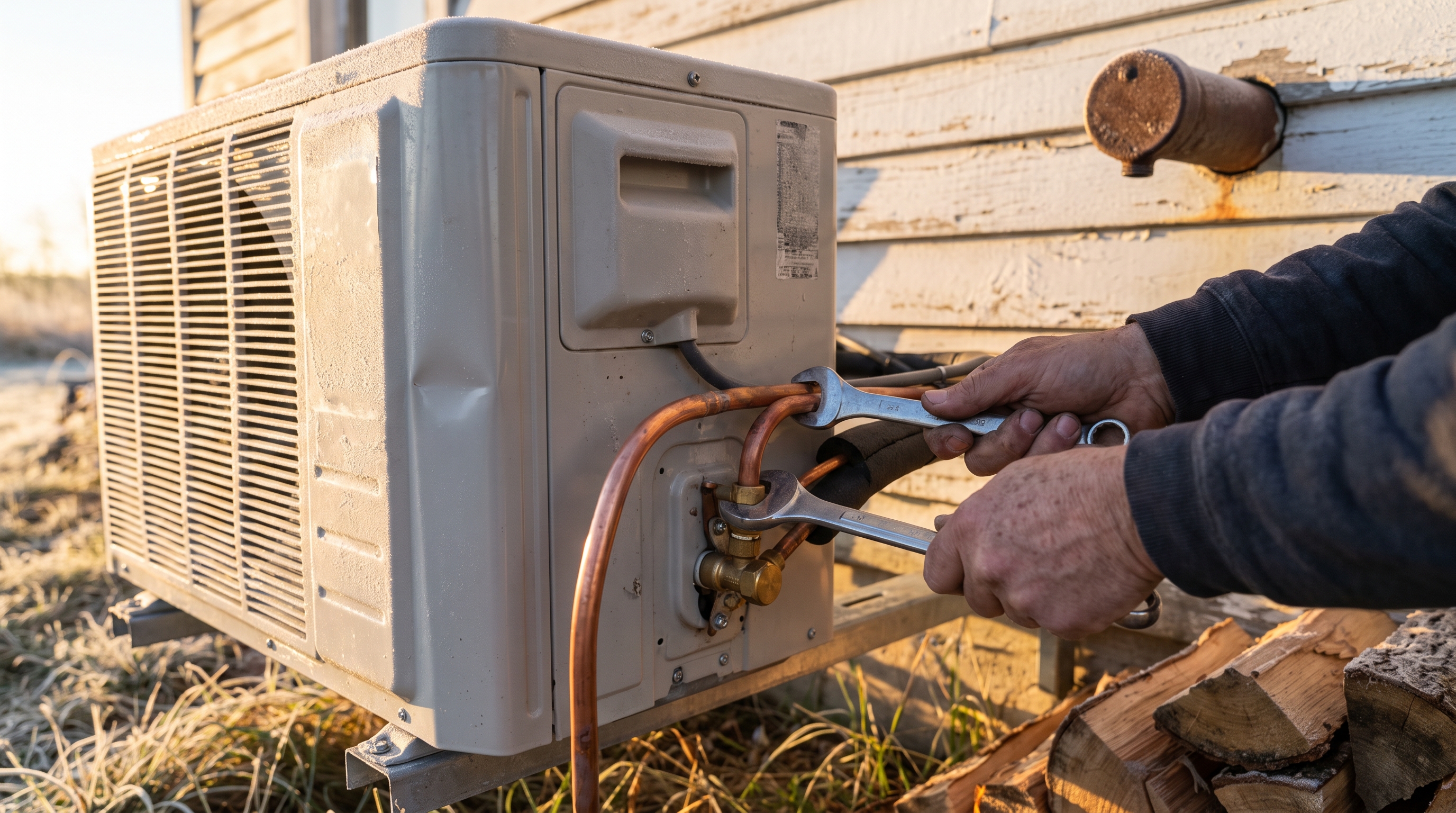
Heat pump vs oil heat cost, fall 2026: with heating oil at $5.61 to $5.77 a gallon, an 85% efficient oil boiler delivers heat for about $48 to $49 per million Btu. A cold-climate heat pump running at a seasonal efficiency (COP) of 2.5 costs about $28.50 in Connecticut and about $35 in Maine and New York. The heat pump wins at every price below.
If you heat with oil in Maine, Connecticut or New York's North Country, this fall's first delivery is going to sting. Maine's statewide average for heating oil was $5.77 a gallon on September 14, 2026, according to the Maine Department of Energy Resources. Filling a standard tank now costs about $675 more than it did a year ago. In the North Country, NYSERDA's survey shows $5.73 a gallon. In Connecticut, EIA data cited by WFSB puts oil at $5.61 a gallon.
That price level changes whether a heat pump is worth it. Below you will find the numbers, the formula so you can run your own, what a conversion costs after rebates, and when keeping the oil boiler as backup is smart.
Why this winter is different
The jump in oil prices is big, and it happened fast:
-
Maine: up 74% from a year ago (Maine DOER, via Maine Public).
-
North Country, NY: $5.73 versus $3.37 a year ago, up about 70% (NYSERDA, via WWNY). Kerosene there is $6.01, up from $3.92.
-
Connecticut: $5.61 versus $3.01 in September 2024, up 86%. That is a two-year change, not a one-year change.
Electricity moved much less. EIA's average residential prices for June 2026 were 29.59¢ per kWh in Maine (up from 28.14¢ a year earlier, about 5%), 29.49¢ in New York (up from 26.55¢, about 11%) and 24.32¢ in Connecticut (down from 27.19¢). When one fuel rises 70% and the other rises 5% to 11% or falls, the comparison shifts.
One note on the data: EIA's weekly residential heating oil survey only runs October to March. New England's last reading was $5.578 a gallon for the week ending March 30, 2026. Weekly numbers resume in October, so check again then. Maine's figures are spot cash prices, not pre-buy contract prices.
The math: cost per million Btu of delivered heat
The fair way to compare fuels is the cost of the heat that actually reaches your rooms. Here is the formula we used (our own calculation, so you can swap in your own prices):
-
Oil: a gallon holds about 138,500 Btu. An 85% efficient boiler delivers about 117,700 Btu per gallon. So cost per million Btu (MMBtu) = oil price per gallon × 8.5.
-
Heat pump: a million Btu equals about 293 kWh of heat. Divide by the heat pump's COP to get the electricity used. At COP 2.5 that is about 117 kWh. So cost per MMBtu = your price per kWh × 293 ÷ COP.
| Heat source | Maine | Connecticut | New York |
|---|---|---|---|
| Oil boiler, 85% (at $5.77 / $5.61 / $5.73) | about $49 | about $47.60 | about $48.70 |
| Heat pump, COP 2.0 | about $43.40 | about $35.60 | about $43.20 |
| Heat pump, COP 2.5 | about $34.70 | about $28.50 | about $34.60 |
| Heat pump, COP 3.0 | about $28.90 | about $23.80 | about $28.80 |
Cost per million Btu of delivered heat. Electricity at EIA June 2026 state averages: 29.59¢ Maine, 24.32¢ Connecticut, 29.49¢ New York. Your utility rate may differ.
Your own electric rate matters. Maine DOER lists Central Maine Power's 2026 variable rate at about 24¢ per kWh plus a $27.37 monthly fixed charge, while Versant Bangor Hydro customers pay about 30.95¢. Both utilities also offer special rates that may help heat pump users. In Connecticut, Eversource's standard service supply rate is 11.577¢ per kWh for July to December 2026, down from 12.641¢ (a secondary source; confirm on the EnergizeCT rate board). Efficiency Maine also has a free heating cost calculator that does this comparison for you.
The break-even oil price
At a COP of 2.5, a heat pump costs the same to run as an 85% oil boiler when oil is about $4.08 a gallon in Maine and New York and about $3.35 in Connecticut. Today's prices sit $1.50 to $2.25 above those lines.
Even if your heat pump only averages COP 2.0 over the season, the break-even rises to roughly $5.10 in Maine and New York and about $4.20 in Connecticut. Oil is still above all three, but in Maine and New York the edge gets thin. At COP 2.0 in Maine, heat pump heat is only about 11% cheaper than oil.
What COP should you expect? Efficiency Maine's field results, as summarized in an August 2026 ACEEE paper, show average seasonal COP rising from 2.57 under its older program to 3.15 under the whole-home program. In a separate metering study of 10 Maine homes (February to June 2021), seven needed no significant supplemental heat, and in all but one home the heat pumps covered at least 80% of the heating load down to -5°F.
A sample winter bill
To make this concrete, picture a home that burns 800 gallons of oil a winter. That number is an illustration we chose, not a figure from any source. Your usage will differ.
| Maine | Connecticut | New York | |
|---|---|---|---|
| Oil, 800 gallons | about $4,620 | about $4,490 | about $4,580 |
| Same heat, heat pump at COP 2.5 | about $3,270 | about $2,690 | about $3,260 |
| Estimated savings | about $1,350 | about $1,800 | about $1,330 |
If the system only manages COP 2.0 in Maine, the heat pump bill rises to about $4,080 and the savings shrink to roughly $500. That gap is why a good installation and a well-sealed house matter so much.
Connecticut installer Gary Pelletier told WFSB that with oil above $5, a heat pump "could cut your heating bill in half or even 75%." Treat that as one installer's view. Our math at COP 2.5 shows savings closer to 30% to 40%, and higher only at better efficiency or lower electric rates.
What a conversion costs, and what rebates cover
For Maine, aggregator and installer estimates put a whole-home ducted heat pump at about $12,000 to $24,000 installed before rebates. That roughly breaks down as $6,000 to $10,000 for equipment and $3,000 to $6,000 for labor, plus any electrical upgrades and permits. These are estimates, not official figures. Get at least two written bids.
Here is how the main programs cut that bill:
-
Efficiency Maine: Whole-home ducted rebates are $9,000 for low-income households, $6,000 for moderate income and $3,000 for any income. Other systems get $3,000, $2,000 or $1,000 per outdoor unit by the same tiers. Add a $500 bonus per housing unit for upgrades completed and claims filed March 1 to December 31, 2026. On a $12,000 to $24,000 ducted job, that means a net of roughly $2,500 to $14,500 for the lowest-income tier and $8,500 to $20,500 for the any-income tier. The heat pump must be your primary heating system.
-
Energize CT: The standard air-source rebate is $250 per ton, up to $2,500. The Energy Optimization whole-home tier is reported at $1,000 per ton for installs January 1 to August 31, 2026, and $1,500 per ton from September 1, 2026. On a 3-ton system that works out to $4,500. These figures come from a secondary source because the EnergizeCT pages were not accessible, so confirm with your installer. The tier requires ENERGY STAR Cold Climate equipment, an installer in the HPIN network, and the heat pump replacing oil, propane, gas or electric resistance as your primary heat.
-
National Grid, upstate New York: The NYS Clean Heat program advertises savings of up to $12,000 on central air-source and mini-split systems. Equipment must be on the NEEP cold-climate list and installed by a participating contractor.
-
Federal tax credit: The 25C Energy Efficient Home Improvement Credit, which was worth up to $2,000 for heat pumps, cannot be claimed for property placed in service after December 31, 2025. Do not count on it for a 2026 install.
Should you keep the oil boiler as backup?
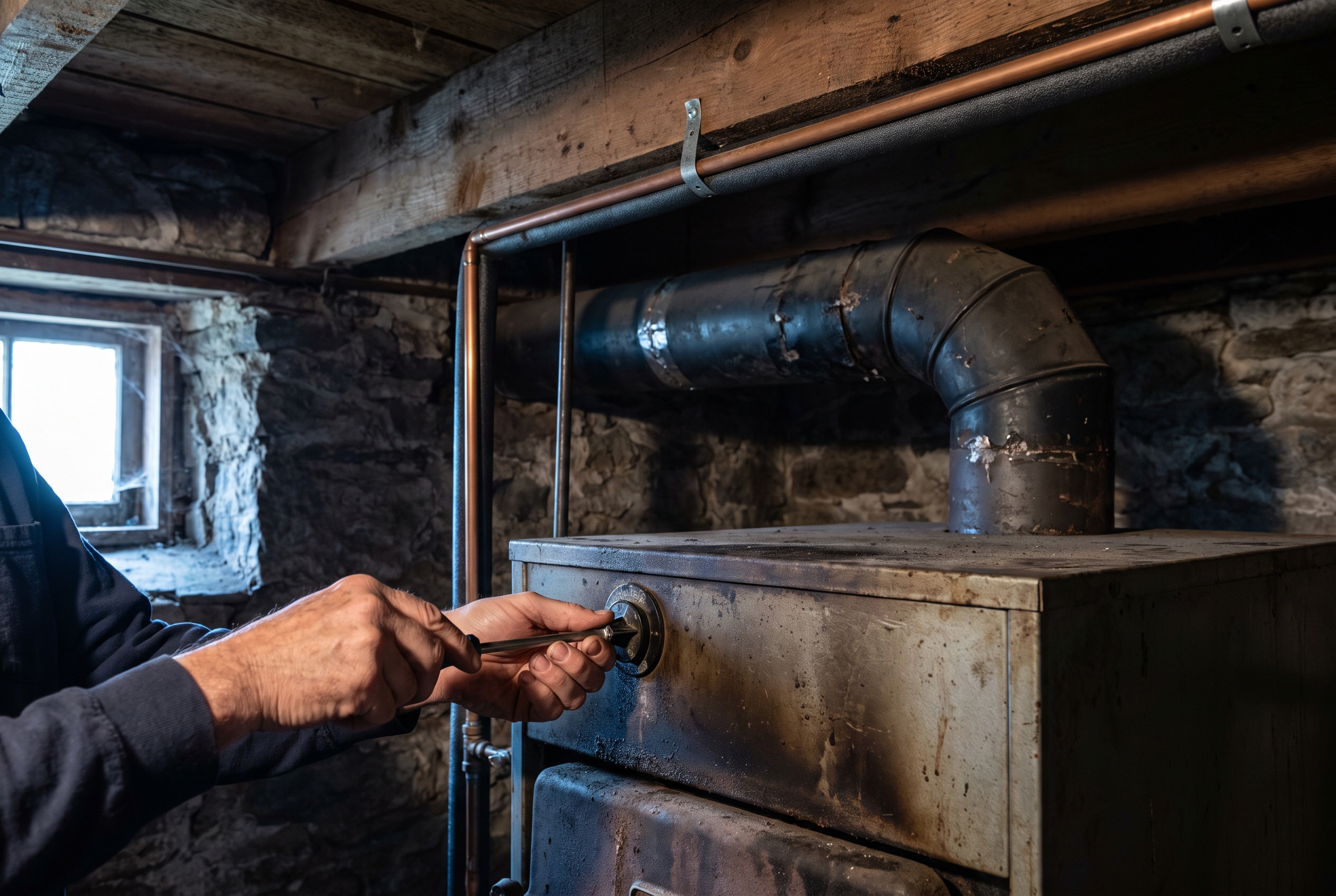
Keeping the boiler can make sense if:
-
Your house is poorly insulated or drafty.
-
You have an older ductless system that struggles in deep cold.
-
Your area sees frequent weeks below zero.
-
Your boiler also makes your domestic hot water.
The COP 2.0 numbers above show why: in Maine and New York, oil and heat pump heat get close to even on the coldest days when efficiency drops.
But backup can cost you rebate money. National Grid in upstate New York says central air-source, mini-split and air-to-water projects must completely remove the previous heating source from service to qualify for the higher incentive. Efficiency Maine and the Energize CT whole-home tier both require the heat pump to be the primary heating system. Ask your installer exactly how a backup plan affects your rebate before you sign.
Weatherize first
Every Btu you do not lose is one you do not have to buy. Energize CT pays $2 per square foot for attic insulation. Sealing and insulating before the heat pump goes in can let your installer size a smaller system, which lowers the install price and helps the equipment run at a better COP.

What to ask the installer
-
Will you do a Manual J load calculation? Sizing by rule of thumb is a red flag.
-
Is the equipment on the NEEP cold-climate list (and ENERGY STAR Cold Climate for Connecticut)?
-
Are you in the program network? That means HPIN in Connecticut or a participating Clean Heat contractor with National Grid. Otherwise you may lose the rebate.
-
Do you file the rebate paperwork for me, and is the rebate shown as a line item on the bid?
-
Does my electrical panel have room, and is any upgrade priced in the quote?
-
What is the backup and controls plan? Ask what temperature the boiler kicks in, if you keep it, and how that affects rebate eligibility.
The decision: call now or plan for spring?
If your oil tank is due for a fill and your house is reasonably tight, now is a good time to get quotes. Installers can often fit jobs in before the first real cold snap, and every gallon you do not burn this winter at $5.70 is money saved. Maine's $500 bonus also requires the upgrade to be completed and the claim filed by December 31, 2026.
If your house needs insulation work first, or you are not ready for a big project, it can make sense to buy only the oil you need, weatherize this fall, and schedule a spring install with a proper load calculation. Either way, watch the Maine DOER price tracker, NYSERDA's monthly oil prices and EIA's weekly survey when it resumes in October, and get at least two bids that show the rebate as a line item.
Related reading
-
Which Insurance Pays When Rain Floods the Basement From Below?
-
Should You Buy Impact Windows or Hurricane Shutters This Fall?
-
The Energy Star Handover Plan Lands September 1. Your Label Is Not Changing Owners That Day
Sources
-
Average statewide price of heating oil in Maine increases 74% from same time last year, Maine Public
-
Home heating oil prices climb to more than $5.60 per gallon in Connecticut, WFSB
-
Residential Heating System Cost Calculator, Efficiency Maine
-
Cold-Climate Heat Pumps Pass the Ultimate Test: a Maine Winter, RAP
ABOUT THIS SERVICE: CallTheLocal.com is a directory and lead generation service, not a contractor or service provider. Submitting this form does not obligate you to hire anyone or purchase any service. Your information will be shared with licensed, insured home service professionals in your area who may provide quotes for your project. CallTheLocal.com does not guarantee the quality, timeliness, or outcome of any work performed by service providers you connect with through this service. Always verify licensing, insurance, and references before hiring. Get everything in writing before work begins.
Note: This article contains AI-assisted content and has been reviewed by our editorial team.