The U.S. Drought Monitor map released Thursday, September 17, 2026, with data valid September 15, landed in the middle of the six weeks when cool-season lawns are normally seeded. That timing is why overseeding during drought is the question filling contractor voicemail across the middle of the country this week. According to Drought.gov, 59.37 percent of the Lower 48 was in drought that week, 49.77 percent of the U.S. and Puerto Rico, about 103.5 million people affected, with 43 states showing D1 conditions or worse.
Before you call anyone, two things decide your answer: what grass you have, and whether your city will let you water the seed.
Does this question even apply to your lawn?
For most of the drought footprint, no. From Dallas south and across the Gulf states, lawns are bermuda, zoysia, St. Augustine or centipede. Those are warm-season grasses, and they are not repaired by fall seeding. UGA Extension notes that warm-season turf is seeded when soil temperatures reach 65F to 70F in late spring, not in September.
UGA also draws a line that most seed aisle signage blurs. Interseeding means putting the same species back into itself to thicken a thin stand. Overseeding means temporarily adding a cool-season grass, usually ryegrass, on top of a warm-season lawn for winter color. Bermudagrass is the only warm-season turf well suited to overseeding. Centipedegrass and St. Augustinegrass spread by stolons only and should not be overseeded at all, because the temporary grass competes with the permanent lawn it sits on.
If that is your lawn, you can put the wallet away. You are not losing a window this month, and the $400 to $900 a fall seeding package would cost you buys nothing your grass can use.
If you do want winter color on bermuda, UGA says wait until the soil temperature at 4 inches approaches 75F and night temperatures drop into the 50s, then apply 5 to 10 pounds of ryegrass per 1,000 square feet (8 to 12 pounds for high-traffic areas), using certified seed treated with a fungicide because seedling blight is a real risk on early applications. Resist heavy rates. The more ryegrass you put down, the harder your bermuda has to fight to come back in spring.
Who this article is for
Tall fescue owners in the transition zone: north Texas and Oklahoma, across Arkansas, Tennessee, north Mississippi, north Alabama and north Georgia. Fescue is a cool-season grass that gets renovated in fall, it thinned out badly in this summer's heat, and it is the one lawn type facing a hard calendar deadline right now.
Can you wait six weeks for the drought to break?
No, not in the way most people mean it. Six weeks from now is November, and November seeding is a different job with different odds.
NC State Extension puts the tall fescue seeding deadline at mid-October, with soil temperature above 60F, air temperature between 68F and 77F, a rate of 5 to 6 pounds per 1,000 square feet, and emergence in 10 to 21 days when soil moisture is adequate. The common extension rule of seeding at least 45 days before the average first frost gets you to the same place: 6 to 8 weeks of growth before a hard freeze, which counting backward from typical transition zone frost dates closes the door in mid-October.
So the real choice is two options, not three. Seed in the next few weeks and pay to keep it wet, or skip fall entirely and plan a dormant seeding from late November through March.
The case for seeding now
Soil temperatures are still in range in most of the transition zone, and they will not be in December. The flash drought thinned the stand, and thin turf going into a wet winter is a weed bill you pay in March. NOAA defines flash drought as rapid onset or intensification driven by precipitation deficits combined with abnormally high temperatures, wind and radiation, which is exactly the mechanism that has been pulling moisture out of the top half inch of soil where seed sits.
There is a cost to seeding that almost never appears on a quote. NC State warns that no herbicide should be applied to fall seeded tall fescue until it is extensively tillered. That means you forfeit this fall's pre-emergent application for poa annua and winter weeds, on thinned turf, going into a winter that is forecast to be wet. Budget for a spring weed problem if you seed.
The case for waiting
The water bill, the watering ordinance, and the risk of paying for the same lawn twice. NC State is blunt that seeding into insufficient moisture produces a sparse stand going into winter. A failed stand is not a partial result, it is a second invoice next spring.
There is also a forecast argument. The Climate Prediction Center's September 10, 2026 ENSO Diagnostic Discussion carries an El Nino Advisory with Nino-3.4 at +1.8C, a greater than 90 percent chance of a very strong event for fall and winter 2026-27, and a 75 percent chance the October through December event exceeds +2.5C RONI, which would surpass every event since 1950. Strong El Nino winters are the southern tier's most reliable wet signal. Ground that is wetter and cheaper to work is a legitimate reason to hold the seed money.
How much water does new grass seed need?
Do this arithmetic before you sign anything. One inch of water over 1,000 square feet is about 623 gallons, or 0.623 gallons per square foot. Establishment means keeping roughly the top quarter to half inch of soil moist for two to three weeks, which usually takes 2 to 4 short cycles a day, then tapering to fewer, deeper cycles.
In air running more than 10F above normal, as the Southern Plains and lower Mississippi Valley did during the week of the September 15 map, sustaining that runs roughly 2 to 4 inches applied over three weeks. That is about 1,250 to 2,500 gallons per 1,000 square feet, so roughly 6,000 to 12,500 gallons on a 5,000 square foot lawn before the grass is established. The contiguous U.S. recorded its warmest June through August on record in 2026, and that heat is the whole reason the number is this large.
Now multiply by your own rate. Most utilities bill in tiers, and 10,000 extra gallons in a month can push you into a higher block where every additional gallon costs more, so the top-tier price is the one to use. Dallas publishes its residential tiers in the FY26 monthly rate sheet. Open your own utility's version and read the top tier, not the average.
One possible break: many utilities set the sewer portion of your bill on a winter average of December through March usage, so heavy September irrigation may raise the water line without raising the sewer line. San Antonio Water System is one published example. This is utility-specific, so confirm it with yours before you count on it.
Will your city let you water a new lawn?
This is where the agronomy stops mattering and the ordinance takes over, and the answer differs sharply by market.
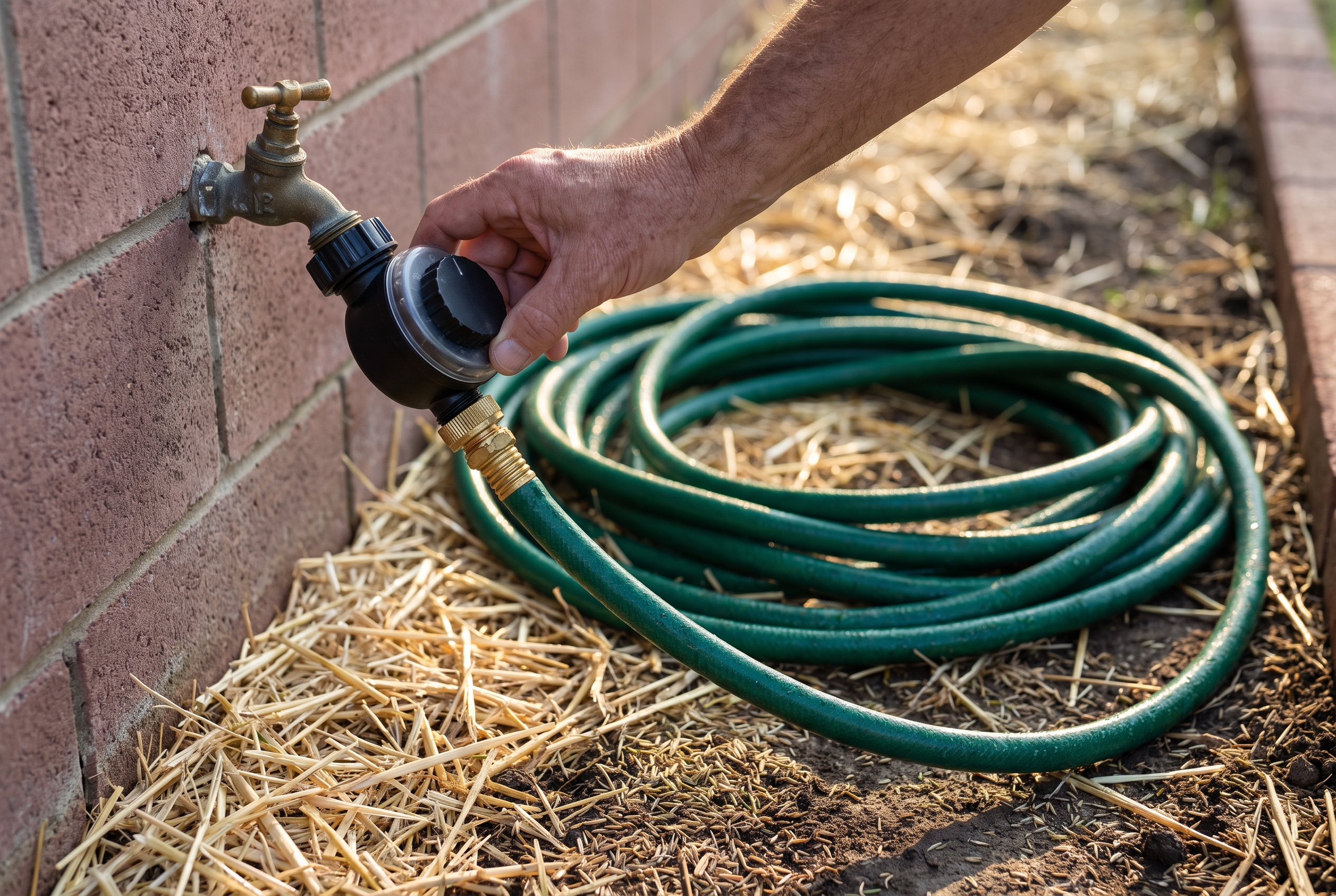
Dallas. The water conservation ordinance caps irrigation at twice weekly by address and bans sprinkler use between 10 a.m. and 6 p.m. from April 1 through October 31. Hand watering, drip and soaker hoses are allowed any time. The city does grant a newly installed landscape variance for additional watering days for up to five weeks, but the variance page states it does not include cool-season grasses, and processing takes about 10 business days. Read that again if you own fescue in Dallas: the exception that would make fall seeding work is the one written to exclude you. Twice weekly does not germinate seed in this heat.
Georgia. The opposite situation. The Water Stewardship Act schedule limits outdoor watering to 4 p.m. through 10 a.m., but exempts irrigation of new and replanted plant, seed or turf during installation and for 30 days after. Hand watering with an automatic shutoff, drip irrigation, soaker hoses and private wells are also exempt. A north Georgia fescue owner has a legal path to establish a stand that a Dallas fescue owner does not.
Your city. We verified the two above directly. For anywhere else, including Oklahoma City, Tulsa, Memphis and Little Rock, look up your provider's current stage before you buy seed. Search the utility's site for "watering schedule" and "new landscape variance," and confirm three things: the days and hours you may run sprinklers, whether a new-seed or new-landscape exemption exists, and how long it takes to get approved. If the variance takes 10 business days and your window closes mid-October, you are applying this week or not at all.
How much does aeration and overseeding cost in 2026?
Price for a stated lawn size, because "overseeding" quotes are useless without square footage and a named seed.
-
Core aeration alone. LawnStarter puts an average yard at $107 to $202, or $0.07 to $0.27 per square foot.
-
DIY aeration. A core aerator rents for around $100 a day plus a refundable deposit of $75 to $150.
-
Seed, commodity grade. Kentucky 31 tall fescue runs roughly $2.20 to $2.50 per pound in 50 pound bags, so 25 to 30 pounds for a 5,000 square foot interseeding is about $55 to $75. K-31 is a coarse pasture-type cultivar, not turf-type.
-
Seed, turf-type blend. Premium blends run several times commodity pricing, commonly quoted around $40 to $80 per 1,000 square feet installed.
-
Bundled aeration plus overseeding. Aggregator estimates land near $160 to $425 for 10,000 square feet, which is on the low end and usually assumes basic seed.
Where does $400 to $900 come from? That is a realistic all-in range for a 5,000 square foot lawn with professional core aeration, a turf-type tall fescue blend rather than K-31, starter fertilizer and possibly topdressing. A 10,000 square foot lawn with the same specification runs higher. Aggregator ranges are national averages, so treat everything above as a sanity check and collect three local bids.
What belongs on a fall seeding quote?
Ask for these in writing before the crew shows up:
-
Number of core aeration passes and in which directions
-
Seed cultivar and blend named specifically, not "premium fescue"
-
Pounds per 1,000 square feet, measured against NC State's 5 to 6 pounds for interseeding
-
Starter fertilizer analysis, with the actual N-P-K numbers
-
Whether topdressing is included or extra
-
Whether there is a germination guarantee or a free reseed, and what conditions void it
Red flag: Kentucky 31 sold to you as a turf-type blend. K-31 is a pasture cultivar. It will grow, but it is coarse and will not match a modern turf-type lawn, and it should be priced like the commodity seed it is.
Five questions to ask before you sign
-
What is my soil temperature at 2 inches today, and did you measure it or guess?
-
What cultivar are you putting down, and at what rate per 1,000 square feet?
-
What happens if it does not come up? Who pays to redo it?
-
Do you pull the watering variance, or is that on me, and how long does it take?
-
Are you skipping my fall pre-emergent because of the seeding, and what is the spring plan for the weeds that lets in?
If you decide to seed: the DIY version
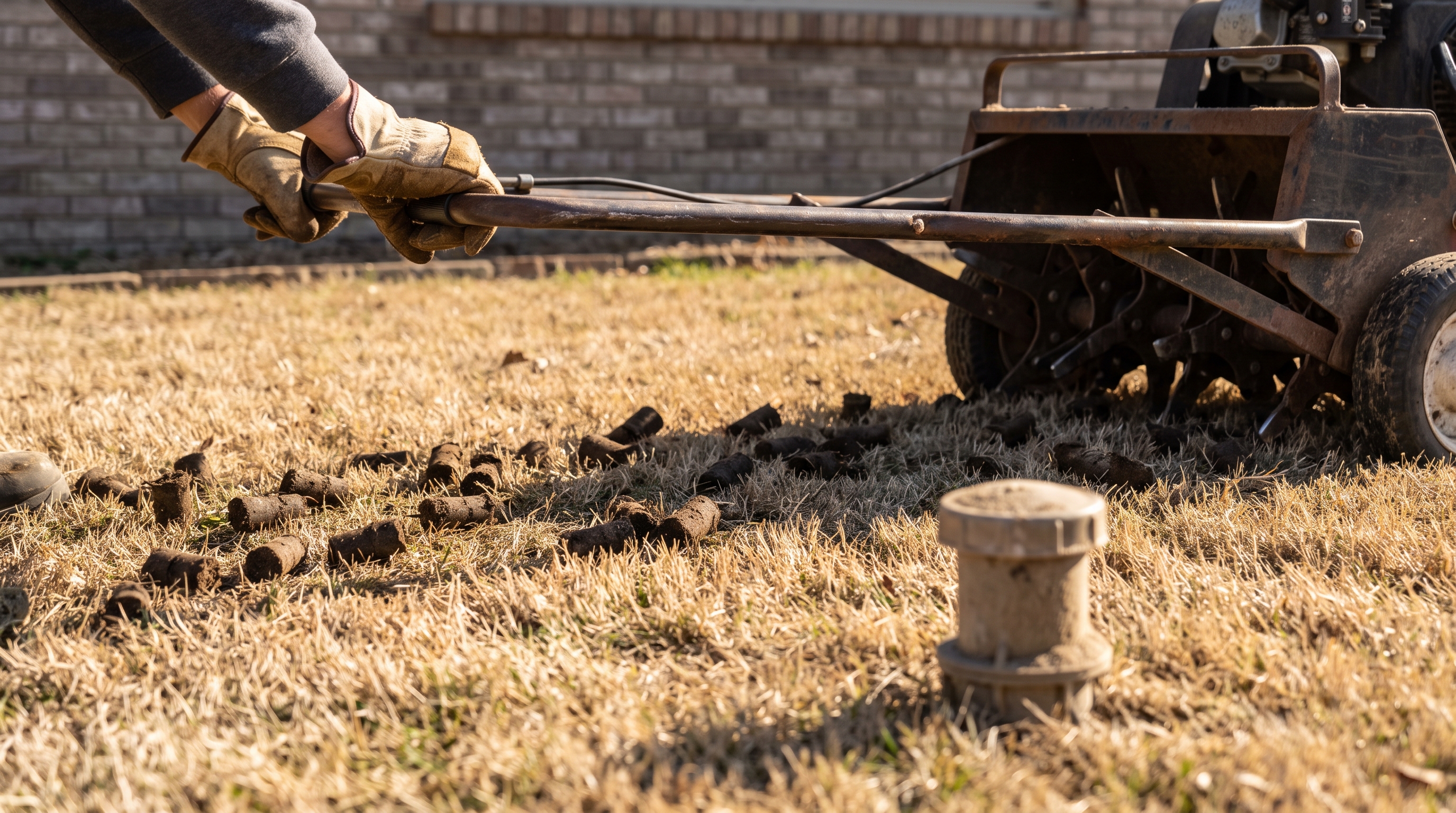
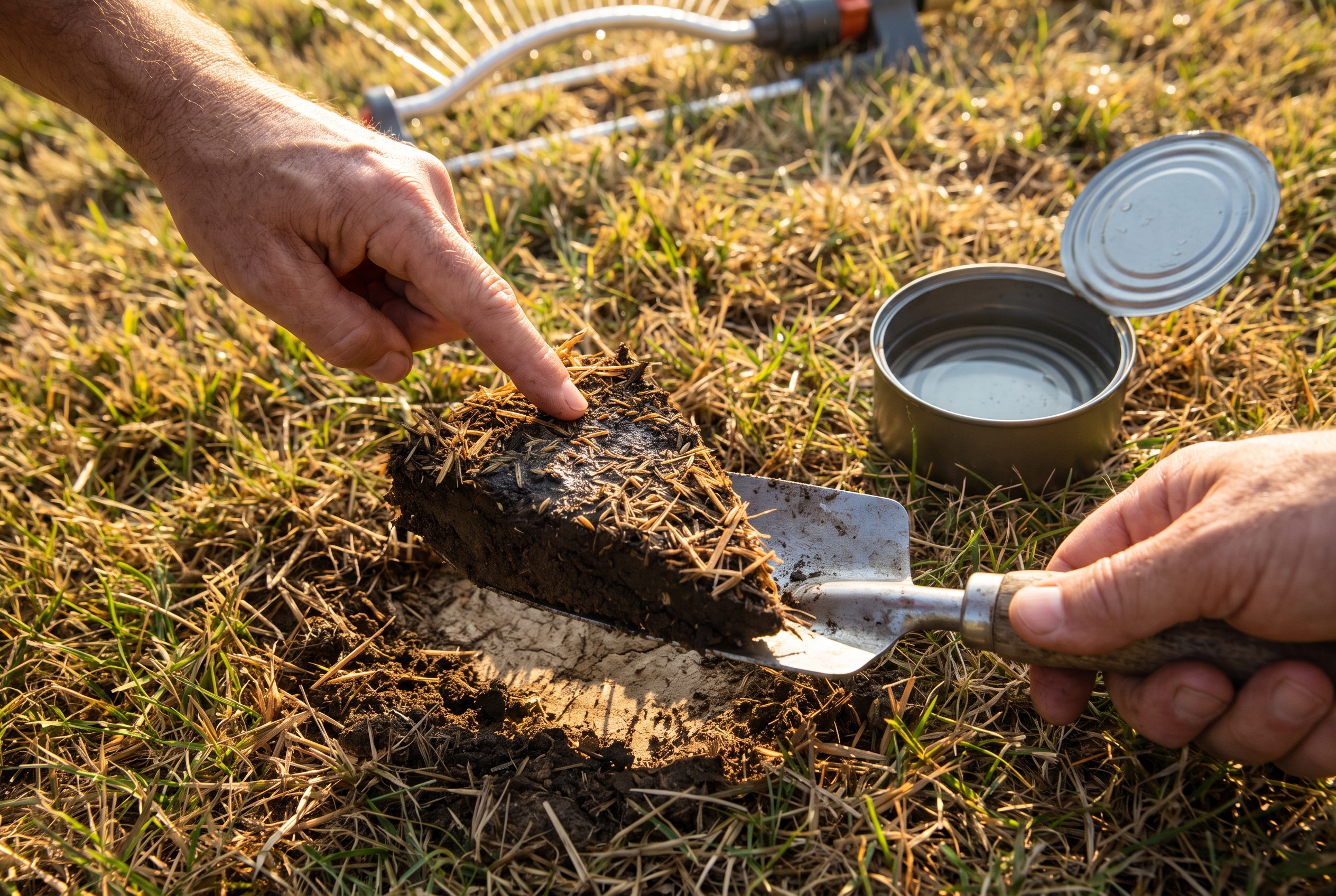
Rent a core aerator, make two passes in different directions, and leave the plugs on the surface to break down. Buy a turf-type tall fescue blend and spread 5 to 6 pounds per 1,000 square feet for interseeding into existing turf. Set the irrigation controller for short, frequent cycles rather than one long soak, since the goal is a damp top half inch and not deep moisture. Put an empty tuna can on the lawn and run a cycle to see what your system actually puts out, because most people are watering half of what they think. Skip the fall weed control entirely, and plan on 10 to 21 days before you see anything.
What is dormant seeding, and is it a better bet this year?
Dormant seeding means putting seed down when it is too cold to germinate, letting winter freeze and thaw cycles work it into the soil, and getting germination when spring soil temperatures rise. University of Missouri IPM reports Purdue field trials in which dormant seeding of tall fescue or Kentucky bluegrass in November, December or March established faster than April or May seeding. February and March timing limits exposure to winterkill.
The catch is the same one fall seeding has: crabgrass control is difficult with any dormant seeding, because pre-emergent herbicides injure seedlings. You are trading a weed problem either way. What dormant seeding buys you this year is water. You are not paying to irrigate a seedbed through 10F-above-normal heat under a twice-weekly watering cap.
The wait-and-do-it-right plan: mark the window on the calendar for late November through March, keep the existing turf alive at survival irrigation rates through the drought instead of trying to make it look good, and hold the seed money until soil temperature and rainfall both say go.
Making the call this week
Three checks, then decide. Pull your soil temperature at 2 inches from the free GreenCast soil temperature map, which covers the 2 to 5 cm layer and offers threshold alerts. Check your county on the U.S. Drought Monitor state map. Then read your city's watering ordinance for a new-seed exemption.
If soil temperature is in range, you have a legal path to water daily, and you can book a crew before mid-October, seed now. If any one of those three is a no, put dormant seeding on the calendar for late November and spend the next two months keeping the lawn you have alive. There is no third option that involves waiting six weeks and seeding anyway.
Related reading
-
Oil at $5.70 a Gallon Changes the Heat Pump Math in the Northeast
-
Which Insurance Pays When Rain Floods the Basement From Below?
-
Your Lawn Can Go From Green to Brown in One Night: Fall Armyworms Are Feeding Right Now
-
California's 'Zone 0' Is Here: Why the First 5 Feet Around Your House Now Has to Be Bare
Sources
-
U.S. Drought Monitor, current map (released September 17, 2026, data valid September 15, 2026)
-
Time for Fall Seeding of Tall Fescue, NC State Extension TurfFiles
-
Fall turfgrass interseeding and overseeding: not one in the same, UGA CAES Field Report
-
Dormant Seeding of Turfgrass in Late Winter, University of Missouri IPM
-
ENSO Diagnostic Discussion, NOAA Climate Prediction Center, September 10, 2026
Note: This article contains AI-assisted content and has been reviewed by our editorial team.
ABOUT THIS SERVICE: CallTheLocal.com is a directory and lead generation service, not a contractor or service provider. Submitting this form does not obligate you to hire anyone or purchase any service. Your information will be shared with licensed, insured home service professionals in your area who may provide quotes for your project. CallTheLocal.com does not guarantee the quality, timeliness, or outcome of any work performed by service providers you connect with through this service. Always verify licensing, insurance, and references before hiring. Get everything in writing before work begins.