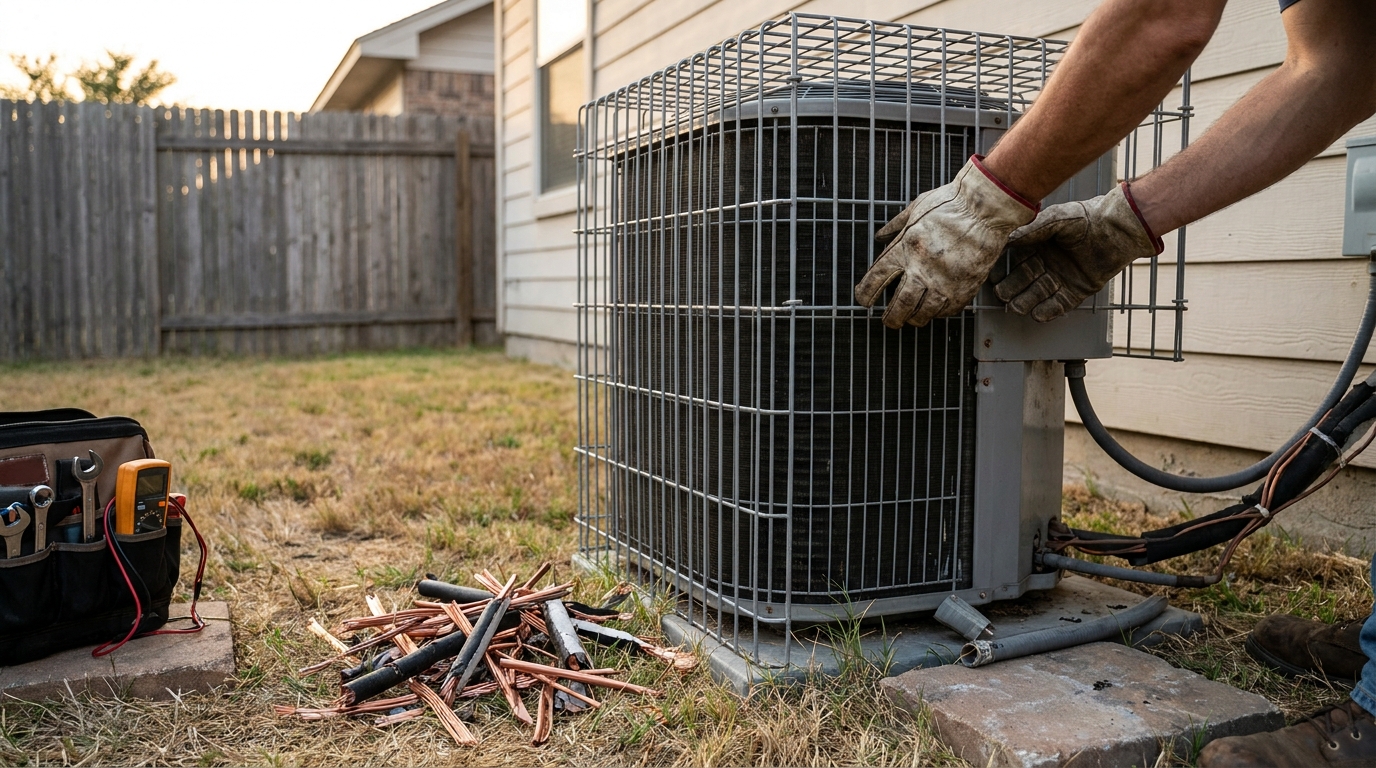
If your electrician, plumber, or HVAC tech has been quoting higher numbers this year, copper is a big reason why. In 2026 copper went on a record run. On the COMEX exchange it hit an all-time intraday high of $6.71 a pound on May 13, 2026, and it was still trading around $6.20 to $6.30 a pound in mid-July, comfortably above the $6 mark. That single number squeezes homeowners from two directions at once: it makes anything with copper in it more expensive to install, and it makes the copper already in your yard and walls a tempting target for thieves.
Here is what the spike actually does to your bill, how to read a 2026 rewire or repipe quote so you are not overpaying, why more plumbers now steer you toward PEX, and how to protect an outdoor AC unit for a few hundred dollars before peak theft season.
Why copper costs more in 2026
The raw metal is only part of the story. Building wire, the copper that runs through your walls, has climbed on its own. Gordian's construction cost index put copper wire at $416.11 per thousand linear feet in April 2026, up 5.30% for the quarter and up 18.42% from a year earlier. Zoom out further and copper wire and cable prices are up roughly 83.7% since February 2020, with construction input prices rising at about a 12.6% annualized rate early in 2026.
On top of the commodity price, there is a tariff layer. Section 232 copper tariffs took effect on April 2, 2026, with a tiered structure: 50% on near-pure copper and similar products, 25% on derivative products, 15% on metal-intensive electrical equipment (through 2027), and 10% on foreign products made with American-sourced metal. Translation: the wire, fittings, and equipment your contractor buys carry an added 15% to 50% depending on the category, and that flows straight into your estimate. Trade analysts expect copper to stay volatile through 2026, with some pullback from the record highs as tariff questions settle, but prices are likely to stay historically elevated.
How to read a 2026 rewire or repipe quote
When copper and tariffs push material costs up, the honest way for a contractor to reflect that is in the line items, not a vague higher bottom line. Ask for an itemized estimate and look for these things:
-
Material versus labor split. On a panel upgrade or a batch of new circuits, wire is a real chunk of the material cost right now. A clear breakout lets you see whether you are paying for copper or for markup.
-
Wire footage and gauge. More copper by the foot and heavier gauge cost more in 2026 than they did a year ago. If a quote lists footage, you can sanity-check it.
-
Material escalation language. Because copper moves week to week, some contractors add a note that pricing holds for a set number of days. That is normal in 2026, not a red flag, but you want it in writing so the number does not drift after you sign.
-
Permits and inspection fees. These are separate from material and should be listed on their own.
A red flag is a big round number with no breakdown and a shrug about "copper being expensive." Copper being expensive is true, but a good pro can show you exactly where it lands on the invoice.
Why plumbers keep pushing PEX
Nowhere is the copper premium more visible than a whole-home repipe. In 2026, a full copper repipe runs roughly $8,000 to $15,000, while the same job in PEX runs about $4,000 to $8,000. For a typical 1,500 square foot home, copper often lands at $9,000 to $12,000 or more, versus $4,500 to $8,500 for PEX.
The gap is not only the material. According to plumbing-trade guidance for 2026, PEX installs about 40% to 60% faster than copper and uses 30% to 50% fewer fittings, which means fewer potential leak points. With plumber labor around $75 to $100 or more per hour and a real shortage of soldering skills in the trade, the flexible tubing wins on both the receipt and the schedule. That is why many plumbers now default to PEX on a standard repipe.
Copper still has its place. Some homeowners prefer it for long-term durability and its track record, and certain local codes or exposed applications may call for it. Just know that in 2026 you are paying a meaningful premium for that choice, so ask your plumber to quote both and explain the tradeoff for your specific home.
AI workflows for revenue teams
Placeholder house ad for Conservus.ai. Swap with final creative when brand assets are ready.
Partner with Conservus.aiThe theft side of a $6 pound
High prices at the store come with high prices at the scrap yard, and that is what drives the second half of this story. In June 2026, #1 bare bright copper scrap traded roughly $4.50 to $4.85 a pound at U.S. yards, with a reported peak near $5.68 a pound on June 12. When scrap gets that valuable, two targets light up: outdoor AC condensers and the copper wiring on jobsites and new-construction homes.
The math is brutally lopsided. A thief who strips the copper from a condenser typically nets around $100 in scrap. The homeowner, meanwhile, pays thousands to replace the stolen condenser or coil, plus refrigerant, permits, and re-inspection. Local reporting from June 2026 describes a rise in residential copper and AC theft as prices climbed. On a renovation or new build, stolen wiring is worse than the material cost alone: it means rework, another inspection, and a delayed move-in or project close.
How to protect an outdoor condenser cheaply
The good news is that hardening a unit is far cheaper than replacing one, and most of it deters a thief looking for an easy $100. HVAC pros recommend a layered approach (condenser protection tips):
-
A steel cage or lockable enclosure. Usually a few hundred dollars, this is the single most visible deterrent. A thief wants speed, and a bolted cage kills that.
-
A locking electrical disconnect. Inexpensive and effective, it stops a thief from safely killing power to work on the unit.
-
Motion-activated LED lighting. Cheap to install and a strong deterrent, since most of this theft happens after dark.
-
Visible security cameras. A camera that is clearly seen does a lot of the work; even a doorbell-style camera aimed at the side yard helps.
-
Trimmed shrubs and clear sightlines. Free. Overgrown landscaping hides both the unit and the person taking it. Open sightlines from the street or a neighbor's window make a thief nervous.
Do the cheap stuff first: trim the shrubs, add a motion light, lock the disconnect. Then add a cage and a camera if your unit sits in a low-visibility spot. For most homes, a few hundred dollars total buys enough friction that a thief moves on to an easier target.
Insurance, jobsites, and timing
Two practical notes. First, document your equipment now: photos of the condenser, the model and serial numbers, and receipts. If the worst happens, that paperwork speeds a claim, and insurers who publish copper-theft guidance point out how disproportionate the loss is to the victim versus the scrap value the thief walks away with.
Second, timing matters. Copper theft tends to climb in warm months when scrap prices are high and units run all day, and 2026 saw its scrap peak in June. If you are planning to add protection, do it before peak summer season rather than after a break-in. The same logic applies to a renovation: keep wiring secured and out of easy reach, and do not leave spools of copper visible on an open jobsite overnight.
AI workflows for revenue teams
Placeholder house ad for Conservus.ai. Swap with final creative when brand assets are ready.
Partner with Conservus.aiBottom line
Copper above $6 a pound in 2026 means two things for your home. Any project with copper in it (a panel rewire, new circuits, or a copper repipe) costs more up front thanks to the metal itself plus the Section 232 tariffs, so get an itemized quote and ask your plumber whether PEX makes sense. And the same prices that raise your bill make your outdoor AC and any exposed wiring worth stealing, so spend a few hundred dollars on a cage, a locking disconnect, lighting, and a camera before summer peaks. Budget for the higher material cost, and protect the copper you already own.
Related reading
-
[The 2026 Electrical Code and Home EV Charging: What DIY Installs, Pre-Wired Homes, and Level 2 Costs Really Look Like Now](/article/2026-nec-ev-charger-diy-rules-level-2-costs)
-
[One in Three Skilled Tradespeople Are Immigrants: How the 2026 Labor Crackdown Is Stretching Your Project Timeline and Quote](/article/immigration-crackdown-construction-labor-shortage-homeowner-timelines-2026)
-
[The Heat Pump Tax Credit Just Vanished: Why a 2026 Install No Longer Qualifies for the $2,000 You Were Counting On](/article/heat-pump-tax-credit-vanished-2026-install)
Sources
-
Copper Price Trends: Q2 2026 Review and Forecast (Investing News Network)
-
What Does $5/lb Copper Mean for the Building Wire Market? (Copperweld)
-
A Recap of Copper Price Trends in the First Quarter of 2026 (Recycling Product News)
-
10 Tips to Protect Your AC Unit From Theft (Mission Air Conditioning & Plumbing)
-
How to Protect Your Home From Copper Thieves (12 On Your Side, WWBT)
-
[PEX vs Copper Pipes in 2026, What Plumbers Recommend (1-800-Plumber + Air)](https://1800plumber.com/blog/pex-vs-copper-pipes-in-2026-what-plumbers-recommend/)
-
Should I Replace My Copper Pipes With PEX? Cost, Pros, and Cons (Angi)
Note: This article contains AI-assisted content and has been reviewed by our editorial team.
ABOUT THIS SERVICE: CallTheLocal.com is a directory and lead generation service, not a contractor or service provider. Submitting this form does not obligate you to hire anyone or purchase any service. Your information will be shared with licensed, insured home service professionals in your area who may provide quotes for your project. CallTheLocal.com does not guarantee the quality, timeliness, or outcome of any work performed by service providers you connect with through this service. Always verify licensing, insurance, and references before hiring. Get everything in writing before work begins.