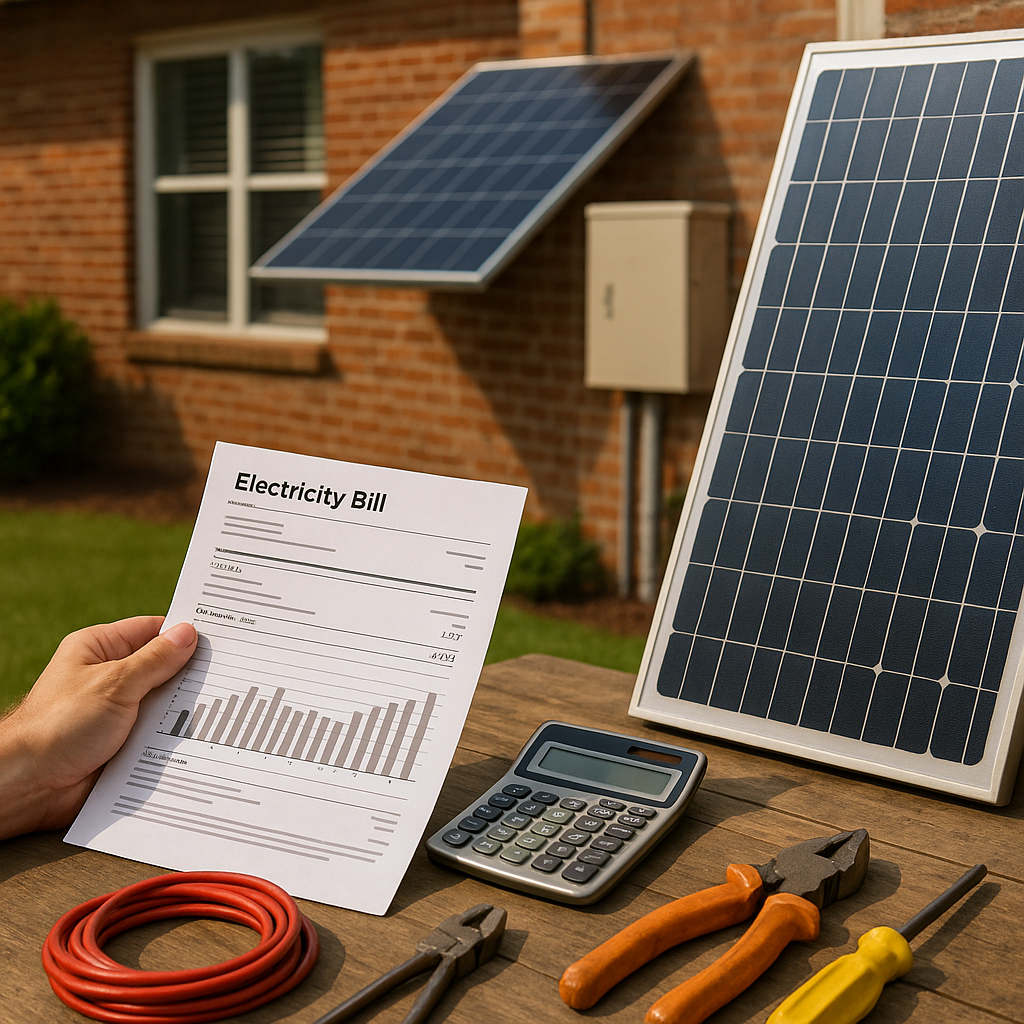
If you saw a headline this week about two huge power companies combining and wondered whether your electric bill is about to jump, take a breath. Here is the calm, practical version of what was announced, who it actually affects, and what it does (and does not) change for your bill and any rooftop solar plans in 2026.
What NextEra and Dominion just announced
On May 18, 2026, NextEra Energy and Dominion Energy said they will combine in an all-stock deal valued at about $67 billion. NextEra is the buyer. Dominion shareholders would receive 0.8138 NextEra shares for each Dominion share, plus a small cash component of roughly $360 million in total. When it is done, current NextEra holders would own about 74.5 percent of the combined company and Dominion holders about 25.5 percent. Both boards approved the deal unanimously, and it is structured to be tax-free to shareholders, according to the company's SEC filing summary.
The combined business would be the largest regulated electric utility in the United States, with around 10 million customer accounts and roughly 110 gigawatts of generation, a leader in renewables and storage and the second-largest nuclear operator, per CNBC and Axios. The reason behind the deal is electricity demand, driven mostly by AI data centers. Dominion powers Northern Virginia, the largest data-center market in the world, and that growth is the strategic logic for the combination.
First question: are you actually affected?
This deal involves your utility if you get power from one of these:
-
Florida Power & Light (FPL) in Florida, about 6 million accounts
-
Dominion Energy in Virginia
-
Dominion Energy in northeastern North Carolina
-
Dominion Energy (DESC) in South Carolina
One correction worth stating plainly, because it has been confused in early chatter: Georgia is not part of this. Georgia Power is owned by Southern Company, a completely separate utility with no role in the NextEra and Dominion combination. If you are a Georgia Power customer, this deal does not change your utility at all.
What happens to your monthly bill
The single most reassuring fact for homeowners comes straight from Dominion's own merger page: customer bills "will not go up as a result of the combination." Dominion has also committed to $2.25 billion in bill credits for Virginia, North Carolina, and South Carolina customers, spread over two years after the deal closes, plus $10 million a year in charitable giving in those three states for five years. The Dominion Energy name will be kept.
Here is the part people miss: a merger by itself does not flip a switch on your rate. Regulated utility rates are set by state commissions through formal rate cases, not by a press release. When large utilities combine, the deal typically comes with conditions negotiated at the state level, things like rate freezes or base-rate moratoriums, hold-harmless commitments, and a requirement to pass merger savings back to customers. A general rate case usually follows later, often in the rough 18 to 36 month range, according to S&P Global's review of utility regulatory settlements.
Because Dominion has pre-committed to bill credits and a no-increase-from-the-merger pledge, your near-term bill is shaped more by each state's own standalone rate proceedings than by the merger itself. In Florida, for example, FPL is operating under a multi-year base-rate plan with scheduled annual adjustments running through 2029. Those changes are part of FPL's existing rate plan and are separate from this merger. If you want exact dollar figures, check the current Florida Public Service Commission docket rather than older summaries, because those numbers move.
AI workflows for revenue teams
Placeholder house ad for Conservus.ai. Swap with final creative when brand assets are ready.
Partner with Conservus.aiHow long until anything actually changes
Not soon. This deal has a long approval path. It needs NextEra and Dominion shareholder votes, the federal HSR antitrust waiting period, approval from FERC under Section 203 of the Federal Power Act, Nuclear Regulatory Commission approval, and sign-off from three state commissions: the Virginia State Corporation Commission, the North Carolina Utilities Commission, and the South Carolina Public Service Commission. Worth noting, the Florida Public Service Commission is not listed among the merger-approval bodies in the deal materials, and FPL rates stay governed by FPL's own existing rate plan.
Dominion's official page says the deal is expected to close in the second half of 2027. The deal materials describe roughly a 12 to 18 month process with an outside date that can run into 2028. So plan on 2027, possibly into 2028, not this year. One more signal that this is not a sure thing on a fixed date: NextEra would owe a $4.83 billion termination fee if the deal collapses on regulatory grounds. Companies do not agree to a number that large unless regulators are expected to look hard at it.
The bigger 2026 story for solar: the federal tax credit is gone
If you are weighing rooftop solar this year, the merger is not your biggest variable. This is: the 30 percent federal residential solar tax credit (Section 25D) expired on December 31, 2025. There was no phase-down and no gradual step-off. It ended, and the Congressional Research Service confirms the legal status.
What that means in plain dollars: if you buy a system outright with cash or a solar loan and it is installed in 2026, there is no federal tax credit. On a typical system in the $18,000 to $26,000 range, the old 30 percent credit would have taken roughly $5,400 to $7,800 off your net cost. That money is no longer on the table for owner-purchased systems, which meaningfully lengthens the payback period compared with the math homeowners ran in 2024 or 2025.
There is one path that still touches a federal credit. Third-party-owned systems, meaning a lease or a power purchase agreement (PPA), can still benefit from a separate commercial credit (Section 48E) through the end of 2027, because the company that owns the panels claims it, not you. In a lease or PPA you do not own the system, and the savings show up as a lower monthly payment rather than an asset you own. That trade-off, own it with no federal credit versus let a third party own it and capture 48E, is the central 2026 solar decision.
One key point so nobody waits for the wrong reason: waiting will not bring the 25D credit back. It expired by law. The reason to think about timing in 2026 is net-metering grandfathering, covered next, not the federal credit.
Solar and net metering, state by state
Virginia
Good news for Virginia. On April 30, 2026, the Virginia State Corporation Commission issued a final ruling on Dominion's net-metering proposal. It preserved 1:1 net metering, monthly rollover of credits, and an annual true-up. It rejected Dominion's requests to own the renewable credits (SRECs) and to charge a new application fee, as Solar Builder also reported. A new "NEM 2.0" tariff applies only to customers who interconnect after the order. If you already have solar, you are grandfathered under the old terms. Under NEM 2.0, leftover annual generation is cashed out at about $0.05829 per kWh.
South Carolina
This is the biggest near-term shift for homeowners, and it has nothing to do with the merger. Dominion's South Carolina NEM 2.0 program expired on December 31, 2025 by law. Starting January 1, 2026, those customers auto-enroll in the "Solar Choice" program, which is less favorable than the older full-retail netting. If you are in South Carolina, run your solar numbers on Solar Choice, not on the old program.
North Carolina
Dominion serves only northeastern North Carolina. In that footprint, standard 1:1 net metering remains available in 2026.
Florida
Florida law still provides full retail-rate net metering in 2026. FPL lets you size a system up to 115 percent of your prior usage, and any year-end excess is typically credited at a lower avoided-cost rate rather than the full retail rate, as EnergySage summarizes. Separately, FPL's multi-year base-rate plan has scheduled annual adjustments through 2029, so check the current numbers against the Florida PSC docket before counting on a specific figure.
AI workflows for revenue teams
Placeholder house ad for Conservus.ai. Swap with final creative when brand assets are ready.
Partner with Conservus.aiLock in now or wait? A simple framework
-
The federal credit is not a "wait" factor. It is gone for owner-purchased systems and will not return. Do not delay hoping it comes back.
-
Grandfathering is a "now" factor. Where net-metering terms are changing, interconnecting before a new tariff takes effect can lock in better long-term credit treatment. Virginia explicitly grandfathers existing solar customers, and South Carolina's better terms have already ended.
-
The merger is a "watch" factor, not an "act today" factor. It will not close before late 2027. Watch for the bill-credit rollout in Virginia, North Carolina, and South Carolina and for any merger-settlement conditions at your state commission, but it should not drive your solar timing in 2026.
Your 2026 homeowner checklist
-
Read your next rate notice and any merger filing for the words "rate freeze," "moratorium," "hold harmless," or "bill credit." Those tell you how your bill is protected.
-
Find your state commission's docket: the Virginia State Corporation Commission, the North Carolina Utilities Commission, the South Carolina Public Service Commission, or the Florida Public Service Commission. The merger and any rate case are public there.
-
Ask any 2026 solar installer four questions: (1) Is this an ownership purchase or a lease/PPA, and who claims any tax credit? (2) Will I be grandfathered under current net-metering terms once I interconnect? (3) What true-up or excess-generation rate will I actually receive? (4) Show me the payback with no federal credit for an owned system, not the pre-2026 number.
-
Get every quote and every promise in writing before any work begins.
Bottom line: the merger is real and large, but for your monthly bill the near-term story is reassuring, with a stated no-increase pledge and billions in committed credits, and nothing changing before 2027 at the earliest. For solar, the decision that actually moves your payback in 2026 is the expired federal tax credit and your state's net-metering terms, not the corporate headline.
Related reading
AI workflows for revenue teams
Placeholder house ad for Conservus.ai. Swap with final creative when brand assets are ready.
Partner with Conservus.aiSources
-
NextEra Energy and Dominion Energy to Combine, joint press release (BusinessWire)
-
NextEra, Dominion announce merger to create U.S. power behemoth (Axios)
-
Southeast utilities NextEra Energy and Dominion Energy to merge (Solar Power World)
-
[Federal Solar Tax Credit in 2026: How Does It Work? (EnergySage)](https://www.energysage.com/solar/solar-tax-credit-explained/)
-
Virginia commission protects compensation rates for rooftop solar customers (Solar Builder)
-
Solar Technical Resources, South Carolina (Dominion Energy, official)
-
Review of utility regulatory settlements (S&P Global Market Intelligence)
This article contains AI-assisted content and has been reviewed by our editorial team.
ABOUT THIS SERVICE: CallTheLocal.com is a directory and lead generation service, not a contractor or service provider. Submitting this form does not obligate you to hire anyone or purchase any service. Your information will be shared with licensed, insured home service professionals in your area who may provide quotes for your project. CallTheLocal.com does not guarantee the quality, timeliness, or outcome of any work performed by service providers you connect with through this service. Always verify licensing, insurance, and references before hiring. Get everything in writing before work begins.