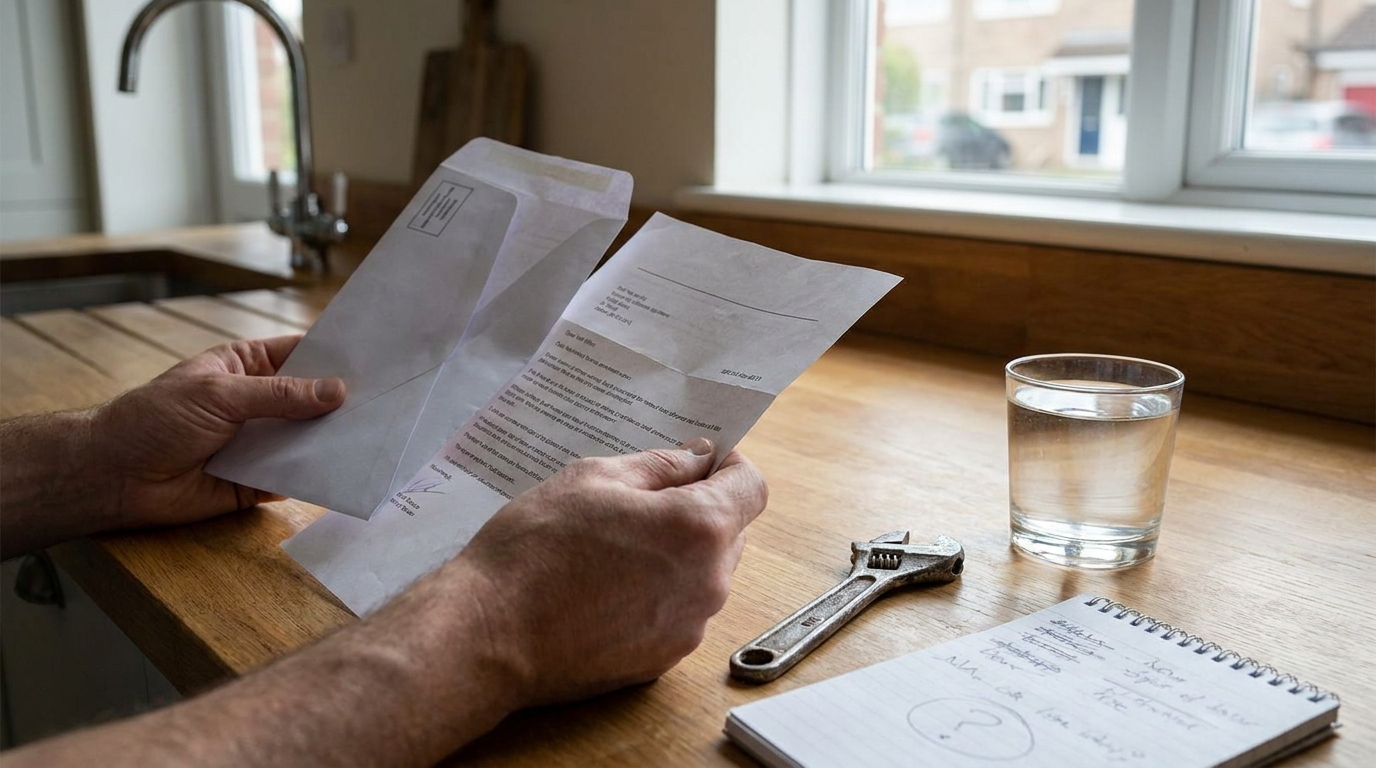
A lot of homeowners are opening the mailbox this year and finding a letter with an alarming subject line: your water service line may be lead. If you got one, take a breath. The letter is not a bill, it is not a citation, and it does not mean your water is unsafe as of today. It is part of a nationwide effort to find and replace old lead pipes, and understanding it can save you thousands of dollars.
Here is why the letters are landing now. Under the EPA's Lead and Copper Rule Improvements (LCRI), water systems must identify and replace lead service lines within 10 years and must classify every service line in their system. The compliance date to have the program fully in place is November 1, 2027. (You may see October 16 floating around online. That was the earlier deadline, October 16, 2024, for utilities to publish their initial pipe inventory and send the first round of notices. It is a different milestone.) The EPA now estimates roughly 4 million lead service lines are still in the ground nationwide, revised down from an earlier estimate of about 9 million. The NRDC has urged people to be skeptical of the lower number, so treat 4 million as a floor, not a final count.
Decode your letter: the four classifications
Every service line has to be sorted into one of four buckets, according to the EPA's service-line inventory fact sheet. Find which one your letter names:
-
Lead: The line is confirmed lead and is slated for replacement.
-
Galvanized requiring replacement (GRR): A galvanized steel line that is or was downstream of lead. Galvanized pipe can absorb and later release lead, so it is treated as a replacement candidate.
-
Unknown: The utility does not yet have records confirming the material. This is extremely common, and it is the one people misread. Unknown does not mean safe. It means not yet verified, and utilities have to keep working to identify these.
-
Non-lead: Confirmed copper, plastic, or another safe material. If your letter says this, you are in good shape.
Utilities are required to send annual notices to customers with lead, GRR, or unknown lines. So if you get a similar letter again in November of next year, that is the rule working as designed, not a mistake.
Who legally owns which pipe
This is the part that catches people off guard. A service line usually has two segments, and they often have two different owners. As explained in this breakdown of who pays for lead service line replacement, the public water system typically owns and maintains the section from the water main to the curb stop (usually near the property line or sidewalk). The segment running from the curb stop into your house is generally the homeowner's legal responsibility.
That split is why the letter can feel like it is quietly handing you a bill. The utility may replace its side and then tell you the private side is yours to handle. Before you accept that framing, keep reading, because the next two sections are where the money is.
What replacement actually costs
Cost varies a lot, which is why you see such a wide range quoted. According to Angi, typical homeowner-side work runs roughly $370 to $2,200, while complex urban jobs can exceed $10,000. The City of Milwaukee's replacement program reports an average private-side cost around $4,800. Put those endpoints together and you get the kind of four-figure-to-five-figure spread you may have seen in headlines.
Three things drive the number:
-
Length: A long run from a curb stop set far back from the house costs more than a short one.
-
Depth: Deeper pipes, common in colder regions, mean more digging.
-
Surface restoration: This is the sleeper cost. Cutting through a concrete driveway, mature landscaping, or a finished basement floor and putting it back can rival the plumbing itself.
Here is the caveat that matters most: for a growing number of homeowners, the real cost is $0. So do not sign anything until you check the funding below.
AI workflows for revenue teams
Placeholder house ad for Conservus.ai. Swap with final creative when brand assets are ready.
Partner with Conservus.aiThe money most letters bury
On May 20, 2026, the EPA announced nearly $2.9 billion for states to find, plan for, and replace lead service lines, distributed through the Drinking Water State Revolving Fund. An additional $18 million in previously unused funds was redistributed to states with lead needs. This is money from the Bipartisan Infrastructure Law, and trade reporting confirms it is aimed squarely at identification, planning, and replacement.
Why does that matter to you? Because many cities are now using these funds to cover 100 percent of the job, both the public side and the private side. Programs vary widely from one city to the next, but this is exactly why paying out of pocket before checking your local program is the single most expensive mistake you can make right now.
A step-by-step to check before you spend a dime:
-
Find your water utility's name (it is on your water bill and on the letter).
-
Go to the utility's website and look for a lead service line replacement program or cost-share program.
-
Call and ask three questions: Do you replace the private side? Do you cover it fully or partially? What is the wait list or timeline?
-
Only if the answer is that you are on your own should you start collecting quotes.
One honest hedge: this funding is not guaranteed forever. Reporting from Inside Climate News notes that states say they need more help while Congress has considered cutting lead-pipe replacement funding. So if your city has a program today, getting in line sooner is smarter than waiting.
How to look up your own classification
There is a common misconception that you can type your address into a single national EPA lookup. That does not exist. Service-line inventories are published by individual utilities and states, so the right move is to search for your utility's or state's published service-line inventory. Your letter and your utility's website are the fastest routes in.
If you want a same-day gut check while you wait on the utility, a home lead-in-water test kit typically runs about $20 to $40. Understand the limits: a home test tells you whether lead is showing up in your water on that day, which depends on how long water sat in the pipe and other factors. It does not tell you your pipe material with certainty. Treat it as a supplement to the utility's classification, not a replacement for it.
Watch for scams and pressure tactics
Any time there is a wave of official-looking letters, scammers follow. The Better Business Bureau warns about utility impostor scams, and the lead-pipe story is a natural hook for them. Red flags to watch for:
-
A cold caller or someone at your door in a plausible-looking uniform saying they need to fix your lead pipe today.
-
A demand for immediate payment, especially by gift card, prepaid debit card, wire transfer, or a digital wallet app.
-
Pressure to let someone into your home right now.
The defense is simple. Hang up or close the door, then call the phone number printed on a known, genuine prior water bill. A legitimate replacement program does not cold-call demanding cash, and it will still be there after you verify.
AI workflows for revenue teams
Placeholder house ad for Conservus.ai. Swap with final creative when brand assets are ready.
Partner with Conservus.aiYour action checklist
-
Read the letter and note which of the four classifications applies to you.
-
If it says non-lead, you are done. If it says lead, GRR, or unknown, keep going.
-
Contact your utility and ask specifically about program funding for the private side.
-
If your job is covered, get on the list. If it is not, get at least two or three quotes from licensed, insured plumbers before choosing.
-
Keep the November 1, 2027 LCRI milestone in mind, and remember that funding availability can change, so acting while a program exists is the safer bet.
-
Never pay a cold caller. Verify through the number on your real bill.
Related reading
-
[Your Local Plumber Just Got Bought by Wall Street: How the $50 Billion Home-Services Buying Spree Is Quietly Reaching Your Service Call](/article/local-plumber-bought-by-wall-street-private-equity-home-services)
-
[Home Insurance Is Now 9% of the Average Mortgage Payment: The Five Home-Service Upgrades That Actually Lower Your Premium in 2026](/article/home-insurance-9-percent-mortgage-five-upgrades-lower-premium-2026)
-
[A Second Wave of HVAC Price Hikes Just Landed July 1: Six Suppliers Added 6 to 10% to Your 2026 AC Job](/article/hvac-price-increases-july-2026-second-wave)
Sources
-
EPA Announces $2.9 Billion for States to Reduce Lead in Drinking Water
-
EPA LCRI Fact Sheet — Service-Line Inventory and Replacement Requirements
-
The EPA Now Says There Are 4 Million Lead Pipes. Be Skeptical. — NRDC
-
EPA Releases $2.9 Billion for Lead Pipe Replacement — WC&P Online
Note: This article contains AI-assisted content and has been reviewed by our editorial team.
ABOUT THIS SERVICE: CallTheLocal.com is a directory and lead generation service, not a contractor or service provider. Submitting this form does not obligate you to hire anyone or purchase any service. Your information will be shared with licensed, insured home service professionals in your area who may provide quotes for your project. CallTheLocal.com does not guarantee the quality, timeliness, or outcome of any work performed by service providers you connect with through this service. Always verify licensing, insurance, and references before hiring. Get everything in writing before work begins.
AI workflows for revenue teams
Placeholder house ad for Conservus.ai. Swap with final creative when brand assets are ready.
Partner with Conservus.ai