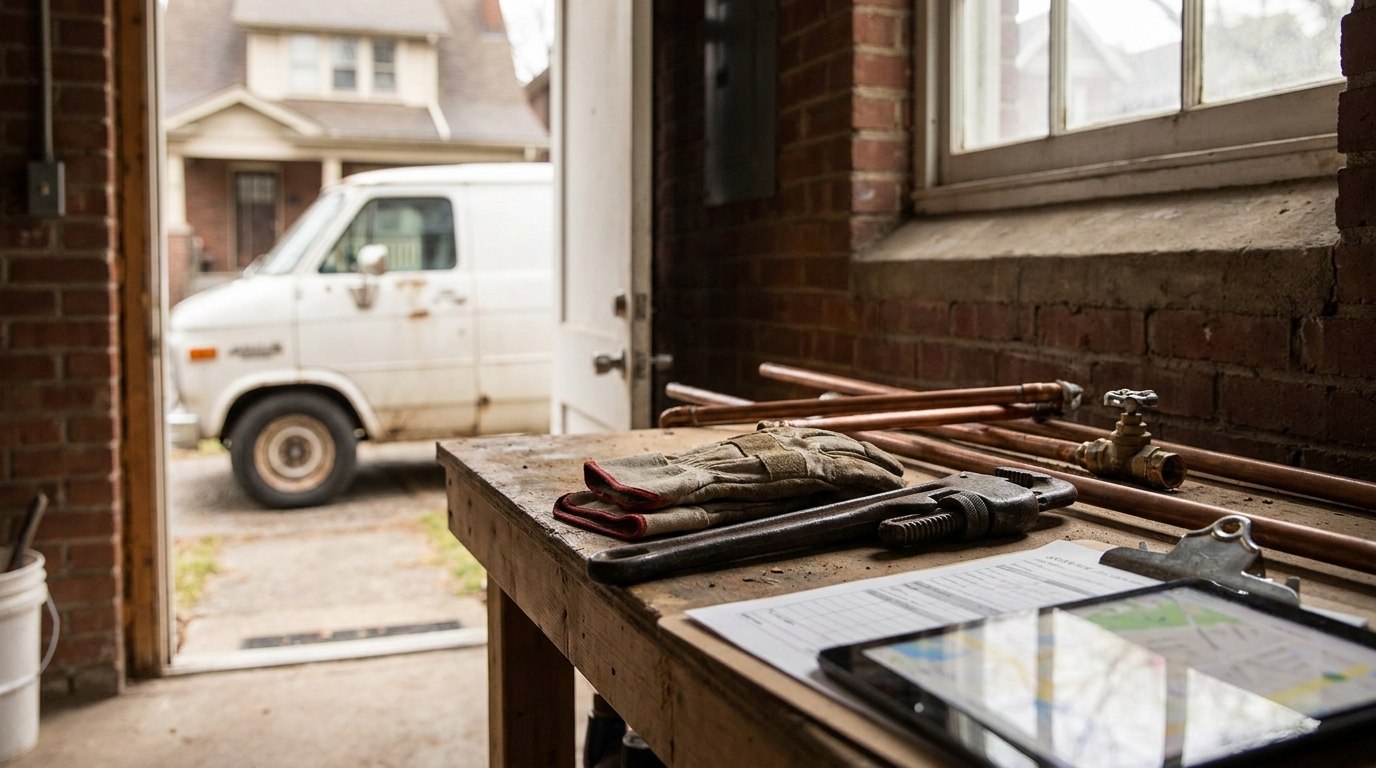
The name painted on the truck in your driveway might be the same one your parents called 20 years ago. The technician might live two towns over. But increasingly in 2026, the company cashing your check answers to a Wall Street investment firm, not the family that started it.
Two headline deals set the tone this year. In February, Blackstone announced an agreement to acquire Champions Group, a residential HVAC, plumbing, and electrical operator, in a deal valued at roughly $2.5 billion. Champions runs across major metros with more than 1,800 field technicians and around 150,000 active service-plan members. Three months later, Apollo agreed to invest about $2 billion for a minority stake in Apex Service Partners at a roughly $10 billion valuation. Apex operates about 75 local brands across 46 states, employs more than 13,000 people, and generates over $3 billion in annual revenue.
If you have never heard of Champions or Apex, that is the point. These are parent companies. The brand on your invoice is usually the local shop they bought. Here is what this buying spree means for the next time your water heater quits or your AC stops blowing cold, and how to keep the upper hand when the truck pulls up.
How big is this, really
Industry and M&A analysts estimate that more than $50 billion has flowed into HVAC, plumbing, and electrical roll-ups since 2018. Treat that number as an industry estimate rather than an official tally, since it comes from deal-tracking analysts (Pipeline On) rather than a government source. But the direction is clear from harder data too. According to S&P Global Market Intelligence, financial buyers now account for roughly half of all HVAC service-company transactions, up from about a third a year earlier. M&A advisory data compiled by Capstone Partners shows private equity add-on activity in HVAC rose about 88 percent year over year through mid-2025.
Why does Wall Street love your plumber? A few reasons. Home services are fragmented, meaning thousands of small independent shops are available to buy. The work is recession-resistant, with services reportedly growing about 6 percent on average during downturns, because a broken furnace in January is not optional. And every maintenance visit is a recurring touchpoint, which investors prize.
The roll-up math, in plain English
Understanding the money helps you understand the pressure on your invoice. In a roll-up, an investment firm buys a large "platform" company, then bolts on smaller local "add-on" shops underneath it. According to the analyst math cited by Pipeline On, platform companies typically sell for 17 to 20 times their annual earnings, while the smaller tuck-in shops get bought for just 5 to 8 times earnings.
That gap is the whole game. Buy small and cheap, fold it into something big and expensive, and the combined company is worth more than the sum of its parts. To make that arithmetic work, the parent needs each acquired shop to earn more per customer than it did before. Apex alone led 2025 deal volume with roughly 60 add-on acquisitions, backed by Alpine Investors, the sponsor that formed the company in 2019, according to PE Hub. Multiply that revenue-per-customer pressure across dozens of local brands and you get a business model that leans on selling you a little more each visit.
How to tell if your contractor was acquired
Acquired companies frequently keep the original local name, logo, phone number, and crew, which makes an ownership change genuinely hard to spot. Watch for these signs:
-
A new membership or maintenance-plan push. Suddenly every visit ends with a pitch to enroll in an annual plan.
-
New billing or dispatch software. Text-message appointment windows, a customer portal, and slicker branded paperwork often arrive with new ownership.
-
Flat-rate tablets. The technician pulls up a pre-loaded price on a tablet instead of quoting from experience or an hourly rate.
-
An out-of-state corporate address on your invoice or emails, even though the truck is local.
-
A gradual rebrand. The old family name gets paired with, or replaced by, a regional group name over a few months.
A quick way to check: search the company name plus words like "acquired," "joins," or "private equity." Directories of active buyers, such as this map of PE-backed HVAC platforms, can help you trace which regional brand may sit under which owner.
What changes on the invoice
The most consistent homeowner-facing shift attributed to new ownership is the move from hourly billing to flat-rate, scope-based pricing. Instead of paying for the hours worked, you pay a menu price for the job. Contractor-side accounts, including this breakdown from Spurk HVAC, report that shops moving to this model often see average tickets rise 15 to 25 percent within about 90 days for comparable work.
Other common changes you may notice:
-
Pricier diagnostic or trip fees, sometimes not credited toward the repair.
-
"Good, better, best" option sheets that steer you toward the higher tiers.
-
Membership enrollment presented as a discount, but tied to recurring charges.
-
Commission targets for technicians, which can shift the conversation toward add-ons and full replacements rather than smaller repairs.
-
Replacement-over-repair recommendations, where you are urged to buy a new system when a fix might have worked.
None of this is automatically a rip-off. But it changes the incentives in the room, and you should know that going in.
What can actually get better
It is not all downside, and a fair look at the trend has to say so. Bigger backing can bring real advantages: faster dispatch, extended or 24/7 hours, financing options for large jobs, stronger warranty backing, and simply more technicians available on a heat-wave weekend. The industry's own trade voices, including the ACCA contractor association, acknowledge both the capital and the training that outside investment can bring. The American Investment Council, summarizing Wall Street Journal coverage, points to higher technician wages, benefits, and expanded service capacity as part of the picture. That is the industry-group framing, so weigh it alongside the pricing concerns, but it is a real part of the story.
Questions to ask before you sign anything
Whether the truck is independent or corporate-owned, these questions protect you:
-
Who owns this company, and has the ownership changed recently?
-
Is your pricing flat-rate or hourly? Can I see the price before you start?
-
Is the diagnostic or trip fee waived if I approve the repair?
-
Are your technicians paid on commission for sales or upsells?
-
If this is a membership, what does it cost per year and what are the cancellation terms?
How to keep your leverage
The homeowner still holds more power than it feels like when a technician is standing in your basement. Use it:
-
Get an itemized written quote before approving work, not a single lump-sum number.
-
Get a second opinion on any big-ticket replacement, especially a furnace, AC system, water heater, or full repipe. A few hundred dollars in diagnostic fees can save thousands.
-
Compare against remaining independents in your area. Smaller shops still compete on price and often bill hourly.
-
Do not decide same-day on an "unsafe system" claim unless there is a genuine, verifiable safety issue like a gas leak or carbon monoxide. Pressure to sign today is a red flag.
-
Check licensing and reviews under both the old and new names. A rebrand can reset a company's public review history, so search both.
Homeowner Action Checklist
-
Ask who owns the company before booking a big job.
-
Request flat-rate pricing in writing, itemized, before work starts.
-
Confirm whether the diagnostic fee applies to the repair.
-
Get a second quote on any replacement over roughly $1,500.
-
Read membership cancellation terms before enrolling.
-
Never approve major work under same-day "emergency" pressure without verification.
-
Search reviews and licensing under both the old and new company names.
The bottom line
The 2026 buying spree is real, it is accelerating, and it is largely invisible from your front porch because the trucks and the crews stay the same. Wall Street ownership can mean better hours, faster service, and stronger warranties. It can also mean higher tickets, harder upsells, and a push to replace what could be repaired. You do not have to guess which one you are getting. Ask who owns the company, get everything in writing, and never let a countdown clock decide a four-figure purchase for you.
Related reading
-
[Home Insurance Is Now 9% of the Average Mortgage Payment: The Five Home-Service Upgrades That Actually Lower Your Premium in 2026](/guides/home-insurance-9-percent-mortgage-five-upgrades-lower-premium-2026)
-
[A Second Wave of HVAC Price Hikes Just Landed July 1: Six Suppliers Added 6 to 10% to Your 2026 AC Job](/guides/hvac-price-increases-july-2026-second-wave)
-
[The $200 Fine Just Became $1,500: What California, Florida, and New Jersey's 2026 Unlicensed Contractor Rules Mean for Your Wallet](/guides/unlicensed-contractor-crackdown-california-florida-new-jersey-2026)
Sources
-
Blackstone Announces Agreement to Acquire Champions Group (press release)
-
Blackstone Nears $2.5 Billion Deal for Champions Group (Bloomberg)
-
Apex Nets $2B Investment from Apollo (Modern Distribution Management)
-
Apollo to acquire minority stake in Apex Service Partners (PE Hub)
-
HVAC deals demonstrate private equity's appetite for add-ons (S&P Global Market Intelligence)
-
US HVAC M&A Industry Update, Summer 2025 (PKF O'Connor Davies / Capstone Partners)
-
Private Equity Buying HVAC and Home Services in 2026 (Pipeline On)
-
Who's Buying HVAC Companies? 27+ Active PE Platforms (CT Acquisitions)
-
How Private Equity Is Reshaping HVAC For Homeowners (Spurk HVAC)
Note: This article contains AI-assisted content and has been reviewed by our editorial team.
ABOUT THIS SERVICE: CallTheLocal.com is a directory and lead generation service, not a contractor or service provider. Submitting this form does not obligate you to hire anyone or purchase any service. Your information will be shared with licensed, insured home service professionals in your area who may provide quotes for your project. CallTheLocal.com does not guarantee the quality, timeliness, or outcome of any work performed by service providers you connect with through this service. Always verify licensing, insurance, and references before hiring. Get everything in writing before work begins.