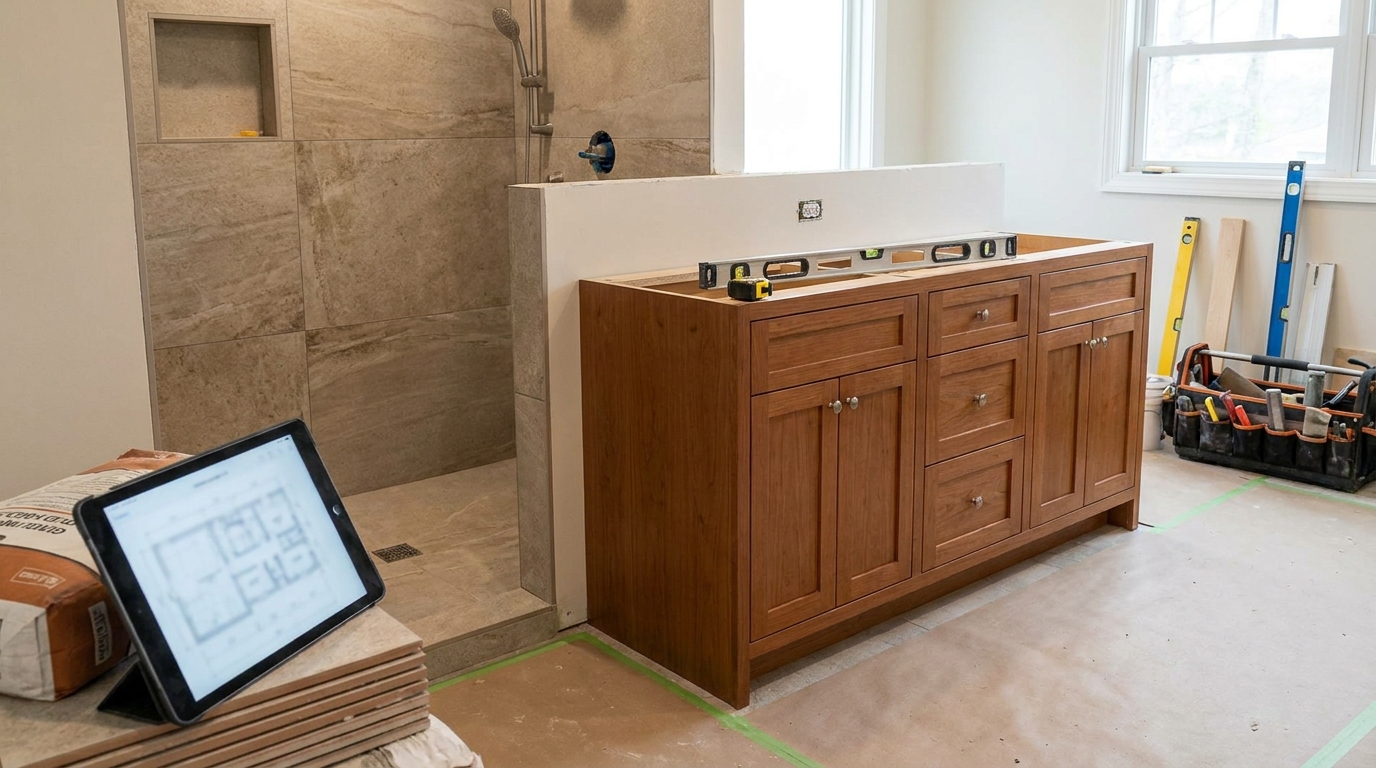
Every January the trend roundups arrive with the same beautiful bathrooms: curbless showers, warm tile underfoot, a wide double vanity. What those photos almost never include is the price tag. This guide attaches real installed costs to the popular 2026 moves so you can walk into a contractor meeting knowing what your money actually buys.
Here is the anchor number to keep in your head. According to Angi's 2026 cost data, a typical bathroom remodel averages around $12,138 and ranges from about $2,500 to $30,000, or roughly $70 to $250 per square foot. That spread is wide for a reason, and understanding where you land on it is the whole game.
The three budget tiers, and what each one buys
Most bathroom projects fall into one of three buckets. Knowing which one you are in keeps your expectations and your quotes honest.
Cosmetic refresh: under $7,000
This is a surface-level update with no change to the layout. Think new paint, updated light fixtures and faucets, a vanity swap, and maybe new flooring over the existing footprint. Nothing moves, so labor stays low. If a contractor is quoting you a full remodel price for what is really a cosmetic refresh, that is your first clue to get a second opinion.
Mid-range remodel: $12,000 to $30,000
This is the sweet spot for most homeowners and the tier the trend photos are usually selling. For this budget you can typically get a new tiled walk-in shower, fresh tile, a double vanity, and possibly a heated floor, all without tearing the room down to the studs or relocating major plumbing. The 2026 average sits right inside this band, which is why it tends to be the most realistic target for a meaningful upgrade.
Full gut: above $30,000
Once you start moving plumbing, converting to a wet room, or doing structural and subfloor work, you cross into full-gut territory. This is where the budget climbs fast, and where the hidden costs below do the most damage.
Trend by trend: what the popular 2026 moves actually cost
Curbless walk-in showers and wet rooms
The curbless, zero-entry shower is the signature look of 2026, and it is not just about style. The 2025 U.S. Houzz Bathroom Trends Study found that wet rooms now make up roughly 13 to 16 percent of renovated baths, with shower sizes growing about 39 percent. The top reasons homeowners give are better use of space (66 percent) and universal design (39 percent), meaning a bathroom that stays usable as you age in place.
On cost, Angi's 2026 walk-in shower data puts a standard tiled walk-in shower at about $6,000 to $12,000. Going curbless adds roughly 20 to 30 percent on top of that, or about $1,200 to $3,600 more, because the subfloor has to be recessed and the wet zone re-waterproofed. That premium is not a markup, it is real work, and a quote that promises a curbless shower without accounting for it should make you nervous.
Heated floors
Warm tile on a cold morning is one of those upgrades people rarely regret. Per HomeGuide's 2026 figures, electric radiant heated floors run about $500 to $2,800 installed. The important thing to understand is the timing: it is relatively cheap to add while the floor is already open during a remodel, and expensive to retrofit later. Skipping it now is one of the more commonly cited remodel regrets, so if you are on the fence, this is the time to decide.
Double vanity
A double vanity remains one of the most requested features for a reason. It is a quality-of-life upgrade in a shared bathroom and, as the resale section below shows, it holds its value well. The cost depends heavily on the cabinetry and countertop you choose, which is exactly why you want those specified by name in your quote rather than buried in a vague allowance.
Large-format tile
Tile choices have consolidated around a clear winner. The Houzz study found rectangular tile dominates walls at about 89 percent, and large-format tile (roughly 12x24 to 18x18 inches) is the most popular at about 48 percent. Fewer grout lines mean a cleaner look and easier upkeep, which is part of the appeal. Neutral large-format tile also happens to be one of the slower-to-date finishes, so it works for both style and resale.
Where trends quietly add cost
The line items that blow up budgets are usually the ones you cannot see in the finished photo. Watch these four:
-
Relocating plumbing. This is the single biggest hidden cost driver. Angi's data shows rough-in plumbing for a bath can run up to about $7,000 for major work, while minor plumbing updates average closer to $800. Moving a toilet or shower to a new spot is what pushes a project from mid-range into full-gut pricing.
-
Waterproofing and slope. Wet rooms and curbless showers live or die on the waterproofing membrane and the floor slope to the drain. This is skilled, code-driven work, and it is the first thing a lowball bid tends to cut.
-
A dedicated electrical circuit for radiant heat. Heated floors need proper electrical, which is part of why doing it during the remodel is so much cheaper than later.
-
Recessing the subfloor for zero entry. The flush, no-threshold look requires lowering the subfloor so the finished floor stays level. If you do not see a line item for this on a curbless quote, the contractor either has not planned for it or is hoping you will not ask.
For context on labor, Angi reports that labor typically accounts for 40 to 65 percent of the total budget, with plumbers billing roughly $45 to $200 per hour. The more trades your project touches, the more that labor share grows.
AI workflows for revenue teams
Placeholder house ad for Conservus.ai. Swap with final creative when brand assets are ready.
Partner with Conservus.aiHow long it takes
Timelines vary too much by scope and region for a single honest number, so focus on what stretches a job rather than a calendar promise. A straightforward mid-range remodel that keeps the existing layout moves fastest. The schedule grows when you add the work that also drives cost: relocating plumbing, custom or intricate tile, and the permit and inspection waits that come with moving plumbing or electrical. A realistic contractor will give you a range, not a single date, and will build in time for inspections. Ask for the schedule in writing and confirm who is responsible for pulling permits.
The resale math: mid-range beats upscale
This is the part that surprises people. According to the 2025 Cost vs. Value Report from Zonda and the Journal of Light Construction, a mid-range bath remodel costs about $26,138 nationally and recoups roughly 74 to 80 percent at resale. An upscale bath remodel costs about $81,612 but recoups only around 42 percent. In plain terms, spending more does not buy you more value back, and the mid-range project is the smarter financial move for most homeowners.
If resale is on your mind, steer toward the choices that age slowly:
-
Holds value: curbless entry paired with universal-design features like grab bars and a comfort-height toilet, a double vanity, and neutral large-format tile.
-
Dates fast: per Homes & Gardens, bold or novelty tile, vessel sinks, and heavily themed finishes tend to look dated quickly. Save the personality for towels and paint, not permanent finishes.
Red flags when scoping a bathroom contractor
A good quote tells you almost as much as the work itself. Before you sign, look for these warning signs:
-
No written waterproofing and slope plan for a wet room or curbless shower.
-
No line item for recessing the subfloor on a zero-entry project.
-
No permits pulled for plumbing or electrical relocation.
-
Vague "allowances" instead of specified tile and fixtures, which lets the final bill drift upward.
-
A suspiciously low bid that skips the waterproofing membrane and drain work. The cheapest quote often becomes the most expensive once the failures show up.
The bottom line for 2026: the trends worth the money are the ones that make the room work better and age gracefully, not the ones that photograph the best. A well-planned mid-range remodel in the $12,000 to $30,000 range buys you the look you want, the function you will actually use, and the resale value that holds. Get your finishes specified in writing, ask where the hidden costs live, and let the budget tier guide your choices rather than the inspiration photos.
AI workflows for revenue teams
Placeholder house ad for Conservus.ai. Swap with final creative when brand assets are ready.
Partner with Conservus.aiRelated reading
Sources
-
Houzz Releases Bathroom Trends Study — Kitchen & Bath Business
-
Bath Remodel, Midrange — Cost vs. Value, Journal of Light Construction
-
The 7 Outdated Bathroom Trends Going Out of Style in 2026 — Homes & Gardens
Note: This article contains AI-assisted content and has been reviewed by our editorial team.
ABOUT THIS SERVICE: CallTheLocal.com is a directory and lead generation service, not a contractor or service provider. Submitting this form does not obligate you to hire anyone or purchase any service. Your information will be shared with licensed, insured home service professionals in your area who may provide quotes for your project. CallTheLocal.com does not guarantee the quality, timeliness, or outcome of any work performed by service providers you connect with through this service. Always verify licensing, insurance, and references before hiring. Get everything in writing before work begins.