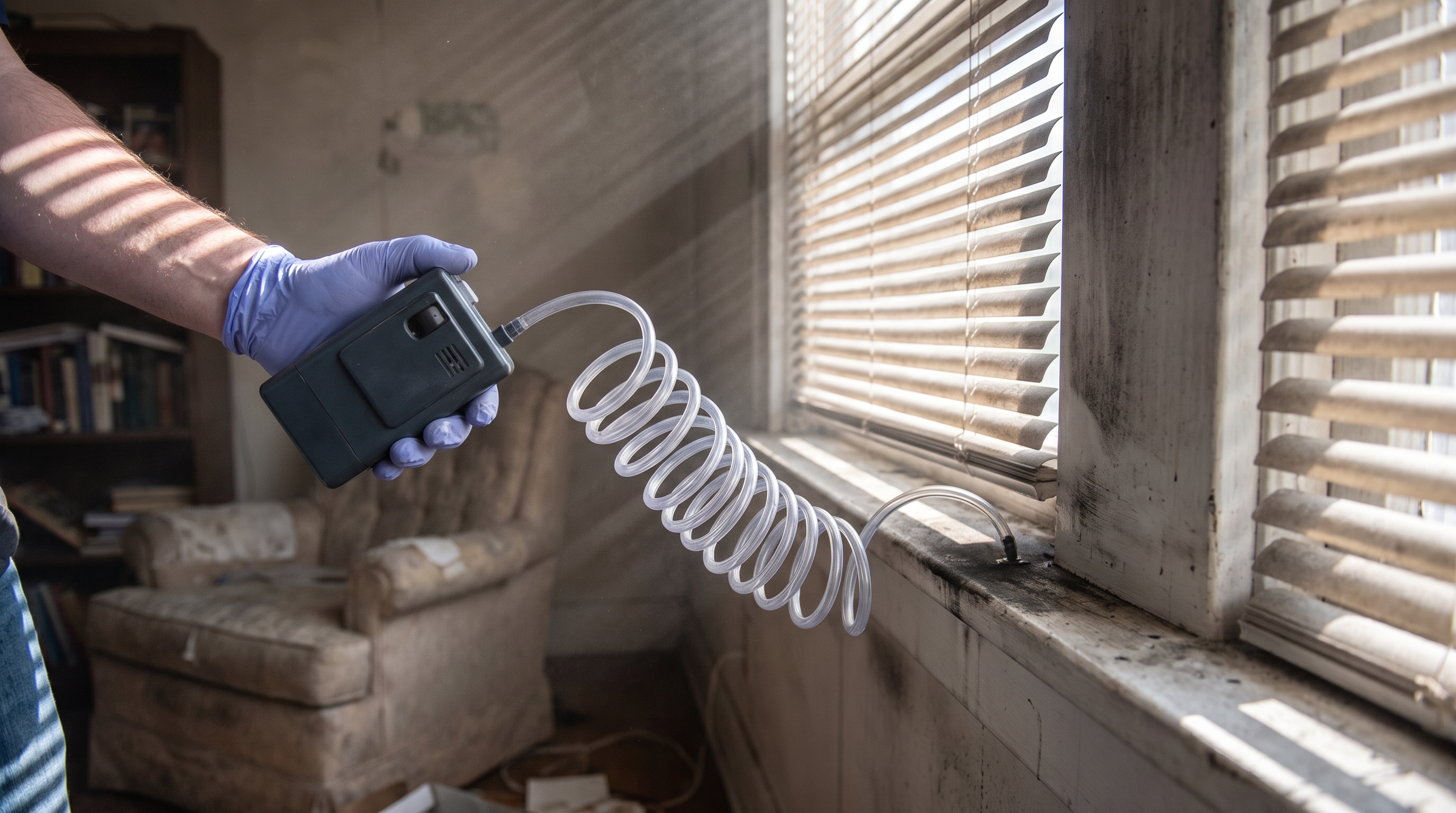
Two bills that would create the first state-level rules in the country for cleaning up homes contaminated by wildfire smoke were enrolled and presented to Governor Gavin Newsom at 10 a.m. on September 11, 2026. If both are signed, a smoke damage insurance claim in California comes with a 30-day inspection deadline, testing the insurer has to pay for, and a legal presumption that the soot in your standing house came from the fire. The Governor has until the end of September 2026 to act.
The same week, homeowners five miles north of Reno were getting a very different message. Washoe County will pay to haul the household hazardous waste off their properties after the Hawk Fire. The ash and debris after that? That one is on them.
Same problem, two states, two answers. Here is what is on the table, what it will and will not do for you this year, and what the cleanup actually costs when nobody is required to pay for it but you.
The two bills, and why neither works alone
The pair are AB 1642, from Assemblymember John Harabedian of Pasadena, and AB 1795, the Smoke Damage Recovery Act, from Assemblymember Mike Gipson of Gardena. They are linked: neither becomes law without the other, as CalMatters reported.
AB 1642 is the technical half. It hands the Department of Toxic Substances Control the job of writing the standards that do not currently exist anywhere in the country: how you test a standing home for smoke contamination, and what level counts as clean. Lead and asbestos protocols are due by the end of 2028. Heavy metals, cyanide, lithium and other combustion contaminants are due by the end of 2029.
AB 1795 is the insurance half. It takes whatever DTSC writes and requires carriers to follow it.
Read those dates again, because they are the honest takeaway. The lab standards are two to three years out. Nothing about a numeric clean-or-not threshold becomes enforceable for a homeowner the day the Governor signs.
The part that bites sooner
AB 1795 does not wait for DTSC. According to the California Department of Insurance, it would require insurers to:
-
Inspect a smoke claim within 30 days.
-
Pay for the testing needed to determine what it takes to return the home to pre-loss condition.
-
Keep paying additional living expenses until the home is actually restored, not until the adjuster decides the file should close.
-
Meet timelines for claim payment.
-
Support training and certification programs for the people who assess, test and restore smoke damage.
The quietest provision may matter most. AB 1795 creates a presumption: if ash, soot, char or other combustion byproducts are present in a standing home after a wildfire, the smoke damage is presumed to be wildfire-caused for insurance purposes. Today, proving where the soot came from is the homeowner's problem. That flips it.
The scale that forced the issue
The January 2025 fires in Los Angeles County destroyed more than 16,000 structures. The state counted more than 42,000 claims from January through November 2025. More than 13,000 of those involved standing homes with smoke damage.
That is the number to sit with. Roughly a third of the claim volume came from houses that were still there. Smoke is a repair category, not a rebuild category, and repair categories are exactly where a carrier and a homeowner can disagree for a year about whether anything is wrong at all.
The bills grew out of the Department of Insurance's Smoke Claims and Remediation Task Force, which published a 64-page report on March 9, 2026 after nine months of work. It recommended a tiered remediation system based on impact level, certification programs and payment timelines. It did not set numeric lead or asbestos limits, which is precisely why AB 1642 pushes that job to DTSC.
AI workflows for revenue teams
Placeholder house ad for Conservus.ai. Swap with final creative when brand assets are ready.
Partner with Conservus.aiWhat testing costs, and what you get for the money
Independent testing is the hinge of the whole thing, so know the price before somebody quotes you one.
United Policyholders, the consumer advocacy group, puts proper testing at roughly $2,000 to $4,000. That covers sample collection, lab work and a written report. CalMatters reported Los Angeles area survivors paying $3,000 to $6,000 per property. If you see a number well under a thousand dollars, ask what is missing from it, because something usually is.
What you are buying is a Certified Industrial Hygienist (CIH) who takes physical samples and sends them to a lab, looking for soot, char, ash and the heavy metals that come off burned building materials, household chemicals and vehicles. What you are not buying is an adjuster walking through with a flashlight and a nose. Those are different activities with different conclusions, and only one of them produces a document.
Keep the testing and the cleaning in separate hands if you can. The company that cleans the house should not be the company that certifies it clean.
What the cleanup costs
There is no single decontamination price, and any article that gives you one is guessing. United Policyholders puts the real spread at a few hundred dollars to six figures, depending on how deep the smoke got and how much of the house is porous.
For budgeting, national 2026 figures from LawnStarter are a reasonable frame, as long as you treat them as ranges and not as a quote:
-
Fire and smoke remediation: roughly $4.25 to $6.50 per square foot
-
Thermal fogging: $200 to $585
-
Ozone treatment: $235 to $465
-
HVAC duct cleaning after smoke: $275 to $490, with about $375 typical
-
National average total: $20,470, inside a $2,900 to $38,325 range
We could not verify city-level pricing for smoke work, so price your own job by square footage and scope rather than by metro. Square footage of affected space, plus how much soft material has to leave the building, will move your number far more than your zip code will.
Why cleaning is often not enough
Smoke particles penetrate porous materials. That is the entire reason this is expensive. Insulation, carpet and upholstered furniture generally get hauled out rather than cleaned, because the odor source stays inside the material.
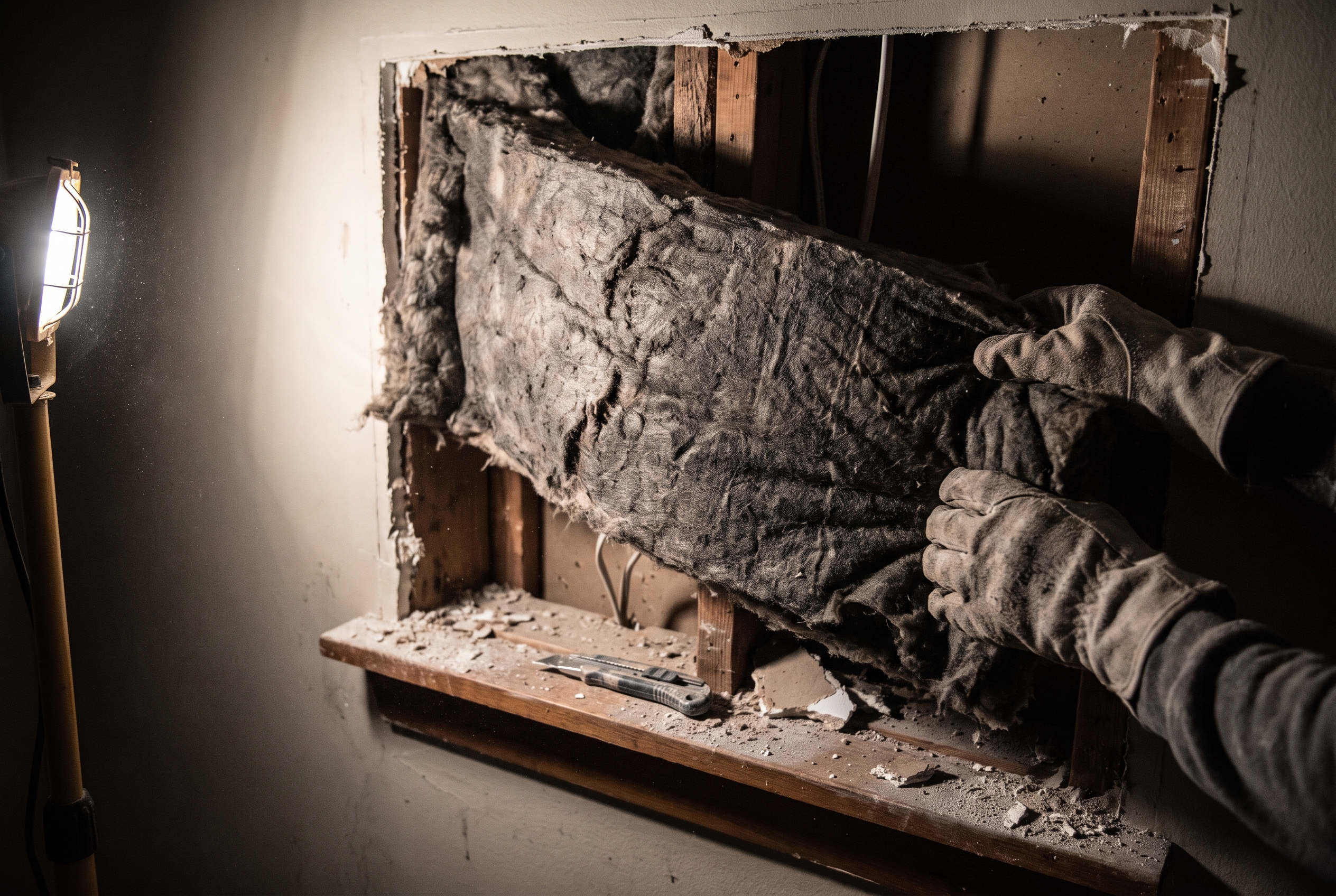
Chris Nelson, general manager of Paul Davis Restoration of Greater Reno and Tahoe, told KOLO 8 News Now that if the odor-causing material stays in place, it re-emits odor as the temperature rises. Translation: the house smells fine in October and smells like a campfire in June. Nelson puts a full restoration at four to six months, in three stages of decontamination, deodorization and rebuilding.
One sequencing tip from United Policyholders that saves money: have a specialized textile restoration company assess and remove the soft goods (clothing, rugs, curtains) before structural cleaning starts. Smoke-saturated porous items left in a room will re-contaminate surfaces somebody already cleaned.
AI workflows for revenue teams
Placeholder house ad for Conservus.ai. Swap with final creative when brand assets are ready.
Partner with Conservus.aiThree documents to have before the adjuster arrives
United Policyholders' guidance comes down to three things, and they all have to exist before anybody hauls anything to the curb:
-
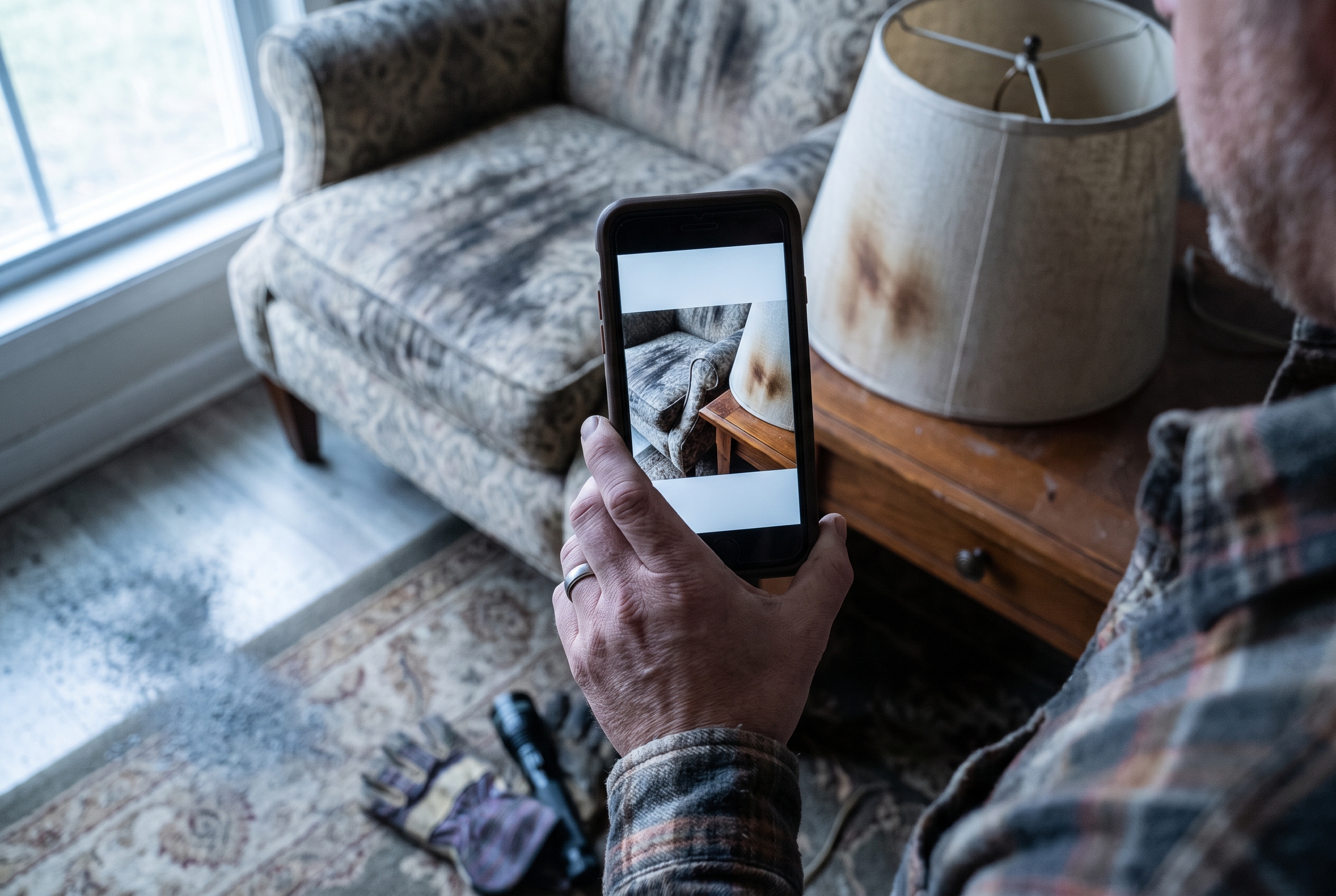
Dated photographs of all damage, taken before you throw out a single item. Once it is gone, it was never damaged.
-
A written room-by-room inventory that splits items into clean versus replace. Room by room, not one long list.
-
Written estimates from at least two restoration companies. Two numbers is an argument. One number is a suggestion.
Add a fourth habit: a running log of every call with the adjuster, with the date, the name and what was said. It costs nothing and it is the only record of a conversation that happened by phone.
How to vet the crew
There is now a real technical standard to point at. ANSI/IICRC S700, Standard for Professional Fire and Smoke Damage Restoration, First Edition 2025, is the first publicly reviewed American National Standard for this work. It covers assessment, the Restoration Work Plan, contractor qualifications and documentation.
So ask three questions of every bidder:
-
Do you hold IICRC certification in Fire & Smoke Restoration, and does the lead technician who will be on my site hold it too? Ask for both.
-
Do you work to ANSI/IICRC S700? A qualified firm will know what you are referring to.
-
Will you give me the written Restoration Work Plan before work starts?
If a bidder cannot produce a written plan, you have no way to tell later whether you got what you paid for.
When the adjuster says the house is fine
This is the scenario the California bills are aimed at, and it is worth knowing where you stand in the meantime. United Policyholders warns that the person an insurer authorizes to decide whether there is damage may have no indoor air quality credentials at all, and that insurer-recommended vendors are not always independent.
If an uncredentialed walkthrough clears your house and you do not believe it:
-
Ask the insurer, in writing, to pay for testing by a Certified Industrial Hygienist.
-
Get a second opinion from a hygienist you hired.
-
If the insurer refuses, escalate to your state insurance regulator.
Put the request in writing even if you are told no over the phone. A denial you can show somebody is worth more than a denial you remember.
AI workflows for revenue teams
Placeholder house ad for Conservus.ai. Swap with final creative when brand assets are ready.
Partner with Conservus.aiNevada right now: who pays for what after the Hawk Fire
The Hawk Fire burned 15,085 acres of private land in Washoe County, about five miles north of Reno, and reached 100 percent containment on September 10, 2026, per the Western Fire Chiefs Association. Nevada has no smoke standards bill on a governor's desk, so the split is plainly stated by the county.
Washoe County Emergency Management describes three phases:
-
Phase 1, household hazardous waste removal: paid for by the county using EPA-qualified contractors. If you have a damaged property and nobody has contacted you, call Washoe 311.
-
Phase 2, debris and ash removal: the property owner's responsibility to coordinate and pay for, using insurance and possibly federal help through the Nevada Office of Emergency Management. 2 News Nevada confirms that split.
-
Phase 3, rebuilding: support through the Community Services Division at (775) 328-2020 or building@washoecounty.gov.
If your carrier is stonewalling, the Nevada Division of Insurance consumer line is (775) 687-0700, option 2.
Before you go back in to clean anything, the Red Cross guidance relayed by News 4 Reno is straightforward: ash from burned structures can carry residues from building materials, household products and vehicles, which makes it more hazardous than ash from burned brush. Wear a snug NIOSH-approved N95, goggles, work gloves, long sleeves, long pants and closed-toe boots.
What to do this week
If you are in California with an open smoke claim, request the CIH test in writing now and keep every additional living expense receipt. The leverage in AB 1795 arrives whether or not the DTSC standards ever do, and a paper trail started today is worth more than one started after a signature.
If you are anywhere else, you are buying that protection yourself. Budget for testing before you budget for cleaning, get two written estimates, and never let the company that cleans the house be the company that clears it.
Related reading
AI workflows for revenue teams
Placeholder house ad for Conservus.ai. Swap with final creative when brand assets are ready.
Partner with Conservus.aiSources
-
California could be first in the nation to create smoke-damage standards (CalMatters)
-
AB-1795 Smoke Damage Recovery Act bill status, California Legislative Information
-
CDI Smoke Claims and Remediation Task Force Report, March 9, 2026 (PDF)
-
Homeowners face a long road back after Hawk Fire smoke and ash damage (KOLO 8 News Now)
-
Wildfire Phases of Recovery and What You Need to Know (Washoe County Emergency Management)
-
Recovery begins for properties damaged by Hawk, Bug, and Stallion fires (2 News Nevada)
-
Red Cross warns of cleanup hazards as Hawk Fire evacuees return home (News 4 Reno)
-
Tracking the Hawk Fire in Nevada (Western Fire Chiefs Association)
-
How Much Does Fire and Smoke Damage Restoration Cost in 2026? (LawnStarter)
Note: This article contains AI-assisted content and has been reviewed by our editorial team.
ABOUT THIS SERVICE: CallTheLocal.com is a directory and lead generation service, not a contractor or service provider. Submitting this form does not obligate you to hire anyone or purchase any service. Your information will be shared with licensed, insured home service professionals in your area who may provide quotes for your project. CallTheLocal.com does not guarantee the quality, timeliness, or outcome of any work performed by service providers you connect with through this service. Always verify licensing, insurance, and references before hiring. Get everything in writing before work begins.