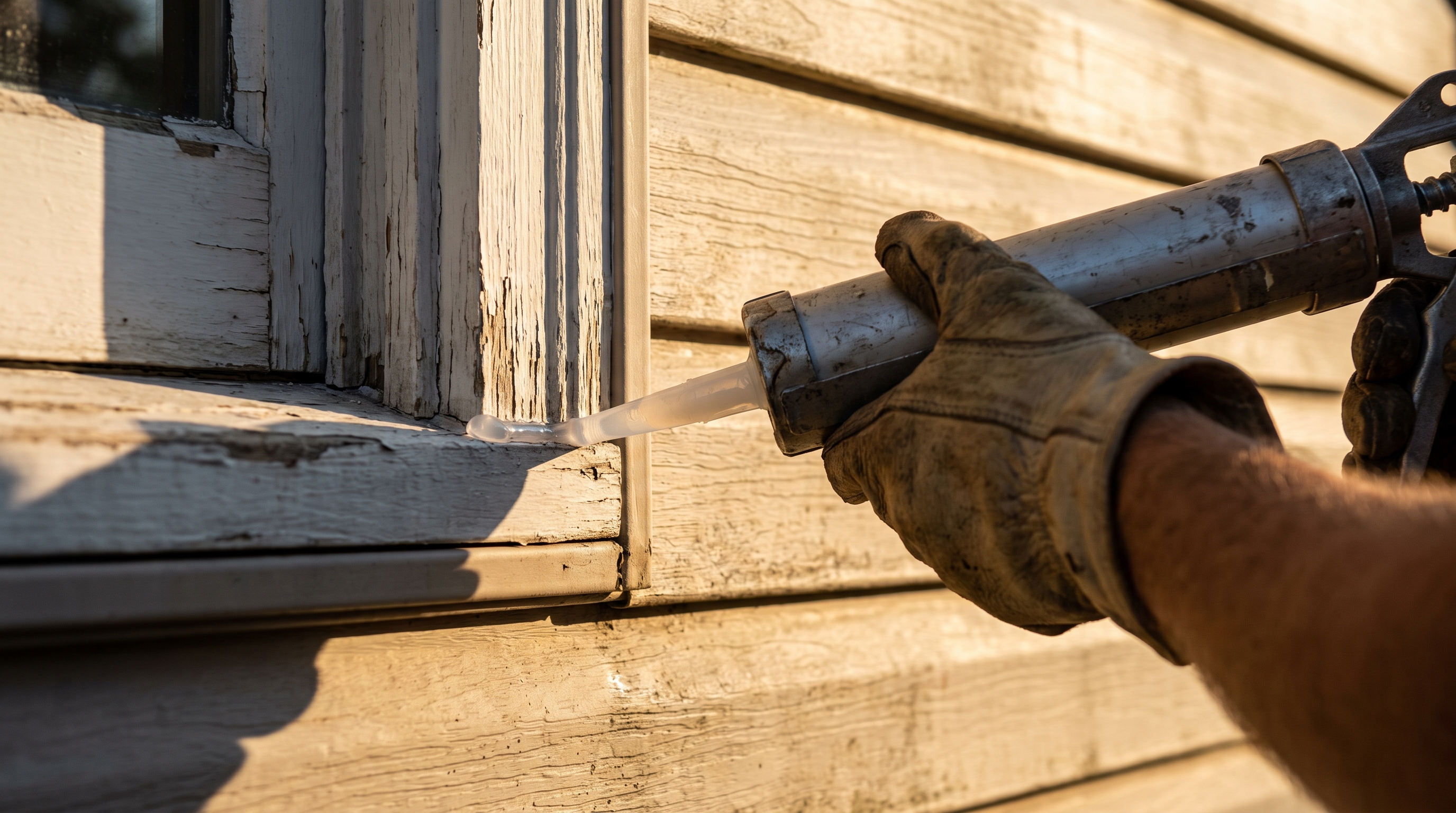
If brown stink bugs are lining up on your sunny siding, they're looking for a place to spend the winter, and your walls are on the list. The good news about how to keep stink bugs out is that the cheapest approach is also the one that works best. University extension programs at Penn State, Maryland, West Virginia University and UC IPM all say the same thing: seal the cracks first. Spraying comes a distant second.
This guide covers why the bugs are showing up now, where to seal, which materials to use, the catch for homes with vinyl siding, and when it makes sense to pay a pro.
Why are stink bugs coming into my house right now?
Shorter days set them off. MSU Extension educator David Lowenstein told C&G News that once daylight drops below about 13 hours, a chemical change in the bug switches it from feeding and breeding to looking for a winter shelter. WVU Extension says they search for entry points hardest on warm fall days, especially after the first frost.
Michigan homeowners know this pest well. MSU entomologist Howard Russell said in 2018 that brown marmorated stink bugs first turned up in southwest Michigan around 2010 and have since spread through the Lower Peninsula. In late August, 99WFMK passed along MSU Extension's advice to seal up before cold weather arrives. Weather plays a part too: last October, MSU researcher Mariana Szucs told Fox 2 Detroit that the unusually warm fall of 2025 meant more young bugs would mature and more would move into houses.
What is the best way to keep stink bugs out?
Close the gaps they crawl through. Every extension source we checked ranks sealing, which pros call "exclusion," ahead of insecticides. WVU Extension says insecticides used by themselves "are likely to provide only limited control." Penn State Extension says exterior sprays "may offer some minor relief," but sunlight breaks them down, so they may stop killing bugs after several days or a week.
So the caulk gun comes before the sprayer. Sealing is cheap, you only do it once, and it helps with drafts too.
Where do stink bugs get into a house?
Through cracks as small as 1/16 to 1/8 inch, according to WVU Extension. That's roughly the thickness of a credit card stack, so look closely. Walk around the house on a sunny afternoon (where the bugs are clustering tells you a lot) and check these spots:
-
Window and door trim: gaps where the frame meets the siding, plus worn weatherstripping.
-
Exterior doors: daylight showing under the door means you need a tighter sweep or threshold.
-
Siding joints and corners: Szucs told Fox 2 that the bugs "sometimes go under the siding on homes."
-
Under wood fascia and along eaves and overhangs.
-
Behind chimneys, where masonry meets the siding.
-
Utility entries: where pipes, cables, wires and the outdoor faucet come through the wall.
-
Dryer vents and other wall vents.
-
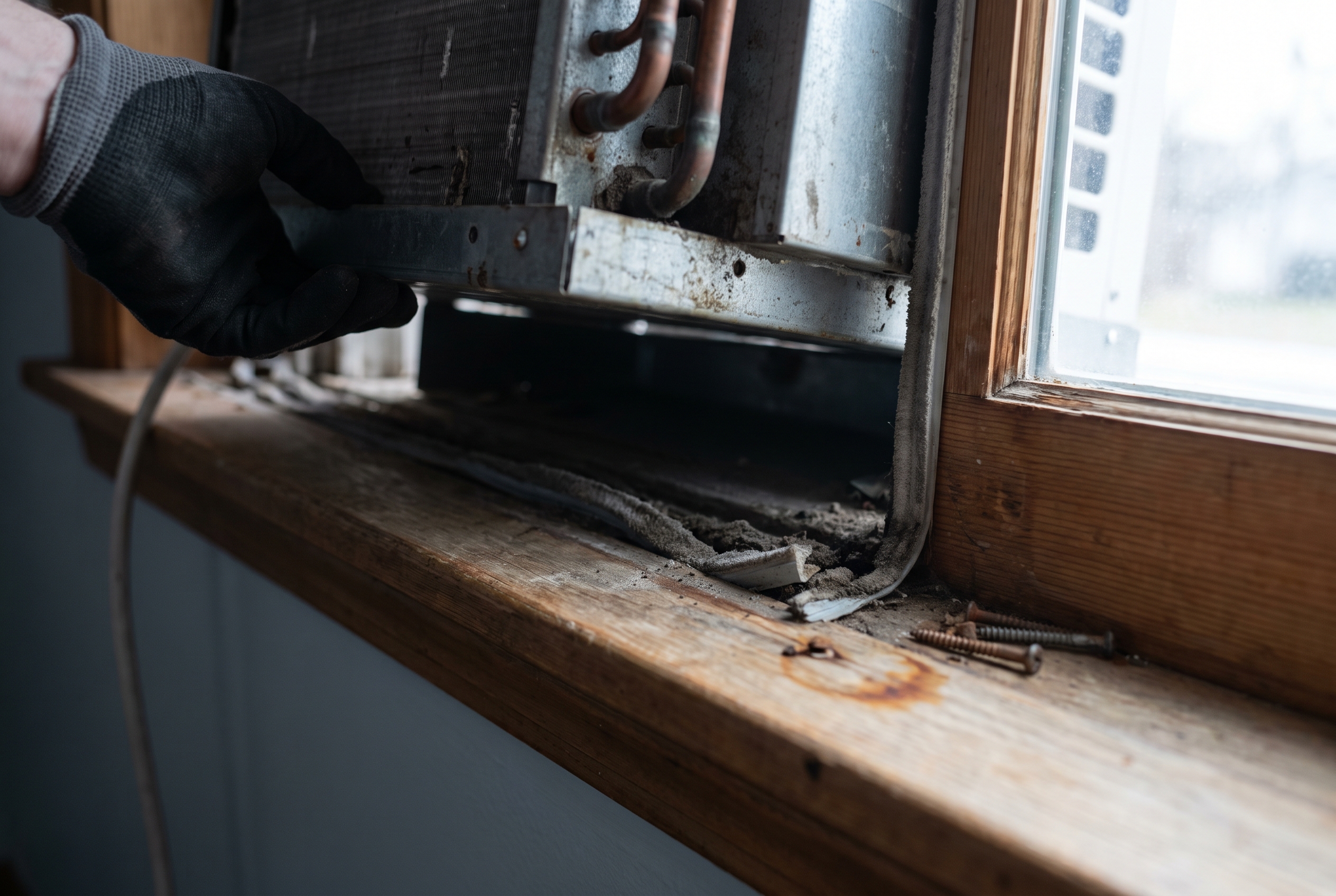
Window air conditioners: both Maryland Extension and WVU Extension say to take them out after summer. If one has to stay in, UC IPM says to fill the gaps around it.
-
Window and door screens: fix or replace torn ones.
-
Gable and attic vents: UC IPM recommends putting window screening on the inside of gable vents.
What caulk should I use to keep stink bugs out?
Use good-quality silicone or silicone-latex caulk. Penn State and Maryland Extension both recommend it for cracks around windows, doors, siding, utility pipes, behind chimneys and under wood fascia. For openings too big for a caulk bead, UC IPM lists foam sealant as an option.
Your shopping list:
-
Silicone or silicone-latex caulk and a caulk gun
-
Foam sealant for larger gaps around pipes and wires
-
Weatherstripping for doors and windows
-
Door sweeps, or replacement thresholds for drafty doors
-
Window screening for the inside of gable vents, plus screen patches or replacement screens
All of this is standard stock at any hardware store. Prices change by brand and store, so check the shelf before you plan your budget.
Is it really a quick caulk job?
On some houses it's close. On others it isn't. If your home has brick, stucco or wood siding with a few obvious gaps, one careful afternoon with a caulk gun can take care of most of the outside. Homes with vinyl siding are harder.
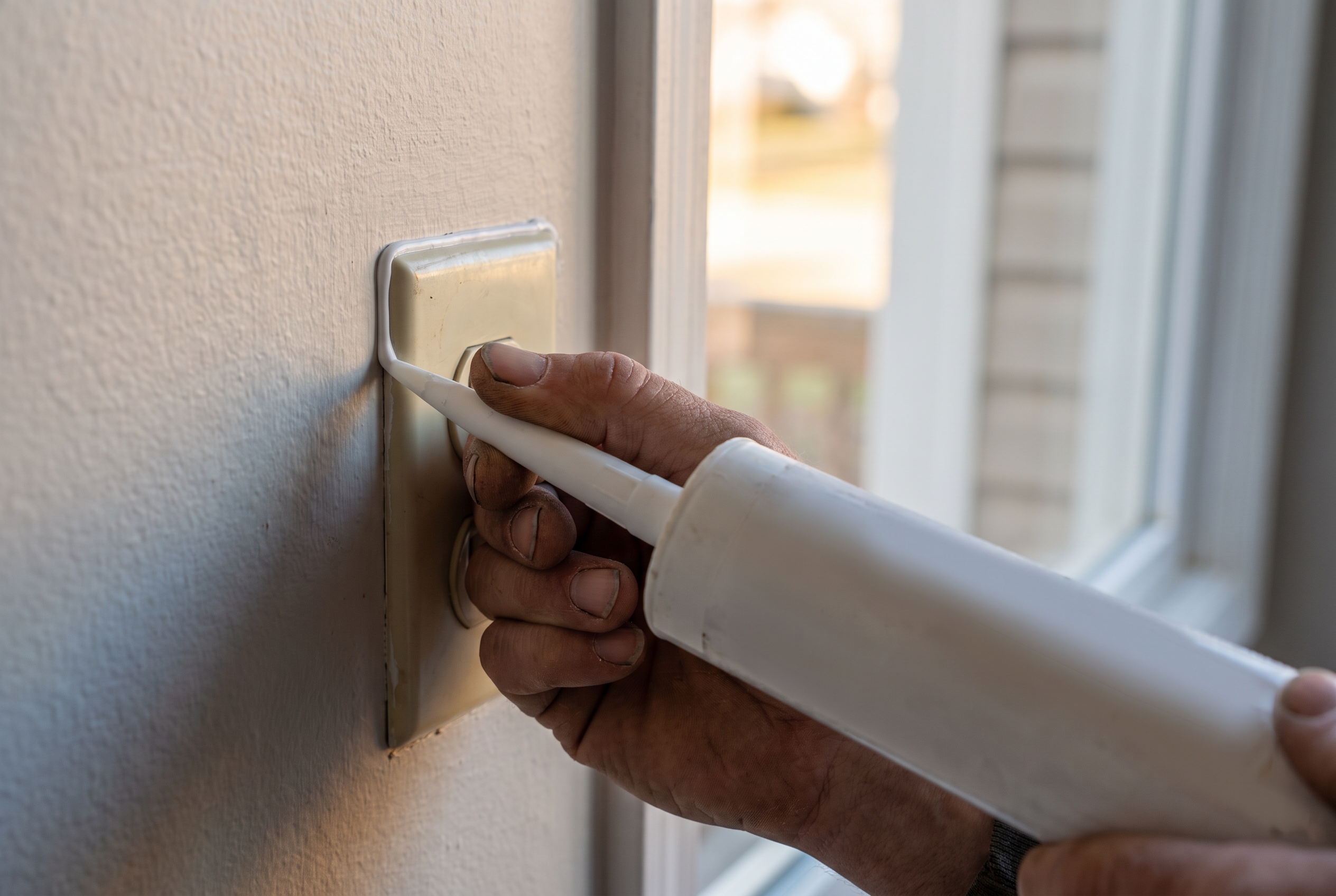
MSU's Howard Russell says caulk can't fully seal a vinyl-sided house, because vinyl siding and soffits leave gaps between the panels by design. Some bugs will still end up inside your walls. His fix is to seal from the inside as well: caulk around outlet and switch boxes, ceiling light fixtures and heat ducts. That keeps the bugs in the wall cavity and out of your rooms.
Bottom line: sealing the outside is worth doing on any house. If you have vinyl siding, plan on a second round of sealing indoors.
How do I get rid of stink bugs that are already inside?
Vacuum them up, and don't squash them. Penn State notes that the vacuum may pick up the smell, so Russell suggests using an old vacuum you don't mind dedicating to the job. He also describes a homemade light trap: put a pan of soapy water under a lamp. Bugs drawn to the light fall in.
Don't spray insecticide inside walls or attics. Penn State advises against it. And if you've already found a few indoors, don't take it personally. Lowenstein told C&G News that having stink bugs inside doesn't mean you did a bad job protecting your house.
Do professional stink bug sprays work?
A little, for a short time. Maryland Extension says any exterior treatment should be a pyrethroid applied by a licensed pest control operator just before the bugs gather in fall. It still calls exterior spraying "expensive, marginally effective, and not generally recommended." Penn State agrees on timing and adds that sunlight breaks the product down within days to a week.
That doesn't mean a pro is a waste of money. It means you should pay for sealing work, not a spray-only visit.
How much does stink bug control cost?
Here are the prices we could verify:
-
National, general pest control: Bob Vila's exterminator cost guide (updated June 2023) puts a one-time visit at $100 to $350, with a typical range of $111 to $261 and a national average of $176. An initial inspection visit runs $85 to $190. Quarterly plans run $110 to $250 per visit.
-
Midwest, stink bug specific: Critter Removal Indianapolis quotes $150 to $500 depending on how bad the problem is, the size of the home and the methods used. That price includes a perimeter spray plus exclusion work (sealing, caulking, mesh screens and vent covers). Seasonal re-treatments cost extra. That's one company's pricing, not a market average.
Prices differ by city and company. The quickest way to find out what's fair where you live is to get two or three written quotes and compare what each one actually includes.
When should I call a pro instead of doing it myself?
Do it yourself if the gaps are at ground level or reachable from a short stepladder. Call a pro when:
-
The gaps are on second-story trim, fascia or gable vents and you'd need an extension ladder
-
You have vinyl siding and the bugs keep showing up indoors even after you've sealed
-
Large clusters come back every fall
What to ask before you hire
-
Does the quote include sealing and vent screening, or only a perimeter spray? Extension experts say spraying by itself gives limited control.
-
What product will you use, and is the person applying it licensed? Maryland Extension specifies a pyrethroid applied by a licensed operator.
-
When will you spray? It should be just before the bugs gather, not after they're already in the walls.
-
Is a re-treatment included, or is it extra?
-
Can I get the line items in writing? You want to see exactly which openings they'll seal.
The bottom line
Seal this week, while the bugs are still gathering. Caulk the cracks, add door sweeps, fix screens, pull out the window AC and screen the gable vents. If the work is out of reach or your vinyl siding keeps letting bugs in, hire someone to do the sealing, and pass on any quote that's a spray and nothing else.
Related reading
Sources
-
Tips for Dealing With Brown Marmorated Stink Bugs, University of Maryland Extension
-
Brown Marmorated Stink Bug FAQ, University of Maryland Extension
-
These Michigan Fall Bugs Are Preparing to Move Into Your Home, 99WFMK
ABOUT THIS SERVICE: CallTheLocal.com is a directory and lead generation service, not a contractor or service provider. Submitting this form does not obligate you to hire anyone or purchase any service. Your information will be shared with licensed, insured home service professionals in your area who may provide quotes for your project. CallTheLocal.com does not guarantee the quality, timeliness, or outcome of any work performed by service providers you connect with through this service. Always verify licensing, insurance, and references before hiring. Get everything in writing before work begins.
Note: This article contains AI-assisted content and has been reviewed by our editorial team.