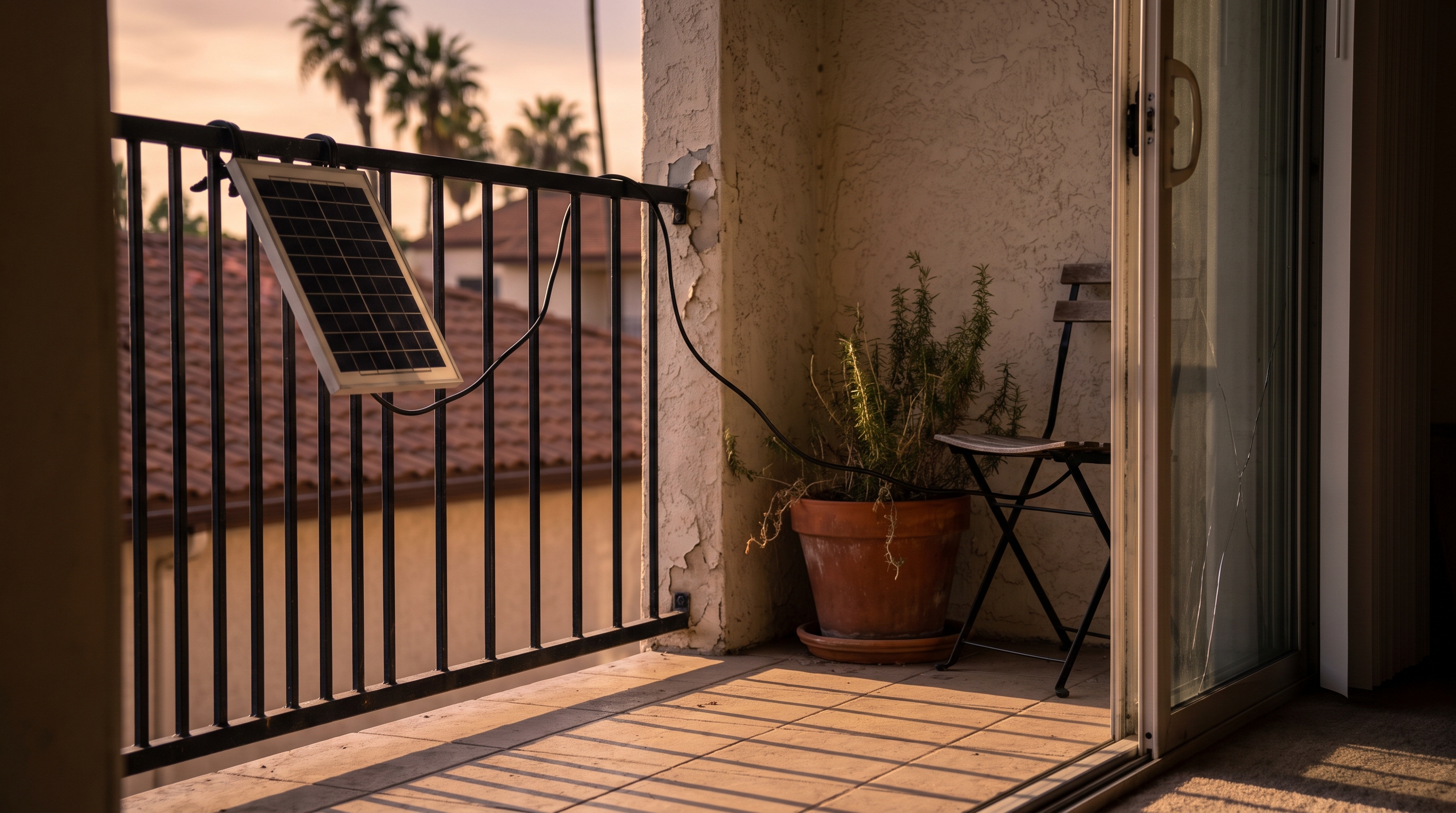
For renters and homeowners with a sunny balcony, patio or yard, balcony solar can be worth it in California, but probably not until 2027. Starting Jan. 1, 2027, SB 868 lets you plug a certified kit of up to 1,200 watts into a standard outlet with no utility approval or fees. Compliant kits are expected by spring 2027.
If you looked up balcony solar California rules after the news broke, the details below cover what the law allows, what a kit costs, what it can and can't power, and when rooftop solar is the better call.
What changed on Sept. 30
Gov. Gavin Newsom signed SB 868, the Plug and Play Solar Act, on Sept. 30, 2026. The bill was written by state Sen. Scott Wiener (D-San Francisco) and is now Chapter 985, Statutes of 2026. According to LAist, California is the 10th state to legalize plug-in solar. Utah was the first.
Here's what the law does, based on Electrek's breakdown and the CalMatters bill digest:
-
Size cap: up to 1,200 watts AC of combined output per household.
-
Connection: the system plugs into a standard 120V household outlet.
-
No utility hoops: utilities can't require an interconnection agreement, advance approval, or "any fee or charge related to the device."
-
Registration only: utilities may require "a simple online registration form" listing your address and the kit's make, model and size.
-
Effective date: Jan. 1, 2027, per Solar.com.
-
Sunset: the utility exemptions expire Jan. 1, 2030, when sales restrictions on qualifying portable PV devices take over.
For context, a PG&E representative told KQED that the old interconnection process would "cost between roughly $100 to $800 and take about an hour," with approval typically coming "through in three days." That paperwork and fee go away for qualifying kits.
Not everyone was on board. PG&E and SDG&E opposed the bill, citing safety and a concern that it would "shift energy costs to people without solar power in any form." Unions representing firefighters and PG&E workers moved to neutral once code compliance was written into the bill.
The timing catch: don't buy a kit yet
This is the most important point in the article. Solar.com reports that "no kit on the market yet meets every requirement in the bill, so Wiener's office expects compliant products to reach California shelves by spring 2027."
So if you see a plug-in kit on sale this fall, don't assume it will qualify once the law takes effect. A kit that doesn't meet every condition doesn't get the utility exemptions. The practical plan is to do your homework now, pick a spot, and buy a certified kit in 2027.
What makes a kit "qualifying"
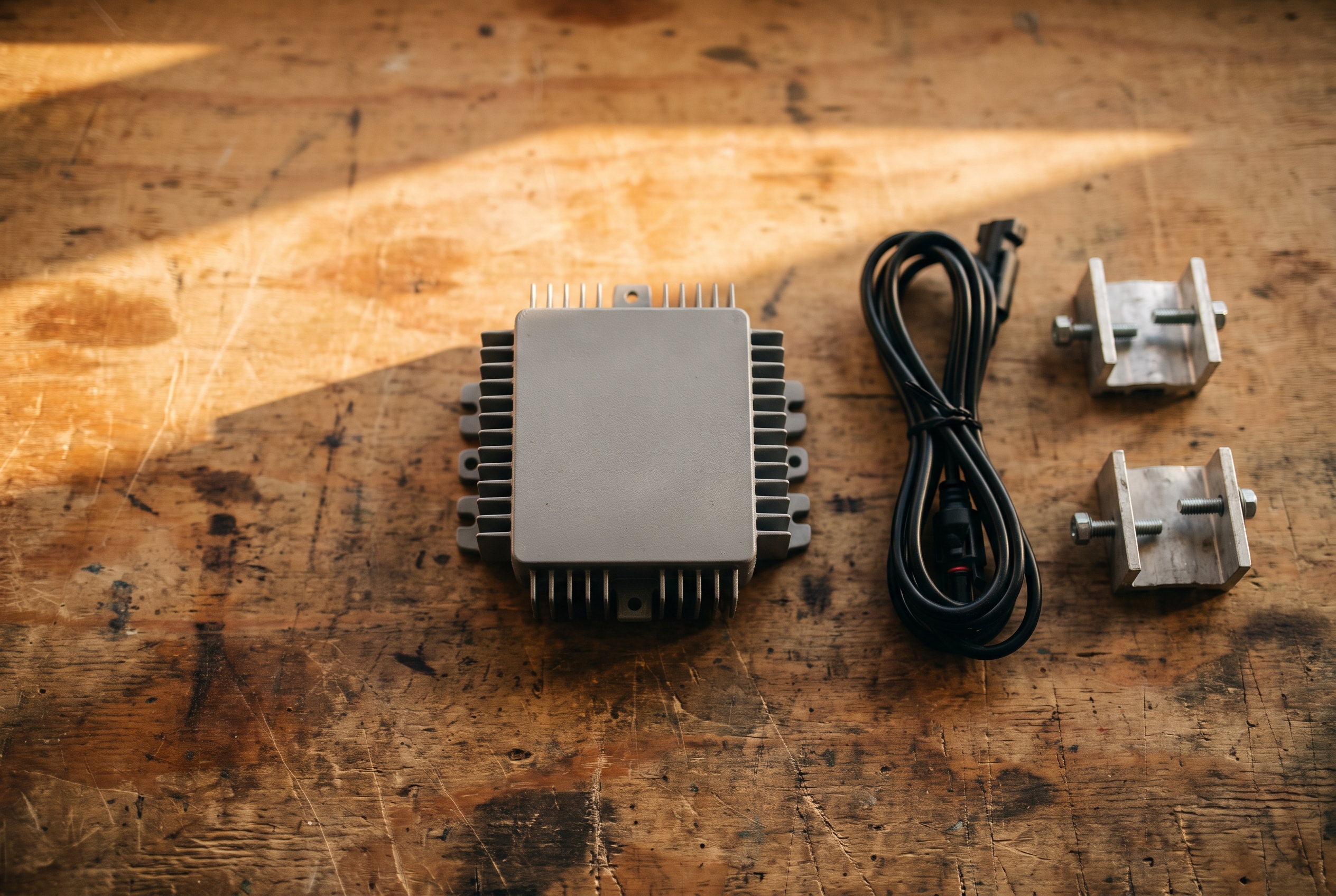
To get the law's protections, a system has to do all of the following (per Electrek and a code-focused reading of the bill by Wirewoman):
-
Stay at or under 1,200 watts AC per household.
-
Comply with electrical codes.
-
Be certified by Underwriters Laboratories (UL) or an equivalent nationally recognized testing lab as a plug-in PV system.
-
Include a certified feature that keeps it from sending power to the grid during an outage.
UL 3700 in plain English
UL 3700 is UL Solutions' plug-in solar standard, launched Jan. 8, 2026. According to Solar.com, it checks that:
-
The plug's prongs go dead within one second of unplugging, so nobody gets shocked grabbing the cord.
-
Output stops during a grid outage, which protects line workers.
-
Your wall wiring is protected from overload.
-
Ground faults cut the power.
As of Sept. 22, 2026, Solar.com lists these products with UL 3700 certification: the Hoymiles HiFlow Pro microinverter (the first, in July 2026), the APsystems EZ1 (CSA-certified to UL 3700), and the Mango Power S kit (four 300W panels). Keep in mind that a certified component isn't the same thing as a kit that checks every box in SB 868, which is why spring 2027 is the date to watch.
What a kit can realistically power
Set your expectations here. A plug-in kit is a bill trimmer, not a power plant. Solar.com puts it well: these systems "won't take you off the grid or backup your home during a power outage, but they chip away at the always-on loads from your fridge, router, and electronics."
The numbers from the sources:
-
Share of your usage: plug-in solar can meet up to about 20% of a home's electricity needs, with savings of up to $500 a year for a small apartment (LAist/KQED).
-
Production: "A plug-in kit in a sunny California location can produce 1,000 to 1,400 kWh per year" (Solar.com).
-
A small kit: Canary Media estimates a 360W kit saves about $150 a year in California (at 32¢/kWh), for roughly a three-year payback.
-
The author's estimate: Sen. Wiener's January 2026 press release put potential savings at up to $450 a year per household.
Why do these numbers look decent? California power is expensive. The EIA reports that California residential electricity averaged 33.61¢ per kWh in July 2026, up from 32.66¢ a year earlier, compared with 18.31¢ nationally. Some quick math of our own: at 33.61¢, Solar.com's low-end figure of 1,000 kWh a year would be worth about $336. That's the ceiling, though. Your real savings depend on how much of the kit's output your home uses as it's being produced.
Solar.com also offers a cost-per-unit view: a $1,000 kit producing 1,000 kWh a year "works out to about 10 cents per kWh over 10 years." Compare that with the 33.61¢ you're paying the utility and you can see why the math gets people's attention.
Kit cost vs. rooftop solar
Plug-in kits on the market today run about $300 to $2,200 depending on size (LAist/KQED). Wiener's office said systems are typically 200 to 1,800 watts and cost $400 to $2,000 without a battery.
One example of current pricing, from Canary Media (July 2026): the nonprofit Bright Saver sells a 180W kit for $285 (members) or $499 (non-members), and a 360W kit for $414 or $699. Membership is $29 a year. These are today's prices for today's kits, so treat them as a ballpark, not a quote for a 2027 SB 868-compliant product.
Rooftop solar is a different scale of project. EnergySage (October 2026) puts the California average at $2.52 per watt installed, or $21,178 for an 8.41 kW system before incentives (range $18,001 to $24,355), with a payback of 7.73 years. A 1,200W plug-in kit is about one-seventh the size of that average rooftop system.
Rooftop solar prices in three California regions
| Region | Price per watt | Average system | Average cost (range) | Payback |
|---|---|---|---|---|
| Los Angeles | $2.51 | 10 kW | $25,055 ($21,297 to $28,813) | 5.8 years |
| San Francisco | $2.56 | 8.15 kW | $20,870 ($17,740 to $24,000) | 8.19 years |
| Sacramento | $2.55 | 10.32 kW | $26,364 ($22,409 to $30,319) | 11.64 years |
| California average | $2.52 | 8.41 kW | $21,178 ($18,001 to $24,355) | 7.73 years |
Source: EnergySage. Los Angeles data as of Sept. 25, 2026; San Francisco, Sacramento and statewide as of October 2026. Prices are before incentives.
One more thing that changed the rooftop math: per EnergySage, the federal solar tax credit is no longer available for cash or loan purchases because it expired at the end of 2025. Lease and PPA providers may still claim it.
Where a kit can go (and what the law doesn't cover)
According to KQED, panels can "hang from a balcony, out a window, or be tented in the backyard." Owners' experiences vary: some found installation "straightforward," while others found it "more challenging than advertised."
Here's the part that matters before you hang anything. In Wirewoman's reading, SB 868 adds Public Utilities Code sections 8530 through 8532, "never uses the word permit," and exempts devices from utility interconnection rules only. It does not take away the authority of your city or county building department. The commentary also notes the bill does not address landlords, HOAs, fire code or balcony egress.
What that means for you:
-
Call your local building department and ask whether a plug-in kit needs a permit where you live.
-
Condo owners and HOA members: read your governing documents (CC&Rs and architectural rules) before buying.
-
Renters: check your lease and ask your landlord in writing.
-
Balconies: don't block your exit path or hang panels where they could interfere with fire safety.
Safety and the outlet question
Plug-in solar feeds power back through a regular household circuit, and that's where safety experts get cautious. MIT Technology Review reported in May 2026 that standard breakers may not respond properly when a panel adds power to a circuit, outdoor GFCI outlets may malfunction, and plug blades can stay energized. UL 3700 recommends specialized outlets.
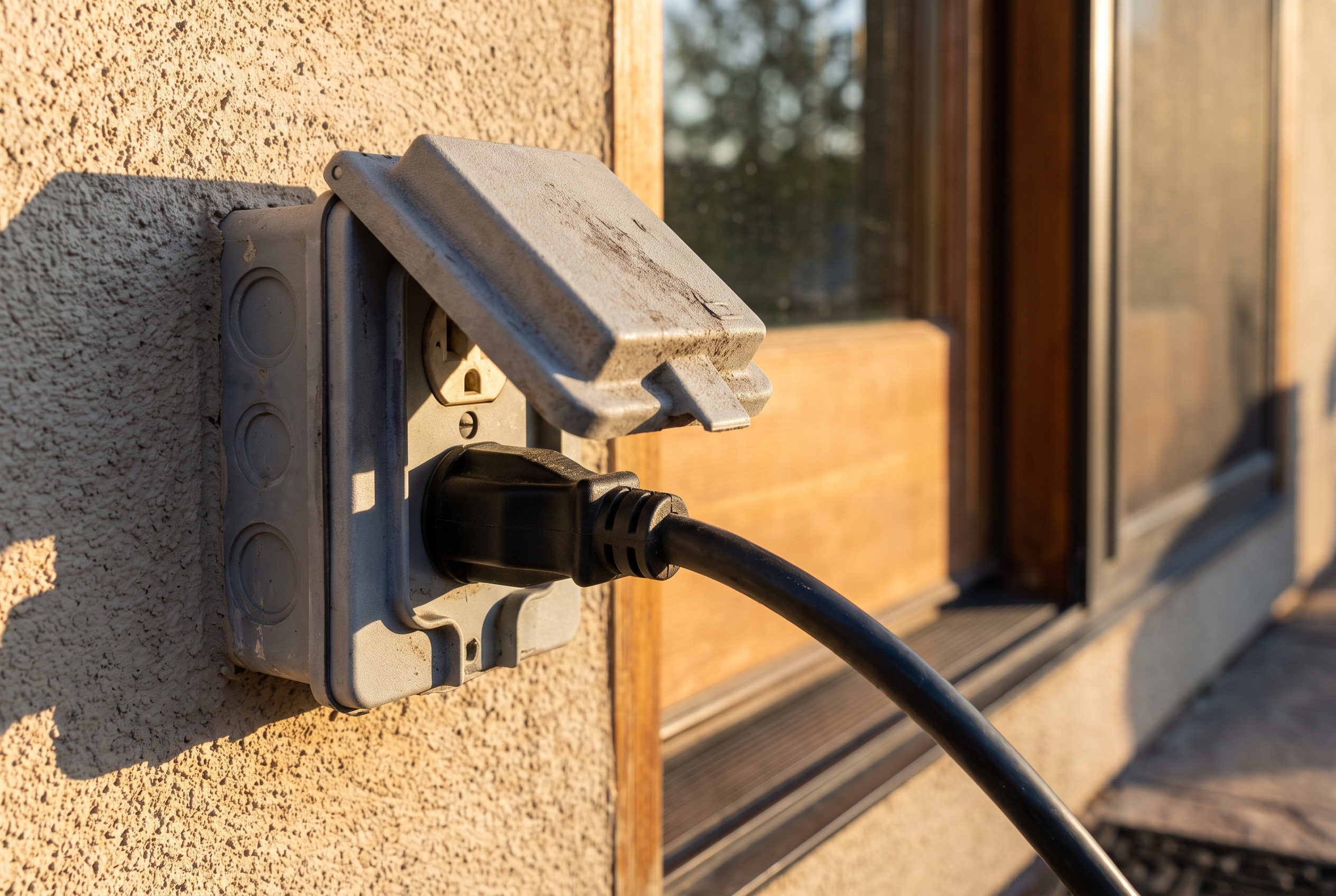
Joseph Bablo of UL Solutions put it bluntly: "I know they want to say No electrician, no permits," he said, then added, "we're not there."
Our take: even if the law doesn't require an electrician, hiring one to check the outlet and circuit you plan to use is money well spent. Ask them:
-
What else is on this circuit, and is it already heavily loaded?
-
Is this outlet in good condition, and is the outdoor GFCI working properly?
-
Would you recommend a dedicated or specialized outlet for a plug-in solar kit?
-
Do I need a permit for any changes you'd make?
That's typically a short service visit, and it's small compared with the cost of the kit.
Who should skip it (or wait)
Based on the numbers above, balcony solar probably isn't a good fit if:
-
Your only spot is shaded or north-facing. The production and savings estimates assume sunny California locations.
-
You own a good roof and are planning rooftop solar anyway. A 1,200W kit is about one-seventh the size of an average California rooftop system, so it won't replace one.
-
You want backup power. These kits shut off during outages by design.
-
You don't want to wait. Certified, compliant kits aren't expected until spring 2027, and buying a non-certified kit now is a gamble.
The bottom line: plan now, buy in 2027
If you rent, live in a condo, or your roof isn't suitable, balcony solar is one of the few ways to put solar to work for you. Pick a sunny spot, confirm your building, HOA or lease rules, and plan to buy a certified kit once compliant products arrive in 2027. Set aside some money for an electrician to check the outlet and circuit.
If you own a sunny roof and use a lot of power, get rooftop bids instead. Compare each quote's price per watt against EnergySage's regional averages ($2.51 in Los Angeles, $2.56 in San Francisco, $2.55 in Sacramento). Bids well above those numbers deserve a hard look, and remember the federal credit no longer applies if you pay cash or finance with a loan.
Ready to compare? You can request quotes from local licensed electricians or solar installers through Call The Local, with no obligation to hire.
Related reading
-
How to Prepare for House Painters Before Interior Painting Day
-
The Solar Company Still Offering You "30% Off" Is Claiming a Credit You Cannot
Sources
-
LAist: California officially legalizes balcony solar, opening the market to the new technology
-
KQED: California Officially Legalizes Balcony Solar, Opening the Market to the New Technology
-
Sen. Scott Wiener: press release introducing SB 868 (Jan. 6, 2026)
-
Solar.com: California Legalizes Plug-In Solar: Newsom Signs SB 868
-
Solar.com: UL 3700 Certification: Which Plug-In Solar Products Have This Safety Stamp?
-
Wirewoman: SB 868 exempts plug-in solar from your utility, not from your building department
-
Canary Media: A new deal on balcony solar just dropped in the US
Note: This article contains AI-assisted content and has been reviewed by our editorial team.
ABOUT THIS SERVICE: CallTheLocal.com is a directory and lead generation service, not a contractor or service provider. Submitting this form does not obligate you to hire anyone or purchase any service. Your information will be shared with licensed, insured home service professionals in your area who may provide quotes for your project. CallTheLocal.com does not guarantee the quality, timeliness, or outcome of any work performed by service providers you connect with through this service. Always verify licensing, insurance, and references before hiring. Get everything in writing before work begins.