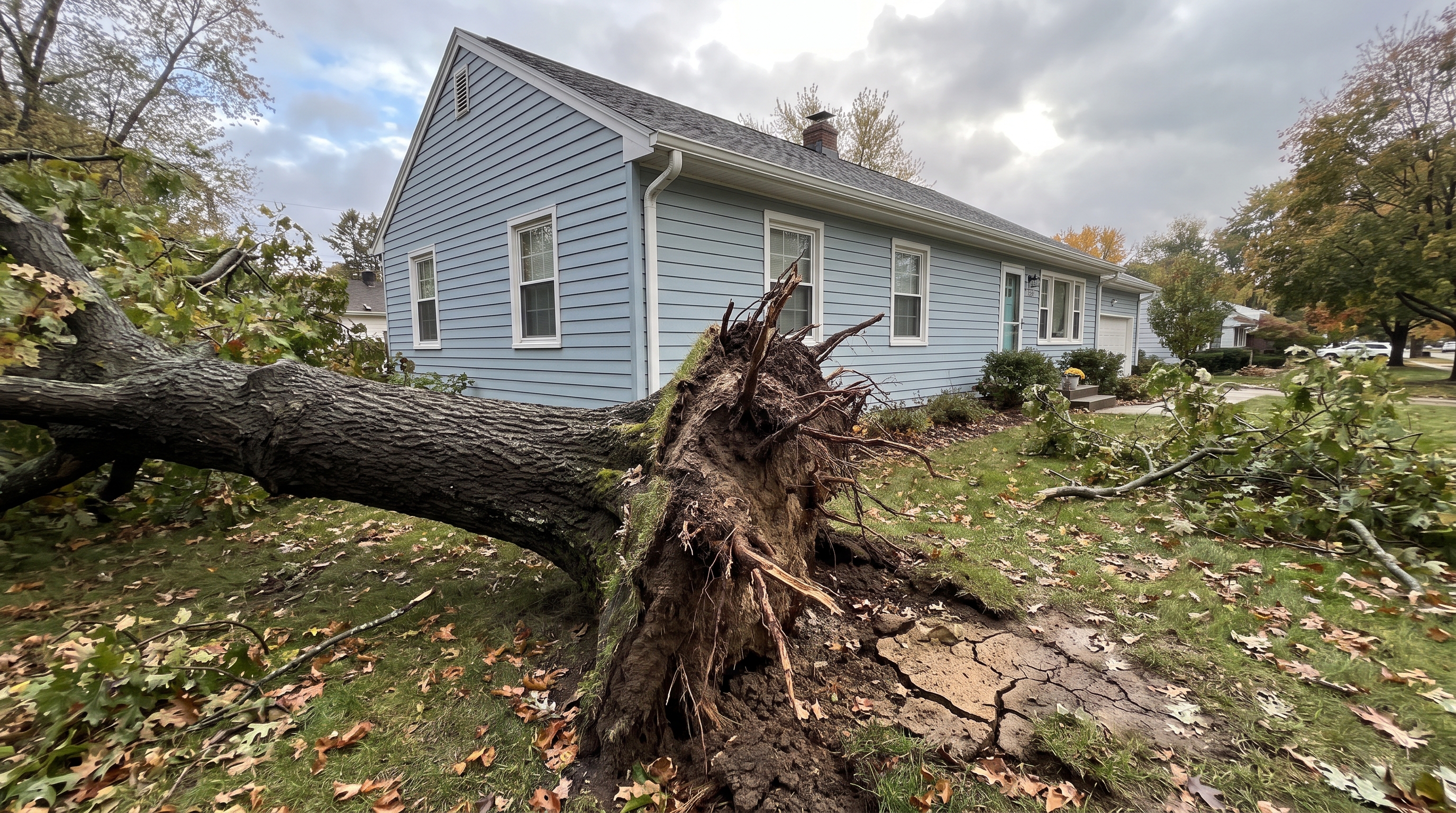
The nor'easter that hit on Sept. 26 and 27 pushed gusts to 81 mph at Montauk, according to CBS New York. Downed trees helped knock out power to about 100,000 customers across the region at one point, the AP reported. From New Jersey and Long Island up through New England, a lot of homeowners are now looking at a trunk lying across the lawn and asking two questions. Will insurance pay for it, and what is a fair fallen tree removal cost? If the tree hit nothing, the answer to the first question is usually no.
The storm was widespread. PSEG Long Island received "over 500 reports of fallen trees and over 250 reports of large fallen branches," per CBS New York, and a 56-year-old man was killed in Brooklyn on Saturday when a tree fell on him. In New England, the Boston Globe reported gusts topping 71 mph Saturday afternoon, with near-hurricane-force gusts in Wellfleet on Cape Cod and on Block Island. Early Sunday, more than 45,000 customers across New England were still without power. Treat every storm-damaged tree as dangerous until a pro has looked at it.
Does homeowners insurance pay to remove a fallen tree that hit nothing?
Usually not. A standard homeowners policy generally does not pay to remove a wind-thrown tree that didn't damage an insured structure.
The Insurance Information Institute (Triple-I) puts it plainly: "If the fallen tree did not hit an insured structure, there is generally no coverage for debris removal." The Connecticut Insurance Department says the same thing: "If the tree is blown over and does no damage to structures, there is generally no coverage for the tree and no coverage to remove the tree from the premises."
The main exception is blocked access. Triple-I notes that "some insurance companies may pay for the cost of removing the felled tree if it is blocking a driveway or a ramp designed to assist the handicapped." The Maine Bureau of Insurance agrees that some policies provide limited coverage for downed trees that block a driveway or limit access to a structure for a person with disabilities. If a tree is across your driveway, call your agent before you pay anyone.
When does insurance cover tree removal?
Coverage kicks in when the tree lands on something your policy insures. Triple-I says that if a tree hits your home or another insured structure, such as a detached garage, a standard homeowners policy covers damage to the structure and any damaged contents. That applies whether wind, lightning or hail brought the tree down.
Removal is covered in that case too, but only up to a limit:
-
Triple-I: generally up to about $500 to $1,000, depending on the insurer and the type of policy.
-
Connecticut Insurance Department: "Generally, the cost to remove the tree from the premises is covered up to $500 so long as the tree damages a covered structure or blocks a driveway on the premises."
Your deductible still applies. Progressive notes that covered tree damage is paid minus your deductible, so if the only loss is a modest removal bill, a claim may not be worth filing.
What about the tree itself? Don't expect a check for a lost oak. Triple-I says coverage for trees and shrubs is "generally limited to 5 percent of the amount of insurance on the structure of the house." It applies only to perils such as fire, lightning, explosion, theft, vandalism and malicious mischief. Wind isn't on that list, so a tree blown over in a nor'easter generally isn't covered as landscaping.
Who pays when a neighbor's tree falls?
In most cases, whoever's property got damaged claims on their own policy, no matter whose tree it was. Regulators don't treat it as a question of ownership.
The Connecticut Insurance Department says a tree falling in a storm is usually treated as an "Act of God," covered by the damaged owner's own property coverage. If your tree falls on a neighbor's property, "your neighbor should file a claim with their own insurer." The tree owner's liability coverage comes into play only if the neighbor sues and the owner is found negligent, for example for ignoring a dead or rotting tree. Maine's regulator says the same from the other side: if a neighbor's tree falls on your property, "typically, this would be covered under your homeowners or auto policy."
A few more points worth knowing:
-
Subrogation: Triple-I notes that "poor maintenance is not covered by homeowners insurance," and your insurer "may try to collect from the neighbor's insurance company in a process called subrogation," mainly when the tree was poorly kept or diseased.
-
Neighbor's tree, no damage: Progressive warns that "if a neighbor's tree falls in your yard without damaging anything, removing the fallen tree may become your responsibility, even if the tree was clearly dead or rotting."
-
Tree on your car: That goes to your auto policy, not your homeowners. Maine's regulator says auto insurance "would cover this damage if you carry comprehensive coverage."
How much does fallen tree removal cost?
A tree that's already down in open yard often costs less than people expect. Lawn Love lists $90 to $300 for removing a fallen tree. Prices rise with height, and they jump for emergency work or trees tangled in wires or resting on structures.
Here's how two 2026 national cost guides break it down:
| Job | This Old House | Lawn Love |
|---|---|---|
| Tree up to 30 ft | $150 to $450 | $285 to $435 |
| 30 to 60 ft | $450 to $1,200 | $435 to $870 |
| 60 to 80 ft | $800 to $1,500 | $870 to $1,160 |
| Over 80 ft | $1,000 to $2,000 | $1,160 to $2,000 |
| Already fallen | Not listed | $90 to $300 |
| Storm-damaged or diseased | Not listed | $400 to $1,000 |
| Emergency removal | Up to $5,000 | $450 to $3,000 |
| Stump removal | Usually extra | Extra $180 to $525 |
This Old House (updated 03/05/2026) puts the average removal at $906. Lawn Love gives a typical range of $385 to $1,070 and a national average of $850. These are national figures, so quotes in your area will vary. Right after a big storm, when every crew in the region is booked, expect bids to run higher than usual.
What moves the quote?
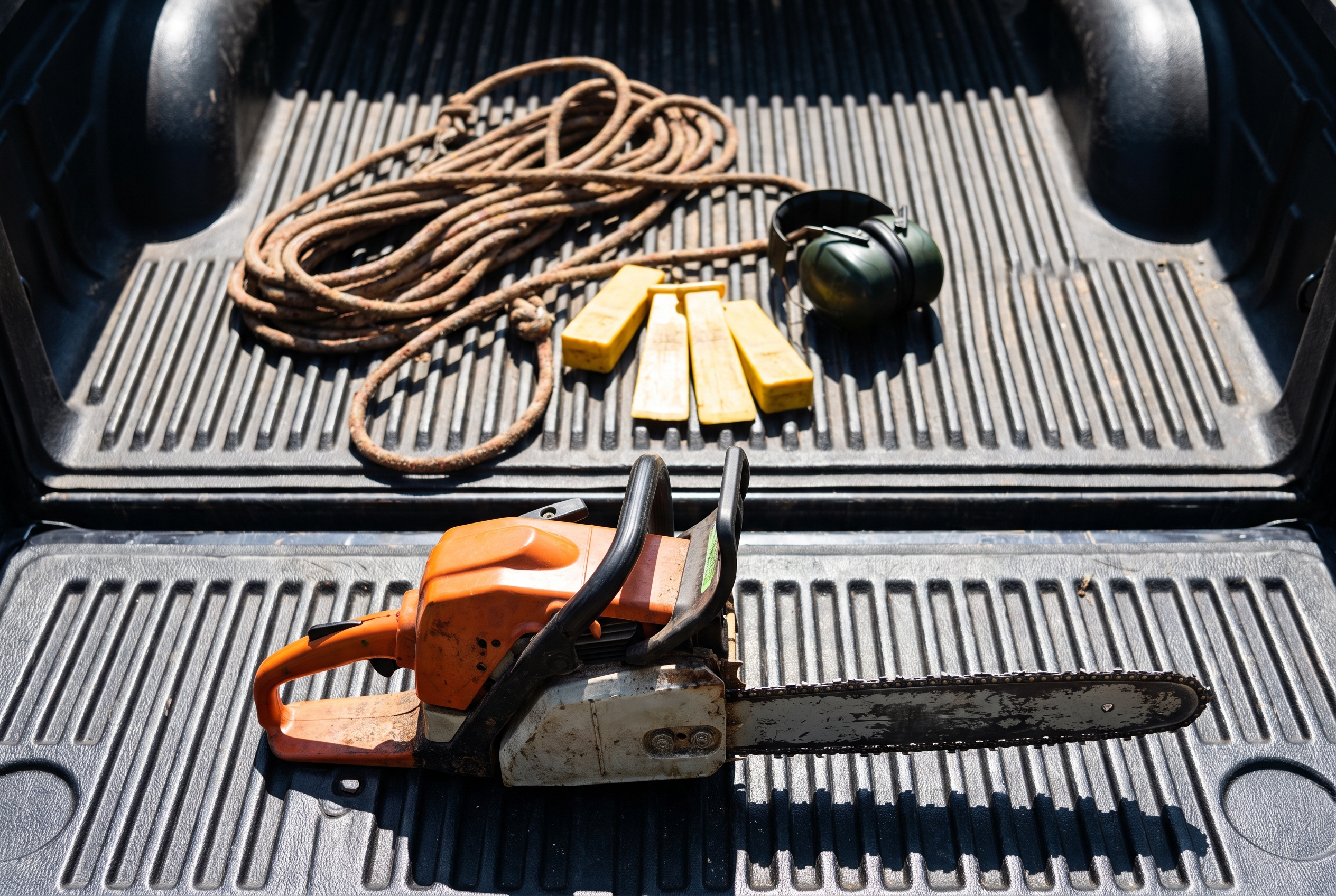
When you compare bids, these are the things that change the price:
-
Tree size: Height and trunk diameter drive how much cutting and hauling is involved.
-
Access: A tree in an open front yard is easier than one wedged behind a fence or between houses.
-
What it's touching: A tree resting on wires, a roof or another tree takes more rigging and care.
-
Urgency: Emergency calls cost more than a scheduled job next week.
-
Stump and haul-away: Ask whether grinding the stump, splitting the wood and hauling debris are included.
Ask each company to list cutting, stump grinding and haul-away as separate line items. That's the only way to compare two bids fairly, and it makes it easy to skip a line (keeping the wood for firewood, for example) to save money.
What to do before you call a tree service
-
Stay clear of wires. Never approach a tree that's touching a power line. Report it to your utility and keep kids and pets away.
-
Photograph everything. Take pictures of the tree, the stump or root ball, and anything it touched: fence, roof, car, driveway.
-
Read your declarations page. Look for debris removal or tree removal limits and your deductible. The Connecticut Insurance Department recommends reviewing it and documenting damage.
-
Call your agent if the tree hit a structure, blocks your driveway or blocks an accessibility ramp. Ask what the removal limit is before you sign with anyone.
-
Connecticut residents with claim questions can reach the Connecticut Insurance Department at (860) 297-3900 or (800) 203-3447.
How to hire a tree service after a storm
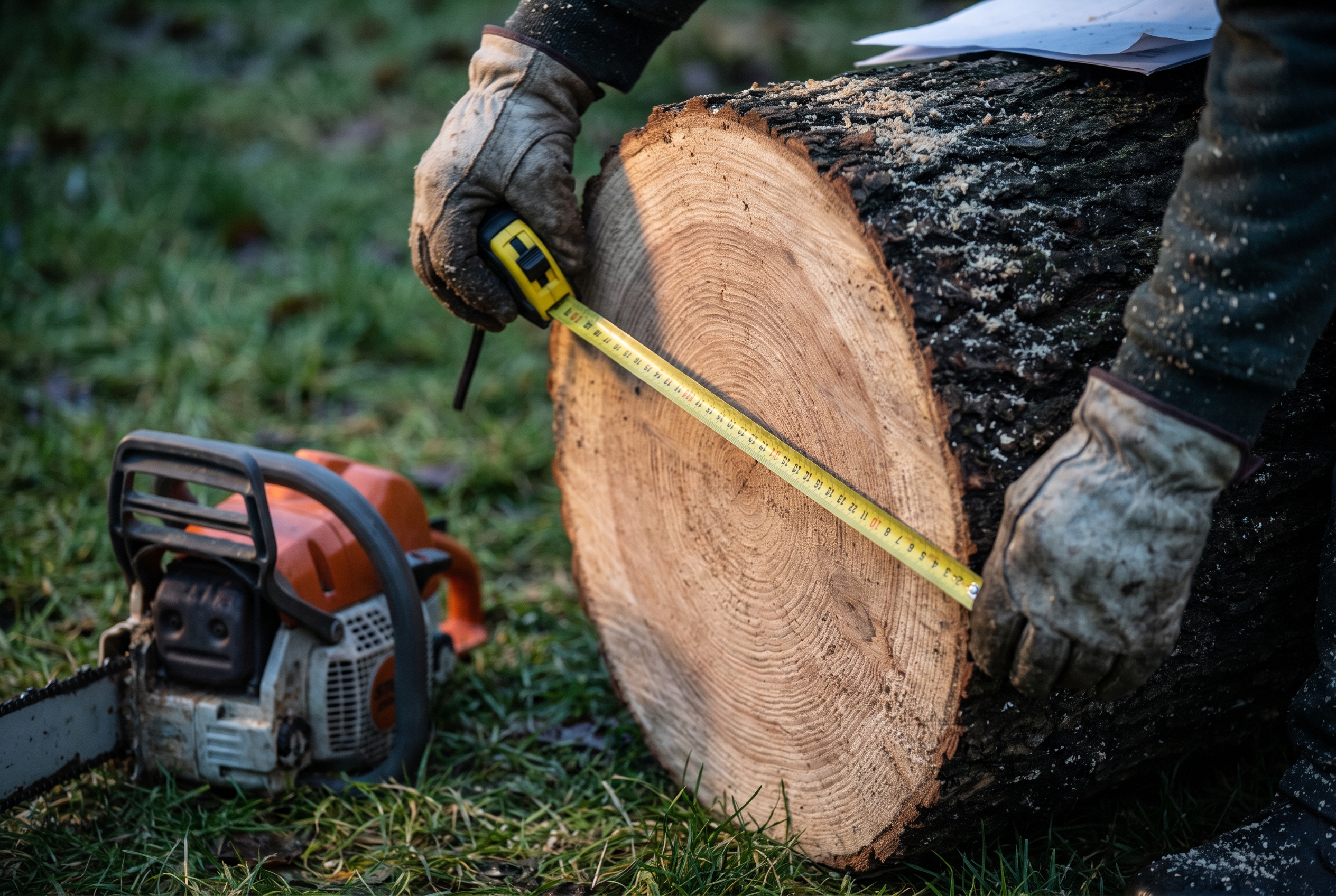
Big storms bring out door-to-door crews. The Tennessee Attorney General's consumer alert on tree removal scams offers advice that applies anywhere:
-
Be wary of people who knock on your door selling tree clean-up.
-
Be wary of anyone who wants full or large payment before work starts.
-
"Never pay with cash."
-
Ask for proof that the business is insured and that the policy covers tree services.
-
Get written estimates from several companies.
Red flags to walk away from: no written estimate, a price that changes once the saw is running, pressure to decide on the spot, or a crew that won't show you an insurance certificate. A legitimate company will be fine putting everything in writing.
So should you call your insurer or a tree service first?
It depends on what the tree hit.
-
It hit nothing: You're probably paying for removal yourself. Skip the claim, get two or three written bids from insured tree services, and compare them line by line. A tree that's already down in open yard may cost only a few hundred dollars.
-
It hit your house, garage or another insured structure, or it blocks your driveway: Call your insurer first. Know your removal limit and your deductible before you sign with a tree service, and keep every receipt.
-
It's on or near power lines: Call the utility, not a tree crew, and stay back.
Related reading
-
Belt, Chain or Wall-Mount Garage Door Opener: Which Is Quietest for the Money?
-
Your Lawn Can Go From Green to Brown in One Night: Fall Armyworms Are Feeding Right Now
Sources
-
Connecticut Insurance Department: Homeowners Storm Claims FAQs
-
Connecticut Insurance Department: Homeowners Storm Claims (knowledge base)
-
This Old House: How Much Does Tree Removal Cost? (2026 Pricing)
-
AP via Turn to 10: A persistent nor'easter battered the US Northeast
-
CBS New York: Nor'easter brings strong winds, rain, flooding to New York, New Jersey area
-
The Boston Globe: Fall nor'easter continues to batter New England for a second day
-
Tennessee Attorney General: Consumer Alert on Tree Trimming and Removal Scams
Note: This article contains AI-assisted content and has been reviewed by our editorial team.
ABOUT THIS SERVICE: CallTheLocal.com is a directory and lead generation service, not a contractor or service provider. Submitting this form does not obligate you to hire anyone or purchase any service. Your information will be shared with licensed, insured home service professionals in your area who may provide quotes for your project. CallTheLocal.com does not guarantee the quality, timeliness, or outcome of any work performed by service providers you connect with through this service. Always verify licensing, insurance, and references before hiring. Get everything in writing before work begins.