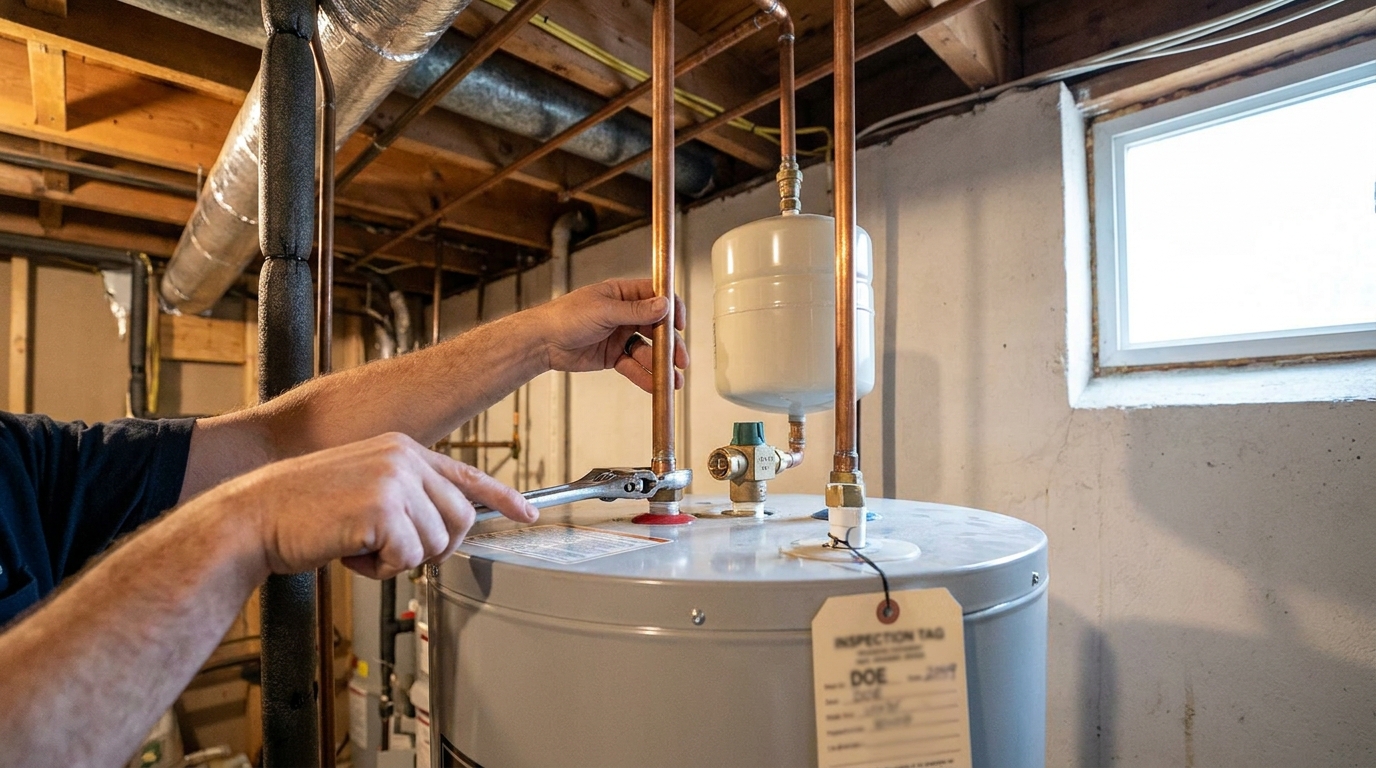
If a short video has told you that a "2026 rule" is about to force you to rip out your water heater and watch your bill double, take a breath. That claim is mostly wrong. Here is the one-line reality check: nothing about the new federal standard forces you to replace a working water heater at home, and the change everyone is panicking about is aimed at manufacturers of commercial equipment, not homeowners.
Let's walk through what the rule actually says, who it touches, what a replacement really costs in 2026, and how to tell an honest quote from a scare-tactic upsell.
What the 2026 rule actually is
The rule at the center of the viral claim is a U.S. Department of Energy (DOE) final rule that raises the minimum efficiency standard for gas-fired commercial water heaters. It applies to products manufactured on or after October 6, 2026. That is the key detail: it is a manufacturing standard, not a homeowner replacement mandate.
To meet the new bar, commercial gas storage units effectively have to use condensing technology and meet or exceed 95% thermal efficiency (96% for volume water heaters sold in the U.S.). In plain terms, the equipment that goes into office buildings, apartment boiler rooms, restaurants, and similar settings has to get more efficient going forward. Commercial electric and oil-fired units are not affected by this particular standard. You can read the trade association summary from the PHCC and the manufacturer detail from A. O. Smith.
Who it does and doesn't touch
Here is where the viral warning falls apart. The 2026 date is a commercial milestone. The residential side runs on a completely separate and much later timeline.
-
Residential gas tankless (gas instantaneous) heaters were specifically excluded from the main residential water-heater standard and pushed to a separate rulemaking. So the exact product a lot of homeowners are worried about was carved out.
-
The new residential standards (known as NAECA4) do not take effect until May 6, 2029, not 2026. When they do, they call for minor updates to gas storage units and heat-pump technology for electric storage units larger than 35 gallons. Details are on the A. O. Smith residential regulations page.
-
There is also a separate December 2024 DOE rulemaking that would require condensing (and effectively phase out non-condensing) gas tankless units, but that is dated to start in 2029, again future-dated and not a 2026 home mandate. Bradford White lays out the split between the commercial and residential timelines.
On top of that, DOE issued an Enforcement Policy Statement on April 24, 2026 that grants a one-year enforcement grace period on the new commercial thermal-efficiency standards, effectively running from October 6, 2026 through October 6, 2027. A trade explainer from BuildOps confirms the commercial-only scope and that grace period.
Nobody is forcing you to replace a working heater
This is the part worth repeating, because it is the direct answer to the scary version of the story. There is no rule that forces replacement of a functioning residential water heater. The changes govern what manufacturers may produce and sell, and they are phased in over several years.
A few specifics that undercut the "replace it now" pressure:
-
The standard is not retroactive. Your existing heater is fine.
-
Even on the commercial side, units manufactured before October 6, 2026 can still be installed after that date. Existing stock does not become illegal overnight.
-
The residential dates that matter to most homes are years out (2029), not this year.
So if your water heater is working, the honest guidance is simple: do nothing because of this rule. Replace it on its own timeline, when it fails or when you decide to upgrade.
Real cost ranges for a replacement today
When you do replace, that is where real money comes in, and it has little to do with the DOE rule. Here are 2026 installed price bands to plan around, drawn from current cost comparisons (Plumbing Sniper, Rheem):
-
Standard 40 to 50 gallon tank: roughly $600 to $3,100 installed.
-
Gas tankless: roughly $1,800 to $5,500 installed, with gas installs often landing in the $3,000 to $5,000 range.
-
Heat-pump water heater: roughly $1,200 to $3,500 installed, higher in expensive metro areas.
Why such wide spreads? The type of unit is only part of it. The rest is your home's specifics: fuel type, venting, where the heater sits, whether gas or electrical service needs upgrading, local permit costs, and any code items your setup triggers (more on those below). If you want neutral background on how tankless units save energy, the DOE has a plain-language tankless water heater guide.
Why bills feel higher anyway
If out-of-pocket costs for efficient units feel higher this year, there is a real reason, and it is not the DOE efficiency rule. The Section 25C Energy Efficient Home Improvement tax credit, which was worth up to $2,000 for heat-pump water heaters, expired December 31, 2025. That credit had been softening the sticker price on heat-pump units. With it gone, homeowners feel more of the full cost directly. That is a policy change worth knowing about, but it is separate from the manufacturing standard the viral clip is talking about.
Legit code add-ons that raise an honest quote
Not every extra line on a quote is a gimmick. Plumbing code drives several add-ons that legitimately raise an install price. Knowing them helps you tell a fair quote from a padded one (consumer summary via Angi, code text via UpCodes):
-
Expansion tank on a closed system (about $90 to $350): Required when a backflow preventer, check valve, or pressure-reducing valve creates a closed system. Heated water expands up to about 4%, which raises system pressure, and the expansion tank absorbs it.
-
Seismic strapping in earthquake regions (about $100 to $150): Code typically requires two straps, one in the upper third and one in the lower third of the tank, with the bottom strap at least 4 inches above the controls. Units over 52 gallons usually need a third strap.
-
Permits and backflow or PRV considerations: A pulled permit and inspection is normal and protects you. Backflow and pressure-reducing valves may factor into whether you need that expansion tank.
Seeing these on a quote is a good sign, not a bad one. It usually means the plumber is installing to code.
How to spot a scare-tactic upsell
Now the red flags. Use these to separate an honest pro from someone leaning on the viral rumor to rush you:
-
Red-flag phrases: "A new law requires you to replace this now," or "You have to swap before the 2026 rule hits." As covered above, no such home mandate exists. That line is a pressure tactic.
-
Vague, lump-sum pricing: A trustworthy quote is itemized. You should see the unit, labor, any expansion tank, strapping, venting, permit, and disposal broken out. If it is one big number with no breakdown, ask for detail.
-
Urgency with no cause: If your current heater works and there is no leak or safety issue, there is no regulatory clock forcing you to act today.
Good questions to ask a plumber: Is my system closed, so do I actually need an expansion tank? Is seismic strapping required in my area? Is a permit included? Can you itemize the quote? Why this size and fuel type for my household? Straight answers to those questions tell you a lot.
Bottom line and homeowner checklist
The viral "2026 rule doubles your bill and forces a swap" claim conflates a narrow commercial manufacturing standard with a home mandate that does not exist. Here is what to actually do:
-
Do nothing to a working heater just because of this rule. It is not retroactive and it does not target your home.
-
Plan replacement on its own timeline, based on the age and condition of your unit, not on a rumor.
-
Budget for legitimate code items like an expansion tank or seismic strapping where they apply.
-
Get itemized quotes and compare at least two or three before you hire.
-
Know that the expired heat-pump tax credit, not the DOE standard, is the real reason efficient upgrades cost more out of pocket in 2026.
When your heater does reach the end of the road, you will make a better call with real numbers than with a countdown clock someone invented for clicks.
Related reading
-
[Free Roof in Exchange for Solar Panels? A $275 Million Fraud Case and 7,000 FTC Complaints Say Read the Contract First](/guides/free-roof-solar-panels-fraud-case-read-contract-first)
Sources
-
DOE Final Rule on Commercial Water Heater Efficiency Standards Takes Effect in 2026 (PHCC)
-
What Contractors Need to Know About the 2026 Commercial Water Heater Requirements (BuildOps)
-
DOE NAECA4 Residential Regulations for Water Heaters (A. O. Smith)
-
Tankless or Demand-Type Water Heaters (U.S. Department of Energy)
-
Heat Pump Water Heater vs Gas Tankless: Complete 2026 Comparison (Rheem)
-
Tankless vs Tank Water Heater Cost 2026: Full Comparison (Plumbing Sniper)
-
Water Heater Installation Code Requirements: A Complete Guide (Angi)
Note: This article contains AI-assisted content and has been reviewed by our editorial team.
ABOUT THIS SERVICE: CallTheLocal.com is a directory and lead generation service, not a contractor or service provider. Submitting this form does not obligate you to hire anyone or purchase any service. Your information will be shared with licensed, insured home service professionals in your area who may provide quotes for your project. CallTheLocal.com does not guarantee the quality, timeliness, or outcome of any work performed by service providers you connect with through this service. Always verify licensing, insurance, and references before hiring. Get everything in writing before work begins.