The roofing scams 2026 has produced so far mostly fall into a few familiar patterns, and three October cases cover the big ones. In North Carolina, a roofer is charged with faking storm damage for an insurance claim. In Ohio, the attorney general is suing two companies accused of taking money for roofs they never finished or never started. In Connecticut, a roofing company owner was arrested after inspectors allegedly found crew members who had been left off the company's insurance policy.
One thing to keep in mind as you read: these are charges and lawsuits, not convictions. Everyone named is presumed innocent. What the cases do well is show you exactly where a homeowner can catch the problem before it costs anything. Each one comes with a red flag, a fix, and a phone number or website to use.
Case 1: North Carolina, and 20 bent shingles
On Oct. 12, the North Carolina Department of Insurance (NCDOI) announced three felony charges against Cameron Alexander Hammond, 34, of Vanceboro: insurance fraud, attempting to obtain property by false pretense, and damage to residential property.
NCDOI says that while working for Carolina Trophy Roofs, Hammond allegedly damaged shingles at a home in Washington, NC on Aug. 18. He then allegedly told North Carolina Farm Bureau and the North Carolina Joint Underwriters Association that the damage came from weather, in order to collect insurance money and a commission on a roof replacement.
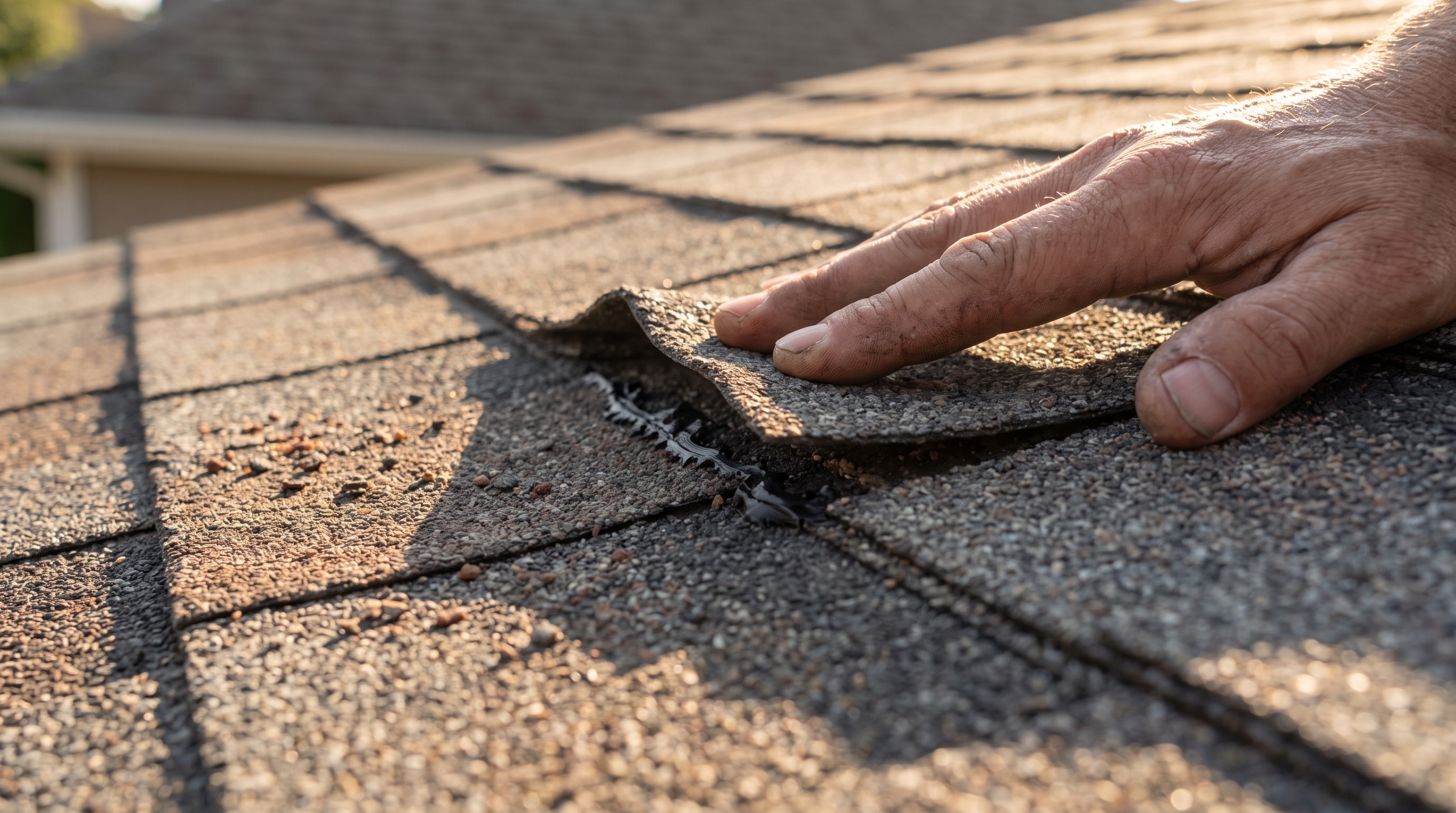
According to Insurance Journal, the arrest warrant says the roof was in good condition until Hammond lifted and bent 20 shingles, breaking the seal and creasing them so they looked wind damaged. Insurance Journal also reports that the house was a "bait house," a sting set up by the NCDOI investigations division and NC Farm Bureau.
Hammond was released on a $5,000 secured bond and is scheduled to appear Dec. 17 in Beaufort County District Court, according to NCDOI and WCTI12.
The company's response, as reported by Insurance Journal: general manager Patrick Brownstone said Hammond had worked there about five weeks before the August incident and was fired when the company learned of the charges. "If you hire enough people, sooner or later you're going to get a bad apple," Brownstone said. The company has offered to pay for repairs to the roof.
This is not the first bait house in the state. In December 2025, NCDOI announced charges against Robert Allen Bentley, 36, of Charlotte, a project manager with A&M Premier Roofing & Construction, over bent shingles on a Wake County home. Same insurer partnership, same kind of alleged damage.
Why it matters for your premium: Insurance Commissioner Mike Causey said in the NCDOI release that "property and casualty insurance fraud costs insurance customers an estimated $120 billion a year in increased premiums."
How do roofers fake storm damage, and how do you stop it?
Short answer: don't let a roofer up on your roof alone before your insurance adjuster has seen it. If the first person to inspect the roof is the one who profits from a replacement, you have no baseline to compare against.
NCDOI's guide to avoiding predatory roofing scams puts it plainly: "If you suspect damage after a storm, call your insurance company first and ask for an adjuster to take a look at your roof before allowing anyone else up there." The same page warns: "Always be suspicious of contractors who show up unsolicited, often after storms."
Practical steps after a storm:
-
Call your insurer before you call a roofer, and ask for an adjuster inspection.
-
Take your own photos of the roof from the ground (and of any shingles in the yard) before anyone climbs up.
-
Politely decline free inspections from crews knocking on doors in your neighborhood.
-
If a roofer does go up, ask for photos of each damaged spot and compare them with what the adjuster finds.
Who to call in North Carolina: NCDOI Criminal Investigations Division, 919-807-6840 or 888-680-7684 (toll-free within NC). You can report anonymously, or file online at ncdoi.gov.
Case 2: Ohio, and $140,000 in unfinished work
On Oct. 14, Ohio Attorney General Andy Wilson announced a lawsuit in Lorain County Common Pleas Court against Journey Home Restoration and its owner, Jason Kaczur, under the Ohio Consumer Sales Practices Act. The suit alleges nine consumers paid a combined $140,000 for roofing, siding and gutter projects that were never completed.
News 5 Cleveland reports the suit also alleges the company abandoned a roofing job partway through, and did not honor a 10-year warranty when a roof it installed leaked within three years. News 5 reports the Better Business Bureau rates the company "F," and BBB's Ericka Dilworth said "the business has chosen not to respond" to complaints since April. The station also reports the company is no longer operating.
Hoodline reports that the filing accuses Kaczur of soliciting customers through church congregations by promising savings on church roof repairs. That is a reminder that a referral from a trusted group is not the same as a vetted contractor.
A second suit, filed in Franklin County Common Pleas Court, targets The Metal Roof Company of central Ohio and owner Danile Toland. Five consumers report combined losses of more than $60,000, with allegations of substandard roofing, ignored complaints, and payment taken for a roof installation that was never started. Together, as Insurance Journal also reported, the two cases involve more than $200,000 from 14 consumers.
"When Ohioans pay for contractors to repair their homes, they trust those contractors to follow through. Not doing the work is not acceptable," Wilson said.
How much deposit should a roofer ask for?
Short answer: a small one, roughly 10 to 20 percent, with most of the money due after the work is done. Both state agencies in this story land in that range.

The Ohio AG's Consumer Protection FAQs suggest paying "a reasonable down payment," perhaps 20 percent of the total cost, and to "reserve final payment until the job is fully completed to your satisfaction." NCDOI says a small deposit of 10 to 20 percent may be standard, "but most of the payment should come after work is completed to your satisfaction."
What that looks like on a real bid:
-
Deposit: a modest share at signing, with a receipt. The Ohio AG says: "Always get a receipt for partial payments or deposits."
-
Middle payments: tied to visible milestones (materials delivered to your driveway, tear-off finished), not to calendar dates.
-
Final payment: held until the roof is finished, the site is cleaned up, and you have the warranty in writing.
-
Cooling-off period: in Ohio, "if you sign a contract in your home, then you have three business days to cancel it, in writing."
If a contractor wants half or more before a single shingle comes off, treat that as a reason to get another bid.
Who to call in Ohio: the Ohio AG Consumer Protection Section at OhioProtects.org or 800-282-0515.
Case 3: Connecticut, and crews left off the policy
On Oct. 15, inspectors from the Workers' Compensation Fraud Control Unit in Connecticut's Office of the Chief State's Attorney arrested Luis Pomaquiza, 42, of Southington, owner of LA Roofing, LLC in Middletown. He is charged with defrauding a workers' compensation insurance carrier, according to the Division of Criminal Justice release and Patch.
In a joint operation with the state Department of Labor's Wage & Workplace Standards Division, inspectors visited roof-replacement sites in Southington and found the company had multiple employees working who were not reported to its insurance carrier. To be precise: the company had an insurer, but crew members were allegedly left off the policy. Pomaquiza was released on a $10,000 non-surety bond, with an Oct. 20 date in Middletown Superior Court. He is presumed innocent.
The same sweep shows why this matters to homeowners. Jordan Tyler, 36, owner of J.A.T. Builders, LLC in East Hartford, was charged with noncompliance with insurance requirements after an employee was hurt while the company had no active workers' comp policy. The state's Second Injury Fund was ordered to pay more than $25,000 in benefits. Insurance Journal also covered the arrests.
How do I check if a roofer is licensed and insured?
Short answer: look it up yourself in the state database instead of taking "we're insured" on faith. A certificate a contractor hands you shows what they want you to see. A state lookup shows what is on file.
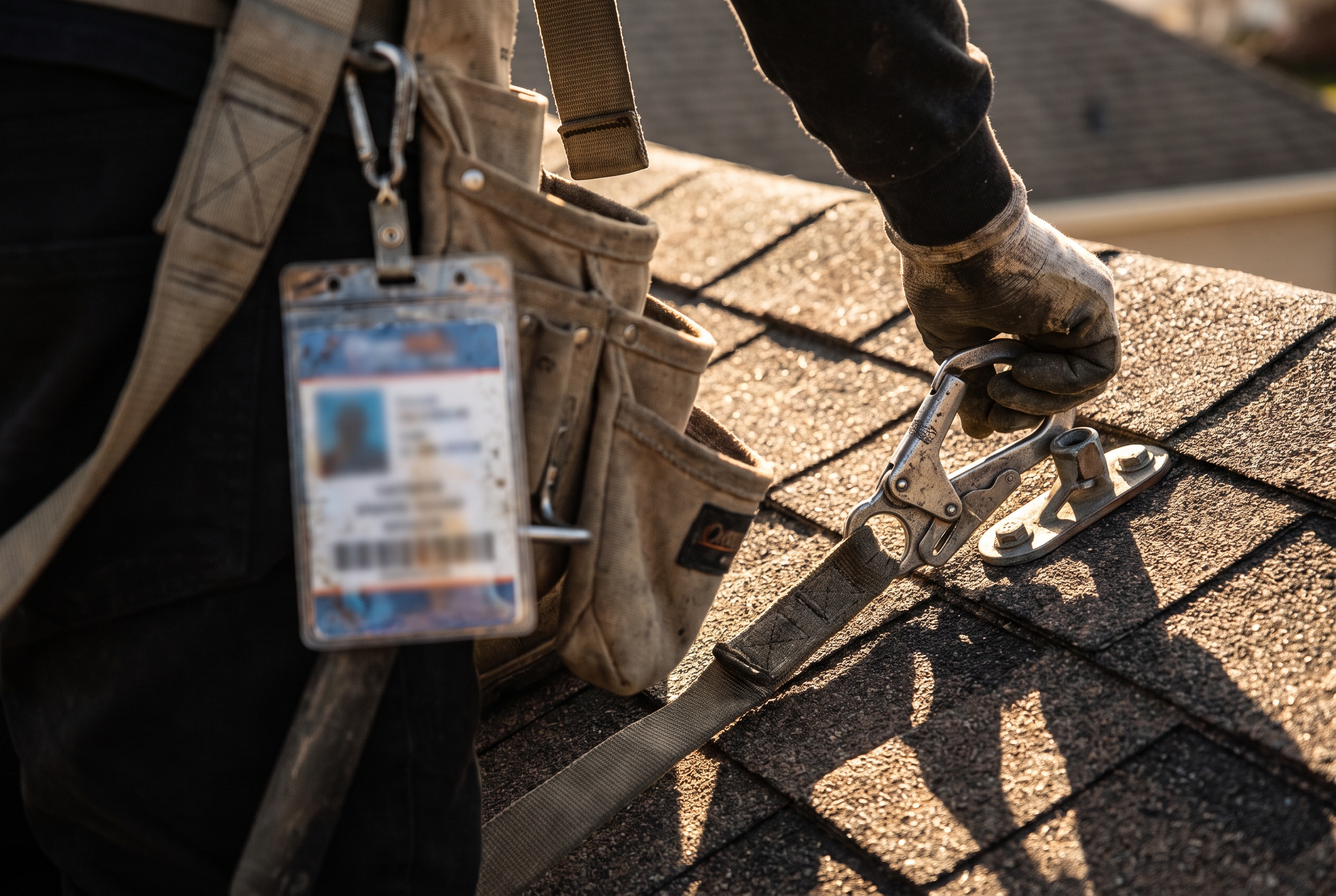
In Connecticut, the Department of Consumer Protection (DCP) says: "All roofing companies must have an active 'Home Improvement Contractor' registration with DCP." Here is the check:
-
Registration: search the company at elicense.ct.gov.
-
Workers' comp: use the CT Workers' Compensation Commission's Coverage Verification Service, which lets anyone check online whether a business has traditional workers' comp coverage. It does not cover self-insured employers or those insured through a mutual self-insurance organization, so if a company does not show up, ask them which applies.
-
Contract: DCP's roofing scam advisory says "all home improvement projects, including roofing repairs, must have a written and signed contract."
-
Crew size: it is fair to ask how many people will be on your roof and whether all of them are employees covered by the policy.
Using a registered contractor also matters if things go wrong. DCP says the Home Improvement Guaranty Fund can reimburse up to $25,000 per contract when there are problems with an actively registered contractor, and its consumer page explains the fund helps homeowners who hold a court judgment against a contractor who cannot pay them back.
Who to call in Connecticut: DCP at dcp.complaints@ct.gov or ct.gov/dcp/complaint.
Who do I report a roofing scam to?
Start with the state agency that oversees the problem. For insurance claim fraud in North Carolina, that is NCDOI (919-807-6840 or 888-680-7684). For money taken for unfinished work in Ohio, it is the attorney general (800-282-0515 or OhioProtects.org). For unregistered contractors or contract problems in Connecticut, it is DCP (dcp.complaints@ct.gov). Keep your contract, receipts, texts and photos together before you call.
A three-question check before you sign any roof contract
Trade outlet Roofing Contractor rounded up these three cases together, and they boil down to three questions you can ask at the kitchen table:
-
Has my insurer's adjuster seen the roof? If not, call your insurer before anyone else climbs up.
-
Is the deposit small and receipted, with most of the money due on completion? Somewhere around 10 to 20 percent up front is the benchmark both NC and Ohio regulators point to.
-
Can I confirm the registration and insurance myself in a state database? If you can't find the company, or the contractor gets vague when you ask, keep looking.
If you can answer yes to all three, you are in a much stronger position to compare bids on price and quality, which is where the decision should be.
Related reading
-
Burst Pipe Repair Cost, From the Plumber's Visit to Drying Out the Drywall
-
Fence Installation Checklist: Survey, Permit, Utility Marks and HOA Approval
-
How to Get Your Roof Ready Before El Niño Storms Hit California
-
What Should an Emergency Roof Tarp Cost After Hurricane Isaias?
-
Flat Roof Leak After Heavy Rain? What to Check in Phoenix and Albuquerque as Polo Moves Through
Sources
-
NCDOI: Craven County man charged with insurance fraud in roofing scam (Oct. 12, 2026)
-
WCTI12: Vanceboro roofer charged after alleged Aug. 18 roof damage at Washington home
-
NCDOI: Charlotte man charged in Wake County roofing scam sting (Dec. 12, 2025)
-
Ohio Attorney General: Wilson Sues 2 Home-Improvement Companies (Oct. 14, 2026)
-
News 5 Cleveland: Ohio Attorney General sues 2 home-improvement companies
-
Hoodline: Lorain County Contractor Sued Over $140K in Unfinished Work
-
Insurance Journal: Ohio AG Sues Home-Improvement Companies (Oct. 16, 2026)
-
Patch: Southington Man Accused Of Workers' Comp Fraud: State
-
Roofing Contractor: Roofing Fraud Cases Bring Lawsuits, Arrests in 3 States
-
CT DCP: Be Aware of Scammers Posing as Roofing Companies (July 14, 2025)
-
CT Workers' Compensation Commission: Coverage Verification Service
Note: This article contains AI-assisted content and has been reviewed by our editorial team.
ABOUT THIS SERVICE: CallTheLocal.com is a directory and lead generation service, not a contractor or service provider. Submitting this form does not obligate you to hire anyone or purchase any service. Your information will be shared with licensed, insured home service professionals in your area who may provide quotes for your project. CallTheLocal.com does not guarantee the quality, timeliness, or outcome of any work performed by service providers you connect with through this service. Always verify licensing, insurance, and references before hiring. Get everything in writing before work begins.