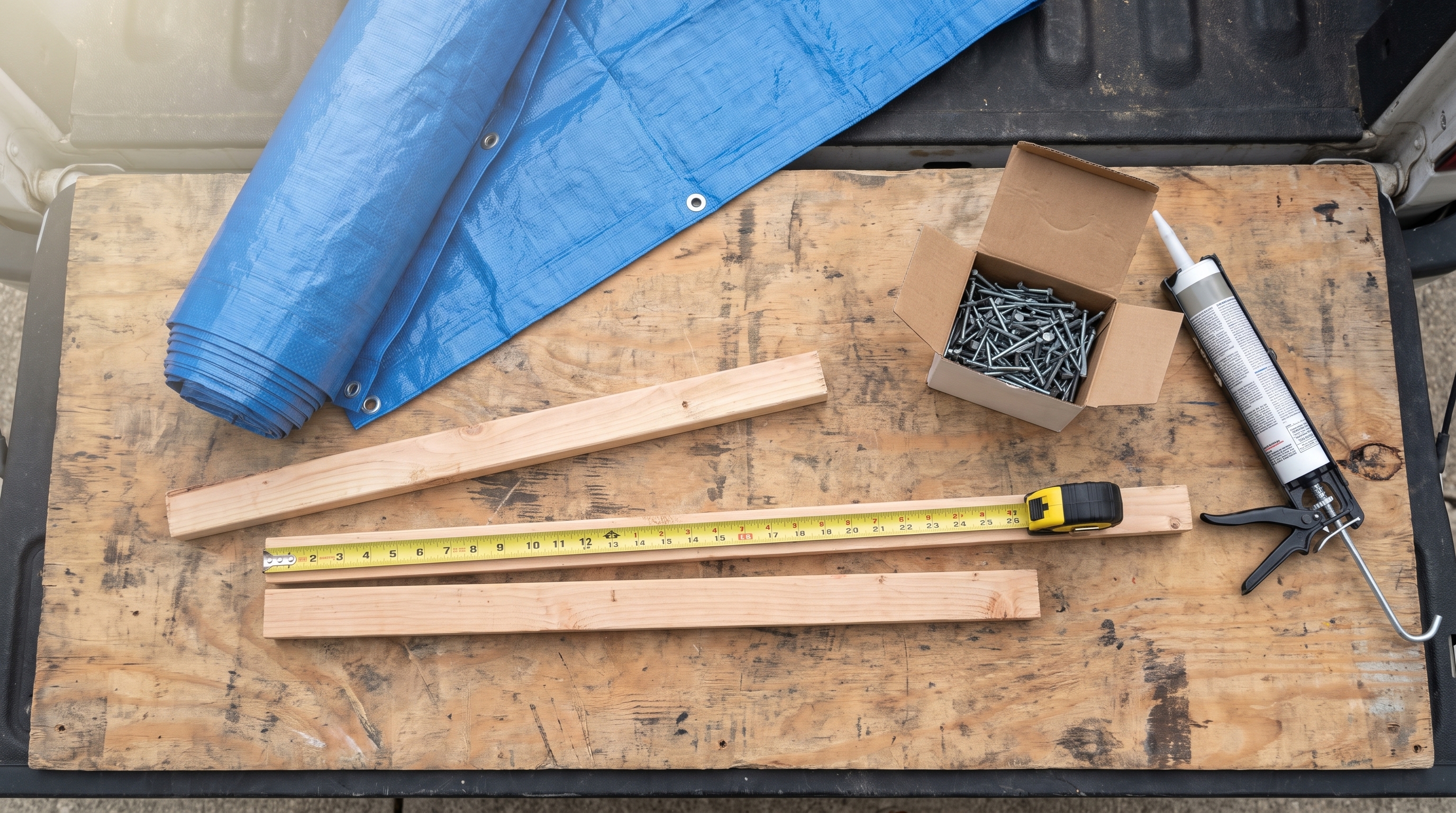
A typical emergency roof tarp costs about $450 for a professional job, according to one Florida roofer's 2026 guide. Its full range runs from $150 to $3,300, and emergency service runs $1.00 to $2.80 per square foot. After Isaias, Alabama and Florida gouging laws compare your quote with the local average price from the 30 days before the emergency was declared.
Hurricane Isaias is forecast to make landfall late Friday or early Saturday along the northern Gulf Coast, most likely in Alabama and the western Florida Panhandle. FOX10 in Mobile reported Thursday that the storm could briefly reach Category 3, with maximum sustained winds forecast at 115 mph. For the Pensacola area, the station forecast sustained winds of 65 to 85 mph, gusts up to 115 mph, and 4 to 8 inches of rain, with some spots getting up to 15 inches. Hurricane Warnings cover Mobile, Baldwin and Escambia counties, and storm surge of 5 to 7 feet is forecast from Dauphin Island to Indian Pass.
Once the wind drops, tarp crews will be out in force. Many of them will be honest, some won't be, and a few will be pricing for panic. Here's how to tell what a fair tarp job costs, what it should include, and how to protect your insurance claim.
The fair-price test is already law in both states
Both states declared emergencies this week, and that puts their price-gouging laws in effect. The good news for homeowners is that both laws use the same yardstick: the average price in your area during the 30 days before the declaration.
Alabama: the 25% rule
Gov. Kay Ivey declared a state of emergency for 40 Alabama counties on October 7, effective at 4 p.m. that Wednesday for seven days unless changed, WSFA reported. "At this moment, forecasts continue to show the real likelihood that the tropical system brewing in the Gulf could impact Alabama as a hurricane as early as Friday," Ivey said. The declaration triggers the Alabama Unconscionable Pricing Act.
According to the Alabama Attorney General, "a price that is 25 percent or more above the average price charged in the same area within the last 30 days" is prima facie unconscionable unless a reasonable cost explains it. Violations can bring penalties of up to $1,000 each, and willful repeat violators can be barred from doing business in the state.
Here's a quick illustration. If tarp jobs in your area averaged $450 over the past month, a quote of about $563 or more would cross the 25% line. The contractor would then need to show a real added cost, such as extra materials or a hard-to-reach roof, to justify it.
Florida: the "gross disparity" rule
Gov. Ron DeSantis declared a state of emergency for 25 Florida counties: Baker, Bay, Calhoun, Columbia, Dixie, Escambia, Franklin, Gadsden, Gilchrist, Gulf, Hamilton, Holmes, Jackson, Jefferson, Lafayette, Leon, Liberty, Madison, Okaloosa, Santa Rosa, Suwannee, Taylor, Walton, Wakulla and Washington, News4JAX reported. Attorney General James Uthmeier turned on the state price-gouging hotline the same day. According to News4JAX, the covered items include "certain services, including tree removal, water remediation and roof repair."
Under Florida Statute 501.160, a price is prima facie unconscionable if it is a "gross disparity" from, or "grossly exceeds," the average price in the trade area during the 30 days right before the declaration. A contractor can defend a higher price by pointing to added costs or market trends. The law covers services needed as a direct result of the emergency, so it applies to tarping.
Florida doesn't set a fixed percentage the way Alabama does. Either way, the practical step is the same: know roughly what a tarp job cost before the storm, and compare.
What a normal tarp job costs
There's no government price list for tarping, so homeowners have to lean on contractor data. One useful baseline comes from JA Edwards of America Roofing's August 2026 Florida cost guide. Keep in mind these figures come from one roofing company, not a broad survey.
-
Overall range: $150 to $3,300
-
Average job: about $450
-
Emergency service: typically $1.00 to $2.80 per square foot
What can fairly push the price up
According to the same guide, prices rise with:
-
Labor and access: a steep pitch, a second or third story, or a hard-to-reach section takes more time and safety gear.
-
Anchoring materials: lumber battens, cap fasteners, screws and waterproof tape all add cost, and a proper job uses them.
-
Debris removal: clearing branches or loose shingles before the tarp goes on.
-
Regional surge pricing: the guide notes prices climb after widespread damage. That is exactly what the gouging laws are there to keep in check.
A bigger damaged area, a taller house and real materials are fair reasons for a higher quote. "There was a hurricane" on its own is not.
What gouging can look like
After Hurricane Helene in 2024, Roofing Contractor magazine reported on an East Tennessee roofer's Facebook post saying a homeowner had been quoted "$1,500 to $1,700 just to put up a tarp" by other companies. A price like that can be legitimate for a large or difficult roof. If your damage is a small patch on a one-story ranch, though, a quote at three to four times the typical job deserves questions and probably a second bid.
What a proper tarp job includes
A cheap tarp that blows off in the next squall isn't a bargain. Here's what a sound install looks like.
-
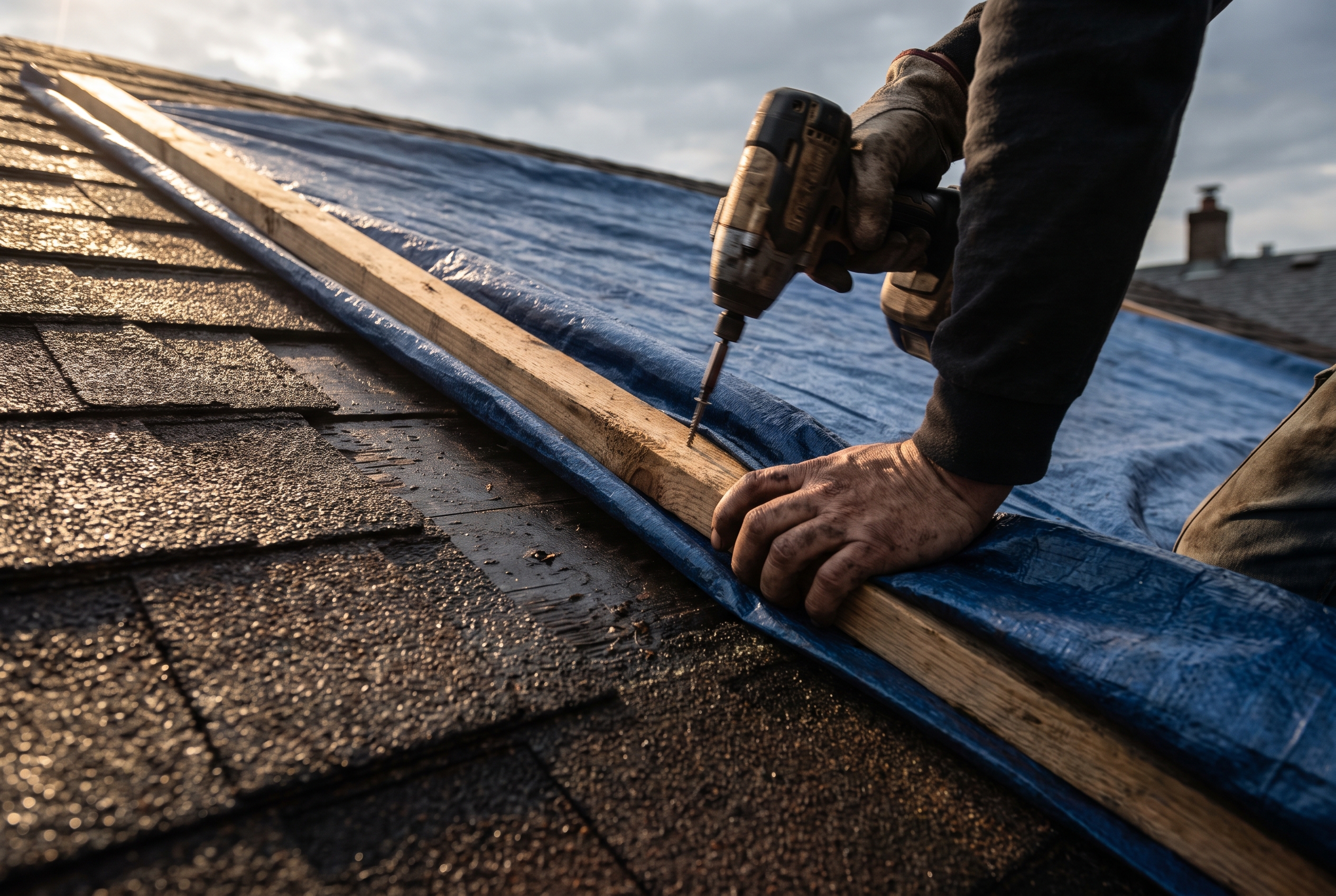
Wood battens fastened to the roof. The federal Blue Roof program uses this method. In FEMA's words, "The blue plastic sheeting is installed using strips of wood that are secured to the roof with nails or screws."
-
Generous overlap. FoxHaven Roofing Group, a Jensen Beach, Florida contractor, says the tarp should reach at least 4 feet past the damage on every side.
-
Edges wrapped and fastened. The same guide describes folding the tarp edge over a 2x4 and fastening through both into the roof decking every 12 inches, with fasteners every 6 inches in vulnerable areas.
-
No slack. Loose spots "collect water," according to FoxHaven, and that's how tarps tear.
Red flags on the roof
-
Sandbags or bricks as the only hold-down
-
Nails punched straight through a loose tarp with no battens
-
A tarp that barely covers the hole, with little or no overlap
-
Visible sagging or puddling right after the install
How long a tarp lasts
A tarp only buys you time. FEMA says Blue Roof sheeting is "designed to last 30 days." FoxHaven says a standard heavy-duty tarp "typically lasts 30 to 90 days" when installed properly, and professional-grade tarps can last "up to 180 days or longer."
After a big storm, roofers book up fast. The day your tarp goes on is a good day to get on a roofer's list for the permanent repair.
The free option: Operation Blue Roof
The federal Blue Roof program, run by the U.S. Army Corps of Engineers with FEMA, installs tarps with "no charge to the homeowner or landlord," according to FEMA. It runs only when it has been activated for a specific disaster, so watch for an official announcement from FEMA or the Corps before you count on it.
Based on the Corps' rules for Hurricane Ian in 2022, eligibility has looked like this:
-
Primary residences or permanently occupied rentals with less than 50 percent structural damage
-
Flat roofs, and roofs made of metal, clay, slate or asbestos tile, do not qualify
-
Homeowners sign a Right of Entry form so crews can work on the property
If water is coming in now, don't hold off waiting on a free program. Paying for a fairly priced tarp and keeping the receipt is usually the safer move.
Vetting the crew
The City of Lakeland's emergency-management guidance spells out how Florida licensing works after a storm:
-
Tarping doesn't require a state license. The city lists "placing a tarp on a roof" as cleanup work.
-
Roof repair does. If the person tarping offers to fix the roof too, they need a state license for that part.
-
"Never Pay the Full Amount Up Front."
-
A business tax receipt "is not a license." Look up the license at myfloridalicense.com or call 850-487-1395.
This matters more than usual right now. Under Florida Statute 489.127(2)(c), unlicensed contracting during a governor-declared state of emergency is a third-degree felony.
Questions to ask before anyone climbs a ladder
-
What's the price per square foot, and how many square feet are you covering?
-
Are battens and screws included, or is that extra?
-
How far past the damage will the tarp extend?
-
Will you take photos before and after?
-
Can I get an itemized, written invoice?
-
Are you licensed for roof repair, and what's the license number?
Getting reimbursed by insurance
Insurers want you to tarp. Citizens Property Insurance tells policyholders that emergency repairs "may include... placing a tarp on a damaged roof." To keep your claim clean:

-
Photograph the damage before the tarp goes on, and again after.
-
Keep original receipts for "all purchases or services needed to make temporary emergency repairs," as Citizens puts it.
-
Get an itemized invoice showing square footage, materials (including battens), and labor.
-
Hold off on permanent work. Citizens says, "Your adjuster must inspect your home and authorize any permanent tear out, removal or repair of items, before they are completed."
Some policies cap what they'll pay for emergency measures. In one Florida appellate case described by HD Law Partners, the Citizens policy at issue capped reasonable emergency measures at "$3,000 or 1 percent" of policy limits. Under that policy, the insurer had 48 hours to approve or deny a request to go over the cap, and a missed deadline meant the homeowner was entitled to full reimbursement. Your policy may say something different, so read its mitigation or emergency-measures section before a large tarp job.
The bottom line: should you call for a tarp?
If water can get into your house, yes, and soon. If the damage is cosmetic, like a few lifted shingles with dry decking and a dry attic, you have time to get bids for the permanent repair instead.
When you do call:
-
Get the price in writing, per square foot, before work starts.
-
Confirm battens and fasteners are included.
-
Compare the quote with the roughly $450 average and $1.00 to $2.80 per square foot from one Florida roofer's 2026 guide, and get a second bid if the number is far above that.
-
Don't pay the full amount up front.
-
Photograph everything and keep every receipt.
-
Report gouging. Alabama: 1-800-392-5658. Florida: 1-866-9NO-SCAM (1-866-966-7226).
Need a roofer once the storm passes? Request quotes from licensed, insured local pros through Call The Local, then compare them line by line.
Related reading
-
How to Keep Stink Bugs Out This Fall by Sealing the Gaps First
-
Flat Roof Leak After Heavy Rain? What to Check in Phoenix and Albuquerque as Polo Moves Through
-
How to Find a Licensed Roofer on Kauai When the Whole Island Needs One
-
Roofers Have Open Calendars in the Quietest Season Since 1941
Sources
-
FOX10: Hurricane Isaias could reach Category 3 strength before Gulf Coast landfall
-
FOX10: Isaias taking aim on the northern Gulf: What Mobile-Pensacola can expect
-
WSFA: State of emergency declared for 40 Alabama counties ahead of Isaias
-
Alabama Attorney General: Price gouging law in effect with state of emergency declaration
-
News4JAX: Florida price gouging hotline activated ahead of Tropical Storm Isaias
-
City of Lakeland Emergency Management: Contractors & Repair Info
-
JA Edwards of America Roofing: Emergency Roof Tarping Cost in Florida: 2026 Prices
-
Roofing Contractor: Roofers Triage After Hurricane Helene and Wait for Hurricane Milton
-
U.S. Army: USACE announces start of Blue Roof Program in response to Hurricane Ian
-
FoxHaven Roofing Group: How To Tarp A Roof In 8 Steps: 2026 Emergency Guide
-
HD Law Partners: When Is An Insurer Required To Pay For Reasonable Emergency Measures?
This article contains AI-assisted content and has been reviewed by our editorial team.
ABOUT THIS SERVICE: CallTheLocal.com is a directory and lead generation service, not a contractor or service provider. Submitting this form does not obligate you to hire anyone or purchase any service. Your information will be shared with licensed, insured home service professionals in your area who may provide quotes for your project. CallTheLocal.com does not guarantee the quality, timeliness, or outcome of any work performed by service providers you connect with through this service. Always verify licensing, insurance, and references before hiring. Get everything in writing before work begins.