If you typed "roof repair Kauai" into a search bar this week, you are in good company. Hurricane Lowell passed Ni'ihau and Kauai overnight Monday into Tuesday, Sept. 8, 2026, without making a direct landfall. It still brought gusts of 92 mph at Pu'u Lua, nearly 74 mph at Waipa and 69 mph at Barking Sands, according to Honolulu Civil Beat.
In Hanapepe, Tracy Valente's 1950s home lost its metal roof. She told Hawaii News Now it sounded like crackling thunder, and she went to her daughter's house nearby. Kekaha homes lost shingles. On the South Shore, oceanfront homes along Ho'ona and Lawai roads in Poipu were destroyed or lost their roofs, The Garden Island reported.
As of 6:05 p.m. on Sept. 10, the County of Kauai had completed about 231 preliminary damage assessments, with 54 homes showing major damage and at least 7 destroyed. By Sunday, Sept. 13, residents had filed more than 550 damage reports, per Kauai Now.
That leaves a lot of homeowners with the same two jobs: keep the rain out now, and find a licensed roofer while hundreds of neighbors are calling the same short list. This guide walks through both, in the order that protects your home and your insurance claim.
What should I do first after hurricane roof damage?
Short answer: photograph and video everything, file a county damage report and your insurance claim, then make temporary repairs and keep every receipt. Hold off on permanent work until your adjuster inspects or your insurer approves it.
Here is the first-48-hours order, based on state guidance from HIEMA and the Department of Commerce and Consumer Affairs (DCCA) and the county's Kauai Recovers site:
-
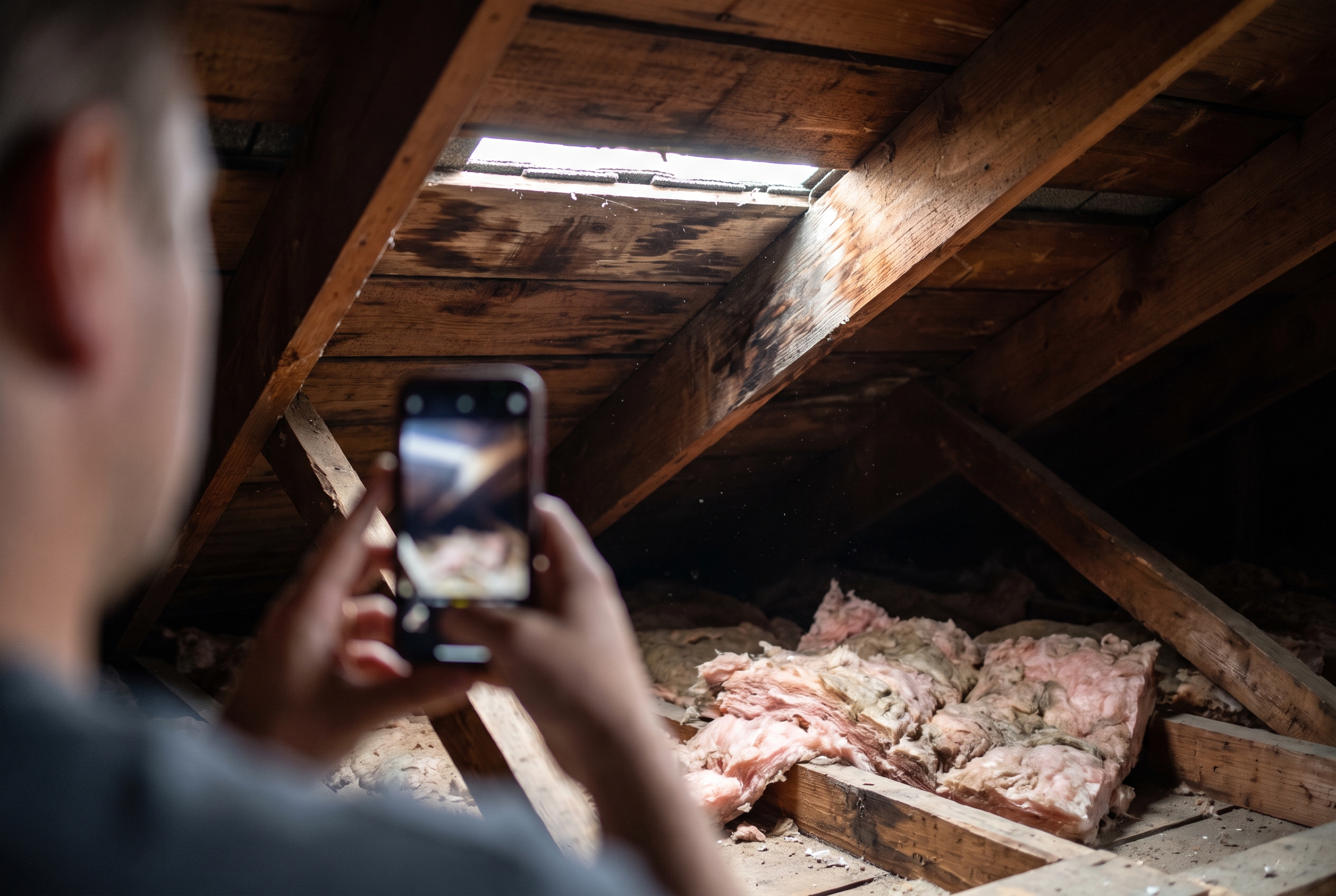
Document before you touch anything. Take photos and video of the roof, ceilings, walls, and anything soaked or broken. Get wide shots and close-ups.
-
File the county damage report. The residential form is at bit.ly/kauaidamage. The county uses these reports to help decide whether Kauai qualifies for state or federal aid. It does not replace your insurance claim.
-
File your own insurance claim. The county report and your policy claim are separate. You have to do both.
-
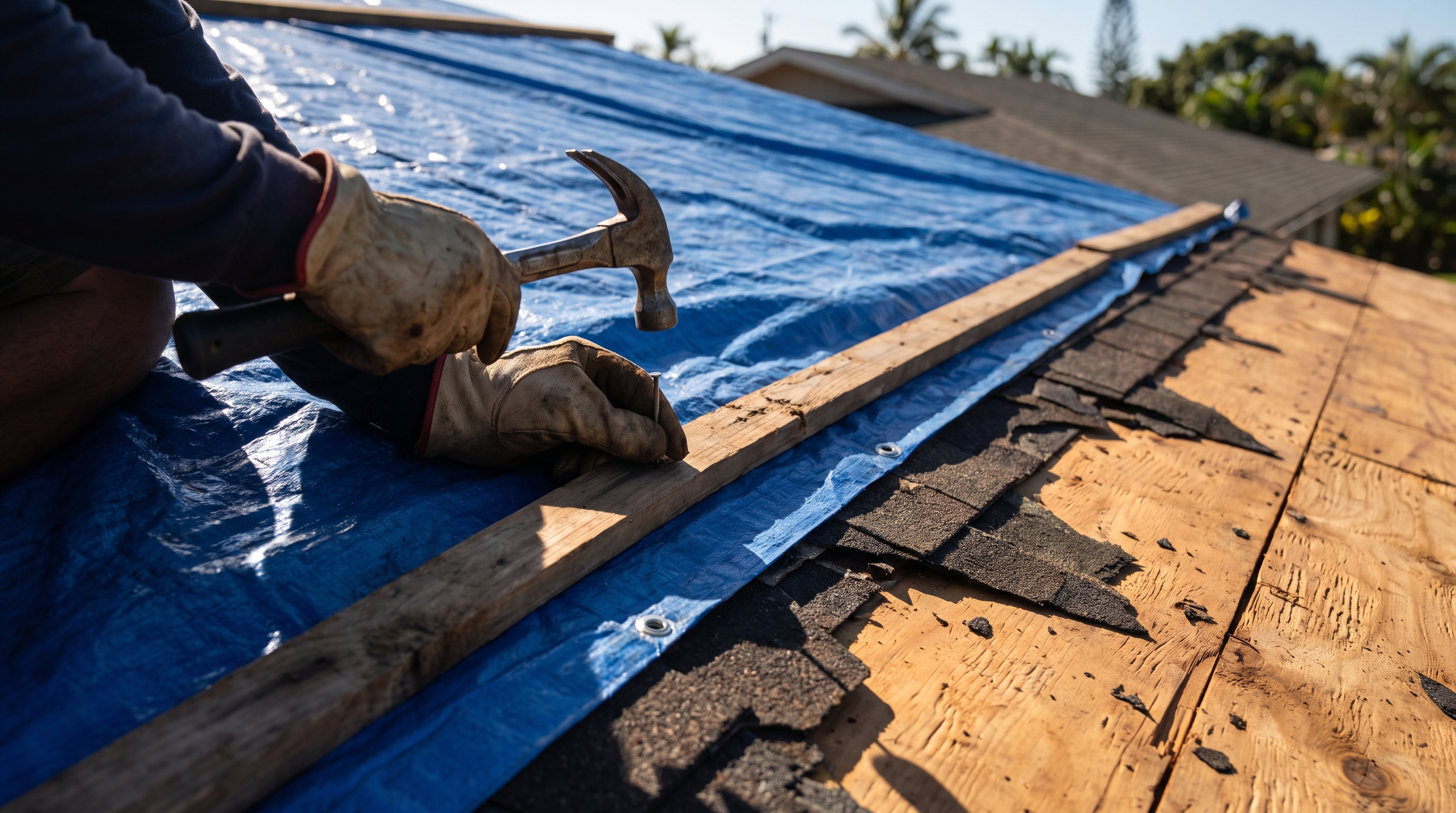
Make temporary repairs. Kauai Recovers, citing the DCCA Insurance Division, says residents should begin emergency repairs as soon as damage is documented. A tarp or board-up keeps more water from getting in, which also protects your claim.
-
Keep receipts. Tarps, fasteners, plywood and any paid emergency labor all belong in your claim file.
One practical snag: before the storm, Kauai's only Home Depot sold out of generators and tarps, Kauai Now reported. Call ahead to other hardware stores, and ask at the county resource centers (details below) about what supplies are available.
Should I tarp the roof myself or pay someone?
Short answer: only climb up if the roof is dry, solid and clear of power lines, and you are comfortable working at height. If any of that is in doubt, pay for tarping, and vet that crew the same way you would a full roofer.
A few ground rules:
-
Stay off wet or storm-damaged roofs. Decking that took a hit can give way under your weight.
-
Watch for downed or sagging lines. About 33,000 of KIUC's 36,000 accounts lost power, and restoration was still under way on Monday, Sept. 14, with roughly 6,820 members out and North Shore work set to start Wednesday. Treat every line as live.
-
Tarp is temporary. It is meant to hold until the adjuster sees the damage, not to replace a roof.
-
Paid tarping is still a contract. Get the price, the scope and the company's name in writing, and run the license check below before anyone climbs your ladder.
We could not confirm a county or federal blue-roof or free tarp program for Lowell as of this writing. Ask at a resource center or call the county before assuming one exists.
How do I check if a roofer is licensed in Hawaii?
Short answer: look up the company and the person on DCCA's free public license search. It shows whether the license is active, its original and expiration dates, and any discipline.
How to do it well:
-
Ask for the license number up front. A legitimate roofer will hand it over without hesitation. Search by number, then by name, to make sure they match.
-
Check the classification. In Hawaii, roofing falls under the C-42 specialty classification. Confirm the classification shown on the DCCA record matches the work you are hiring for.
-
Look at the dates. An expired license, or one that expires mid-job, is a reason to ask questions.
-
Read the discipline section. Past penalties do not always rule someone out, but you want to know about them before you sign.
-
Run DCCA's Business Check too. It shows complaint history, which the license record alone may not.
-
Call if something looks off. The DCCA line is 1-844-808-DCCA (3222).
The $1,500 "handyman" exception does not cover a real roof job
Hawaii law, HRS 444-2, exempts small jobs where labor and materials together total no more than $1,500. That limit rose from $1,000 in 2019. The exemption does not apply to any job that needs a building permit, and it does not apply when a larger job is split into smaller contracts to stay under the limit. So if someone offers to "break it into a few smaller bills," that is a red flag, not a favor.
AI workflows for revenue teams
Placeholder house ad for Conservus.ai. Swap with final creative when brand assets are ready.
Partner with Conservus.aiWhat are the red flags after a storm?
Short answer: be wary of door knockers, anyone who wants your insurance check signed over, pressure to start permanent work before the adjuster comes, cash-only deals, and no written contract.
-
Unsolicited door knockers. Someone who shows up the morning after with a truck and a clipboard may be fine, or may be gone by the time the check clears. Run the license search before you talk price.
-
"Just sign the check over to us." The state is blunt about this one: "Be cautious of contractor scams, never sign your entire claims check over to a contractor."
-
Rushing permanent work. DCCA's guidance: "Do not begin permanent repairs until an adjuster inspects or the insurer approves." A roofer pushing you to tear off and rebuild before that can put your claim at risk.
-
Cash only, big deposit, no paperwork. Get the scope, price, materials, schedule and payment terms in writing before work begins.
-
No proof of insurance or bonding. Ask for certificates and call the issuer to confirm they are current.
-
A license that does not match. Wrong name, wrong classification, or expired. Walk away.
Should I sign my insurance check over to a roofer?
Short answer: no. The state says never to sign your entire claims check over to a contractor. Pay for completed work according to a written contract instead.
Here is how the money usually flows on a roof claim, and where a roofer fits in:
-
The adjuster inspects. Have your photos, videos and temporary repair receipts ready.
-
The insurer issues an estimate. This is the adjuster's scope of work: what they believe needs to be repaired or replaced, and what they will pay.
-
You collect contractor bids. Ask each roofer to bid against that scope.
-
Compare line by line. Is the roofer including decking, underlayment, disposal and permits the adjuster left out? Or charging for items the adjuster did not approve? Gaps are the conversation to have with your insurer before you sign.
The county's Kauai Recovers site links to the state's Post-Disaster Insurance Claims Guide. For questions about how your insurer is handling a claim, the DCCA Insurance Division is the place to call at 1-844-808-DCCA (3222).
How much does a new roof cost in Hawaii?
Short answer: the only verified 2026 Hawaii figures we found are from Oahu, before the storm: about $14 to $18 per square foot for architectural shingles and $28 to $35 per square foot for standing seam metal, installed.
Those ranges come from a contractor's line-item guide published March 26, 2026 by Warrior Construction on Oahu. For a 1,500-square-foot roof, that works out to:
| Roof type (Oahu, pre-storm) | Per sq ft installed | 1,500 sq ft roof |
|---|---|---|
| Architectural shingles | $14 to $18 | $21,000 to $27,000 |
| Standing seam metal | $28 to $35 | $42,000 to $52,500 |
The same guide breaks down a sample 1,500-square-foot metal roof at $45,750:
| Line item | Approximate cost |
|---|---|
| Materials | $18,750 |
| Labor | $15,000 |
| Disposal | $4,000 |
| Permits and admin | $1,250 |
| Overhead and profit | $6,750 |
| Total | $45,750 |
Two add-ons that show up often on storm jobs: replacement plywood at $120 to $150 per sheet installed, and a sealed roof deck at an extra $2 to $3 per square foot.
What we do not know about Kauai prices right now
We found no verified source for Kauai roofing prices after Lowell, for how long roofers are booked out, or for whether storm demand is pushing quotes up. Anyone who quotes you a "typical Kauai post-storm price" is guessing unless they can show you real bids. Use the Oahu numbers as a sanity check, not a promise, and get 2 to 3 written bids from licensed roofers so you can see the local market for yourself.
When you compare bids, use the line items above as a checklist. If one bid has no disposal line, no permit line, or a vague "materials" lump sum, ask what is included before you decide it is the cheapest.
AI workflows for revenue teams
Placeholder house ad for Conservus.ai. Swap with final creative when brand assets are ready.
Partner with Conservus.aiDo I need a permit for roof repair on Kauai?
Short answer: confirm with the County Building Division before any full tear-off or re-roof. Do not assume the permit and fee waivers the county offered after Iniki in 1992 apply to Lowell; we found nothing confirming that.
-
Building Division: (808) 241-4854.
-
Permit counter closure: The Lihue Civic Center, which houses building and zoning permit services, was closed after a fire, according to The Garden Island. Call ahead rather than driving over.
-
Ask your roofer who pulls the permit. A licensed roofer should know the process and include permit costs in the bid.
Getting rid of old roofing
Seven county debris sites are open, and storm-debris tipping fees are waived at Kekaha Landfill and the transfer stations, per Kauai Now. Pieces other than green waste must be 3 feet or shorter. If you are hauling your own torn roofing, cut it down first. If a roofer is hauling it, ask whether the waived fees are reflected in the disposal line of their bid.
What help is available while federal aid is pending?
Gov. Josh Green estimated Kauai's damage will top $400 million, more than Hurricane Lala caused, and noted that a major disaster declaration typically covers 75% of costs, Hawaii News Now reported. He submitted an expedited request for Kauai and Maui counties covering Individual Assistance (the Individuals and Households Program), Public Assistance, Hazard Mitigation and SBA loans.
As of Sept. 14, the declaration had not been approved, and Hawaii's congressional delegation was urging President Trump to act, per the Star-Advertiser. If it is approved with Individual Assistance, homeowners may become eligible for federal help. Until then, do not delay documenting, tarping or filing your claim while you wait.
What you can use now:
-
Resource centers: Hanalei Neighborhood Center and Koloa Neighborhood Center, open from Sept. 15, 9 a.m. to 6 p.m.
-
Property tax relief: storm-damaged owners can apply at kauai.gov/lowellrealproperty. The remission form deadline is June 30, 2027.
-
County recovery hub: KauaiRecovers.org for damage reporting, the claims guide and updates.
Before you call a roofer: a quick checklist
-
Damage photographed and on video, including close-ups?
-
County damage report filed at bit.ly/kauaidamage?
-
Insurance claim filed, with a claim number written down?
-
Tarp or temporary fix in place, receipts saved?
-
Roofer's license checked on DCCA, with the right classification and no surprises?
-
Complaint history checked on DCCA Business Check?
-
Proof of insurance and bonding in hand?
-
Adjuster has inspected, or insurer has approved permanent work?
-
Two or three written bids compared line by line against the adjuster's scope?
-
Permit needs confirmed with the Building Division?
-
Claims check still in your name, not signed over?
If you can check every box, you are ready to hire. If the roofer you like cannot start for a while, a solid tarp and a signed, clear contract beat a rushed job from someone you have not vetted.
AI workflows for revenue teams
Placeholder house ad for Conservus.ai. Swap with final creative when brand assets are ready.
Partner with Conservus.aiRelated reading
-
Why Exterior Paint Quotes Swing So Widely From House to House
-
California Moves to Set the First Rules for Smoke Damaged Homes
-
Roofers Have Open Calendars in the Quietest Season Since 1941
Sources
-
Honolulu Civil Beat: Hurricane Lowell Hit Kaua'i Hard, But Worst Fears Averted
-
Hawaii News Now: West Kauai residents ride out Hurricane Lowell, assess damage
-
The Garden Island: On Kauai's devastated south shore, volunteers help clean up Lowell's mess
-
Kauai Now: What Kaua'i County residents, visitors need to know about Hurricane Lowell recovery
-
The Garden Island: County issues Hurricane Lowell recovery updates
-
Hawaii News Now: Gov. Green warns Hurricane Lowell damage on Kauai will exceed $400M
-
Kauai Now: Gov. Josh Green submits expedited request for a major disaster declaration
-
Honolulu Star-Advertiser: Delegation urges Trump to OK disaster declarations
ABOUT THIS SERVICE: CallTheLocal.com is a directory and lead generation service, not a contractor or service provider. Submitting this form does not obligate you to hire anyone or purchase any service. Your information will be shared with licensed, insured home service professionals in your area who may provide quotes for your project. CallTheLocal.com does not guarantee the quality, timeliness, or outcome of any work performed by service providers you connect with through this service. Always verify licensing, insurance, and references before hiring. Get everything in writing before work begins.
Note: This article contains AI-assisted content and has been reviewed by our editorial team.